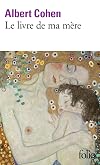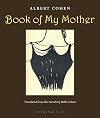
Book of My Mother
by Albert Cohen
On This Page
Description
Shortly after Albert Cohen left France for London to escape the Nazis, he received news of his mother's death in Marseilles. Unable to mourn her, he expressed his grief in a series of heartfelt pieces for La France Libre, which he later revised and combined in this moving collection of poignant memoirs. Translated from French by his wife Bella Cohen, it still retains its poignancy as an achingly honest, intimate and moving account and a tribute to all mothers. A heartbreakingly beautiful show more work by the internationally renowned author. show lessTags
Recommendations













Member Reviews
Albert Cohen (1895-1981) was an author and civil servant, whose Greek Jewish parents emigrated to Marseilles soon after his birth. He worked in Geneva through the 1930s, where his mother visited him regularly. He emigrated to Bordeaux and then London in 1940 during the German occupation of France. He urged his elderly and widowed mother, who was in failing health, to move with him to London, but she preferred to remain in Marseilles. Cohen was grief stricken once he learned of her death in 1943. He wrote a series of articles in tribute to her in La France libre during the war, which were later compiled and published as Le Livre de ma mère in 1954. It was translated into English by Bella Cohen, his third wife, and published as Book of show more My Mother in 1997. Archipelago Books released a new edition this month, which I received through my subscription with the publisher.
The book opens with a flowery ode to his late mother, then provides the reader with a detailed glimpse of his mother, a heavy set but attractive woman who served her husband and son with bottomless devotion and love, regardless of how she was treated by them. Albert was somewhat carefree, and wasted the extra money his mother gave him on the vacuous young women he favored. He subtly rejects his mother's old-fashioned advice, as he prefers to live for the moment and to take advantage of the freedoms that modern society affords him. He does love her, but takes her presence for granted, despite her health problems.
In the middle of the book, Cohen writes to her in sorrow and regret, as he finally realizes how much she meant to him, and how impoverished his life is without her:
I was cruel to you once, and I asked for your forgiveness, which you granted so joyfully. You know, do you not, that I loved you with all my heart. How happy we were together, what chattering accomplices we were—such garrulous good friends, talking interminably. But I could have loved you yet more and written to you each day and given you each day a sense of your importance, which I alone was able to give you and which made so you proud, you who were humble and unacknowledged, my little genius, Maman, my dearest girl.
His anguished cry in this portion of the book brought tears to my eyes, as I thought of my own elderly mother, and know that our days together on earth are numbered. (And, I'm tearing up again as I write this.)
Had the book ended at this point, I would probably have rated it five stars. However, much of the last half of the book is a maudlin and repetitive dirge, with frequent proclamations that "She is dead" and intermittent macabre details about his mother's interment.
He closes the book with a heart felt plea to his readers:
Sons of mothers who are still alive, never again forget that your mothers are mortal. I shall not have written in vain if one of you, after reading my song of death, is one evening gentler with his mother because of me and my mother. Be gentle with your mother each day. Show her more love than I showed my mother. Give your mother some happiness each day, that is what I say to you with the right accorded to me by regret; that is the grave message of a mourner.
This is a difficult book for me to rate. I have settled on a four star rating, as it touched and deeply moved me, and has affected how I view the very good but not perfect relationship I have with my elderly parents. However, the book's latter half was quite disturbing and nearly unreadable to me, as I felt as if I was looking into the intimate thoughts of a mentally disturbed man. I would highly recommend this book, but I would also suggest skipping much of the latter half starting from Chapter 14 and resuming with Chapter 28. show less
The book opens with a flowery ode to his late mother, then provides the reader with a detailed glimpse of his mother, a heavy set but attractive woman who served her husband and son with bottomless devotion and love, regardless of how she was treated by them. Albert was somewhat carefree, and wasted the extra money his mother gave him on the vacuous young women he favored. He subtly rejects his mother's old-fashioned advice, as he prefers to live for the moment and to take advantage of the freedoms that modern society affords him. He does love her, but takes her presence for granted, despite her health problems.
In the middle of the book, Cohen writes to her in sorrow and regret, as he finally realizes how much she meant to him, and how impoverished his life is without her:
I was cruel to you once, and I asked for your forgiveness, which you granted so joyfully. You know, do you not, that I loved you with all my heart. How happy we were together, what chattering accomplices we were—such garrulous good friends, talking interminably. But I could have loved you yet more and written to you each day and given you each day a sense of your importance, which I alone was able to give you and which made so you proud, you who were humble and unacknowledged, my little genius, Maman, my dearest girl.
His anguished cry in this portion of the book brought tears to my eyes, as I thought of my own elderly mother, and know that our days together on earth are numbered. (And, I'm tearing up again as I write this.)
Had the book ended at this point, I would probably have rated it five stars. However, much of the last half of the book is a maudlin and repetitive dirge, with frequent proclamations that "She is dead" and intermittent macabre details about his mother's interment.
He closes the book with a heart felt plea to his readers:
Sons of mothers who are still alive, never again forget that your mothers are mortal. I shall not have written in vain if one of you, after reading my song of death, is one evening gentler with his mother because of me and my mother. Be gentle with your mother each day. Show her more love than I showed my mother. Give your mother some happiness each day, that is what I say to you with the right accorded to me by regret; that is the grave message of a mourner.
This is a difficult book for me to rate. I have settled on a four star rating, as it touched and deeply moved me, and has affected how I view the very good but not perfect relationship I have with my elderly parents. However, the book's latter half was quite disturbing and nearly unreadable to me, as I felt as if I was looking into the intimate thoughts of a mentally disturbed man. I would highly recommend this book, but I would also suggest skipping much of the latter half starting from Chapter 14 and resuming with Chapter 28. show less
Albert Cohen was a Jewish Swiss novelist who wrote in french. His novels took the form of autobiography and this one deals with his relationship with his mother. The novel was published in its current form in 1954 and collects together texts written under the title of Chants de mort. His mother died in Marseilles in 1943. The book takes the form of an hommage to his mother, he speaks of his love and his admiration for the woman who seems to have shaped his life. She is ever present in his thoughts after her death and becomes a ghost like figure that haunts him while he is writing his book.
Cohen starts by introducing himself as a lonely figure who is punctilious in his preparations for writing his texts. He imagines his pen asking him show more what he is doing "who sleeps" it asks and the author replies it is his mother who sleeps in the cemetery and who is the subject of his pain. He describes his parents early life in France as Jews fleeing to Marseilles, struggling to fit in with a new culture and having to work hard to earn a living. He says his mother never really fitted in, devoting herself to looking after her husband and her children. He sketches in this early life with a series of flashbacks which are memories of his special relations with his mother. He tells of them going to a fashionable cafe where his mother would be unable or unwilling to speak to the other customers, her attention and conversation solely concerned with her son. She stressed his jewish upbringing and wanted to see him remain faithful to the religion. She became a lonely figure, more so when her husband died and her family moved away. She seemed to worship her son Albert, sacrificing herself for him; selling her jewellery when his expensive lifestyle needed to be supported by more money. In return Cohen paints an idealistic portrait of his mother, but it is tinged with guilt.
He talks of his mothers yearly visits when he was following his career in the diplomatic service in Geneva. How her whole year was centred on the two or three weeks that she stayed with him. How she dressed to please him, how she saved her money to buy him small presents, how she never interfered in his lifestyle. The guilt shines through when he tells how he had arranged to meet her in the local park, but dallied with his latest girlfriend (a blond woman) and arrived three hours late to find his mother shivering with cold, but so pleased to see him and not a word of reproach. The memories start to peter out as the book progresses and becomes an agonised calling to his mother beyond the grave, he never actually asks for her forgiveness, but this is clearly his intent as he has become a lonely solitary figure just like her. He imagines her in her grave, he imagines her next to him while he is writing. He keeps reminding himself and his readers that his mother, his saintly mother is dead. The book becomes a paean to mothers everywhere.
Cohen's writing is intense, almost a plea. There is much repetition, maybe because of the origins of the book as previous texts, but the repetition has a cumulative effect. In many ways this is an extraordinary book, it will not be to everyones taste, but I found it powerful enough. This is written by a man who feels that he should have dedicated more of his life to his mother as she had dedicated hers to him, all that is left for him to do is write a panegyric and bemoan her absence and confess his love. One wonders if he ever escaped her presence. A five star read. show less
Cohen starts by introducing himself as a lonely figure who is punctilious in his preparations for writing his texts. He imagines his pen asking him show more what he is doing "who sleeps" it asks and the author replies it is his mother who sleeps in the cemetery and who is the subject of his pain. He describes his parents early life in France as Jews fleeing to Marseilles, struggling to fit in with a new culture and having to work hard to earn a living. He says his mother never really fitted in, devoting herself to looking after her husband and her children. He sketches in this early life with a series of flashbacks which are memories of his special relations with his mother. He tells of them going to a fashionable cafe where his mother would be unable or unwilling to speak to the other customers, her attention and conversation solely concerned with her son. She stressed his jewish upbringing and wanted to see him remain faithful to the religion. She became a lonely figure, more so when her husband died and her family moved away. She seemed to worship her son Albert, sacrificing herself for him; selling her jewellery when his expensive lifestyle needed to be supported by more money. In return Cohen paints an idealistic portrait of his mother, but it is tinged with guilt.
He talks of his mothers yearly visits when he was following his career in the diplomatic service in Geneva. How her whole year was centred on the two or three weeks that she stayed with him. How she dressed to please him, how she saved her money to buy him small presents, how she never interfered in his lifestyle. The guilt shines through when he tells how he had arranged to meet her in the local park, but dallied with his latest girlfriend (a blond woman) and arrived three hours late to find his mother shivering with cold, but so pleased to see him and not a word of reproach. The memories start to peter out as the book progresses and becomes an agonised calling to his mother beyond the grave, he never actually asks for her forgiveness, but this is clearly his intent as he has become a lonely solitary figure just like her. He imagines her in her grave, he imagines her next to him while he is writing. He keeps reminding himself and his readers that his mother, his saintly mother is dead. The book becomes a paean to mothers everywhere.
Cohen's writing is intense, almost a plea. There is much repetition, maybe because of the origins of the book as previous texts, but the repetition has a cumulative effect. In many ways this is an extraordinary book, it will not be to everyones taste, but I found it powerful enough. This is written by a man who feels that he should have dedicated more of his life to his mother as she had dedicated hers to him, all that is left for him to do is write a panegyric and bemoan her absence and confess his love. One wonders if he ever escaped her presence. A five star read. show less
These were originally written as newspaper or magazine articles so not designed to be read in one go and, although beautifully written, they are overpowering in this format. It’s the same old story: he didn’t appreciate his mother’s love and care as he was growing up and was consumed with guilt when she died.
It has taken me while to get round to reading this ER copy as it was supplied as a pdf and so was not comfortable to read on my kindle and I don’t like to read on a computer screen. I was recently given a tablet which, although still a backlit screen, was easier to hold as I read. This was a fairly short book and I think I might not have managed to read a longer one under these conditions.
It has taken me while to get round to reading this ER copy as it was supplied as a pdf and so was not comfortable to read on my kindle and I don’t like to read on a computer screen. I was recently given a tablet which, although still a backlit screen, was easier to hold as I read. This was a fairly short book and I think I might not have managed to read a longer one under these conditions.
 This review was written for LibraryThing Early Reviewers.
This is a really nice, and very sentimental book. It reads like a series of writings rather than as one continuous 'novel'. The writing is beautiful, simple and expresses the emotions beautifully.
From what I can make out, there is no attempt to craft this as a literary work. It is a simple outpouring of emotion, love felt, and regret expressed. I am not used to expressing my sentiments and emotions, and there are times when the book seems a tad mawkish to me, and Albert kicks himself a bit too much. However, this is me expressing this, and not him.
Yet, it is a wonderful reminder that we often don't stop to express emotion until it is too late, and then we have a lifetime of regret to look forward to. "If only I had....."
A wonderful show more book. I recommend this to anyone who has a mother or father. To anyone who loves deeply.
We move on, and leave our parents behind. This is a mistake, and I thank Albert for this wonderful book. show less
From what I can make out, there is no attempt to craft this as a literary work. It is a simple outpouring of emotion, love felt, and regret expressed. I am not used to expressing my sentiments and emotions, and there are times when the book seems a tad mawkish to me, and Albert kicks himself a bit too much. However, this is me expressing this, and not him.
Yet, it is a wonderful reminder that we often don't stop to express emotion until it is too late, and then we have a lifetime of regret to look forward to. "If only I had....."
A wonderful show more book. I recommend this to anyone who has a mother or father. To anyone who loves deeply.
We move on, and leave our parents behind. This is a mistake, and I thank Albert for this wonderful book. show less
Fine prose, but, perhaps too much on a single topic. There are many marvelous moments in Cohen's long record of mourning for his mother. But these must be read in brief intervals or they become too much of a muchness. Still, a fine collection to have in the library.
Os.
Os.
D'Albert Cohen, j'avais lu Mangeclous et surtout le plus que célèbre Belle du Seigneur. Ce dernier est un grand (dans tous les sens du terme) roman d'amour.
Le livre de ma mère, à teneur autobiographique, est jugé par nombre de critiques comme une belle histoire d'amour (filial) ou un chant d'amour.
Comme l'écrit lui-même A Cohen , c'est plutôt un "chant de mort" : la mort de sa mère évidemment, dans la logique des choses de la vie mais absurde pour ce fils aimant qui réalise que quoi qu'il fasse sa mère ne le voit plus, ne l'entend plus, ne l'aime plus. Mais aussi et peut-être surtout l'incompréhension de la mort en général ("Dieu, que tout cela est absurde.") et la projection de sa propre mort et des angoisses à y show more penser.
Alors A Cohen nous raconte sa mère, avec ses défauts mais aussi sa gentillesse, son abnégation, son amour, son idolâtrie du fils prodige. Il nous dit combien et comment elle l'a aimé, comment il lui a rendu. Et combien il réalise qu'elle lui manque, qu'il pense à elle, qu'il l'imagine dans sa tombe, "silencieuse sous la terre, enfermée dans la geôle terreuse avec interdiction d'en sortir, prisonnière dans la solitude de la terre".
Un chant de mort bien triste.
Je laisse conclure A Cohen : " Dieu merci les pêcheurs vivant deviennent vite des morts offensés". show less
Le livre de ma mère, à teneur autobiographique, est jugé par nombre de critiques comme une belle histoire d'amour (filial) ou un chant d'amour.
Comme l'écrit lui-même A Cohen , c'est plutôt un "chant de mort" : la mort de sa mère évidemment, dans la logique des choses de la vie mais absurde pour ce fils aimant qui réalise que quoi qu'il fasse sa mère ne le voit plus, ne l'entend plus, ne l'aime plus. Mais aussi et peut-être surtout l'incompréhension de la mort en général ("Dieu, que tout cela est absurde.") et la projection de sa propre mort et des angoisses à y show more penser.
Alors A Cohen nous raconte sa mère, avec ses défauts mais aussi sa gentillesse, son abnégation, son amour, son idolâtrie du fils prodige. Il nous dit combien et comment elle l'a aimé, comment il lui a rendu. Et combien il réalise qu'elle lui manque, qu'il pense à elle, qu'il l'imagine dans sa tombe, "silencieuse sous la terre, enfermée dans la geôle terreuse avec interdiction d'en sortir, prisonnière dans la solitude de la terre".
Un chant de mort bien triste.
Je laisse conclure A Cohen : " Dieu merci les pêcheurs vivant deviennent vite des morts offensés". show less
Nov 20, 2019French
Pour résumer : Ma maman était la plus géniale des mamans parce que, petite chose idiote, ridicule et insignifiante, elle avait compris toute ma grandeur, ne vivait que pour moi, se sacrifiait avec plaisir à tout instant, m'était dévouée comme un chien et me trouvait parfait. Personne n'est à sa hauteur car personne n'aime de manière aussi inconditionnelle qu'elle un fils parfaitement condescendant et égocentrique, qui n'avait aucun respect pour sa mère de son vivant et n'en a pas plus pour les autres femmes de sa vie maintenant qu'elle est morte, et qui regrette sans regretter ce qu'il lui a fait subir car il ne trouve rien d'autre à admirer chez sa maman que sa servilité et son renoncement total. Où est l'ode à la show more maternité là-dedans ? Je ne vois (ou "nous ne voyons" car pour le coup, les deux personnes - mère et fille - qui partagent ce compte sont d'accord) que les lamentations d'un homme totalement imbu de lui-même. show less
Apr 18, 2011French
2
Members
- Recently Added By
Author Information

14+ Works 1,939 Members
Some Editions
Series
Belongs to Publisher Series
Common Knowledge
- Canonical title
- Book of My Mother
- Original title
- Le Livre de ma mère
- Original publication date
- 1954
- People/Characters*
- La mère d'Albert Cohen
- First words
- Every man is alone and no one cares a rap for anyone and our sorrows are a desert island.
- Last words*
- (Click to show. Warning: May contain spoilers.)Des années ce snt écoulées depuis que j'ai écris ce chant de mort. j'ai continué à vivre, à aimer. J'ai vécu, j'ai aimé, j'ai eu des heures de bonheur tandis qu'elle gisait abondonnée, en son terrrible lieu. j'ai commis le pêché de vie, moi aussi, comme les autres. j'ai ri et je rirai encore. Dieu merci, les pêcheurs vivants deviennent vite des morts offensés.
Chapitre XXXI - Original language
- French
*Some information comes from Common Knowledge in other languages. Click "Edit" for more information.
Classifications
Statistics
- Members
- 367
- Popularity
- 85,515
- Reviews
- 13
- Rating
- (3.41)
- Languages
- 10 — Dutch, English, Finnish, French, German, Hebrew, Italian, Multiple languages, Portuguese (Portugal), Spanish
- Media
- Paper, Audiobook, Ebook
- ISBNs
- 27
- ASINs
- 12