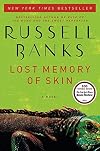
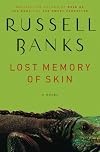
Lost Memory of Skin
by Russell Banks
On This Page
Description
This is a novel that illuminates the shadowed edges of contemporary American culture with startling and unforgettable results. Suspended in a strangely modern day version of limbo, the young man at the center of this morally complex new novel must create a life for himself in the wake of incarceration. Known in his new identity only as the Kid, and on probation after doing time for a liaison with an underage girl, he is shackled to a GPS monitoring device and forbidden to live within 2,500 show more feet of anywhere children might gather. With nowhere else to go, the Kid takes up residence under a south Florida causeway, in a makeshift encampment with other convicted sex offenders. Barely beyond childhood himself, the Kid, despite his crime, is in many ways an innocent, trapped by impulses and foolish choices he himself struggles to comprehend. Enter the Professor, a man who has built his own life on secrets and lies. A university sociologist of enormous size and intellect, he finds in the Kid the perfect subject for his research on homelessness and recidivism among convicted sex offenders. The two men forge a tentative partnership, the Kid remaining wary of the Professor's motives even as he accepts the counsel and financial assistance of the older man. When the camp beneath the causeway is raided by the police, and later, when a hurricane all but destroys the settlement, the Professor tries to help the Kid in practical matters while trying to teach his young charge new ways of looking at, and understanding, what he has done. But when the Professor's past resurfaces and threatens to destroy his carefully constructed world, the balance in the two men's relationship shifts. Suddenly, the Kid must reconsider everything he has come to believe, and choose what course of action to take when faced with a new kind of moral decision. In this novel the author examines the indistinct boundaries between our intentions and actions. It probes the zeitgeist of a troubled society where zero tolerance has erased any hope of subtlety and compassion, a society where isolating the offender has perhaps created a new kind of victim. show lessTags
Recommendations

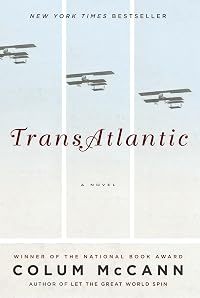


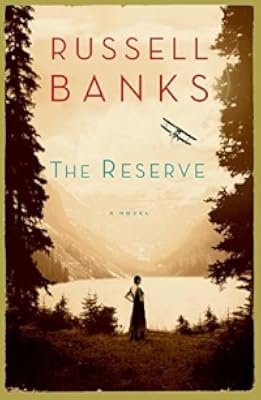
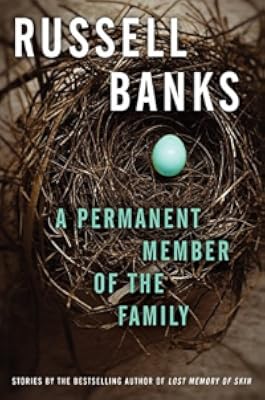
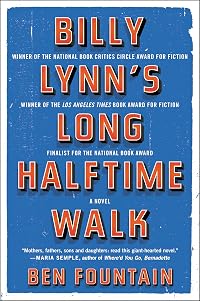






Member Recommendations

Babou_wk La présence de l'écrivain lui-même à l'intérieur du roman.

Member Reviews
The Kid, a convicted sex offender in his early twenties, lives beneath the Calusa Causeway in Florida, because it happens to be one of three remote locations in Calusa County that is 2500 feet away from any children’s gathering place. While the Kid’s crime is comparatively mild, he makes his home with violent and despicable criminals who find themselves in the same housing predicament.
Early in the novel, the Kid comes in contact with the Professor, a brilliant man with a mysterious past of his own, who is studying homelessness among sex offenders. The Professor concocts a plan to empower the Causeway residents by creating a kind of mini-government that organizes them into committees of sanitation, security, etc. Before the plan can show more be fully realized, certain life events get in the way.
While the author does not ask the reader to sympathize with these criminals, he appears to be saying that certain aspects of modern society are largely responsible for their behavior, yet we have no coherent plan to deal with them, particularly after they are released from prison (and then wonder why recidivism rates are so high). It also questions the practice of equating all sex-related crimes once the perpetrator is released from prison. As it stands (according to the novel), whether someone commits a brutal rape or has consensual sex with a teenager, they remain on the federal sex-offender registry for life.
I really liked this thought-provoking novel. While perhaps not great art, it is quite the page-turner, and Banks is an excellent story-teller. I look forward to reading more from him, particularly his more acclaimed work, like Affliction. show less
Early in the novel, the Kid comes in contact with the Professor, a brilliant man with a mysterious past of his own, who is studying homelessness among sex offenders. The Professor concocts a plan to empower the Causeway residents by creating a kind of mini-government that organizes them into committees of sanitation, security, etc. Before the plan can show more be fully realized, certain life events get in the way.
While the author does not ask the reader to sympathize with these criminals, he appears to be saying that certain aspects of modern society are largely responsible for their behavior, yet we have no coherent plan to deal with them, particularly after they are released from prison (and then wonder why recidivism rates are so high). It also questions the practice of equating all sex-related crimes once the perpetrator is released from prison. As it stands (according to the novel), whether someone commits a brutal rape or has consensual sex with a teenager, they remain on the federal sex-offender registry for life.
I really liked this thought-provoking novel. While perhaps not great art, it is quite the page-turner, and Banks is an excellent story-teller. I look forward to reading more from him, particularly his more acclaimed work, like Affliction. show less
The Kid is a twenty-one year old virgin. He doesn't know anything about his father. His mother, who loves him, is too wrapped up in her own life and series of boyfriends to pay much attention to him. He becomes addicted to online porn, falls into a trap, is arrested and becomes a convicted sex offender. Upon his release from prison, he must wear an ankle monitoring device for ten years and cannot live within 2500 feet of a school, playground or place children may cluster. He also can't leave the county. So, that means living in an airport hangar, a swamp or under a bridge near the highway. He will be on the Sex Offenders Registry for life.
In this book, Russell Banks forces us to look at the way we treat sex offenders, without expecting show more us to sympathize with them. He shows that ongoing restrictions can impair an offender's ability to rehabilitate by curtailing housing and employment opportunities. He shows that an ex-politician convicted of having sex with children is treated the same was as a young man trying to have consensual sex with a teenaged girl seven years his junior.
In the novel, the Kid is befriended by the Professor -- a genius who is studying the link between homelessness and sex offenders. But what is the Professor really after? It seems he may have motives beyond his stated one. He and the Kid become more and more involved in each other's lives. And, through the character of the Professor, we start to question what is true about not only him, but about human nature.
Excellent writing and deep, complex character development. I loved this one. show less
In this book, Russell Banks forces us to look at the way we treat sex offenders, without expecting show more us to sympathize with them. He shows that ongoing restrictions can impair an offender's ability to rehabilitate by curtailing housing and employment opportunities. He shows that an ex-politician convicted of having sex with children is treated the same was as a young man trying to have consensual sex with a teenaged girl seven years his junior.
In the novel, the Kid is befriended by the Professor -- a genius who is studying the link between homelessness and sex offenders. But what is the Professor really after? It seems he may have motives beyond his stated one. He and the Kid become more and more involved in each other's lives. And, through the character of the Professor, we start to question what is true about not only him, but about human nature.
Excellent writing and deep, complex character development. I loved this one. show less
The plot of Banks's latest novel is such that one could be excused for avoiding it. However, Banks is such a skillful writer, who creates characters one can care about and plots that are thought-provoking, that I recommend you give this one a try.
Stated simply, it's a book about convicted sex offenders living under a highway overpass. More particularly, it's the story of the Kid, one of those offenders, who has led a hard-scrabble life and who is a 22 year old virgin. The dilemma for these sex offenders is that they are forbidden to live within 2500 feet of any place children might gather. For this particular county the only places that qualify are the airport, a swamp on the edge of town, and the underpass.
A "cosmetic" police raid show more scatters the inhabitants for a short while, but as they begin to reassemble under the causeway, an enigmatic character, the Professor, begins visiting. He is a professor, a putative genius, and purports to be studying the problems of sex offenders and homelessness. He focuses on the Kid, and seeks the Kid's trust with financial and practical assistance. The Professor has a mysterious past, is grossly obese, and conceals a host of peculiarities. The relationship between the Professor and the Kid is the integral part of most of the book. Things come to a head when a hurricane disperses the underpass residents once again.
The book succeeds as a character study of two troubled individuals. It also raises issues about the treatment of sex offenders, and whether there should be degrees of punishment. Despite its subject matter, I have no problem recommending it. If you've read any of Banks's other superb novels, you know why. show less
Stated simply, it's a book about convicted sex offenders living under a highway overpass. More particularly, it's the story of the Kid, one of those offenders, who has led a hard-scrabble life and who is a 22 year old virgin. The dilemma for these sex offenders is that they are forbidden to live within 2500 feet of any place children might gather. For this particular county the only places that qualify are the airport, a swamp on the edge of town, and the underpass.
A "cosmetic" police raid show more scatters the inhabitants for a short while, but as they begin to reassemble under the causeway, an enigmatic character, the Professor, begins visiting. He is a professor, a putative genius, and purports to be studying the problems of sex offenders and homelessness. He focuses on the Kid, and seeks the Kid's trust with financial and practical assistance. The Professor has a mysterious past, is grossly obese, and conceals a host of peculiarities. The relationship between the Professor and the Kid is the integral part of most of the book. Things come to a head when a hurricane disperses the underpass residents once again.
The book succeeds as a character study of two troubled individuals. It also raises issues about the treatment of sex offenders, and whether there should be degrees of punishment. Despite its subject matter, I have no problem recommending it. If you've read any of Banks's other superb novels, you know why. show less
Russell Banks doesn't write about cheery subjects very much, and this is not an exception. This is a story about a young convicted sex-offender ("The Kid"), living under a causeway where he and other sex-offenders must live in order to abide by parole requirements that they live at least 2500 feet from any location where children are regularly present.
It's also a story about a man called "The Professor" who befriends the Kid. The Professor is a professor of sociology at nearby Calusa State University. He tells the Kid that he'd like to interview him as a part of his research on people like the Kid, how they live, how they can construct lives within the constraints they are required to live under.
I won't spoil the story -- part of what I show more like about the novel is how it unfolds, how we, along with the Kid, piece together what is going on little by little, and, in the end, still can't be sure. We don't know much about the Kid either at the beginning -- we don't even know what his actual offense was until about halfway through the book. As a reader, my own sympathies for him develop as well as I learn about him. After all, he is a convicted sex offender, not a very sympathetic figure. But as he unfolds the story, Banks gives us a chance to see the Kid's life from the inside out, giving us the basis for seeing ourselves in even such an alien and ruined character.
The Professor is a bundle of misdirection -- stories about himself, told to the Kid, to his wife, and to himself, that don't fit together and that seem to conceal each other as if each were the cover story for the others. But this is the story of all of us to a greater or lesser degree. We recast our actions and the events in our lives through explanations, sometimes self-serving, sometimes just different by way of the need for some kind of explanation. The Kid's own story about his offense carries a similar fog of uncertainty. No one explanation is the right one -- they all swirl in an ambiguity we cannot resolve by simply paying closer attention to the facts.
But what the Kid's encounter with the Professor does, along with a devastating storm that destroys the causeway settlement, is produce in him an urgency for resolution to counter this inevitability of uncertainty. You can't wait to know before you act -- where knowing is impossible, you must decide, believe, and act. By the end of the book, that's what the Kid does.
If I find any fault with the book, it's with the explicitly philosophical conversations between the Kid and a reporter he meets toward the end of the story. Up until that point, the story tells itself, unfolding bit by bit. But many of the thoughts about knowledge, uncertainty, and the act of belief or resolution I mentioned above are spoken in dialogue between the Kid and the reporter. One of the great advantages, I think, of novels over philosophy is their ability to show rather than to say, to let the point unfold in a reality akin to real life rather than to simply state it and argue for it. That may only be a quibble with the book. I enjoyed it. show less
It's also a story about a man called "The Professor" who befriends the Kid. The Professor is a professor of sociology at nearby Calusa State University. He tells the Kid that he'd like to interview him as a part of his research on people like the Kid, how they live, how they can construct lives within the constraints they are required to live under.
I won't spoil the story -- part of what I show more like about the novel is how it unfolds, how we, along with the Kid, piece together what is going on little by little, and, in the end, still can't be sure. We don't know much about the Kid either at the beginning -- we don't even know what his actual offense was until about halfway through the book. As a reader, my own sympathies for him develop as well as I learn about him. After all, he is a convicted sex offender, not a very sympathetic figure. But as he unfolds the story, Banks gives us a chance to see the Kid's life from the inside out, giving us the basis for seeing ourselves in even such an alien and ruined character.
The Professor is a bundle of misdirection -- stories about himself, told to the Kid, to his wife, and to himself, that don't fit together and that seem to conceal each other as if each were the cover story for the others. But this is the story of all of us to a greater or lesser degree. We recast our actions and the events in our lives through explanations, sometimes self-serving, sometimes just different by way of the need for some kind of explanation. The Kid's own story about his offense carries a similar fog of uncertainty. No one explanation is the right one -- they all swirl in an ambiguity we cannot resolve by simply paying closer attention to the facts.
But what the Kid's encounter with the Professor does, along with a devastating storm that destroys the causeway settlement, is produce in him an urgency for resolution to counter this inevitability of uncertainty. You can't wait to know before you act -- where knowing is impossible, you must decide, believe, and act. By the end of the book, that's what the Kid does.
If I find any fault with the book, it's with the explicitly philosophical conversations between the Kid and a reporter he meets toward the end of the story. Up until that point, the story tells itself, unfolding bit by bit. But many of the thoughts about knowledge, uncertainty, and the act of belief or resolution I mentioned above are spoken in dialogue between the Kid and the reporter. One of the great advantages, I think, of novels over philosophy is their ability to show rather than to say, to let the point unfold in a reality akin to real life rather than to simply state it and argue for it. That may only be a quibble with the book. I enjoyed it. show less
In the fictional city of Calusa (a stand-in for Miami) sex offenders make an encampment under a causeway. It’s the only place in the city where they can live the required 2500 ft. away from schools, daycare centers, anywhere children congregate. They are “pariahs of the most extreme sort, American untouchables” and “simply wished out of existence.”
The Kid is one of them. A twenty-two year old virgin and porn addict who got caught in an online sting. A sociology professor befriends him in an attempt to improve the lives of the offenders. But the professor has his own deep secrets.
In Lost Memory of Skin Russell Banks manages to tie together the current offenders with former shady government operatives and also offers an show more indictment of the manner the justice system deals with the untouchables. show less
The Kid is one of them. A twenty-two year old virgin and porn addict who got caught in an online sting. A sociology professor befriends him in an attempt to improve the lives of the offenders. But the professor has his own deep secrets.
In Lost Memory of Skin Russell Banks manages to tie together the current offenders with former shady government operatives and also offers an show more indictment of the manner the justice system deals with the untouchables. show less
With Lost Memory of Skin, Russell Banks has accomplished something I would not have believed possible. Not only has he used a convicted sex offender as the lead character of his new novel, he has managed to make the young man both likable and someone readers can respect and root for as the novel progresses.
This twenty-something, young sex offender, known only as “The Kid,” finds himself living under a Miami Beach bridge as the novel opens. Like all the rest who share this horrible living space with him, the Kid is caught up in an irony of his conviction. His probation terms require that he not leave the county, but he is not allowed to live anywhere within 2500 feet of where children are likely to congregate. Living under the show more causeway is the only way he and his fellow offenders can meet this term of their probations.
For all his lack of experience, the Kid is a complex character. He knows nothing about his father except for the man’s name, and he was raised by one of the most indifferent mothers imaginable. The Kid, in fact, can be said to have raised himself. His addiction to Internet porn, an addiction he acquired as a young boy, was probably the defining event of his life. That his mother only got upset about her son’s addiction to pornography because he maxed out her credit card, is indicative of the moral guidance he received at home.
When “The Professor,” a hugely obese college professor from a local school, appears on the scene, the Kid’s life begins to change. Suddenly, someone wants to hear what the Kid has to say about his situation and wants to organize things under the causeway in a way that will make life a little easier for those who live there. At first suspicious of the Professor’s motives (even to suspecting the Professor of wanting to molest him), the Kid gradually comes to trust the man. When the Professor is revealed to have problems and peculiarities of his own, things will take an even darker, unexpected twist but the Kid, true to his own moral code, will somehow manage to persevere.
Lost Memory of Skin does not overtly argue that the rest of us should try harder to “understand” what drives sex offenders to commit the horrible crimes they commit. Banks is much subtler than that. His message is more about the “big net” approach to punishment that treats all degrees of sex crime as being pretty much the same. Readers will have to judge for themselves whether or not Banks’s argument is a sound one.
It was only after I heard Banks speak about Lost Memory of Skin at the 2011 Texas Book Festival that I became curious enough to want to read it. Frankly, prior to that event, the idea of reading a rather long novel about convicted sex offenders was not an appealing one. Thankfully, my curiosity won out over my natural aversion to the topic, and I did not miss out on one of the year’s best novels. It was a close call.
Rated at: 5.0 show less
This twenty-something, young sex offender, known only as “The Kid,” finds himself living under a Miami Beach bridge as the novel opens. Like all the rest who share this horrible living space with him, the Kid is caught up in an irony of his conviction. His probation terms require that he not leave the county, but he is not allowed to live anywhere within 2500 feet of where children are likely to congregate. Living under the show more causeway is the only way he and his fellow offenders can meet this term of their probations.
For all his lack of experience, the Kid is a complex character. He knows nothing about his father except for the man’s name, and he was raised by one of the most indifferent mothers imaginable. The Kid, in fact, can be said to have raised himself. His addiction to Internet porn, an addiction he acquired as a young boy, was probably the defining event of his life. That his mother only got upset about her son’s addiction to pornography because he maxed out her credit card, is indicative of the moral guidance he received at home.
When “The Professor,” a hugely obese college professor from a local school, appears on the scene, the Kid’s life begins to change. Suddenly, someone wants to hear what the Kid has to say about his situation and wants to organize things under the causeway in a way that will make life a little easier for those who live there. At first suspicious of the Professor’s motives (even to suspecting the Professor of wanting to molest him), the Kid gradually comes to trust the man. When the Professor is revealed to have problems and peculiarities of his own, things will take an even darker, unexpected twist but the Kid, true to his own moral code, will somehow manage to persevere.
Lost Memory of Skin does not overtly argue that the rest of us should try harder to “understand” what drives sex offenders to commit the horrible crimes they commit. Banks is much subtler than that. His message is more about the “big net” approach to punishment that treats all degrees of sex crime as being pretty much the same. Readers will have to judge for themselves whether or not Banks’s argument is a sound one.
It was only after I heard Banks speak about Lost Memory of Skin at the 2011 Texas Book Festival that I became curious enough to want to read it. Frankly, prior to that event, the idea of reading a rather long novel about convicted sex offenders was not an appealing one. Thankfully, my curiosity won out over my natural aversion to the topic, and I did not miss out on one of the year’s best novels. It was a close call.
Rated at: 5.0 show less
Acclaimed author Russell Banks give us a novel in which the main character is suspended in a modern limbo. A place where no tolerance has possibly made more victims. A young man now know as his new identity the Kid is shackled into a GPS monitoring device and forbidden to live with in 2,500 feet of where children may gather. He takes to the streets and ends up in a camp under a causeway with other convicted sex offenders. Kid meets the Professor who is doing research on homelessness among convicted sex offenders, Kid reluctantly takes his help. It isn't until Professor's own background surfaces that the Kid reconsiders everything he has come to believe and has to choose what action to take.
Members
- Recently Added By
Lists

Recommend the 20 best books you've read in the last five years
2,168 works; 606 members

Best 21st Century Books (So Far)
670 works; 86 members

Favourite Books
1,819 works; 316 members

2008-2012 Notable Books for Adults
127 works; 10 members

Pen/Faulkner Winners and Finalists
178 works; 9 members

Five star books
1,757 works; 107 members
Author Information

40+ Works 11,905 Members
The oldest of four children, Russell Banks spent his childhood and adolescence in New Hampshire and Eastern Massachusetts. His blue collar, working class background is strongly reflected in his writing. The first in his family to attend college, Banks studied at Colgate University and later graduated Phi Beta Kappa from the University of North show more Carolina, at Chapel Hill. While he was establishing himself as a writer, Banks spent time as a plumber, shoe salesman, and a window dresser. Banks's titles include Searching for Survivors, Family Life, Hamilton Stark, The New World, The Book of Jamaica, Trailerpark, The Relation of My Imprisonment, Continental Drift, Success Stories, Affliction, The Sweet Hereafter and Dreaming Up America. Banks has also written numerous poems, stories, and essays. Banks is the recipient of several awards and prizes. Among his accolades are the St. Lawrence Award for Short Fiction, the John Dos Passos Award, and the Literature Award from the American Academy of Arts and Letters. In 1986, Continental Drift was a finalist for the Pulitzer Prize. (Bowker Author Biography) show less
Awards and Honors
Awards
Common Knowledge
- Canonical title
- Lost Memory of Skin
- Original title
- Lost memory of skin
- Original publication date
- 2011-09-27
- People/Characters
- The Kid; Larry Somerset
- Important places
- The Claybourne Causeway, Calusa, Florida, USA; Calusa, Florida, USA
- Epigraph
- Now I am ready to tell how bodies changed into different bodies. -- Metamorphoses
- Dedication
- To C.T. And in memory, to F.T.B. (1914-2010)
- First words
- It isn't like the kid is locally famous for doing a good or a bad thing and even if people knew his real name it wouldn't change how they treat him unless they looked it up online which is not something he wants to encourage.
- Last words
- (Click to show. Warning: May contain spoilers.)He'll be thirty-one years old by then.
- Blurbers
- Atwood, Margaret; McCann, Colum; Haigh, Jennifer; Ondaatje, Michael; Franzen, Jonathan; Leonard, Elmore
- Original language*
- Anglais
*Some information comes from Common Knowledge in other languages. Click "Edit" for more information.
Classifications
Statistics
- Members
- 853
- Popularity
- 31,793
- Reviews
- 48
- Rating
- (3.63)
- Languages
- 5 — Dutch, English, French, German, Italian
- Media
- Paper, Audiobook, Ebook
- ISBNs
- 25
- ASINs
- 14