On This Page
Description
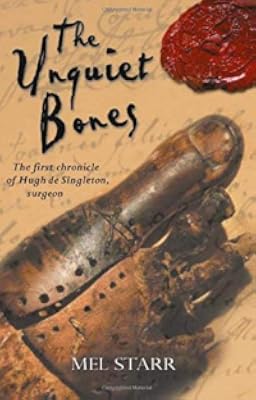
First in the medieval whodunnit series set in Bampton, Oxfordshire, during the plague years and featuring a newly qualified surgeon Hugh of Singleton, fourth son of a minor knight, has been educated as a clerk, usually a prelude to taking holy orders. However, feeling no certain calling despite a lively faith, he turns to the profession of surgeon, training in Paris and then hanging out his sign in Oxford. A local lord asks him to track the killer of a young woman whose bones have been found show more in the castle cesspit. She is identified as the impetuous missing daughter of a local blacksmith, and her young man, whom she had provoked very publicly, is in due course arrested and sentenced at the Oxford assizes. From there the tale unfolds, with graphic medical procedures, droll medieval wit, misdirection, ambition, romantic distractions, and a consistent underlying Christian compassion. show lessTags
Recommendations







Member Reviews
I wish I had read this novel before the 2nd (sadly it was not available for loan at the time). In my opinion it was far better than 'A Corpse at St Andrew's Chapel' which follows it.
For starters, it was interesting learning something about Hugh's life and background before he came to Bampton, and his motivation to become a surgeon. His initial struggles to find work and his place in the world seem in a way relatable.
As expected, Hugh is initially reluctant to investigate the matter of the bones found in the castle cesspit, and doubts his own ability yet he does turn up important leads in the process. Ultimately though, his following the seemingly obvious conclusion almost leads to tragic consequences, which knocks his confidence even show more further.
In this sense, Hugh's character is very human and endearing, he needs encouragement (as we all do) and is well aware of his own inadequacies.
The way in which faith is also woven into the story works well.
Hugh as stated before is a close friend of the theologian and scholar John Wycliffe, who questioned many of the core teachings of the Catholic Church. He is also very much out protaganist's mentor, who causes him not only question some of his choices and decisions, but sometimes helps to prod him in the right direction. Wycliffe is a fascinating figure historically, and his inclusion in these novels really adds to them as a way of exploring religious themes, and making the novels more appealing to non-Catholics, but also as an interesting character.
There were also plenty of interesting descriptions of surgery and medical procedures, which are another thing I enjoy about this series. Hugh's use of herbs almost harks back to Cadfael, and gives some fascinating insights into an often misunderstood profession. The investigatory process also gives some opportunity for presenting (and in some ways critiquing) the fourteenth century legal and justice system.
There is even a hint of romance as Hugh is rather enamored by his employer Lord Gilbert's sister, despite the differences in rank and station.
My only gripes were that Hugh seemed a little too sympathetic to those who turned out to be behind the crimes, which was in a sense understandable considering their circumstances, and the 'self-defence' account did not really seem entirely convincing. This said, Hugh did at least pursue the correct legal channels and the correct process was followed, but the guilty may still have got off a little too lightly.
Beside this, the description in a couple of places of the set of bones was a little unpleasant and off-putting.
Overall 'The Unquiet Bones' is a great first installment to the series which should be enjoyed by both fans of historical fiction and mystery stories, and those who enjoy clean reads. show less
For starters, it was interesting learning something about Hugh's life and background before he came to Bampton, and his motivation to become a surgeon. His initial struggles to find work and his place in the world seem in a way relatable.
As expected, Hugh is initially reluctant to investigate the matter of the bones found in the castle cesspit, and doubts his own ability yet he does turn up important leads in the process. Ultimately though, his following the seemingly obvious conclusion almost leads to tragic consequences, which knocks his confidence even show more further.
In this sense, Hugh's character is very human and endearing, he needs encouragement (as we all do) and is well aware of his own inadequacies.
The way in which faith is also woven into the story works well.
Hugh as stated before is a close friend of the theologian and scholar John Wycliffe, who questioned many of the core teachings of the Catholic Church. He is also very much out protaganist's mentor, who causes him not only question some of his choices and decisions, but sometimes helps to prod him in the right direction. Wycliffe is a fascinating figure historically, and his inclusion in these novels really adds to them as a way of exploring religious themes, and making the novels more appealing to non-Catholics, but also as an interesting character.
There were also plenty of interesting descriptions of surgery and medical procedures, which are another thing I enjoy about this series. Hugh's use of herbs almost harks back to Cadfael, and gives some fascinating insights into an often misunderstood profession. The investigatory process also gives some opportunity for presenting (and in some ways critiquing) the fourteenth century legal and justice system.
There is even a hint of romance as Hugh is rather enamored by his employer Lord Gilbert's sister, despite the differences in rank and station.
My only gripes were that Hugh seemed a little too sympathetic to those who turned out to be behind the crimes, which was in a sense understandable considering their circumstances, and the 'self-defence' account did not really seem entirely convincing. This said, Hugh did at least pursue the correct legal channels and the correct process was followed, but the guilty may still have got off a little too lightly.
Beside this, the description in a couple of places of the set of bones was a little unpleasant and off-putting.
Overall 'The Unquiet Bones' is a great first installment to the series which should be enjoyed by both fans of historical fiction and mystery stories, and those who enjoy clean reads. show less
Master Hugh is perhaps over-accomplished in the same way Dr Maturin is in O'Brian's novels of the Napoleonic Wars, considering both the state of medicine in his day and Hugh's relative inexperience shortly after his training in Paris. An example: his repeated use of wine to cleanse wounds and surgical sites, merely a rare and idiosyncratic practice or completely anachronistic? Admittedly, inwardly I cheered his success even as his inner monologue acknowledged his practise was conjectural. Such anhistorical instances as this are balanced with a continued attention to the impact of plague events, to the lot of women of various social positions (no inheritance, little prospect if male head of family dies or disowns), to the prospects of show more men not eldest born, to the considerations of weather and shelters typical of town and hamlet.
Starr weaves into the narrative examples of Christian belief and custom, at a cultural and social level rather than theological, another means for building up a sense of time and place.
As with many detective books, the premise allows for interaction and contrast between social classes, more frequently and broader than I suspect typical for most people of the time, as well as visiting various locations, in this case including traffic between the villages and the castle demesne, and villeins, burghers, and Duke's officers and household. The murders and their solution as reached by Hugh are true to the lifeways of the people involved, relying neither on contrived circumstances nor tortured logic. For that reason, they are as much a part of learning of mediaeval England as Starr's description of weather or living conditions.
Starr's narrative voice is an impressive achievement, unclear to me how anachronistic it might be though his background in mediaeval history and English is grounds for assuming he made a particular effort at accuracy. show less
Starr weaves into the narrative examples of Christian belief and custom, at a cultural and social level rather than theological, another means for building up a sense of time and place.
As with many detective books, the premise allows for interaction and contrast between social classes, more frequently and broader than I suspect typical for most people of the time, as well as visiting various locations, in this case including traffic between the villages and the castle demesne, and villeins, burghers, and Duke's officers and household. The murders and their solution as reached by Hugh are true to the lifeways of the people involved, relying neither on contrived circumstances nor tortured logic. For that reason, they are as much a part of learning of mediaeval England as Starr's description of weather or living conditions.
Starr's narrative voice is an impressive achievement, unclear to me how anachronistic it might be though his background in mediaeval history and English is grounds for assuming he made a particular effort at accuracy. show less
1363. Hugh of Singleton, as the fourth son of a minor knight, had been educated as a clerk but feels a calling to become a surgeon.
On setting himself up in Oxford chance brings him to the attention of Lord Gilbert, Third Baron Talbot, lord of Bampton Castle. He offers Hugh the chance to be a surgeon to the area, but soon he finds himself investigating a death when bones are found in the garderobe of the castle.
An enjoyable historical mystery, well-written and a cast of likeable characters. I look forward to reading the next in the series.
A very good solid start to the series.
On setting himself up in Oxford chance brings him to the attention of Lord Gilbert, Third Baron Talbot, lord of Bampton Castle. He offers Hugh the chance to be a surgeon to the area, but soon he finds himself investigating a death when bones are found in the garderobe of the castle.
An enjoyable historical mystery, well-written and a cast of likeable characters. I look forward to reading the next in the series.
A very good solid start to the series.
The Unquiet Bones is the first in a series of five books so far featuring Hugh de Singleton, Surgeon. After achieving his bachelor's degree, deciding not to take holy orders, surviving the plague and studying abroad in Paris, in 1363 we find Hugh de Singleton setting up his own surgeon's office in Oxford.
After impressing the Lord of Bampton Castle, Hugh is offered a permanent position as the only surgeon in town and is soon asked to inspect a set of human bones for cause of death. His keen observations that a murder has taken place sets the scene for a charming medieval murder mystery.
Author Mel Starr does a terrific job of making the reader feel like they're really in the 1360s, and the glossary at the beginning was marvellous. Despite show more being a fan of the genre (particularly the work of Paul Doherty) some of these terms were new to me and added to my overall reading experience. For example, I had no idea that a fewterer was the keeper of the Lord's kennel and hounds.
Here are two of my favourite quotes from the novel:
"It was not the first or last time I found that uncomfortable honesty was a tree which might bear agreeable fruit." Page 34
(Character talking about his own nose on Page 47: "To a masculine face, anyway. It seems to depart my brow properly, but then takes a right turn, as if my nostrils were trying to direct my attention to some event on the dexter side. It is inherited. My father viewed the world across a nose of similar size and bearing. My father was also bald." Page 47
All in all, I enjoyed the murder mystery second to details of the medical maladies Hugh saw to in the town of Bampton and the remedies he used. Personally, I would have preferred more focus on his surgical and medical skills and less on his investigation, however that's just me. show less
After impressing the Lord of Bampton Castle, Hugh is offered a permanent position as the only surgeon in town and is soon asked to inspect a set of human bones for cause of death. His keen observations that a murder has taken place sets the scene for a charming medieval murder mystery.
Author Mel Starr does a terrific job of making the reader feel like they're really in the 1360s, and the glossary at the beginning was marvellous. Despite show more being a fan of the genre (particularly the work of Paul Doherty) some of these terms were new to me and added to my overall reading experience. For example, I had no idea that a fewterer was the keeper of the Lord's kennel and hounds.
Here are two of my favourite quotes from the novel:
"It was not the first or last time I found that uncomfortable honesty was a tree which might bear agreeable fruit." Page 34
(Character talking about his own nose on Page 47: "To a masculine face, anyway. It seems to depart my brow properly, but then takes a right turn, as if my nostrils were trying to direct my attention to some event on the dexter side. It is inherited. My father viewed the world across a nose of similar size and bearing. My father was also bald." Page 47
All in all, I enjoyed the murder mystery second to details of the medical maladies Hugh saw to in the town of Bampton and the remedies he used. Personally, I would have preferred more focus on his surgical and medical skills and less on his investigation, however that's just me. show less
I loved the language and the sense of place in this, the first in a series featuring a medieval age surgeon in England. There is a very helpful glossary at the beginning to help one understand the many idioms used in the story. I had the the sense of being immersed in medieval times. The author was a history teacher for many years; his diligent research is obvious and makes the story seem completely authentic. The mystery itself was fair; it was learning the character of Hugh Singleton and following his thinking and interactions with other characters that made this such a good read. There is a wonderful female, Lady Joan, who though way above his station, is the object of his desire and perhaps returns his good regard. I'm glad I have show more the next in the series already waiting to be read. show less
This was an agreeable little mystery. I went with the author to fourteenth century Oxford and Bampton, visiting an England pretty well mapped in fiction by now. Still and all, Mr. Starr's characters made agreeable traveling companions, and his plot kept me interested.
A university trained surgeon goes to set up practice in a small English country village because he accidentally helps the Lord of said village when he suffers a minor injury in Oxford. A murder takes place, and Hugh de Singleton, newly minted surgeon, uses his knowledge and his wits to seek the killer of a local lightskirted lass. More murders occur, and the perpetrator is brought before the law; but Hugh, as Starr has made him, seems unsure if justice was done, or merely show more the law was served.
Religion looms large in this book, but quite appropriately so, since this is the time of the Catholic Church's greatest power. John Wyclif, he of the vernacular Bible and proto-Rreformation figure, was a mere irritation at that point, so the hegemony over spiritual matters and the temporal power of the Church weren't in serious question.
It's agreeably done, this mystery. I'm not sufficiently enamored to seek out others in the series. I don't like pseudo-archaic dialect much, but this isn't egregious. I'd simply prefer to spend my eyeblinks elsewhere in future. Read away, historical mystery fans, nothing here will jolt you. show less
A university trained surgeon goes to set up practice in a small English country village because he accidentally helps the Lord of said village when he suffers a minor injury in Oxford. A murder takes place, and Hugh de Singleton, newly minted surgeon, uses his knowledge and his wits to seek the killer of a local lightskirted lass. More murders occur, and the perpetrator is brought before the law; but Hugh, as Starr has made him, seems unsure if justice was done, or merely show more the law was served.
Religion looms large in this book, but quite appropriately so, since this is the time of the Catholic Church's greatest power. John Wyclif, he of the vernacular Bible and proto-Rreformation figure, was a mere irritation at that point, so the hegemony over spiritual matters and the temporal power of the Church weren't in serious question.
It's agreeably done, this mystery. I'm not sufficiently enamored to seek out others in the series. I don't like pseudo-archaic dialect much, but this isn't egregious. I'd simply prefer to spend my eyeblinks elsewhere in future. Read away, historical mystery fans, nothing here will jolt you. show less
To my sorrow I began reading Melvin R. Starr's books featuring the chronicles of Hugh de Singleton, Surgeon, about mid-series. After reading several in a row, I now have the opportunity to begin at the beginning and that is with The Unquiet Bones.
If you're not familiar with Starr's wonderful qualifications to write about this period of medieval life, check him out. (click here) And if you've not read any of his "Hugh de Singleton" adventures you have missed a treat. Set in a real historical site that contains remains of Church of St Beornwald near the castle of Bampton.
Cloaked in terminology and tone that take you back to the 1300s and yet entirely readable here in the 21st century, these stories easily bring you to the place of walking show more the paths and conversing with the Lords, villeins, and fair maidens of that time. In the opening of The Unquiet Bones the cesspit (oh my what a stinking horror to clean) is being cleaned out and bones are found. Thought to be pig bones (and why on Earth would pig bones be in a cesspit?) but on closer examination they are found to be human. This is where the surgeon, Hugh de Singleton, is called in to do some 1300s forensic science and identify the bones and cause of death.
As the story progresses, a high ranking man's fancy garment is found in the woods and covered in leaves. This leads to more investigation.
I have inadequate words of my own to express how enjoyable Starr's stories are. The droll expressions of Hugh de Singleton, the terse comments, and the wonderful flow of story and character development.
I highly recommend the series to anyone who wants a delightful romp in the 1300s with Hugh de Singleton, Surgeon.
DISCLOSURE: I received a complimentary copy from Kregel on behalf of Lion Fiction and the author. show less
If you're not familiar with Starr's wonderful qualifications to write about this period of medieval life, check him out. (click here) And if you've not read any of his "Hugh de Singleton" adventures you have missed a treat. Set in a real historical site that contains remains of Church of St Beornwald near the castle of Bampton.
Cloaked in terminology and tone that take you back to the 1300s and yet entirely readable here in the 21st century, these stories easily bring you to the place of walking show more the paths and conversing with the Lords, villeins, and fair maidens of that time. In the opening of The Unquiet Bones the cesspit (oh my what a stinking horror to clean) is being cleaned out and bones are found. Thought to be pig bones (and why on Earth would pig bones be in a cesspit?) but on closer examination they are found to be human. This is where the surgeon, Hugh de Singleton, is called in to do some 1300s forensic science and identify the bones and cause of death.
As the story progresses, a high ranking man's fancy garment is found in the woods and covered in leaves. This leads to more investigation.
I have inadequate words of my own to express how enjoyable Starr's stories are. The droll expressions of Hugh de Singleton, the terse comments, and the wonderful flow of story and character development.
I highly recommend the series to anyone who wants a delightful romp in the 1300s with Hugh de Singleton, Surgeon.
DISCLOSURE: I received a complimentary copy from Kregel on behalf of Lion Fiction and the author. show less
Members
- Recently Added By
Published Reviews
ThingScore 50
"...the story has a twist or two and I found myself rooting for the modest Hugh, especially in his aspiring to the beautiful Lady Joan who is way above his station. Billed as the 'first chronicle', there is obviously more to look forward to."
added by richardderus
Lists

Majkia's Mystery/ Thriller TBR
86 works; 3 members

Best Mysteries With a Historical Setting
292 works; 160 members
Author Information

17 Works 2,063 Members
Series

Common Knowledge
- Canonical title
- The Unquiet Bones
- Original publication date
- 2008-11-04
- People/Characters
- Hugh de Singleton; Lord Gilbert Talbot; Lady Petronilla Talbot; Joan Talbott; Wyclif, John, 1320-1384; Roger de Cottesford (show all 7); Alice atte Bridge
- Important places
- Oxford, Oxfordshire, England, UK; Bampton Castle
- Important events
- Reign of Edward III, King of England (1327-01-25 | 1377-06-21)
- Dedication
- For Susan
Proverbs 12:4a - First words
- Uctred thought he had discovered pig bones.
- Last words
- (Click to show. Warning: May contain spoilers.)A fine, healthy little lass, too, she is.
- Publisher's editor
- Collins, Tony; Greenough, Jan
- Blurbers
- Maier, Paul L.
- Original language
- English
Classifications
Statistics
- Members
- 572
- Popularity
- 51,625
- Reviews
- 38
- Rating
- (3.73)
- Languages
- Dutch, English, German, Portuguese
- Media
- Paper, Audiobook, Ebook
- ISBNs
- 15
- UPCs
- 1
- ASINs
- 9