On This Page
Description
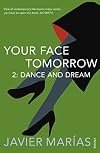
Your Face Tomorrow, Javier Marias's dazzling unfolding magnum opus, is a novel in three parts, which began with Volume One:Fever and Spear. Described as a "brilliant dark novel" (Scotland on Sunday), the book now takes a wild swerve in its new volume. Skillfully constructed around a central perplexing and mesmerizing scene in a nightclub,Volume Two: Dance and Dream again features Jacques Deza. In Volume One he was hired by MI6 as a person of extraordinarily sophisticated powers of show more perception. In Volume Two Deza discovers the dark side of his new employer when Tupra, his spy-master boss, brings out a sword and uses it in a way that appalls Deza: You can't just go around hurting and killing people like that. Why not? asks Tupra. Searching meditations on favors and jealousy, knowledge and the deep human desire not to know, violence and death play against memories of the Spanish Civil War as Deza's world becomes increasingly murky. show lessTags
Recommendations














































Member Reviews
The word that springs to mind when contemplating this book is torpid. From the blurb, I presumed that the narrator’s uncanny perceptiveness about people would be used for some sort of plot purpose. This did not turn out to be the case. I was perhaps halfway through when I realised that nothing was going to happen and digressive conversations were all that I should expect. This was rather a disappointment, but I persisted because Marías writes beautifully. Thus I continued to enjoy the configurations of words even when the content dragged somewhat. From time to time I was fascinated, especially during the discussions of the Spanish Civil War, however I remain a bit baffled at the novel’s reluctance to allow Deza (our narrator) to show more actually use his quasi-superpower. Or rather, to allow consequences to flow from his use thereof. There is a sort of self-consciousness to this, though, as at one point Deza reads his file and finds the comment, ‘The oddest thing is that he makes no use of his knowledge.’ That is odd! And it makes Deza a frustratingly elusive narrator.
Indeed, I did find this novel dragged on somewhat frustratingly. I’d previously read [b:All Souls|1655608|All Souls|Javier Marías|https://images.gr-assets.com/books/1330711132s/1655608.jpg|1650254], which I’m pretty sure is also from the perspective of Deza. In that, Marías used his formidable writing talents to satirise Oxford academic life and I greatly enjoyed it. ‘You Face Tomorrow: Fever and Spear’ reminded me less of [b:All Souls|1655608|All Souls|Javier Marías|https://images.gr-assets.com/books/1330711132s/1655608.jpg|1650254] and more of Sebald’s [b:Austerlitz|88442|Austerlitz|W.G. Sebald|https://images.gr-assets.com/books/1327920142s/88442.jpg|2193696] or [b:The Rings of Saturn|434903|The Rings of Saturn|W.G. Sebald|https://images.gr-assets.com/books/1386921954s/434903.jpg|17952027], with their winding diffusiveness. Yet Sebald grounds the reader in a sense of place, whereas Marías allows the narrative to float along in a series of conversations and anecdotes. It’s elegantly done and at times deeply profound, yet neither what I was expecting nor what I hoped for. Moreover, the book ended in the most abrupt, disconcerting manner, just as something threatened to occur. Is this intended to encourage the reader to pick up the sequel? I must say, I’m not really inclined to, as either it will either be more of the same, which I am content to do without, or will grow a plot and thus fit poorly with this first instalment. I wonder if this book was a thought experiment - what if someone was supernaturally good at reading people, but did not care in the least about what he found out? The answer is: he would spend a lot of time listening to old men ramble about their pasts. show less
Indeed, I did find this novel dragged on somewhat frustratingly. I’d previously read [b:All Souls|1655608|All Souls|Javier Marías|https://images.gr-assets.com/books/1330711132s/1655608.jpg|1650254], which I’m pretty sure is also from the perspective of Deza. In that, Marías used his formidable writing talents to satirise Oxford academic life and I greatly enjoyed it. ‘You Face Tomorrow: Fever and Spear’ reminded me less of [b:All Souls|1655608|All Souls|Javier Marías|https://images.gr-assets.com/books/1330711132s/1655608.jpg|1650254] and more of Sebald’s [b:Austerlitz|88442|Austerlitz|W.G. Sebald|https://images.gr-assets.com/books/1327920142s/88442.jpg|2193696] or [b:The Rings of Saturn|434903|The Rings of Saturn|W.G. Sebald|https://images.gr-assets.com/books/1386921954s/434903.jpg|17952027], with their winding diffusiveness. Yet Sebald grounds the reader in a sense of place, whereas Marías allows the narrative to float along in a series of conversations and anecdotes. It’s elegantly done and at times deeply profound, yet neither what I was expecting nor what I hoped for. Moreover, the book ended in the most abrupt, disconcerting manner, just as something threatened to occur. Is this intended to encourage the reader to pick up the sequel? I must say, I’m not really inclined to, as either it will either be more of the same, which I am content to do without, or will grow a plot and thus fit poorly with this first instalment. I wonder if this book was a thought experiment - what if someone was supernaturally good at reading people, but did not care in the least about what he found out? The answer is: he would spend a lot of time listening to old men ramble about their pasts. show less
The second part of what may well be the slowest-moving action thriller in modern literature describes the first few minutes of the conversation between the narrator and the lady who rang his doorbell at the end of part one (for the remainder we will have to wait for part three) and takes us through about twenty minutes of a night on the town with an Italian couple.
Of course, it's not really the foreground story that's important here, but the opportunity it gives the narrator to develop further his ideas about loyalty and betrayal, and to reflect on the meaning of violence and the different ways we respond to it, as perpetrators, victims, witnesses, or merely those who hear or see a report of it. Beautifully written and — apparently show more — seamlessly translated into English, but I certainly wouldn't advise anyone to read this without having first read part one. show less
Of course, it's not really the foreground story that's important here, but the opportunity it gives the narrator to develop further his ideas about loyalty and betrayal, and to reflect on the meaning of violence and the different ways we respond to it, as perpetrators, victims, witnesses, or merely those who hear or see a report of it. Beautifully written and — apparently show more — seamlessly translated into English, but I certainly wouldn't advise anyone to read this without having first read part one. show less
Javier María’s Your Face Tomorrow, Volume 2 is good but it doesn’t match the brilliance of Volume 1. Volume 1 might be a masterpiece. Our narrator Jaime Dezas, a Spanish expat who lives in London, does intelligence work, probably for the state but who really knows? We start with him talking (or thinking) about how terrible it is to be obligated to others. He starts with the example of a hypothetical beggar. Better not to give the beggar anything, he says, since once you do you’re tied to that person and his fate forever.
Coming right off the bat as it does, this statement strikes one as overly dramatic, if not lugubrious. But then we must remember back to Volume 1 that Jamie Dezas is suffering. His wife, Luisa, prior to the start show more of that volume, kindly asked Dezas to clear out of the Madrid house so that he wouldn't cramp her style as she road tests other men. Dezas obliges by moving to London. He goes too far, but that's because he's in such pain....
We have been raised, especially in the US, to believe in this old chestnut of rugged individualism. Think Walt Whitman's Leaves of Grass. From a distance all blades of grass seem the same, but on closer inspection we discover that each is entirely individuated, singular. Well, you can throw that mindset out the window with the intelligence unit for which Jaime Dezas works. They believe the world is reducible to types. It is a view that bases itself flagrantly on surfaces and does not bother to plumb the depths of people. Dezas sees the "whole group as devoted to fictions." He is alone in this view.
I took about six weeks off between Volumes 1 and 2 to read other things. Please don’t do that. It’s best to read all three volumes straight through. Your Face Tomorrow provides the kind of dense reading experience that I’ve only experienced with Faulkner, though Marías's prose is without the intense rhythmic drive of that southern US writer. María’s writerly gifts, if we can call them that, for he overuses them so much that they become mannerisms, are for digression and delay. He will go on and on delaying getting to the point, digressing digressing digressing ad infinitum or so it seems.
The entire book essentially consists of one night at a London disco where something untoward happens. Jaime and his boss, Bertrand Tupra, in his alias as Mr. Reresby, are hosting an Italian mafioso type and his wife. Dezas is asked to dance by the bored wife and they go onto the dance floor where he is accosted by an idiot countryman, one De la Garza, who is crude and libidinous though high ranking at the Spanish embassy. There is this interval on the dance floor when Tupra calls Jaime back to the table to translate something. What Jaime does next makes no sense but the action of the novel depends on it. Despite knowing the idiocy of this Spaniard he puts the mafioso’s wife in the man’s hands. Go figure? Isn’t he asking for trouble? He is. Is it purposeful? Good question. See Volume 3.
The pace at which the story moves here is reminiscent of late Henry James. This is not a compliment. Please, the reader exclaims (mentally) from time to time, do move this plot along. Most of the story plays out in the handicapped stall of the disco’s men’s room. A scene whose digressions goes on and on to mind-numbing length. I wondered if Marías here wasn’t gleefully dragging everything out to such positively excruciating lengths. I have this image of him sitting before the keyboard giggling and rubbing his hands together. So fed up did I become with the digressions that I began to skip them in order to get to the next plot point. This is something I never do. I am a disciplined reader, but it was either skip the weary digression or throw the book against the wall. I had no desire to skip the digressions in Volume 1. In Volume 1 the digressions were always interesting. They held you. Not so here.
In this second volume the reader is, as Martin Amis once said, stretched like a guitar string and made to twang. Yet one foolishly reads on. And nothing really happens! Everything that is threatened to happen is averted. The story is less important than the mental states of our very articulate narrator. He sees a lot. He sees it from all perspectives. His mind is a whirring circular saw tearing through great meaty chucks of -- perception. He builds up and deconstructs.
My final comment is about Marías's humorlessness. He could use some humor to lighten his prose. But he seems incapable of it. It might be that he sees humor in any form as working against the deep gravitas he seeks to project. This is one way he achieves his distinctive voice. For one thing I will say about him, he doesn't sound like anyone else I've ever read. Moreover, Marías has a downright Proustian gift for parenthesis.
In case you were wondering, I will try to read Volume 3. Let us hope it’s not as problematic as Volume 2.
Recommended with reservations. show less
Coming right off the bat as it does, this statement strikes one as overly dramatic, if not lugubrious. But then we must remember back to Volume 1 that Jamie Dezas is suffering. His wife, Luisa, prior to the start show more of that volume, kindly asked Dezas to clear out of the Madrid house so that he wouldn't cramp her style as she road tests other men. Dezas obliges by moving to London. He goes too far, but that's because he's in such pain....
We have been raised, especially in the US, to believe in this old chestnut of rugged individualism. Think Walt Whitman's Leaves of Grass. From a distance all blades of grass seem the same, but on closer inspection we discover that each is entirely individuated, singular. Well, you can throw that mindset out the window with the intelligence unit for which Jaime Dezas works. They believe the world is reducible to types. It is a view that bases itself flagrantly on surfaces and does not bother to plumb the depths of people. Dezas sees the "whole group as devoted to fictions." He is alone in this view.
I took about six weeks off between Volumes 1 and 2 to read other things. Please don’t do that. It’s best to read all three volumes straight through. Your Face Tomorrow provides the kind of dense reading experience that I’ve only experienced with Faulkner, though Marías's prose is without the intense rhythmic drive of that southern US writer. María’s writerly gifts, if we can call them that, for he overuses them so much that they become mannerisms, are for digression and delay. He will go on and on delaying getting to the point, digressing digressing digressing ad infinitum or so it seems.
The entire book essentially consists of one night at a London disco where something untoward happens. Jaime and his boss, Bertrand Tupra, in his alias as Mr. Reresby, are hosting an Italian mafioso type and his wife. Dezas is asked to dance by the bored wife and they go onto the dance floor where he is accosted by an idiot countryman, one De la Garza, who is crude and libidinous though high ranking at the Spanish embassy. There is this interval on the dance floor when Tupra calls Jaime back to the table to translate something. What Jaime does next makes no sense but the action of the novel depends on it. Despite knowing the idiocy of this Spaniard he puts the mafioso’s wife in the man’s hands. Go figure? Isn’t he asking for trouble? He is. Is it purposeful? Good question. See Volume 3.
The pace at which the story moves here is reminiscent of late Henry James. This is not a compliment. Please, the reader exclaims (mentally) from time to time, do move this plot along. Most of the story plays out in the handicapped stall of the disco’s men’s room. A scene whose digressions goes on and on to mind-numbing length. I wondered if Marías here wasn’t gleefully dragging everything out to such positively excruciating lengths. I have this image of him sitting before the keyboard giggling and rubbing his hands together. So fed up did I become with the digressions that I began to skip them in order to get to the next plot point. This is something I never do. I am a disciplined reader, but it was either skip the weary digression or throw the book against the wall. I had no desire to skip the digressions in Volume 1. In Volume 1 the digressions were always interesting. They held you. Not so here.
In this second volume the reader is, as Martin Amis once said, stretched like a guitar string and made to twang. Yet one foolishly reads on. And nothing really happens! Everything that is threatened to happen is averted. The story is less important than the mental states of our very articulate narrator. He sees a lot. He sees it from all perspectives. His mind is a whirring circular saw tearing through great meaty chucks of -- perception. He builds up and deconstructs.
My final comment is about Marías's humorlessness. He could use some humor to lighten his prose. But he seems incapable of it. It might be that he sees humor in any form as working against the deep gravitas he seeks to project. This is one way he achieves his distinctive voice. For one thing I will say about him, he doesn't sound like anyone else I've ever read. Moreover, Marías has a downright Proustian gift for parenthesis.
In case you were wondering, I will try to read Volume 3. Let us hope it’s not as problematic as Volume 2.
Recommended with reservations. show less
Extensive (even by Your Face Tomorrow standards) brooding upon and leering at women's thighs dampened my enjoyment after the excellent first volume, and it's hard to say whether the objectification is intentional characterization of Deza or authorial shittiness, since the women in these books rarely get the opportunity to share anything of substance. Still, I appreciated Marias's careful, minute examinations of violence, loneliness, and the awfulness of De la Garza's hairnet.
Aunque Marías escribe como Dios, me parece que narrativamente se le ha ido un poco la mano. Mucho caldo para tan poca chicha. Se me hace un poco pesado, la verdad. Seguimos con el tercero.
"Why not," Tupra responds? So ends the middle volume in this bizarre tale where espionage plays background to a world of memory and time. The setting is contemporary yet the Spanish Civil War assaults the nose. There is an acrid memory and flexible loyalties to ponder. The protagonist is separated from his spouse but her attentions are sought at every turn. Deza, the protagonist, exists in an eternal dislocation: from his domestic life, his country, language and even his memories, especially those of his father.
Habits are the object of attention here, no surprise given the vigilant surveillance employed by the characters. As others have noted, this is hardly an independent novel, not a typical trilogy. rather, this is a single novel show more published in three volumes. I created my own obstacle around the midpoint. My wife and I viewed The Story of Film http://www.imdb.com/title/tt2044056/?ref_=sr_5 a 15 hour voyage, which illuminates the appeal of the flickering screen -- editing, lighting and an adjustment of time and space. This viewing certainly informed my reading and completion of this volume. I'm afraid I don't have a ready answer for Tupra; we shall see. show less
Habits are the object of attention here, no surprise given the vigilant surveillance employed by the characters. As others have noted, this is hardly an independent novel, not a typical trilogy. rather, this is a single novel show more published in three volumes. I created my own obstacle around the midpoint. My wife and I viewed The Story of Film http://www.imdb.com/title/tt2044056/?ref_=sr_5 a 15 hour voyage, which illuminates the appeal of the flickering screen -- editing, lighting and an adjustment of time and space. This viewing certainly informed my reading and completion of this volume. I'm afraid I don't have a ready answer for Tupra; we shall see. show less
Writing a review for this book is pretty silly; it really is the middle of a novel. You get the thrill neither of a beginning, nor of an ending; there's no cliffhanger as there was at the end of Fever and Spear. You can't read this without having read the first volume.
That said, it retains all the strengths of that first volume: intelligent, funny, witty, affecting, and beautifully translated. The drawbacks here: the character this volume focuses on - Tupra, in the main - isn't as much fun as the Oxford dons that the first volume featured; and the thinking here is a little less original. Whereas the first volume seemed to be more of a critique of pomo nonsense, this volume sometimes indulges in it.
That said, it retains all the strengths of that first volume: intelligent, funny, witty, affecting, and beautifully translated. The drawbacks here: the character this volume focuses on - Tupra, in the main - isn't as much fun as the Oxford dons that the first volume featured; and the thinking here is a little less original. Whereas the first volume seemed to be more of a critique of pomo nonsense, this volume sometimes indulges in it.
Members
- Recently Added By
Published Reviews
ThingScore 100
As accomplished and sui generis as all his mature work.
added by Shortride
Lists

Five star books
1,755 works; 108 members

España en cien libros
100 works; 1 member
Author Information

153+ Works 13,201 Members
Javier Marias, a literary phenomenon worldwide, is still in the process of being discovered in America. Among his awards are the Premio Ciudad de Barcelona, The Spanish Critics' Award, the Prix L'Oeil et la Lettre, the Premio Mondello, the Premio Internacional de Novela Romulo Gallegos, the Prix Femina Etranger, the Nelly-Sachs Prize, and the show more Dublin International IMPAC Award. He is also King Xavier I of Redonda. show less
Some Editions
Awards and Honors
Awards
Notable Lists
Series

Work Relationships
Is contained in
Common Knowledge
- Canonical title
- Your Face Tomorrow, Volume 2: Dance and Dream
- Original title
- Tu Rostro Mañana: Baile y Sueño
- Original publication date
- 2002; 2004
- People/Characters
- Jacques Deza; Luisa Deza; Bertram Tupra; Sir Peter Wheeler; Flavia Manoia; Rafita de la Garza (show all 8); Comendador; Incompara
- Important places
- Madrid, Spanje; London, England, UK
- Dedication
- Für Carmen López M., die mir hoffentlich weiter zuören will
And for Sir Peter Russell, to whom this book is indebted for his long shadow, and the author, for his far-reaching friendship - First words
- Man sollte niemals etwas erzählen noch Angaben machen oder Geschichten beisteuern oder Anlass dazu geben, dass die Leute sich an Menschen erinnern, die niemals existiert, die niemals ihren Fuß auf die Erde gesetzt oder die ... (show all)Welt durchschritten haben oder wohl gewesen sind, aber sich bereits halbwegs in Sicherheit befanden im unvollkommenen, ungewissen Vergessen.
- Quotations
- Erzählen ist fast immer ein Geschenk, sogar wenn die Erzählung Gift enthält und einträufelt, es ist auch ein Band und ein Vertrauensbeweis, und selten ist das Vertrauen, das nicht früher oder später verraten wird, selte... (show all)n das Band, das sich nicht verwickelt oder verknotet, und so drückt es am Ende, und man man muss das Messer oder die Schneide ziehen, um es zu durchtrennen.
[...] es scheint unausweichlich zu sein, dass man das, was man weiß oder gesehen hat, am Ende gegen den geliebten Menschen oder Ehepartner benutzt [...]
Die Leute gehen hin und erzählen unweigerlich, sie erzählen alles früher oder später, das Interessante und das Flüchtige, das Private und das Öffentliche, das Intime und das Überflüssige, das, was verborgen bleiben so... (show all)llte, und das, was verbreitet werden soll, den Schmerz und die Freuden und das Ressentiment, die Beleidigungen und die Anbetung und die Rachepläne, das, was uns mit Stolz, und das, was uns mit Scham erfüllt, das, was ein Geheimnis zu sein schien, und das, was es sein wollte, das allseits Bekannte und das Uneingestehbare, das Entsetzliche und das Offenkundige, das Wesentliche - die Verliebtheit - und das Bedeutungslose - die Verliebtheit.
[...] im Leben, das sehr viel enger mit dem Kino und der Literatur verknüpft ist als man gemeinhin zugibt und glaubt. Das heißt nicht, dass das eine das andere oder das andere das eine nachahmt, wie behauptet wird, sondern ... (show all)dass unsere zahllosen Einbildungen ebenfalls zum Leben gehören und dazu beitragen, es zu erweitern und zu komplizieren und es trüber und zugleich annehmbarer zu machen, wenn auch nicht erklärbarer (oder doch, sehr selten). Sie ist sehr dünn, die Linie, die die Tatsachen von den Einbildungen trennt und die Wünsche von ihrer Erfüllung und das Fiktive vom Geschehenen, denn in Wirklichkeit sind die Einbildungen schon Tatsache und die Wünsche ihre Erfüllung [...] - Last words
- (Click to show. Warning: May contain spoilers.)Denn ich erkannte in der Tat ihre Stimme und machte ihr von oben die Tür auf, ohne mich zu fragen, warum sie mich in der Nacht zu Hause aufsuchte und heraufkam, um mit mir zu sprechen.
- Original language
- Spanish
- Disambiguation notice
- This is only volume 2 of Your Face Tomorrow.
Classifications
- Genres
- Fiction and Literature, General Fiction
- DDC/MDS
- 863.64 — Literature & rhetoric Spanish, Portuguese, Galician literatures Spanish fiction 20th Century 1945-2000
- LCC
- PQ6663 .A7218 .T8313 — Language and Literature French, Italian, Spanish and Portuguese literatures Spanish literature Individual authors, 1961-2000
- BISAC
Statistics
- Members
- 610
- Popularity
- 47,521
- Reviews
- 19
- Rating
- (4.11)
- Languages
- 9 — Dutch, English, French, German, Italian, Polish, Portuguese, Spanish, Turkish
- Media
- Paper, Ebook
- ISBNs
- 22
- ASINs
- 6