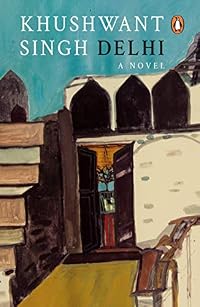
Delhi
by Khushwant Singh
On This Page
Description
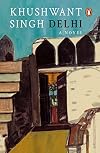
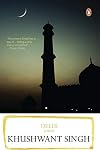
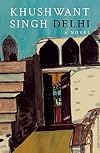
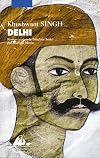
'I return to Delhi as I return to my mistress Bhagmati when I have had my fill of whoring in foreign lands...' Thus begins Khushwant Singh's vast, erotic, irrelevant magnum opus on the city of Delhi. The principal narrator of the saga, which extends over six hundred years, is a bawdy, ageing reprobate who loves Delhi as much as he does the hijda whore Bhagmati—half man, half woman with sexual inventiveness and energy of both the sexes. Travelling through time, space and history to show more 'discover' his beloved city, the narrator meets a myriad of people—poets and princes, saints and sultans, temptresses and traitors, emperors and eunuchs—who have shaped and endowed Delhi with its very special mystique... And as we accompany the narrator on his epic journey we find the city of emperors transformed and immortalized in our minds for ever.. show less
Tags
Recommendations




Member Reviews
I read this as a book in praise of mixing, muddling and hybridity, and against dogmatism. Fittingly, then, it was a very hard book to pin down. Every time I thought I had a handle on it, it would shoot off in a new direction.
So what actually happens? The book starts with a passage where Singh extols the virtues of Delhi, under an unappealing exterior:
"I return to Delhi as I return to my mistress Baghmati when I have had my fill of whoring in foreign lands. Delhi and Baghmati have a lot in common. Having long been misused by rough people they have learnt to conceal their seductive charms under a mask of repulsive ugliness ... What you have to do for things to appear different is to cultivate a sense of belonging to Delhi ... Then the show more skies over Delhi's marbled palaces turn an aquamarine blue ... I make Delhi and Baghmati sound very mysterious. The truth is that I am somewhat confused in my thoughts ... In these pages I will explain the strange paradox of my life-long, love-hate affair with the city and the woman. It may read like A Fucking Man's Guide To Delhi: Past & Present but that is not what I mean it to be."
The format is that the narrator alternates tales of his life in Delhi with episodes in Delhi's history, told by eyewitnesses. Initially the structure is fairly clear - the narrator squires some woman around Delhi, has sex with her at or near some famous monument, and then segues into the story of someone associated with the building of that monument. But it begins to decay: the narrator ages, and spends more time worrying about not having sex; and the historical episodes are less clearly linked to the events in his life.
The episodes in Delhi's history seem to focus on intolerance and massacre, with a very few stories that undermine that trend. There are a lot of self-justifying accounts by rulers, and a few stories from underlings who are buffeted by (or manage to take advantage of) forces much greater than them.
I had two problems with this book. The first is that the historical episodes take a lot of previous knowledge for granted - I found many of them quite hard to follow, especially the ones told by the rulers. The second is that I couldn't figure out the purpose in focusing all the stories of Delhi's history (and present) on such violence and hostility. I guess if I'd found it an easier book to read, I wouldn't have dwelt on this, but as it was I spent quite a lot of time wondering where it was going. The answer, as it turned out, was pretty bleak. I suppose it could have been (as quoted above) about the paradox of his love for Delhi, but for me there wasn't really anything that could explain the love, as well as the hate. show less
So what actually happens? The book starts with a passage where Singh extols the virtues of Delhi, under an unappealing exterior:
"I return to Delhi as I return to my mistress Baghmati when I have had my fill of whoring in foreign lands. Delhi and Baghmati have a lot in common. Having long been misused by rough people they have learnt to conceal their seductive charms under a mask of repulsive ugliness ... What you have to do for things to appear different is to cultivate a sense of belonging to Delhi ... Then the show more skies over Delhi's marbled palaces turn an aquamarine blue ... I make Delhi and Baghmati sound very mysterious. The truth is that I am somewhat confused in my thoughts ... In these pages I will explain the strange paradox of my life-long, love-hate affair with the city and the woman. It may read like A Fucking Man's Guide To Delhi: Past & Present but that is not what I mean it to be."
The format is that the narrator alternates tales of his life in Delhi with episodes in Delhi's history, told by eyewitnesses. Initially the structure is fairly clear - the narrator squires some woman around Delhi, has sex with her at or near some famous monument, and then segues into the story of someone associated with the building of that monument. But it begins to decay: the narrator ages, and spends more time worrying about not having sex; and the historical episodes are less clearly linked to the events in his life.
The episodes in Delhi's history seem to focus on intolerance and massacre, with a very few stories that undermine that trend. There are a lot of self-justifying accounts by rulers, and a few stories from underlings who are buffeted by (or manage to take advantage of) forces much greater than them.
I had two problems with this book. The first is that the historical episodes take a lot of previous knowledge for granted - I found many of them quite hard to follow, especially the ones told by the rulers. The second is that I couldn't figure out the purpose in focusing all the stories of Delhi's history (and present) on such violence and hostility. I guess if I'd found it an easier book to read, I wouldn't have dwelt on this, but as it was I spent quite a lot of time wondering where it was going. The answer, as it turned out, was pretty bleak. I suppose it could have been (as quoted above) about the paradox of his love for Delhi, but for me there wasn't really anything that could explain the love, as well as the hate. show less
The city of Delhi has had a rich, albeit violent, history and Khushwant Singh recounts it with his trademark wit and bawdiness in the form of fiction. Narrated by an ageing historian broadly resembling the author himself, this novel has many interludes from various points in history, starting from the thirteenth century to the twentieth. These historical pieces are voiced by people of varying stature, from emperors to poets to common folk. Filled with unimaginable amount of violence, these episodes have been presented from unconventional points of view, leaving the reader to judge the right and the wrong of it all. What makes it an engaging read is the author's skill in adapting his prose to give a unique voice to each of his narrators show more befitting their station.
The only complaint I have about this otherwise fine book is about the profusion of sexual content and some cringe-worthy passages, which could easily have been edited out. But, Khushwant Singh is Khushwant Singh, and his novel is his, and I liked it for the most part. show less
The only complaint I have about this otherwise fine book is about the profusion of sexual content and some cringe-worthy passages, which could easily have been edited out. But, Khushwant Singh is Khushwant Singh, and his novel is his, and I liked it for the most part. show less
Ratings
Members
- Recently Added By
Author Information

170+ Works 3,212 Members
Khushwant Singh was born on February 2, 1915 in the village of Hadali in what is now the Punjab province of Pakistan. He attended St. Stephen's College in Delhi, Government College in Lahore, and King's College London. In 1947, he worked for India's ministry of external affairs and served as press officer in Ottawa and London. From 1980 to 1986, show more he was a member of the upper house of the Indian parliament. He was an author and journalist. His newspaper column, With Malice Towards One and All, was syndicated all over India. During his lifetime, he wrote more than 100 novels and short-story collections including Train to Pakistan, I Shall Not Hear the Nightingale, Delhi: A Novel, The Company of Women, and The Sunset Club. He also wrote a two-volume History of the Sikhs, an autobiography entitled Truth, Love and a Little Malice, and a book of biographical profiles entitled The Good, the Bad and the Ridiculous. He died on March 20, 2014 at the age of 99. (Bowker Author Biography) show less
Awards and Honors
Notable Lists
Common Knowledge
- Canonical title
- Delhi
- Important places
- Delhi, India
Classifications
Statistics
- Members
- 211
- Popularity
- 154,253
- Reviews
- 2
- Rating
- (3.63)
- Languages
- 6 — English, French, German, Hindi, Italian, Panjabi
- Media
- Paper, Ebook
- ISBNs
- 12
- ASINs
- 4