On This Page
Description
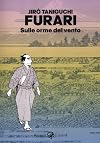
"Jiro Taniguchi returns with this delightful and insightful tale of life in a Japan long forgotten. Inspired by an historical figure, Tadataka Ino (1745 - 1818), Taniguchi invites us to join this unnamed but appealing and picturesque figure as he strolls through the various districts of Edo, the ancient Tokyo, with its thousand little pleasures. Now retired from business he surveys, measures, draws and takes notes whilst giving free reign to his taste for simple poetry and his inexhaustible show more capacity for wonder. As he did with the lead character in The times of Botchan, the writer Soseki, Taniguchi slips easily into the heart and mind of this early cartographer and reveals his world to us in full graphic detail so we may fully perceive and understand."--Provided by publisher. show lessTags
Recommendations





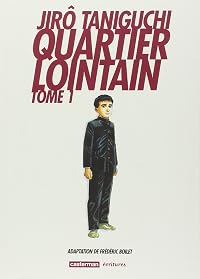
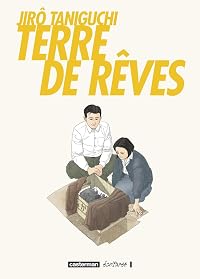







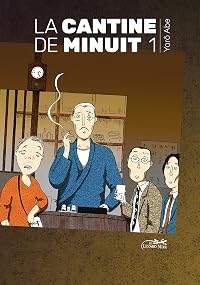
























Member Recommendations
Member Reviews
I Go Out Walkin'
Review of the Ponent Mon hardcover edition (June 2017) translated by Kumar Sivasubramanian from the Japanese language original ふらり (April 2011)
I was previously only familiar with the late works of Japanese manga artist Jiro Taniguchi (1947-2017) through his commissioned views of Venice and Guardians of the Louvre. Those oversized and fully colorized editions have perhaps spoiled me somewhat for the earlier, smaller & non-colorized books such as Furari.
Furari is a historical fiction based on the life of Japanese cartographer Inō Tadataka (1745-1818) who was the first person to map Japan with modern surveying techniques. Through 16 beautifully structured chapters, often inspired by nature in the form of insects, show more fish, animals and birds, we see Inō gradually gaining inspiration for his massive mapping project under the supportive loving eye of his wife Eï. This is a gradual process which evolves from his retirement habit of counting his paces while walking and exploring his city. The panels sometimes take on a fantastical element as Inō transmogrifies into a bird flying over the land below or an insect walking through a huge jungle of grass. Those latter sections were among my favourites.
It was therefore somewhat disappointing that the book is printed in a rather small size format and is non-colorized for the most part. There is a 4-page teaser section which is colorized, as if to say "look how beautiful this book would be if we coloured it all in?". I'll confess to relying on a magnifying glass many times in order to better appreciate the care and attention that Taniguchi took on these drawings. That is my only reservation in keeping this from a 5 rating which it really otherwise deserves.
See cover at https://cv.bkmkn.kodansha.co.jp/9784063729962/9784063729962_w.jpg
Cover of the Japanese language original. Image sourced from Kodansha Comics Plus.
Trivia and Links
Read a superb review of Furari by Ilse (Belgium) on Goodreads here.
See image at https://i2.wp.com/www.maproomblog.com/xq/wp-content/uploads/2020/02/ino-tadataka...
A section of Inō Tadataka’s map of Japan showing Mount Fuji and surrounding areas at 1:36,000 scale. Image sourced from Mapping a Nation: Japan's Most Famous Cartographer. show less
Review of the Ponent Mon hardcover edition (June 2017) translated by Kumar Sivasubramanian from the Japanese language original ふらり (April 2011)
I was previously only familiar with the late works of Japanese manga artist Jiro Taniguchi (1947-2017) through his commissioned views of Venice and Guardians of the Louvre. Those oversized and fully colorized editions have perhaps spoiled me somewhat for the earlier, smaller & non-colorized books such as Furari.
Furari is a historical fiction based on the life of Japanese cartographer Inō Tadataka (1745-1818) who was the first person to map Japan with modern surveying techniques. Through 16 beautifully structured chapters, often inspired by nature in the form of insects, show more fish, animals and birds, we see Inō gradually gaining inspiration for his massive mapping project under the supportive loving eye of his wife Eï. This is a gradual process which evolves from his retirement habit of counting his paces while walking and exploring his city. The panels sometimes take on a fantastical element as Inō transmogrifies into a bird flying over the land below or an insect walking through a huge jungle of grass. Those latter sections were among my favourites.
It was therefore somewhat disappointing that the book is printed in a rather small size format and is non-colorized for the most part. There is a 4-page teaser section which is colorized, as if to say "look how beautiful this book would be if we coloured it all in?". I'll confess to relying on a magnifying glass many times in order to better appreciate the care and attention that Taniguchi took on these drawings. That is my only reservation in keeping this from a 5 rating which it really otherwise deserves.
See cover at https://cv.bkmkn.kodansha.co.jp/9784063729962/9784063729962_w.jpg
Cover of the Japanese language original. Image sourced from Kodansha Comics Plus.
Trivia and Links
Read a superb review of Furari by Ilse (Belgium) on Goodreads here.
See image at https://i2.wp.com/www.maproomblog.com/xq/wp-content/uploads/2020/02/ino-tadataka...
A section of Inō Tadataka’s map of Japan showing Mount Fuji and surrounding areas at 1:36,000 scale. Image sourced from Mapping a Nation: Japan's Most Famous Cartographer. show less
Qui Taniguchi ripensa alla sua città natale (Tottori, interessata da un terribile incendio nel dopoguerra), alla sua infanzia e al suo distacco dalla famiglia, costruendo una storia toccante in cui esacerba il senso di colpa per l’incomprensione fra figlio e padre seguente all’abbandono da parte della madre. Come sempre, introspettivo e toccante.
Quando penso al mio
paese natio... un'immagine appare
vivida nella mia mente.
Un primo pomeriggio di primavera,
io, ancora bambino, sto giocando
seduto sul pavimento del negozio da
barbiere di mio padre.
Lo ricordo come un momento felice
della mia infanzia.
La cantina buia...
ricordo le parole dello zio.
Il sake' vive...
bisogna curarlo sempre.
Bisogna conoscere bene il carattere del lievito e il barile.
Se gli parli col cuore loro rispondono e il sake' diventa un buon sake. (236)
paese natio... un'immagine appare
vivida nella mia mente.
Un primo pomeriggio di primavera,
io, ancora bambino, sto giocando
seduto sul pavimento del negozio da
barbiere di mio padre.
Lo ricordo come un momento felice
della mia infanzia.
La cantina buia...
ricordo le parole dello zio.
Il sake' vive...
bisogna curarlo sempre.
Bisogna conoscere bene il carattere del lievito e il barile.
Se gli parli col cuore loro rispondono e il sake' diventa un buon sake. (236)
Un altro "uomo che cammina" per Taniguchi. Stavolta la vicenda è ispirata alla figura del cartografo giapponese Tadataka Inō e dunque ambientata nel XVIII secolo. Camminare come pratica dell'aprirsi al mondo: evidente che questa lezione (menzionata anche testualmente in chiusura di opera) è uno dei punti chiave del pensiero di Taniguchi.
Amo las obras de Taniguchi, pero Furari me ha parecido aburrido en algunos puntos
Mi chiedo se non sia finalmente arrivato il momento in cui e' necessario fermarsi per osservare bene cio' che ci circonda, camminare e' il movimento piu' importante per l'essere umano. Siamo liberi di decidere il ritmo dei nostri passi, e di percepire tutto cio' che vediamo nella sua piu' intima verita'. (back cover)
Un passo su una foglia di farfaraccio
Versi di rane. (p. 68)
Attendere... Osservare...
Va' con la schiena dritta
Continua a camminare
Corri come un filo d'erba! (p. 102)
La luna piena
Prendimela subito!
Piange il bambino. (p. 164)
Sulla montagna si fa largo tra le foglie il bramito di un cervo:
malinconia d'autunno. (p. 182)
Per caso sei diventato una formica?
Eh!
Si'. Per un attimo...
Chissa' chi le ha chiamate cosi'.
Il loro show more ideogramma e' composto dai caratteri "insetto" e "fedelta'".
Fedelta', o meglio "perseveranza" ...
Siamo simili... passo dopo passo... continuiamo a camminare, senza mai fermarci. (p. 193) show less
Un passo su una foglia di farfaraccio
Versi di rane. (p. 68)
Attendere... Osservare...
Va' con la schiena dritta
Continua a camminare
Corri come un filo d'erba! (p. 102)
La luna piena
Prendimela subito!
Piange il bambino. (p. 164)
Sulla montagna si fa largo tra le foglie il bramito di un cervo:
malinconia d'autunno. (p. 182)
Per caso sei diventato una formica?
Eh!
Si'. Per un attimo...
Chissa' chi le ha chiamate cosi'.
Il loro show more ideogramma e' composto dai caratteri "insetto" e "fedelta'".
Fedelta', o meglio "perseveranza" ...
Siamo simili... passo dopo passo... continuiamo a camminare, senza mai fermarci. (p. 193) show less
Excellent.
Members
- Recently Added By
Lists

Recommended Comics / Graphic Novels
595 works; 120 members
Author Information

131+ Works 4,756 Members
Jiro Taniguchi was born in Tottori, Japan on August 14, 1947. The manga artist had his first cartoon published in 1970. His works included The Times of Botchan, A Distant Neighbourhood, and The Walking Man. In 2011, the French government awarded him the Knight of the Order of Arts and Letters. He died on February 11, 2017 at the age of 69. (Bowker show more Author Biography) show less
Awards and Honors
Series

Belongs to Publisher Series
Work Relationships
Has the adaptation
Common Knowledge
- Canonical title
- My Father's Journal; Furari
- Original title
- Chichi no Koyomi; ふらり
- Original publication date
- 1995; 2011
- Important places
- Edo, Japan (ancient Tokyo)
- First words*
- Cuando pienso en mi pueblo siempre me viene a la mente la misma escena.
- Last words*
- (Click to show. Warning: May contain spoilers.)Ahora pienso que... no es uno el que vuelve al pueblo, es el pueblo el que un dia vuelve al corazón de uno.
- Original language
- Japanese
*Some information comes from Common Knowledge in other languages. Click "Edit" for more information.
Classifications
Statistics
- Members
- 347
- Popularity
- 90,818
- Reviews
- 14
- Rating
- (4.13)
- Languages
- 9 — Danish, Dutch, English, French, German, Italian, Japanese, Portuguese, Spanish
- Media
- Paper
- ISBNs
- 27
- ASINs
- 1