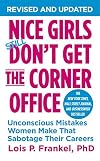
Nice Girls Don't Get the Corner Office: 101 Unconscious Mistakes Women Make that Sabotage Their Careers
by Lois P. Frankel
On This Page
Description
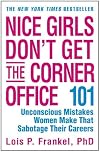
BEFORE YOU WERE TOLD TO "LEAN IN," DR. LOIS FRANKEL TOLD YOU HOW TO GET THAT CORNER OFFICE The New York Times bestseller, which for 10 years has been a must-have for women in business, is now completely revised and updated. In this new edition, internationally recognized executive coach Lois P. Frankel reveals a distinctive set of behaviors-over 130 in all-that women learn in girlhood that ultimately sabotage them as adults. She teaches you how to eliminate these unconscious mistakes that show more could be holding you back and offers invaluable coaching tips that can easily be incorporated into your social and business skills. The results for hundreds of thousands of women have been career opportunities they never thought possible-at every stage of their career, from entry-level to the corner office! Stop making "nice girl" errors that can become career pitfalls, such as: Mistake #13: Avoiding office politics. If you don't play the game, you can't possibly win. Mistake #21: Multi-tasking. Just because you can do something, doesn't mean you should do it. Mistake #54: Failure to negotiate. Don't equate negotiation with confrontation. Mistake #70: Inappropriate use of social media. Once it's out there, it's hard to put the toothpaste back in the tube. Mistake #82: Asking permission. Children, not adults, ask for approval. Be direct, be confident. show lessTags
Recommendations


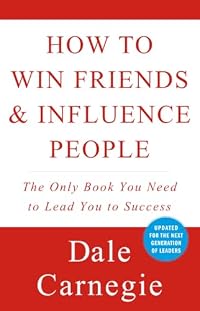
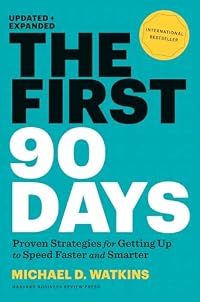
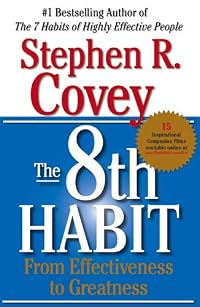
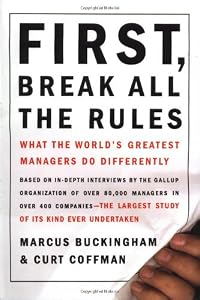








Member Recommendations
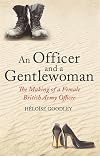
RuthieD A positive inspiring book by a woman who worked in the City and then trained as an officer in Sandhurst.
Its about career change, finding your strengths accepting your weaknesses and about working and living in a male dominated environment.
Member Reviews
I was about to pass this book up because the title didn't catch my attention. As I looked at the back cover,I thought to myself, "I do plenty of things to further my career, I don't need to look at this book!" Now that I've finished reading the book, I am so glad I gave this book a chance.It helped me to see how women, myself included, act in certain ways which ultimately prevents us from furthering their career or obtaining their career goals. Frankel starts in chapter one by noting that although this book lists 101 mistakes that women make in reference to their career,all women will not make all the mistakes listed in the book. After stating this fact, Frankel then presents a self-assessment chart for the reader to fill out to show more determine where she needs the most work to change her female behavior. Since each part of the assessment focuses on a particular weakness,each chapter following the assessment focuses on how women play the game, act, think, market,sound,look and respond. When using describing female behavior, Frankel means the behavior that girls have been taught through society as well as in their own childhoods.She feels that women have been taught to be less outspoken, to be nurturers and providers, and to cater to their male co-workers. For example, I will admit that at my job, I sometimes do the work that is assigned to others. This is because I feel if I don't do it, it won't get done; Frankel label this behavior as mistake #4: Doing the work of Others.According to the book, I can resolve this problem by only doing what I am assigned to do and if I feel guilty for saying no to others,use self-talk to replace feeling guilty. What I like most about the book is that she provides the mistake on one page and then on the opposite page, she provides coaching tips. Since she works as an executive coach, she provides lots of tips. She also provides real like experience that she had with clients in reference to each mistake and discusses the problem that each women faced as well as how with her help, they were able to come up with a solution. Overall, I feel that this is a great book for any women whether she is woman at a Fortune 500 company or at Burger King. If we as women are to be more active in the business women, we need to learn rules so we know how to play the game. Also, we need to realize that although our past behavior worked for us at one time, in order to fully obtain our career goals, we need to learn to not cater to other but instead, we need to focus on the the highest level of success possible. show less
Here's the thing about this book. It has a lot of great tips—for both men and women—on how to behave in the workplace. I disagreed with a couple of them, but this book is generally quite useful.
But I didn't like the "nice girls" theme. Maybe I was just lucky as a kid, but I was not raised to be a "nice girl." I wasn't taught to be quiet, to avoid being too aggressive, or to be considerate to others at my own expense. The only "you're a girl and this is the way things are" instruction I got was that fun female anatomy stuff. Sure, I have some nice-girl qualities—a lot more than I thought I did before reading this book—but those are personality facets, not learned behaviors. It irritated me that Frankel repeatedly lumps all women show more into the nice-girl category. Probably because I haven't overcome all of my tomboyishness yet, and I still recoil sometimes when I'm associated with anything typically girly. (And I kind of feel like Frankel is discouraging this aim I've had since I started working to embrace being a woman rather than disassociating myself from all girly tendencies, because apparently, to succeed in today's business world, you have to do it by exhibiting manly qualities.)
There's another reason I don't think I was quite the right audience for this book, but I'd be breaking a couple of Frankel's guidelines if I talked about them here. See, I learned stuff from this book. show less
But I didn't like the "nice girls" theme. Maybe I was just lucky as a kid, but I was not raised to be a "nice girl." I wasn't taught to be quiet, to avoid being too aggressive, or to be considerate to others at my own expense. The only "you're a girl and this is the way things are" instruction I got was that fun female anatomy stuff. Sure, I have some nice-girl qualities—a lot more than I thought I did before reading this book—but those are personality facets, not learned behaviors. It irritated me that Frankel repeatedly lumps all women show more into the nice-girl category. Probably because I haven't overcome all of my tomboyishness yet, and I still recoil sometimes when I'm associated with anything typically girly. (And I kind of feel like Frankel is discouraging this aim I've had since I started working to embrace being a woman rather than disassociating myself from all girly tendencies, because apparently, to succeed in today's business world, you have to do it by exhibiting manly qualities.)
There's another reason I don't think I was quite the right audience for this book, but I'd be breaking a couple of Frankel's guidelines if I talked about them here. See, I learned stuff from this book. show less
Some good advice (set firm advice! don't say yes to everything!), some horrible advice (always wear make-up! don't report discrimination!).
Very useful, not because any piece of advice is mind blowing, but because it lists a variety of acceptable habits in one place and vehemently supports why they are acceptable (say no to taking notes or making coffee more than once, don't bring in baked goods for fun, dress the part, become comfortable with silences, don't apologize, don't over-explain, don't work too hard, ask forgiveness rather than permission, and so on). This book affirms tactics to be taken seriously as a competent employee and manager/leader and gives readers license to use them; it's nothing shockingly new. It seems to be the sort of book that would be worth rereading every 6 or 12 months. Very quick to get through, easy to read, and doesn't suffer from useless show more quizzes or pompous/grandiose writing. It does, however, have an embarrassing title. show less
I was about to pass this book up because the title didn't catch my attention. As I looked at the back cover,I thought to myself, "I do plenty of things to further my career, I don't need to look at this book!" Now that I've finished reading the book, I am so glad I gave this book a chance.It helped me to see how women, myself included, act in certain ways which ultimately prevents us from furthering their career or obtaining their career goals. Frankel starts in chapter one by noting that although this book lists 101 mistakes that women make in reference to their career,all women will not make all the mistakes listed in the book. After stating this fact, Frankel then presents a self-assessment chart for the reader to fill out to show more determine where she needs the most work to change her female behavior. Since each part of the assessment focuses on a particular weakness,each chapter following the assessment focuses on how women play the game, act, think, market,sound,look and respond. When using describing female behavior, Frankel means the behavior that girls have been taught through society as well as in their own childhoods.She feels that women have been taught to be less outspoken, to be nurturers and providers, and to cater to their male co-workers. For example, I will admit that at my job, I sometimes do the work that is assigned to others. This is because I feel if I don't do it, it won't get done; Frankel label this behavior as mistake #4: Doing the work of Others.According to the book, I can resolve this problem by only doing what I am assigned to do and if I feel guilty for saying no to others,use self-talk to replace feeling guilty. What I like most about the book is that she provides the mistake on one page and then on the opposite page, she provides coaching tips. Since she works as an executive coach, she provides lots of tips. She also provides real like experience that she had with clients in reference to each mistake and discusses the problem that each women faced as well as how with her help, they were able to come up with a solution. Overall, I feel that this is a great book for any women whether she is woman at a Fortune 500 company or at Burger King. If we as women are to be more active in the business women, we need to learn rules so we know how to play the game. Also, we need to realize that although our past behavior worked for us at one time, in order to fully obtain our career goals, we need to learn to not cater to other but instead, we need to focus on the the highest level of success possible. show less
I was about to pass this book up because the title didn't catch my attention. As I looked at the back cover,I thought to myself, "I do plenty of things to further my career, I don't need to look at this book!" Now that I've finished reading the book, I am so glad I gave this book a chance.It helped me to see how women, myself included, act in certain ways which ultimately prevents us from furthering their career or obtaining their career goals. Frankel starts in chapter one by noting that although this book lists 101 mistakes that women make in reference to their career,all women will not make all the mistakes listed in the book. After stating this fact, Frankel then presents a self-assessment chart for the reader to fill out to show more determine where she needs the most work to change her female behavior. Since each part of the assessment focuses on a particular weakness,each chapter following the assessment focuses on how women play the game, act, think, market,sound,look and respond. When using describing female behavior, Frankel means the behavior that girls have been taught through society as well as in their own childhoods.She feels that women have been taught to be less outspoken, to be nurturers and providers, and to cater to their male co-workers. For example, I will admit that at my job, I sometimes do the work that is assigned to others. This is because I feel if I don't do it, it won't get done; Frankel label this behavior as mistake #4: Doing the work of Others.According to the book, I can resolve this problem by only doing what I am assigned to do and if I feel guilty for saying no to others,use self-talk to replace feeling guilty. What I like most about the book is that she provides the mistake on one page and then on the opposite page, she provides coaching tips. Since she works as an executive coach, she provides lots of tips. She also provides real like experience that she had with clients in reference to each mistake and discusses the problem that each women faced as well as how with her help, they were able to come up with a solution. Overall, I feel that this is a great book for any women whether she is woman at a Fortune 500 company or at Burger King. If we as women are to be more active in the business women, we need to learn rules so we know how to play the game. Also, we need to realize that although our past behavior worked for us at one time, in order to fully obtain our career goals, we need to learn to not cater to other but instead, we need to focus on the the highest level of success possible. show less
This book has been all that I hoped for and more. The book, in a nutshell, basically says that to get ahead in life, in career, in everything, women need to stop acting like little girls.
Replete with examples from Ms. Frankel's consulting clients, this book gives practical, no-holds-barred evaluations of such behaviours as feeding people at the office, working too hard, asking questions instead of making statements, and "asking permission." That last was a revelation to me.
As Ms. Frankel points out, we are all raised in a society that says you should get proper approvals before taking a step---any step. But men learn when to ask and when to just go ahead. Men learn how to apply the rubric "It's easier to get forgiveness than to get show more permission." Ms. Frankel points out that children, not adults, ask for permission to do perfectly rational things. I had never considered how detrimental to my career the habit of asking permission had been. But I decided to give Ms. Frankel's suggestions a try. They worked!
If you are feeling frustrated by the glass ceiling, if you feel stuck and can't figure out why you can't get further in your career ambitions (and if you're a female), this book is definitely worth the investment. It opened my eyes to things I did that I never even thought about, things that presented an image of an incompetent child---not a competent, composed, and capable woman. My image is now improving, and yours can too. show less
Replete with examples from Ms. Frankel's consulting clients, this book gives practical, no-holds-barred evaluations of such behaviours as feeding people at the office, working too hard, asking questions instead of making statements, and "asking permission." That last was a revelation to me.
As Ms. Frankel points out, we are all raised in a society that says you should get proper approvals before taking a step---any step. But men learn when to ask and when to just go ahead. Men learn how to apply the rubric "It's easier to get forgiveness than to get show more permission." Ms. Frankel points out that children, not adults, ask for permission to do perfectly rational things. I had never considered how detrimental to my career the habit of asking permission had been. But I decided to give Ms. Frankel's suggestions a try. They worked!
If you are feeling frustrated by the glass ceiling, if you feel stuck and can't figure out why you can't get further in your career ambitions (and if you're a female), this book is definitely worth the investment. It opened my eyes to things I did that I never even thought about, things that presented an image of an incompetent child---not a competent, composed, and capable woman. My image is now improving, and yours can too. show less
Members
- Recently Added By
Author Information

24 Works 1,300 Members
Lois P. Frankel holds a Ph.D. in psychology from the University of Southern California. She used to work in human resources at a Fortune 10 oil company. She is currently the president of Corporate Coaching International and a sought-after speaker. Her works include Nice Girls Don't Get the Corner Office, Nice Girls Don't Get Rich, and See Jane show more Lead. She is the founder of MOSTE: Motivating Our Students Through Experience, which is a non-profit organization that provides mentors and scholarships to at-risk, inner-city middle school girls. She received Maybelline's Women of Achievement award for her work empowering girls through education. (Bowker Author Biography) show less
Common Knowledge
- Canonical title
- Nice Girls Don't Get the Corner Office: 101 Unconscious Mistakes Women Make that Sabotage Their Careers
- Original publication date
- 2004
- Dedication
- This book is dedicated to Harriet Tubman, Eleanor Roosevelt, Babe Didrikson, Wilma Mankiller, Rosa Parks, Golda Mier, and other like them who, finding there were no paths, created them to make the journey easier for those ... (show all)of us who followed.
- First words
- Introduction
As an executive coach and corporate trainer, my success and reputation are dependent on people achieving their goals as a result of our work together.
Chapter 1: Getting Started
Here's your first coaching tip: Don't begin reading this book until you've learned how to use it to your advantage. - Blurbers
- Fisher, Anne; Evans, Gail
Classifications
- Genres
- Business, Nonfiction, General Nonfiction, Sexuality and Gender Studies
- DDC/MDS
- 158.1082 — Philosophy & psychology Psychology Applied psychology Personal improvement and analysis With Respect to Specific Groups
- LCC
- HQ1206 .F68 — Social sciences The family. Marriage, Women and Sexuality The Family. Marriage. Women Women. Feminism
- BISAC
Statistics
- Members
- 785
- Popularity
- 35,403
- Reviews
- 16
- Rating
- (3.63)
- Languages
- 9 — Danish, Dutch, English, Finnish, French, German, Polish, Portuguese (Portugal), Swedish
- Media
- Paper, Audiobook, Ebook
- ISBNs
- 30
- UPCs
- 1
- ASINs
- 11