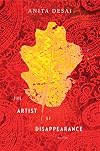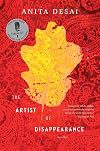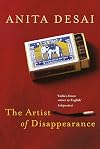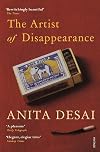
The Artist of Disappearance
by Anita Desai
On This Page
Description
"Written late in Anita Desai's illustrious career, these three novellas ruminate on art and memory, illusion and disillusion, and the sharp divide between life's expectations and dreams and its realities. Set in India in the not too distant past, the stories' diverse surroundings and dramas frame universal themes, which illuminate the ways in which various aspects of the Indian culture can nourish or suffocate. All are served up with Desai's characteristic perspicuity, subtle humor and show more quiet, sensitive writing. Overwhelmed by their own lack of purpose, the men and women who populate these tales set out on unexpected journeys that present them with a fresh sense hope and opportunity. In "The Museum of Final Journeys," a bored and officious junior civil servant imagines he's about to discover a museum filled with priceless treasures; in "Translation," a middle-aged woman has the chance to translate an unknown writer and in the process, impress the woman she most admires; in "The Artist of Disappearance," a documentary film crew, looking to expose the ecological havoc of illegal mining and logging, stumbles upon an artistic creation of unspeakable beauty, hidden from the world by its creator, a local recluse. But these are not heroic characters, and when confronted with defining moments, they struggle against their circumstances, their passivity and the disappointments of their daily lives, like so many flies in a spider's web. An impeccable craftsman, Desai remains evenhanded, elegantly setting the stage for all attendant human frailties to play out." -- show lessTags
Recommendations
























Member Reviews
All of us, every one of us, has had a moment when a window opened, when we caught a glimpse of the open, sunlit world beyond, but all of us, on this bus, have had that window close and remain closed. – from Translator Translated -
The Artist of Disappearance is a collection of novellas which are all set in India and have the similar themes of identity, searching for meaning in one’s life and how place can define who we become.
The Museum of Final Journeys, the first novella in the book, introduces the idea that memory is fragile and unreliable. Another theme in the story is the delicate balance of the natural world in a modernized society. In this story, a young man arrives in a dusty, desolate town where he has been posted to show more complete his training for a government position. He laments the long, dull days and the slovenly conditions of his new home. Then, one afternoon, a clerk arrives to make an appeal – he is the curator of sorts of an unusual museum but he can no longer afford to keep it running and wishes for the government to take it over. Intrigued, the narrator agrees to visit the museum. What he finds is astonishing and surprising – a treasure trove of objects, the unusual story of a family, and a creature whose life depends on the benevolence of her caretakers. Years later, his memory of the event is fragmented and frail like a mirage – perhaps as a way to resolve the guilt he feels for his lack of action.
The second story in the collection, Translator Translated, centers around Prema, an Indian woman who unexpectedly runs into an old high school friend and gets the opportunity to realize her dream of translating fiction. In this novella, Desai explores the different cultures of India and the loss of little known languages, as well as the role language plays in our identity. Prema loves the language of Oriya which is her mother’s tongue, but it is a language which very few people speak or understand. When Prema begins translating a book from Oriya into English she finds herself struggling to connect the two halves of her own life which includes the inter-caste marriage of her parents. As Prema works, she finds it harder and harder to be faithful in her translation of the author’s work.
Wasn’t this what the Impressionist painters had done in those early adventurous days, breaking up flat surfaces to refract light into many scattered molecules, and so reconstruct the surface and make it stir to life? – from Translator Translated -
As the novella unfolds, Prema becomes more lost to herself as she converts her mother tongue into the colonial language of English. Translator Translated is a beautiful meditation on the loss of culture and identity in a modern world.
The final story of this collection is, perhaps, my favorite. The Artist of Disappearance centers around Ravi, an odd man who is isolated from society and lives in the burned out shell of his family’s home. Ravi has always been different from others. He is especially connected to nature.
Outdoors was the life to which he chose to belong – the life of the crickets springing out of the grass, the birds wheeling hundreds of feet below in the valley or soaring upwards above the mountains, and the animals invisible in the undergrowth, giving themselves away by an occasional rustle or eruption of cries or flurried calls; plants following their own green compulsions and purposes, almost imperceptibly, and the rocks and stones, seemingly inert but mysteriously part of the constant change and movement of the earth. – from The Artist of Disappearance -
Ravi’s story is about nurturing that part of ourselves which is connected to the earth. In the towns around Ravi’s home, bulldozers are destroying the land and mining has stripped the earth of living creatures. But, high in the mountains, Ravi constructs a beautiful glade made from stones and trees, flowers and berries. Ravi is completely disconnected from society while being wholly connected to the physical space he calls home.
As a whole, Desai’s collection is nearly dreamlike in quality. Her characters have unfulfilled dreams and are disillusioned with their lives. Each character is presented with opportunities to enrich themselves and then find they stumble because of their human imperfection.
Anita Desai writes beautifully. She captures the beauty of India, but also does not hesitate to reveal its faults and complexities. I thoroughly enjoyed this slim volume of stories whose characters struggle and search for meaning in their lives.
Highly recommended for readers who love literary fiction. show less
The Artist of Disappearance is a collection of novellas which are all set in India and have the similar themes of identity, searching for meaning in one’s life and how place can define who we become.
The Museum of Final Journeys, the first novella in the book, introduces the idea that memory is fragile and unreliable. Another theme in the story is the delicate balance of the natural world in a modernized society. In this story, a young man arrives in a dusty, desolate town where he has been posted to show more complete his training for a government position. He laments the long, dull days and the slovenly conditions of his new home. Then, one afternoon, a clerk arrives to make an appeal – he is the curator of sorts of an unusual museum but he can no longer afford to keep it running and wishes for the government to take it over. Intrigued, the narrator agrees to visit the museum. What he finds is astonishing and surprising – a treasure trove of objects, the unusual story of a family, and a creature whose life depends on the benevolence of her caretakers. Years later, his memory of the event is fragmented and frail like a mirage – perhaps as a way to resolve the guilt he feels for his lack of action.
The second story in the collection, Translator Translated, centers around Prema, an Indian woman who unexpectedly runs into an old high school friend and gets the opportunity to realize her dream of translating fiction. In this novella, Desai explores the different cultures of India and the loss of little known languages, as well as the role language plays in our identity. Prema loves the language of Oriya which is her mother’s tongue, but it is a language which very few people speak or understand. When Prema begins translating a book from Oriya into English she finds herself struggling to connect the two halves of her own life which includes the inter-caste marriage of her parents. As Prema works, she finds it harder and harder to be faithful in her translation of the author’s work.
Wasn’t this what the Impressionist painters had done in those early adventurous days, breaking up flat surfaces to refract light into many scattered molecules, and so reconstruct the surface and make it stir to life? – from Translator Translated -
As the novella unfolds, Prema becomes more lost to herself as she converts her mother tongue into the colonial language of English. Translator Translated is a beautiful meditation on the loss of culture and identity in a modern world.
The final story of this collection is, perhaps, my favorite. The Artist of Disappearance centers around Ravi, an odd man who is isolated from society and lives in the burned out shell of his family’s home. Ravi has always been different from others. He is especially connected to nature.
Outdoors was the life to which he chose to belong – the life of the crickets springing out of the grass, the birds wheeling hundreds of feet below in the valley or soaring upwards above the mountains, and the animals invisible in the undergrowth, giving themselves away by an occasional rustle or eruption of cries or flurried calls; plants following their own green compulsions and purposes, almost imperceptibly, and the rocks and stones, seemingly inert but mysteriously part of the constant change and movement of the earth. – from The Artist of Disappearance -
Ravi’s story is about nurturing that part of ourselves which is connected to the earth. In the towns around Ravi’s home, bulldozers are destroying the land and mining has stripped the earth of living creatures. But, high in the mountains, Ravi constructs a beautiful glade made from stones and trees, flowers and berries. Ravi is completely disconnected from society while being wholly connected to the physical space he calls home.
As a whole, Desai’s collection is nearly dreamlike in quality. Her characters have unfulfilled dreams and are disillusioned with their lives. Each character is presented with opportunities to enrich themselves and then find they stumble because of their human imperfection.
Anita Desai writes beautifully. She captures the beauty of India, but also does not hesitate to reveal its faults and complexities. I thoroughly enjoyed this slim volume of stories whose characters struggle and search for meaning in their lives.
Highly recommended for readers who love literary fiction. show less
 This review was written for LibraryThing Early Reviewers.
Incandescent, immaculate - this is a pristine little book containing clarity of vision and purpose in such a simple clean package, much like a shard of quartz or the glittering beetle - objects that Desai also pays homage to in the final of the three novellas contained wherein.
I've noticed that writers who are further along in their careers seem to favor a stripped down sort of language, as if the challenge is to convey the same meaning of a 15-worded sentence within a more compact statement of perhaps half the length. Desai seemed to do this even early in her career, and it's always done her writing credit; she packs so much dynamite into the shortest of sentences; they are all the more powerful for their brevity.
Within the three show more novellas are characters who are all desperate for something which they cannot grasp, though the recluse Ravi seems to come closest in the last novella which the whole book takes its title from. The first story's narrator describes his predicament of being presented with a responsibility that he does not quite fathom; the second character conversely grasps at some responsibility in a desperate move to salvage her own self; and the third does not so much take on a responsibility as become it - his duty and his self wholly merged within each other.
It all raises questions that will pick at you long after reading, chiefly regarding the artist's participation in the surrounding world, and whether the degree of engagement is help or hindrance to the creative work. Must you detach yourself completely in order to gain the perspective to translate the world faithfully in your art? And if you do, what about the resulting loss of experience?
What - or where - is the balance? show less
I've noticed that writers who are further along in their careers seem to favor a stripped down sort of language, as if the challenge is to convey the same meaning of a 15-worded sentence within a more compact statement of perhaps half the length. Desai seemed to do this even early in her career, and it's always done her writing credit; she packs so much dynamite into the shortest of sentences; they are all the more powerful for their brevity.
Within the three show more novellas are characters who are all desperate for something which they cannot grasp, though the recluse Ravi seems to come closest in the last novella which the whole book takes its title from. The first story's narrator describes his predicament of being presented with a responsibility that he does not quite fathom; the second character conversely grasps at some responsibility in a desperate move to salvage her own self; and the third does not so much take on a responsibility as become it - his duty and his self wholly merged within each other.
It all raises questions that will pick at you long after reading, chiefly regarding the artist's participation in the surrounding world, and whether the degree of engagement is help or hindrance to the creative work. Must you detach yourself completely in order to gain the perspective to translate the world faithfully in your art? And if you do, what about the resulting loss of experience?
What - or where - is the balance? show less
These novellas by Anita Desai are written in a crystalline, engaging style, which kept me reading even in parts about characters just going about their daily lives or a less interesting detour in the final piece. Because of this, I’ll definitely seek out more of Desai’s work. The first novella is about a bored government worker stuck in a provincial post who visits a dilapidated estate full of exotic curios. The second follows an unhappy woman whose life becomes more exciting as she reconnects with an old schoolmate and works for her as a translator. In the final piece, an isolated man with an unfortunate history collides with the modern world.
Desai’s writing immediately pulled me into “The Museum of Final Journeys”, the show more first story. Even though the first part describes the narrator’s discomfort with his new place and position and the boring routines of his office, it is somehow compelling. The main plot is involving and somewhat quixotic, even if the whole story is only an odd and discomfiting reminiscence of the now older narrator. The next story “Translator Translated” also has a wonderful opening hook, as the main character, Prema, a mediocrity back in school, sees golden girl Tara, now a respected publisher. Against the odds, Prema is able to interest Tara in her favorite author, who writes in a neglected language. Prema’s love for and obsession with translating is well-written, and I also liked the parts that switch between third and first person – usually I dislike it when authors do that. Prema goes around with an air of defeat, so it never seemed like things could work out for her. However, the story didn’t go where I expected it to. The story also raised a number of interesting issues regarding the translator-author relationship. The title story is the last one. At first, it tells the story of Ravi, an eccentric and withdrawn man who lives in a burned-out house. Even though his family’s decline is related in a more “telling instead of showing” way, it is still involving with some sharp writing. I found the second half less compelling as there is an abrupt subject change, although the end ties everything up. Definitely worth a look. show less
Desai’s writing immediately pulled me into “The Museum of Final Journeys”, the show more first story. Even though the first part describes the narrator’s discomfort with his new place and position and the boring routines of his office, it is somehow compelling. The main plot is involving and somewhat quixotic, even if the whole story is only an odd and discomfiting reminiscence of the now older narrator. The next story “Translator Translated” also has a wonderful opening hook, as the main character, Prema, a mediocrity back in school, sees golden girl Tara, now a respected publisher. Against the odds, Prema is able to interest Tara in her favorite author, who writes in a neglected language. Prema’s love for and obsession with translating is well-written, and I also liked the parts that switch between third and first person – usually I dislike it when authors do that. Prema goes around with an air of defeat, so it never seemed like things could work out for her. However, the story didn’t go where I expected it to. The story also raised a number of interesting issues regarding the translator-author relationship. The title story is the last one. At first, it tells the story of Ravi, an eccentric and withdrawn man who lives in a burned-out house. Even though his family’s decline is related in a more “telling instead of showing” way, it is still involving with some sharp writing. I found the second half less compelling as there is an abrupt subject change, although the end ties everything up. Definitely worth a look. show less
Beautifully written, quiet and contemplative, these three stories should have been winners for me. But they left me cold. I read each one in between other books, and honestly can remember very little about the first story – it left no impression on me whatsoever. The second was better - an exploration of a woman’s sense of disconnection from the world and how she tries to anchor her existence – all overlaid with interesting cultural and social questions related to modern India. The last story was very good but I don’t think it will end up leaving much of an impression on me. Desai just seemed to create a purposeful distance between her work and her reader; this may work for some but I prefer to feel a stronger connection to what show more I read. show less
This review was written for LibraryThing Early Reviewers.In just a few days this book will hit the stores and I hope that many of you will go out and buy it because it is, in a word, wonderful. The rich and elegant writing transports you into the characters' worlds and makes you feel like you're right there with them, living their lives, feeling their pain, their joy, their turmoil and their bliss. It did that for me anyway. The relatively short novellas surprised me by how much substance there was in their pages, how I had to take a break between each one to reflect upon the characters, the time and place, the circumstances. This reflection wasn't a matter of choice, I really had to do it, let everything sink in, work its way through me, and that made the experience all the more fulfilling show more because it's not often that I find books that pack that kind of punch.
All three novellas are powerful in their own way but the third one, the one that lends its title to the collection, is my favorite because it is the most multi-faceted and most positive of the three. While Ravi is a textbook recluse his joy from creating and his lack of desire to have anyone else's approval were in such refreshing contrast to the mode of thinking which almost dictates that if one spends their time doing something the activity must be financially gainful or at least bring some sort of renown. My favorite thing about Ravi though wasn't that he was a person who created simply to create, but that he was a person who didn't become discouraged by setbacks, he just changed direction and proceeded on a different path. I think that's an excellent message since we all can become discouraged if things don't go exactly the way we plan.
There really wasn't anything that I didn't like about this book, it was deeply satisfying and made me curious to read Anita Desai's other works. I highly recommend it to anyone. show less
All three novellas are powerful in their own way but the third one, the one that lends its title to the collection, is my favorite because it is the most multi-faceted and most positive of the three. While Ravi is a textbook recluse his joy from creating and his lack of desire to have anyone else's approval were in such refreshing contrast to the mode of thinking which almost dictates that if one spends their time doing something the activity must be financially gainful or at least bring some sort of renown. My favorite thing about Ravi though wasn't that he was a person who created simply to create, but that he was a person who didn't become discouraged by setbacks, he just changed direction and proceeded on a different path. I think that's an excellent message since we all can become discouraged if things don't go exactly the way we plan.
There really wasn't anything that I didn't like about this book, it was deeply satisfying and made me curious to read Anita Desai's other works. I highly recommend it to anyone. show less
Anita Desai is a matchless prose stylist, a master of subtlety, a connoisseur of the crystal clear sentence. Her writing seems to hearken back half a century to a time when clarity counted for more than innovation. For that reason The Artist of Disappearance, a collection of three novellas, might seem a bit old fashioned. But it is also refreshing because in these pieces she is doing nothing more profound than using flawless prose to spin a good yarn. These three novellas are remarkable for their restraint, for the subdued emotions they evoke, and for their timeless sense of loss and melancholy. In the first, "The Museum of Final Journeys," a nameless bureaucrat serving in a remote outpost is invited to inspect a collection of rare and show more exotic items housed at a dilapidated estate that has been abandoned by its owners. In "Translator Translated," Prema is commissioned to produce translations of the works of renown author Suvarna Devi, who writes in the obscure Oriya language, but becomes so involved in her project that she crosses the invisible boundary separating creator and translator. And in the title novella Ravi, a recluse living in the burnt out shell of his family's home, high on a hill outside of Mussoorie, recedes even further from view when a film crew visits seeking to expose the corrupt practices that have resulted in officially sanctioned devastation to the region's natural beauty. Desai's stories are set in modern India, but feel like they were written ages ago. Enjoyable if not exactly riveting, the book comes across as a minor work. But for anyone with a craving for traditional storytelling by a contemporary master, The Artist of Disappearance will more than satisfy. show less
The Artist of Disappearance is the third of three relatively short novellas written by the Booker nominated author, Anita Desai. The first of these outstanding stories is "The Museum of Final Journeys" and follows a young bureaucrat temporarily assigned to a rural outpost. Following the footsteps of his father, he finds himself disappointed and frustrated with his civil service post and his rural surroundings. One hot sweltering evening a very old man approaches him and begins a long story. His first response is anger and irritation at being cornered by this man but his irritation soon turns to interest. It seems the son of a wealthy landowning family tired of the rural life and travels the world sending back many, many varied artworks show more and treasures. Now the caretaker is in charge of maintaining this "museum". When the bureaucrat visits, he finds room after room of treasures, finally coming to a room with a live elephant that must be fed despite the lack of funds. What should our narrator do? We find out as the story abruptly shifts to a later period in the life of the narrator.
The second story Translator Translated tells the story of a young woman studying literature and finding herself deeply engaged in the native language of her region and the writing of Suvarna Devi. Meeting a former classmate who has become a well known publisher, she suggests translating the work of Suvarna Devi. Her translation is accepted and published with some modest acclaim and Suvarna embarks on writing a novel. The novel according to the translator needs considerable editing and she sets out to make changes as she sees fit. However, the son-in-law of the author objects to the changes and her own attempts at writing are a failure as well. The embittered translator returns to teaching where the school administration and students eagerly await her impending retirement.
Both of these stories chronicle vestiges of English rule and influence, the first dealing with hierarchical systems and bureaucracies and the second with the educational preference for English literature rather than regional Indian literature. Both characters find an opportunity to break with traditional and the colonial past but find that such systems continue to exert control over individual human decisions and therefore individual identities.
The third and title novella, The Artist of Disappearance, is in some ways the strongest among these three superb stories. Here, Ravi, the adopted son to two wealthy parents finds himself abandoned by his parents each summer as they travel to Europe. He becomes a quiet, reclusive and withdrawn adult who lives in the burned out house with his teacher, Miss Wilkerson and finally after her death entirely alone but served by the servant, Bhola. He finds a secluded area of the forest to build his garden art project. This secret garden is discovered a documentary film company that has come to expose illegal mining and timber production in the area. Instead they discover the secret garden and seek out Ravi. He refuses to be interviewed and knows he can never return to his garden project now that it has been desecrated. On the way out of town they encounter several explosions indicating illegal mining. They are delighted to have an ending to their film. Here the final sentence puts the events in a new perspective.
All three stories are superbly written and all three express a subtle sense of humor and irony as they explore how political and cultural forces shape our lives. show less
The second story Translator Translated tells the story of a young woman studying literature and finding herself deeply engaged in the native language of her region and the writing of Suvarna Devi. Meeting a former classmate who has become a well known publisher, she suggests translating the work of Suvarna Devi. Her translation is accepted and published with some modest acclaim and Suvarna embarks on writing a novel. The novel according to the translator needs considerable editing and she sets out to make changes as she sees fit. However, the son-in-law of the author objects to the changes and her own attempts at writing are a failure as well. The embittered translator returns to teaching where the school administration and students eagerly await her impending retirement.
Both of these stories chronicle vestiges of English rule and influence, the first dealing with hierarchical systems and bureaucracies and the second with the educational preference for English literature rather than regional Indian literature. Both characters find an opportunity to break with traditional and the colonial past but find that such systems continue to exert control over individual human decisions and therefore individual identities.
The third and title novella, The Artist of Disappearance, is in some ways the strongest among these three superb stories. Here, Ravi, the adopted son to two wealthy parents finds himself abandoned by his parents each summer as they travel to Europe. He becomes a quiet, reclusive and withdrawn adult who lives in the burned out house with his teacher, Miss Wilkerson and finally after her death entirely alone but served by the servant, Bhola. He finds a secluded area of the forest to build his garden art project. This secret garden is discovered a documentary film company that has come to expose illegal mining and timber production in the area. Instead they discover the secret garden and seek out Ravi. He refuses to be interviewed and knows he can never return to his garden project now that it has been desecrated. On the way out of town they encounter several explosions indicating illegal mining. They are delighted to have an ending to their film. Here the final sentence puts the events in a new perspective.
All three stories are superbly written and all three express a subtle sense of humor and irony as they explore how political and cultural forces shape our lives. show less
This review was written for LibraryThing Early Reviewers.Members
- Recently Added By
Published Reviews
ThingScore 63
The three novellas in Anita Desai's new collection, The Artist of Disappearance, are filled with disappointments in human nature, inciting a melancholy that is hard to shake.
The stories are all linked by a passion for arts, but they are actually more about ourselves – the selves that dare to hope, that desperately want to be different, but which then sink back and disappear into show more ordinariness.
Each tale evokes flashes of a vanishing reality, taking us back to a post-colonial world as it literally fades and crumbles. Desai's writing is at times as sensuous and charming as some of her best: birds sing with "piercing sweetness"; mushrooms resemble refugees with their "ghostly pallor and caps, hats and bonnets". But, the stories themselves fail to persuade and the disappointments are too explicit, the endings too abrupt. Perhaps aptly, these interlinked stories of human disappointment are beautifully written but ultimately disappointing. show less
The stories are all linked by a passion for arts, but they are actually more about ourselves – the selves that dare to hope, that desperately want to be different, but which then sink back and disappear into show more ordinariness.
Each tale evokes flashes of a vanishing reality, taking us back to a post-colonial world as it literally fades and crumbles. Desai's writing is at times as sensuous and charming as some of her best: birds sing with "piercing sweetness"; mushrooms resemble refugees with their "ghostly pallor and caps, hats and bonnets". But, the stories themselves fail to persuade and the disappointments are too explicit, the endings too abrupt. Perhaps aptly, these interlinked stories of human disappointment are beautifully written but ultimately disappointing. show less
added by kidzdoc
The Artist… is blurbed as “a triptych of novellas”, which is a rather boosterish way of referring to three long short stories. But as with Kazuo Ishiguro’s Nocturnes (2009), say, there’s a skein of resonances, light but extensive, drawing the triad together.
The stories resist adequate synopsis, though it’s pretty easy to summarise what happens in them. A middle-aged civil servant show more remembers his first posting in a flyblown backwater, and a visit to a private museum, slowly falling apart after the extinction of the family that built it. A schoolteacher re-acquaints herself with her mother’s low-caste origins, and re-evaluates her own disputable identity and modest achievements, as she translates two novels from an uncommon tribal language into English. A man living in the burnt-out ruins of his family home attracts the interest of a TV crew on the trail of illegal logging in the foothills of the Himalayas. show less
The stories resist adequate synopsis, though it’s pretty easy to summarise what happens in them. A middle-aged civil servant show more remembers his first posting in a flyblown backwater, and a visit to a private museum, slowly falling apart after the extinction of the family that built it. A schoolteacher re-acquaints herself with her mother’s low-caste origins, and re-evaluates her own disputable identity and modest achievements, as she translates two novels from an uncommon tribal language into English. A man living in the burnt-out ruins of his family home attracts the interest of a TV crew on the trail of illegal logging in the foothills of the Himalayas. show less
added by kidzdoc
Lists

Pen/Faulkner Winners and Finalists
178 works; 9 members
Author Information

39+ Works 4,745 Members
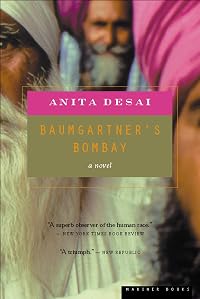
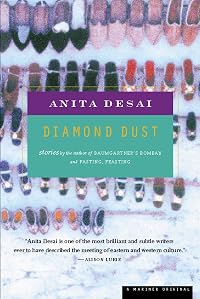
Anita Desai was born in Mussoorie, India, in 1937 of Indian and German parentage. Her works focus on relationships and family life in India, particularly the problems of women in Indian society. She has written for both adults and children, winning the Winifred Holtby Prize from the Royal Society of Literature for Fire on the Mountain (1977) and show more the Guardian Prize for Children's Fiction for her novel The Village by the Sea (1982). Among her numerous other honors is a Literary Lion Award from the New York Public Library in 1993. Desai came to America in 1987. She has taught at Mount Holyoke College, Baruch College, and Smithe College. Desai is currently Emeritus John E. Burchard Professor of Humanities at MIT. (Bowker Author Biography) Anita Desai was born & educated in India. Among her many published works are "Fasting, Feasting" (a finalist for the 1999 Booker Prize), "Baumgartner's Bombay," "In Custody," "Games at Twilight," & "Diamond Dust." Her awards & honors include the Alberto Moravia Award, the National Academy of Letters Award, & the Winifred Holtby Prize of the Royal Society of Literature. She lives in Cambridge, Massachusetts, where she teaches writing at MIT. (Publisher Provided) show less
Awards and Honors
Awards
Common Knowledge
- Canonical title
- The Artist of Disappearance
- Original title
- The artist of disappearence
- Original publication date
- 2011-08-04
- Important places
- India
- Epigraph
- One thing alone does not exist - oblivion.
-'Everness', Jorge Luis Borges translated by Alastair Reid - Dedication
- For my brother
Dinu Mazumdar
I owe him much - First words
- We had driven for never-ending miles along what seemed to be more a mudbank than a road between fields of virulent green—jute? rice? what was it this benighted hinterland produced?
Classifications
Statistics
- Members
- 281
- Popularity
- 115,029
- Reviews
- 31
- Rating
- (3.64)
- Languages
- English, French, Italian, Swedish
- Media
- Paper, Audiobook, Ebook
- ISBNs
- 23
- ASINs
- 4