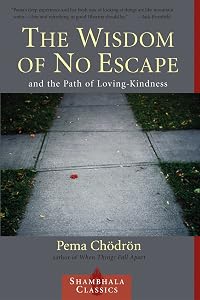
The Wisdom of No Escape and the Path of Loving-Kindness
by Pema Chödrön
On This Page
Description
"It's true, as they say, that we can only love others when we first love ourselves. And we can only experience real joy when we stop running from pain. The key to understanding these truisms is simple but not easy: learn to open ourselves up to life in all circumstances. In this guide to true kindness for self and others, Pema Chödrön presents a uniquely practical approach to doing just that. And she reveals that when we embrace the happiness and heartache, inspiration and confusion, and show more all the twists and turns that are a natural part of life, we can begin to discover a true wellspring of courageous love that's been within our hearts all along."--Amazon.com. show lessTags
Recommendations

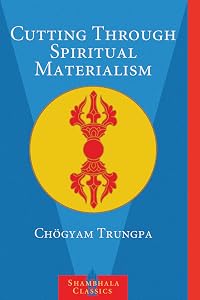
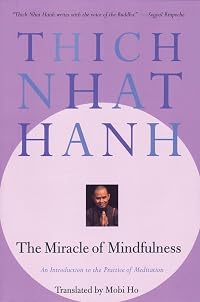
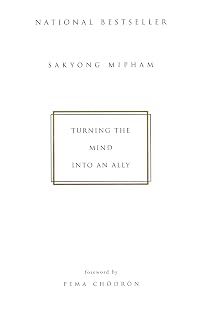
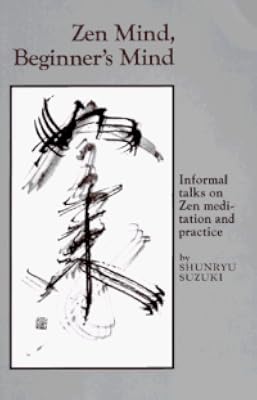




Member Reviews
"The Wisdom of No Escape" is a profound and liberating guide to embracing life's imperfections with compassion. Pema Chödrön's wisdom shines through each page, offering heartfelt teachings on self-love and acceptance. With gentle nudges, she reminds us that we need not escape from difficulties; instead, we can find solace in the present moment. This book is a transformative journey, urging readers to befriend their fears and open their hearts to the world's beauty. A timeless reminder that true freedom lies in embracing ourselves and our reality with unwavering love.
Click here to know more https://www.soulveda.com/books/think-positively-8-books-to-help-you-develop-a-mo...
Click here to know more https://www.soulveda.com/books/think-positively-8-books-to-help-you-develop-a-mo...
This book is a transcription of a series of dhamma talks given by Pema Chodron during a "dathun" (one month retreat) in Gampo Abbey. The book is not the best introduction to buddhism. It doesn't have a clear structure and the language is a bit too fuzzy for my taste.
However, after reading so much books on buddhism by practitioners and teachers of the insight meditation tradition, the talks of Pema Chodron provide a new, more personal perspective on the dhamma and meditation. It's clear from the book that Chodron comes from Tibetan buddhism and her focus on dealing with suffering, cultivation compassion and 'gentleness' was really interesting.
I really enjoyed her explanation of tonglen meditation.
However, after reading so much books on buddhism by practitioners and teachers of the insight meditation tradition, the talks of Pema Chodron provide a new, more personal perspective on the dhamma and meditation. It's clear from the book that Chodron comes from Tibetan buddhism and her focus on dealing with suffering, cultivation compassion and 'gentleness' was really interesting.
I really enjoyed her explanation of tonglen meditation.
This is another great book by the Buddhist nun, Pema Chodrön. She is one of the few authors, all of whose books I feel I need to read.
The talks in the book were given during a dathun (one-month practice period) in the spring of 1989.
The dathun took place in Gampo Abbey, a Buddhist monastery located on Cape Breton Island, Nova Scotia.
We learn the meditation technique presented by Chogyan Trungpa, both the sitting meditation, walking meditation and eating meditation (oryoti).
The participants were encouraged and inspired to remain ”wholeheartedly awake” to everything that occurred and to use the material of daily life as their primary teacher.
During the dathun, the participants kept the five monastic vows: not to lie, not to show more steal, not to engage in sexual activity, not to take life, and not to use alcohol or drugs.
Pema deals with loving-kindness (maitri). Loving-kindness towards ourselves does not mean trying to change ourselves. “It’s about befriending who we are already.”
The path of meditation has to do with curiosity or inquisitiveness, which involves being gentle, precise and open.
We need to be satisfied with what we already have. “We need to become more awake to who we are.”
“The ground of loving-kindness is this sense of satisfaction with who we are and what we have.”
In meditation and in our daily life there are three qualities that we can nurture and cultivate – precision, gentleness and the ability to let go.
The technique is, firstly, to take good posture and, second, to become mindful of your out-breath, your ordinary out-breath.
Be with the breath as it goes out, feel the breath go out, touch the breath as it goes out.
When you’ve been thinking, say to yourself “thinking”.
We emphasize not only precision but gentleness.
The moment when you label your thoughts “thinking” is the key place where you cultivate gentleness, sympathy, and loving-kindness.
If you find your body or mind tensing, relax it.
The third aspect of the technique is the quality of opening or letting go. This is not so easy. But it is something that happens as a result of working with precision and gentleness.
Pema says we must come back to the present moment as much as we can, follow the out-breath, label our thoughts “thinking”, come back to the present moment, acknowledge what’s going on in our mind.
“The message is that each of us has all that it takes to become fully enlightened.”
She tells us that a German woman, Sister Ayya Khema, a Theravadin nun from Sri Lanka, came to visit them and led a Vipashana retreat. She emphasized joy, while Pema herself emphasized suffering.
In the retreat, Ayya Khema taught them that each of them had in their heart a joy that was accessible to them. “Joy is like a soft spring rain that allows us to lighten up, to enjoy ourselves, and therefore it’s a whole new way of looking at suffering.”.
Joy has to do with seeing how precious things are. The greatest obstacle to connecting with our joy is resentment.
Resenting what happens to you and complaining about your life are like refusing to smell the wild roses when you go for a morning walk.
“Resentment, bitterness, and holding a grudge prevent us from seeing and hearing and tasting and delighting.”
Pema tells us that one of Trungpa Rinpoche’s main teachings was “”You can do it.” You can connect with the joy in your heart.
“Acknowledging the preciousness of each day is a good way to live, a good way to connect with our basic joy.””
Mindfulness is loving all the details of our lives, and “awareness is the natural thing that happens”.
We are always standing at the centre of the world.
Through giving loving kindness to our speech and our actions, we begin to realize this.
Wherever we go for the rest of our life, we’re always in the middle of the universe and the sacred circle is always around us.
Whoever comes into the sacred space around us is there to teach us.
Meditation begins to open up our life so we’re not caught in self-concern, just wanting life to go our way.
Rinpoche would often talk about nowness. If you want to obtain enlightenment, you have to do it now.
The more we open our heart and make friends with our body and our domestic situation, the more we appreciate everything. Everything is absolutely wonderful.
Mindfulness trains you to be awake and alive. “The key is now. Whatever we’re doing we’re doing it now.”
“There isn’t any hell or heaven except for how we relate to our world. Hell is just resistance to life.”
What I have written above will give you an idea of what the book is about and whether or not you might like to read it.
Personally, I strongly recommend you read all Pema Chodron’s books. show less
The talks in the book were given during a dathun (one-month practice period) in the spring of 1989.
The dathun took place in Gampo Abbey, a Buddhist monastery located on Cape Breton Island, Nova Scotia.
We learn the meditation technique presented by Chogyan Trungpa, both the sitting meditation, walking meditation and eating meditation (oryoti).
The participants were encouraged and inspired to remain ”wholeheartedly awake” to everything that occurred and to use the material of daily life as their primary teacher.
During the dathun, the participants kept the five monastic vows: not to lie, not to show more steal, not to engage in sexual activity, not to take life, and not to use alcohol or drugs.
Pema deals with loving-kindness (maitri). Loving-kindness towards ourselves does not mean trying to change ourselves. “It’s about befriending who we are already.”
The path of meditation has to do with curiosity or inquisitiveness, which involves being gentle, precise and open.
We need to be satisfied with what we already have. “We need to become more awake to who we are.”
“The ground of loving-kindness is this sense of satisfaction with who we are and what we have.”
In meditation and in our daily life there are three qualities that we can nurture and cultivate – precision, gentleness and the ability to let go.
The technique is, firstly, to take good posture and, second, to become mindful of your out-breath, your ordinary out-breath.
Be with the breath as it goes out, feel the breath go out, touch the breath as it goes out.
When you’ve been thinking, say to yourself “thinking”.
We emphasize not only precision but gentleness.
The moment when you label your thoughts “thinking” is the key place where you cultivate gentleness, sympathy, and loving-kindness.
If you find your body or mind tensing, relax it.
The third aspect of the technique is the quality of opening or letting go. This is not so easy. But it is something that happens as a result of working with precision and gentleness.
Pema says we must come back to the present moment as much as we can, follow the out-breath, label our thoughts “thinking”, come back to the present moment, acknowledge what’s going on in our mind.
“The message is that each of us has all that it takes to become fully enlightened.”
She tells us that a German woman, Sister Ayya Khema, a Theravadin nun from Sri Lanka, came to visit them and led a Vipashana retreat. She emphasized joy, while Pema herself emphasized suffering.
In the retreat, Ayya Khema taught them that each of them had in their heart a joy that was accessible to them. “Joy is like a soft spring rain that allows us to lighten up, to enjoy ourselves, and therefore it’s a whole new way of looking at suffering.”.
Joy has to do with seeing how precious things are. The greatest obstacle to connecting with our joy is resentment.
Resenting what happens to you and complaining about your life are like refusing to smell the wild roses when you go for a morning walk.
“Resentment, bitterness, and holding a grudge prevent us from seeing and hearing and tasting and delighting.”
Pema tells us that one of Trungpa Rinpoche’s main teachings was “”You can do it.” You can connect with the joy in your heart.
“Acknowledging the preciousness of each day is a good way to live, a good way to connect with our basic joy.””
Mindfulness is loving all the details of our lives, and “awareness is the natural thing that happens”.
We are always standing at the centre of the world.
Through giving loving kindness to our speech and our actions, we begin to realize this.
Wherever we go for the rest of our life, we’re always in the middle of the universe and the sacred circle is always around us.
Whoever comes into the sacred space around us is there to teach us.
Meditation begins to open up our life so we’re not caught in self-concern, just wanting life to go our way.
Rinpoche would often talk about nowness. If you want to obtain enlightenment, you have to do it now.
The more we open our heart and make friends with our body and our domestic situation, the more we appreciate everything. Everything is absolutely wonderful.
Mindfulness trains you to be awake and alive. “The key is now. Whatever we’re doing we’re doing it now.”
“There isn’t any hell or heaven except for how we relate to our world. Hell is just resistance to life.”
What I have written above will give you an idea of what the book is about and whether or not you might like to read it.
Personally, I strongly recommend you read all Pema Chodron’s books. show less
As always Pema Chodron writes with clarity and wisdom. I feel as is she has been where I am and knows exactly what I need to hear and do to become who I need to be.
Maybe the best introduction to Buddhism as a way of life. For optimists who are "there" already emotionally, and want to be seriously grounded in this impressive doctrine, here's a bunch of solid reasons to think of life as a great adventure :-)
Originally published in 1991, this book presents the transcripts from 18 teaching by Ani Pema presented over the course of a 1989 month-long retreat at a Gampo Abbey in Nova Scotia. Each chapter can stand alone, but each does build on the others. Tonglen practice is presented and explored. In addition to Chogyam Trungpa, Pema quotes Thich Nhat Hanh, Black Elk, and Shunryu Suzuki Roshi. Wonderful book.
Pema Chödrön is one of the prominent female Tibetan Buddhist teachers in the West. All of her books offer direct advice on how to live fearlessly and equanimously amidst the constant change and challenge of everyday life. As an introduction to Buddhism, this is highly recommended.
Members
- Recently Added By
Lists

Buddhism, books there in
23 works; 4 members
Author Information

Some Editions
Work Relationships
Is contained in
Is abridged in
Common Knowledge
- Canonical title*
- Liefdevolle vriendelijkheid
- Original title
- The Wisdom of No Escape and the Path of Loving Kindness
- Alternate titles
- The Wisdom of No Escape: How to Love Yourself and Your World
- Original publication date
- 1991
- Dedication*
- Voor mijn leraar,
de eerwaarde vidyadhara Chögyam Trungpa Rinpoche
en voor mijn kinderen Arlyn en Edward - Original language
- English
*Some information comes from Common Knowledge in other languages. Click "Edit" for more information.
Classifications
- Genres
- Religion & Spirituality, Nonfiction, General Nonfiction, Philosophy
- DDC/MDS
- 294.3443 — Religion Other religions Buddhism/Hinduism Buddhism Buddhism - practice Religious experience, life, practice Worship, meditation, yoga
- LCC
- BQ5625 .C48 — Philosophy, Psychology and Religion Buddhism Buddhism Practice of Buddhism. Forms of worship Religious life Devotion. Meditation. Prayer
- BISAC
Statistics
- Members
- 1,205
- Popularity
- 20,637
- Reviews
- 12
- Rating
- (4.20)
- Languages
- 8 — Chinese, Dutch, English, French, German, Italian, Polish, Spanish
- Media
- Paper, Audiobook, Ebook
- ISBNs
- 24
- ASINs
- 16