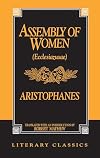
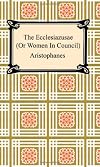
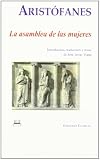
The Assembly of Women [in translation]
by Aristophanes
On This Page
Description
Ecclesiazusae, probably produced in 391 BC, is at once a typically Aristophanic fantasy of gender inversion, obscenity and farce, the earliest surviving work in the western Utopian tradition, and the source of a blueprint for a communist society on which Plato may well have drawn in his Republic.Tags
Recommendations
























Member Reviews
Extraordinary translation of one of the latest works by Aristophanes. The accuracy showed in rendering the original text makes this edition one of the best ever.
J’ai entendu parler de cette pièce au détour d’un court reportage sur France Culture signalant qu’elle est actuellement jouée en Palestine et que c’est une pièce d’une grande actualité. J’ai peu de connaissance du théâtre antique mais j’ai voulu me laisser tenter et j’ai jeté mon dévolu sur cette traduction du domaine public proposée par l’inépuisable wikisource.
Aristophane est le père de la comédie, j’avais entendu cela. Mais je ne m’attendais pas à un niveau de comique aussi premier degré, où rien des fonctions les plus primaires du corps n’est passé sous silence. Ne goûtant pas ce genre d’humour, ni aujourd’hui ni il y a deux millénaires et demi, je n’ai pas particulièrement show more apprécié ma lecture qui a été longue et lourde.
Le propos politique est intéressant, il y a une critique de la démocratie grecque que l’on porte aujourd’hui au pinacle, une réflexion sur le communisme et ses limites qui n’a pas attendu Marx. Il y a donc beaucoup de choses intéressantes dans cette pièce. Je me suis aperçue qu’elle était, avec Les Cavaliers, au programme du concours des prépas scientifiques il y a peu et cela a dû être passionnant de l’étudier en lien avec la notion de démocratie.
Pour moi, je me contenterai de cette lecture et je me tournerai vers d’autres auteurs de théâtre antique ou moderne pour des pièces qui seront plus à mon goût. show less
Aristophane est le père de la comédie, j’avais entendu cela. Mais je ne m’attendais pas à un niveau de comique aussi premier degré, où rien des fonctions les plus primaires du corps n’est passé sous silence. Ne goûtant pas ce genre d’humour, ni aujourd’hui ni il y a deux millénaires et demi, je n’ai pas particulièrement show more apprécié ma lecture qui a été longue et lourde.
Le propos politique est intéressant, il y a une critique de la démocratie grecque que l’on porte aujourd’hui au pinacle, une réflexion sur le communisme et ses limites qui n’a pas attendu Marx. Il y a donc beaucoup de choses intéressantes dans cette pièce. Je me suis aperçue qu’elle était, avec Les Cavaliers, au programme du concours des prépas scientifiques il y a peu et cela a dû être passionnant de l’étudier en lien avec la notion de démocratie.
Pour moi, je me contenterai de cette lecture et je me tournerai vers d’autres auteurs de théâtre antique ou moderne pour des pièces qui seront plus à mon goût. show less
Jan 2, 2022French
Ratings
Members
- Recently Added By
Lists

Harold Bloom - The Western Canon: A. The Theocratic Age
97 works; 13 members

100 Books to Read in a Lifetime (That Are Older Than 200 Years)
415 works; 173 members

Authors from Greece
3 works; 1 member

My Play Collection
769 works; 3 members
Author Information

Aristophanes, 448 b.c. - 385 b.c. Aristophanes is considered to be one of the greatest comedic writers ever to have taken to the stage. He was born in Athens, Greece, in the town of Cydathenaeum. Aristophanes is believed to have been well educated, which would explain his propensity towards words. It is also believed that he owned land on the show more island of Aegina. Aristophanes was first a satirist, he was well known for attacking anything from politics to poets, mainly the war between Sparta and Athens and the poet Euripides. He wrote more than 40, eleven of which are still being acted today. "The Acharnians" was his first play, written in 425, B.C.. This was the first of his plays in reaction to the war, as well as the play "Peace." But perhaps Aristophanes most famous play, Lysistrata, made his true feelings of the war known. In this play, the women seek peace by claiming celibacy until the fighting is stopped. It is the play that he is most famous for, for capturing the feeling of the people in a way that was both lighthearted and poignant. Aristophanes died three years after the war ended, in 385, B.C.,but left behind a legacy that has lasted to the present day. (Bowker Author Biography) show less
Some Editions
Awards and Honors
Awards
Notable Lists
Series
Belongs to Publisher Series
Work Relationships
Is contained in
Aristophanis Comoediae. Tomus II: Lysistratam, Thesmophoriazusas, Ranas, Ecclesiazusae, Plutum, Fragmenta, Indicem Nominum continens (Oxford Classical Text) by Aristophanes
6 Plays: Birds / Lysistrata / Women at the Thesmophoria / Frogs / Assembly-Women / Wealth by Aristophanes
8 Plays: Assembly-Women / Birds / Clouds / Frogs / Lysistrata / Peace / Wasps / Women at the Thesmophoria by Aristophanes
Has as a student's study guide
Common Knowledge
- Canonical title
- The Assembly of Women [in translation]
- Original title
- Ἐκκλησιάζουσαι
- Alternate titles
- Ecclesiazusae; Assemblywomen; Congresswomen; A Parliament of Women
- Original publication date
- Play premiered 392 BC
- People/Characters
- Praxagora
- Related movies
- An oles oi gynaikes tou kosmou... (1967 | IMDb)
Classifications
- Genre
- Fiction and Literature
- DDC/MDS
- 882.01 — Literature & rhetoric Classical & modern Greek literatures Classical Greek dramatic poetry and drama standard subdivisions; collections; history, description, critical appraisal; Specific periods Ancient period to ca. 499
- LCC
- PA3877 .E3 — Language and Literature Greek language and literature. Latin language and literature Greek literature Individual authors
- BISAC
Statistics
- Members
- 194
- Popularity
- 168,003
- Reviews
- 2
- Rating
- (3.37)
- Languages
- 11 — Danish, Dutch, English, French, German, Greek (Ancient), Italian, Portuguese, Russian, Spanish, Turkish
- Media
- Paper, Ebook
- ISBNs
- 32
- ASINs
- 7