On This Page
Description
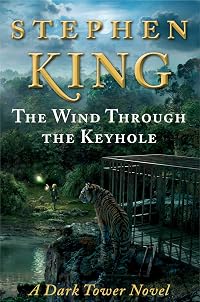
Sent by his father to investigate evidence of a murderous shape shifter, a "skin man," Roland Deschain takes charge of Bill Streeter, a brave but terrified boy who is the sole surviving witness to the beast's most recent slaughter. Roland, himself only a teenager, calms the boy by reciting a story from the Magic Tales of the Eld that his mother used to read to him at bedtime, "The Wind through the Keyhole." (The novel can be placed between Dark Tower IV and Dark Tower V.)Tags
Recommendations

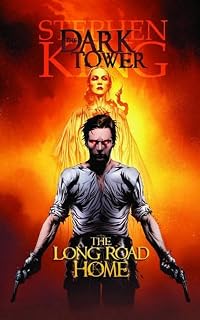







Member Recommendations
Member Reviews
So glad I didn't wait to read this book and instead read it as book 4.5. The book is a story within a story within a story, told while our ka-tet waits out a crazy storm on their journey to the Dark Tower (after the Emerald City experience in book 4). We are given both another look at a young Roland on another assignment for his father as well as a taste of the storytelling that Roland grew up with. Both these tales bring you deeper into the character of Roland as well as the history/mythology of Mid-World. Definitely a hard book for me to put down, and the best evidence yet of how much King's writing improved from "The Gunslinger" (how much I did not like that book cannot fully be explained). Even though this novel was written after show more the "completion" of the original Dark Tower series, I am still looking forward to the rest of the books. show less
Here we are again in Mid-World, following Roland and his ka-tet as they head towards the Dark Tower at the centre of creation; and it's like I've never been away.
Actually that last bit is hogwash. It's been seven and a half years (!) since I read [b:The Dark Tower|22549|The Dark Tower|Stephen King|http://photo.goodreads.com/books/1167351400s/22549.jpg|6309701] and returning to its world was, like returning anywhere after a long absence, a little weird at first. I'd forgotten a great deal, everything from the interplay between Roland and his friends to the peculiar derivative of English that the inhabitants of Mid-World speak. But as the pages passed I found myself comfortable once more and remembering why it is that I love King's show more heptalogy so.
The book is essentially two novellas and a short story. Squeezing three good stories into a little over three hundred pages sounds like a challenge for any author, fortunately King is no stranger to both the short story and novella format. The novelty here is that the stories aren't three separate entities, but are buried within one another. We start the book following Roland and company after the events of [b:Wizard and Glass|5096|Wizard and Glass (The Dark Tower, #4)|Stephen King|http://photo.goodreads.com/books/1327946510s/5096.jpg|750558]; sheltering from the kind of storm that would make Roland Emmerich drool, Roland tells a tale from his youth… and so we follow a younger Roland after the flashback-events of Wizard and Glass, on one of his first real missions and in pursuit of a fearsome beastie; late in the tale, wanting to distract a young boy from recent horrors, Roland tells a tale from his childhood… and so we come to the eponymous fairy tale. Ka is a wheel, and it turns, as they say.
All three stories are well told with the innermost story in particular being a fantastic tale (in both senses). King's use of language is at its very best and his logistical choices also demonstrate his cunning. The stories are skewed to the right, as it were, with each new tale starting towards the end of its predecessor, so that when they start ending they all end quickly without us having to resettle ourselves in Roland's youth, and then in his maturity.
Obviously the book doesn't reveal much that is new in the Dark Tower universe, but then sitting as it does before the antepenultimate book in the series it was never going to. But then that shouldn't be the point. While the last three books in the series were mighty fine in their own right, it was inevitable that the closer Roland drew to the Dark Tower the more I became interested in his destination over his journey. It's a relief, then, that here in the middle of all things Roland doesn't move an inch closer to the Tower, yet holds me enthralled none the less. show less
Actually that last bit is hogwash. It's been seven and a half years (!) since I read [b:The Dark Tower|22549|The Dark Tower|Stephen King|http://photo.goodreads.com/books/1167351400s/22549.jpg|6309701] and returning to its world was, like returning anywhere after a long absence, a little weird at first. I'd forgotten a great deal, everything from the interplay between Roland and his friends to the peculiar derivative of English that the inhabitants of Mid-World speak. But as the pages passed I found myself comfortable once more and remembering why it is that I love King's show more heptalogy so.
The book is essentially two novellas and a short story. Squeezing three good stories into a little over three hundred pages sounds like a challenge for any author, fortunately King is no stranger to both the short story and novella format. The novelty here is that the stories aren't three separate entities, but are buried within one another. We start the book following Roland and company after the events of [b:Wizard and Glass|5096|Wizard and Glass (The Dark Tower, #4)|Stephen King|http://photo.goodreads.com/books/1327946510s/5096.jpg|750558]; sheltering from the kind of storm that would make Roland Emmerich drool, Roland tells a tale from his youth… and so we follow a younger Roland after the flashback-events of Wizard and Glass, on one of his first real missions and in pursuit of a fearsome beastie; late in the tale, wanting to distract a young boy from recent horrors, Roland tells a tale from his childhood… and so we come to the eponymous fairy tale. Ka is a wheel, and it turns, as they say.
All three stories are well told with the innermost story in particular being a fantastic tale (in both senses). King's use of language is at its very best and his logistical choices also demonstrate his cunning. The stories are skewed to the right, as it were, with each new tale starting towards the end of its predecessor, so that when they start ending they all end quickly without us having to resettle ourselves in Roland's youth, and then in his maturity.
Obviously the book doesn't reveal much that is new in the Dark Tower universe, but then sitting as it does before the antepenultimate book in the series it was never going to. But then that shouldn't be the point. While the last three books in the series were mighty fine in their own right, it was inevitable that the closer Roland drew to the Dark Tower the more I became interested in his destination over his journey. It's a relief, then, that here in the middle of all things Roland doesn't move an inch closer to the Tower, yet holds me enthralled none the less. show less
In quella grande cucina che è il suo cervello, Zio Steve impasta e rimescola, salva ricette, mette via gli avanzi per un futuro uso, accumula spezie in vecchi barattoli polverosi. Poi, un giorno, tira fuori da sotto una pigna un mezzo foglio: la ricetta non è completa ma non importa, gli ingredienti sono lì, messi da parte, e se qualcuno è un po' muffo basta tagliare la parte messa peggio e tenere il resto e la sua grande arte di cuoco fa il resto.
Per chi lo conosce bene, è facile riconoscere dove la pietanza si era un po' attaccata al fondo e dove ha aggiunto all'ultimo momento un ingrediente preso a caso dalla sua immensa dispensa, ma che fa? la classe è tale che il piatto riesce comunque superiore a quelli di quasi tutti i show more cuochi, anche quando la pietanza è un po' contestata come la serie de La torre nera.
Tutto questo per dire che ogni tanto ho ridacchiato riconoscendo le pezze, ma lo stesso me la sono goduta, e ho fatto mattina per finire il romanzo. show less
Per chi lo conosce bene, è facile riconoscere dove la pietanza si era un po' attaccata al fondo e dove ha aggiunto all'ultimo momento un ingrediente preso a caso dalla sua immensa dispensa, ma che fa? la classe è tale che il piatto riesce comunque superiore a quelli di quasi tutti i show more cuochi, anche quando la pietanza è un po' contestata come la serie de La torre nera.
Tutto questo per dire che ogni tanto ho ridacchiato riconoscendo le pezze, ma lo stesso me la sono goduta, e ho fatto mattina per finire il romanzo. show less
I so love Roland and his ka-tet! What a pleasant little surprise this was for me. Long after the final dark tower book was released, we are gifted with this tale within a tale within a tale. Roland and the gang are riding out a vicious storm when he begins to tell them about his time tracking a skin-walker. Embedded in this tale is the true meat of the book, a fable from his childhood about Tim Stoutheart. It is beautifully written and crafted in mid-world, but a story of bravery anyone could appreciate.
I think I enjoyed this so much because I love the stories of Roland as a boy (my favorite being of course the Wizard and Glass). We are given the chance to see what shaped him into the gunslinger he is today. This was short by King's show more standards-- only 300 pages. Despite this, it transported me into the beloved world of the Ka-tet. Great for lovers of the series, but I am sure it would stand on it's own prettty darn well and for that I say Thankyee sai. show less
I think I enjoyed this so much because I love the stories of Roland as a boy (my favorite being of course the Wizard and Glass). We are given the chance to see what shaped him into the gunslinger he is today. This was short by King's show more standards-- only 300 pages. Despite this, it transported me into the beloved world of the Ka-tet. Great for lovers of the series, but I am sure it would stand on it's own prettty darn well and for that I say Thankyee sai. show less
I love the Dark Tower series. It’s flawed and uneven, sure, I won’t argue with you about that. But Mid-World is wonderfully weird, and Roland Deschain is unforgettable – sad, grim, driven, honorable, and faithful to a fault to the code of the gunslinger.
I didn’t realize how much I missed Roland and his ka-tet until I opened the pages of this Mid-World turducken, served up between “Wizard and Glass” and “Wolves of the Calla.” En route from a devastated alternate Kansas to the besieged frontier settlement of Calla, our adventurers find it necessary to hole up and wait out a mortal storm. As the wind pummels, Roland passes the time by telling a tale from his youth, when as a young gunslinger hunting a killer he comforted a show more witness by telling a story his own mother used to tell: “The Wind Through the Keyhole.”
Dark Tower lore doesn’t move forward much (if at all) in this side quest, but the story within a story within a story is rich with the texture that makes the series so enjoyable. All the classic hits are playing: the blend of medieval chivalry and Old West settlement that is Gilead, the old magic that thrums beneath the surface of mundanity, the decaying technological flotsam of North Central Positronics, the bits and pieces of Americana that have filtered into this level of the Tower from our own world.
I think anyone could enjoy this peek into a land that’s “moved on,” but only at the risk of some pretty important spoilers. This novel is meant for readers like me who closed the final volume of the main series with regret, but didn’t know how deeply the Tower had struck its foundations before picking up this book and realizing how good it is to be back in Mid-World. Now I ken it very well, and say thankya. show less
I didn’t realize how much I missed Roland and his ka-tet until I opened the pages of this Mid-World turducken, served up between “Wizard and Glass” and “Wolves of the Calla.” En route from a devastated alternate Kansas to the besieged frontier settlement of Calla, our adventurers find it necessary to hole up and wait out a mortal storm. As the wind pummels, Roland passes the time by telling a tale from his youth, when as a young gunslinger hunting a killer he comforted a show more witness by telling a story his own mother used to tell: “The Wind Through the Keyhole.”
Dark Tower lore doesn’t move forward much (if at all) in this side quest, but the story within a story within a story is rich with the texture that makes the series so enjoyable. All the classic hits are playing: the blend of medieval chivalry and Old West settlement that is Gilead, the old magic that thrums beneath the surface of mundanity, the decaying technological flotsam of North Central Positronics, the bits and pieces of Americana that have filtered into this level of the Tower from our own world.
I think anyone could enjoy this peek into a land that’s “moved on,” but only at the risk of some pretty important spoilers. This novel is meant for readers like me who closed the final volume of the main series with regret, but didn’t know how deeply the Tower had struck its foundations before picking up this book and realizing how good it is to be back in Mid-World. Now I ken it very well, and say thankya. show less
this is a nice diversion. i doubt it adds anything to the real tale of the tower, especially as it was written after, and seems to serve mostly as just another example of roland's early gunslinging, plus the story within the story where maerlyn shows up. otherwise it's mostly just a nice tale to tell while you're sitting and waiting out a storm, so you can get back to chasing the tower.
i really like the way he says they start stories, rather than our 'once upon a time' here:
"Once upon a bye, long before your grandfather's grandfather was born..."
"The worst thing about wishes is that sometimes they come true."
i really like the way he says they start stories, rather than our 'once upon a time' here:
"Once upon a bye, long before your grandfather's grandfather was born..."
"The worst thing about wishes is that sometimes they come true."
When Stephen King finally started writing towards the conclusion of his epic Dark Tower series, he was still recovering from a near fatal vehicle accident – a man it seemed right out of one of his books, driving a black van, ran him down while he was walking. King has noted several times that little, old ladies and inmates on death row had begged him to either finish the story quickly, or at least secretly give them the ending before they passed from this world. King was not out of touch with these obsessive yearnings; he also felt compelled to finish his opus and leave it for future generations. The end, if it can be called that, came quickly once started. It seemed that King himself was on a mad train of his own making, barreling show more toward oblivion with no hope of salvation unless he finished.
When the last book was published in our hands, we all devoured it, heart sick with the turning of each page, closer to the end of a journey that had lasted, for many of us, several decades. But the end is the end. Isn’t it?
King found Roland and his ka-tet still spoke to him. And if they spoke to him, he knew he had to tell the story. The result is [The Wind Through the Keyhole], an installment in the Dark Tower series that King places in between [Wizard and Glass] and [Wolves of the Calla] – Dark Tower 4.5.
Like [Wizard and Glass], this story is an interlude. Roland, Eddie, Susannah, Jake, and Oy, have escaped the Tick Tock Man and Randall Flagg at the Green Palace. They are on the road to the Outer Baronies where they will have to stand and fight. But before they find that fight, a fatal storm blows in and they have to shelter. Left with nothing else to do, Roland indulges them with another adventure from his young life – the tracking and killing of a shape-shifting creature that has beset a mining town. In the telling, he also recounts one of the fables of his own youth, The Wind Through the Keyhole, a fable of a young boy’s courage in the face of evil and dark magic.
For the truly obsessed fans of Dark Tower and King, [The Wind Through the Keyhole] is an unexpected and rich gift. And while this is not the best of the books in the series, any opportunity to read about Roland again is welcome.
5 bones!!!!!
An All-Time Favorite show less
When the last book was published in our hands, we all devoured it, heart sick with the turning of each page, closer to the end of a journey that had lasted, for many of us, several decades. But the end is the end. Isn’t it?
King found Roland and his ka-tet still spoke to him. And if they spoke to him, he knew he had to tell the story. The result is [The Wind Through the Keyhole], an installment in the Dark Tower series that King places in between [Wizard and Glass] and [Wolves of the Calla] – Dark Tower 4.5.
Like [Wizard and Glass], this story is an interlude. Roland, Eddie, Susannah, Jake, and Oy, have escaped the Tick Tock Man and Randall Flagg at the Green Palace. They are on the road to the Outer Baronies where they will have to stand and fight. But before they find that fight, a fatal storm blows in and they have to shelter. Left with nothing else to do, Roland indulges them with another adventure from his young life – the tracking and killing of a shape-shifting creature that has beset a mining town. In the telling, he also recounts one of the fables of his own youth, The Wind Through the Keyhole, a fable of a young boy’s courage in the face of evil and dark magic.
For the truly obsessed fans of Dark Tower and King, [The Wind Through the Keyhole] is an unexpected and rich gift. And while this is not the best of the books in the series, any opportunity to read about Roland again is welcome.
5 bones!!!!!
An All-Time Favorite show less
Members
- Recently Added By
Lists

Stephen King Bibliography
77 works; 3 members

Dark Tower Books
47 works; 2 members

Books Read in 2012
816 works; 34 members

Jarett's Books
86 works; 1 member

Mind Expanding Books by hackerkid
581 works; 8 members

Eerie eTales
192 works; 3 members
Talk Discussions
Past Discussions
June 2014's SK Flavor of the Month - The Wind Through the Keyhole in King's Dear Constant Readers (August 2014)
The Wind Through the Keyhole in King's Dear Constant Readers (May 2012)
Author Information

Stephen King was born in Portland, Maine, on September 21, 1947. After graduating with a Bachelor's degree in English from the University of Maine at Orono in 1970, he became a teacher. His spare time was spent writing short stories and novels. King's first novel would never have been published if not for his wife. She removed the first few show more chapters from the garbage after King had thrown them away in frustration. Three months later, he received a $2,500 advance from Doubleday Publishing for the book that went on to sell a modest 13,000 hardcover copies. That book, Carrie, was about a girl with telekinetic powers who is tormented by bullies at school. She uses her power, in turn, to torment and eventually destroy her mean-spirited classmates. When United Artists released the film version in 1976, it was a critical and commercial success. The paperback version of the book, released after the movie, went on to sell more than two-and-a-half million copies. Many of King's other horror novels have been adapted into movies, including The Shining, Firestarter, Pet Semetary, Cujo, Misery, The Stand, and The Tommyknockers. Under the pseudonym Richard Bachman, King has written the books The Running Man, The Regulators, Thinner, The Long Walk, Roadwork, Rage, and It. He is number 2 on the Hollywood Reporter's '25 Most Powerful Authors' 2016 list. King is one of the world's most successful writers, with more than 100 million copies of his works in print. Many of his books have been translated into foreign languages, and he writes new books at a rate of about one per year. In 2003, he received the National Book Foundation Medal for Distinguished Contribution to American Letters. In 2012 his title, The Wind Through the Keyhole made The New York Times Best Seller List. King's title's Mr. Mercedes and Revival made The New York Times Best Seller List in 2014. He won the Edgar Allan Poe Award in 2015 for Best Novel with Mr. Mercedes. King's title Finders Keepers made the New York Times bestseller list in 2015. Sleeping Beauties is his latest 2017 New York Times bestseller. (Bowker Author Biography) Stephen King is the author of more than thirty books, all of them worldwide bestsellers. Among his most recent are "Hearts in Atlantis", "The Girl Who Loved Tom Gordon", "Bag of Bones", & "The Green Mile". "On Writing" is his first book of nonfiction since "Danse Macabre", published in 1981. He served as a judge for Prize Stories: The Best of 1999, The O. Henry Awards. He lives in Bangor, Maine with his wife, novelist Tabitha King. King's book, The Bazaar of Bad Dreams: Stories, made the 2015 New York Times bestseller list. (Publisher Provided) show less
Awards and Honors
Series

Work Relationships
Is contained in
Common Knowledge
- Canonical title
- The Wind Through the Keyhole
- Original title
- The Dark Tower IV: The Wind through the Keyhole
- Original publication date
- 2012-03-12
- People/Characters
- Roland Deschain; Jake Chambers; Eddie Dean; Susannah Dean; Oy; Bix (show all 40); Steven Deschain; Hugh Peavy; Jamie DeCurry; Everlynne of Serenity; Sister Fortunata; Kellin Frye; Vikka Frye; Bill Canfield; Bill Streeter; Tim Ross; Nell Ross; Jack Ross; Ardelia Smack; Bern Kells; Covenant Man; "Straw" Willem Destry; "Square" Peter Cosington; "Slow" Ernie Marchly; Baldy Anderson; Ada Cosington; Dustin Stokes; Armaneeta; Helmsman; Tallman; Daria (North Central Positronics Portable Guidance Module DARIA, NCP-1436345-AN); Will Wegg; Strother; Pickens; Snip; Steg Luka; Ollie Ang; Bobby Frane; Jake Marsh; Maerlyn
- Important places
- Mid-World (fictional); Gook; Debaria; Little Debaria; Tree Village; Fagonard Swamp (show all 7); North Forest Kinnock Dogan
- Dedication
- This is for Robin Furth, and the gang at Marvel Comics.
- First words
- During the days after they left the Green Palace tha wasn't Oz after all -- but which was now the tomb of the unpleasant fellow Roland's ka-tet had known as the Tick-Tock Man -- the boy Jake began to range farther and farther... (show all) ahead of Roland, Eddie, and Susannah.
- Quotations
- It seemed to him that if the wrong man stepped into the marriage-loop with a woman, it was a noose instead of a ring.
"I cut the rope so, chary man!"
Time was a face on the water, and like the great river before them, it did nothing but flow.
There's nothing like stories on a windy night when folks have found a warm place in a cold world.
Horror's a worm that needs to be coughed out before it breeds. Now tell them.
The salt ye take is the salt ye must pay for, as anyone from these parts will tell you. (show all 12)
The stories we hear in childhood are the ones we remember all our lives.
It hurt, of course, but more often than note the best things do, I've found. You wouldn't think it could be so, but--as the oldtimers used to say--the world's tilted, and there's an end to it.
Look not long at what's offered, for every precious thing has wings and may fly away.
It was not fair, it was not fair, it was not fair. So cried his child's heart, and then his child's heart died a little. For that is also the way of the world.
If the sweetness of our lives did not depart, there would be no sweetness at all.
Luck's the word those with poor hearts use for ka, Susannah of New York. - Last words
- (Click to show. Warning: May contain spoilers.)These are things that happened, once upon a bye.
- Original language
- English
Classifications
Statistics
- Members
- 5,256
- Popularity
- 2,592
- Reviews
- 149
- Rating
- (4.01)
- Languages
- 18 — Czech, Danish, Dutch, English, Finnish, French, German, Hungarian, Italian, Polish, Portuguese, Romanian, Russian, Serbian, Spanish, Swedish, Turkish, Ukrainian
- Media
- Paper, Audiobook, Ebook
- ISBNs
- 72
- ASINs
- 33