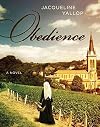
Obedience
by Jacqueline Yallop
On This Page
Description
Set in contemporary and World War II France, this is the story of Sister Bernard: her forbidden love, her uncertain faith, and her guilt-ridden past. "Obedience" is a powerful exploration of one woman's struggle to reconcile her aching need to be loved with her fear of God's wrath.Tags
Recommendations











































Member Recommendations
Member Reviews
Obedience by Jacqueline Yallop is really a tale of two stories – one is historical fiction, allowing the reader insight into occupied France during World War II, and the other is contemporary fiction, showcasing the end of an era. Throughout both stories flows Sister Bernard’s history, past and present combining to highlight the lasting impact one moment’s poor decision had on the rest of her life. While Sister Bernard is forced to confront her guilt, the unfolding of her story highlights the true victims and guilty party of those past deeds. A difficult book to describe, Obedience is a compelling read for its brutally honest depiction of convent life, the pressure to conform, and the steps people are willing to take to survive show more when the world is torn upside-down.
The words “poor decision” when describing Sister Bernard’s life-changing moment is something of a misnomer. Her need to find love overrides every instinct her upbringing and religious life has instilled in her. Indeed, this is the true tragedy, as this need induces her to act before thinking and to take chances when to be caught means almost certain death. What is worse is the fact that her sheltered existence within the convent fails to prepare her for the true circumstances behind the presence of the German soldiers and the cruelty of mankind. Sister Bernard is simply a nun in the wrong place at the wrong time, and her overwhelming need to belong to someone places her in some truly unfortunate, horrific experiences.
Obedience itself is rather jagged in its storytelling. The sections jump from one era to the next with little to no warning or explanation of the current time frame of the story in a given section. The reader is forced to determine whether it is past or present based on certain clues. This does become easier towards the end, when the two scenes are more familiar to the reader, but can be confusing in the beginning of the novel. Similarly, Obedience is one of those novels that does not willingly share its secrets and truths. Rather, the entire story is hazy, almost impressionistic, providing no clear picture of motive, personalities, physical descriptions, or anything else which would add clarity to the truth. Instead, the reader is forced to interpret the hidden secrets, much like someone interprets a painting, based on the sweeping strokes of Ms. Yallop’s pen.
While difficult to describe, Obedience is one novel that sneaks under a reader’s skin. Languid in its storytelling, the story unfolds slowly and yet surprisingly forcefully, compelling the reader to feel the full weight of Sister Bernard’s emotional turmoil. It is a novel that leaves the reader grasping under the weight of the full knowledge of lost opportunities and lost truths.
Acknowledgements: Thank you to NetGalley and to Elaine Broeder from Penguin Group for my e-galley! show less
The words “poor decision” when describing Sister Bernard’s life-changing moment is something of a misnomer. Her need to find love overrides every instinct her upbringing and religious life has instilled in her. Indeed, this is the true tragedy, as this need induces her to act before thinking and to take chances when to be caught means almost certain death. What is worse is the fact that her sheltered existence within the convent fails to prepare her for the true circumstances behind the presence of the German soldiers and the cruelty of mankind. Sister Bernard is simply a nun in the wrong place at the wrong time, and her overwhelming need to belong to someone places her in some truly unfortunate, horrific experiences.
Obedience itself is rather jagged in its storytelling. The sections jump from one era to the next with little to no warning or explanation of the current time frame of the story in a given section. The reader is forced to determine whether it is past or present based on certain clues. This does become easier towards the end, when the two scenes are more familiar to the reader, but can be confusing in the beginning of the novel. Similarly, Obedience is one of those novels that does not willingly share its secrets and truths. Rather, the entire story is hazy, almost impressionistic, providing no clear picture of motive, personalities, physical descriptions, or anything else which would add clarity to the truth. Instead, the reader is forced to interpret the hidden secrets, much like someone interprets a painting, based on the sweeping strokes of Ms. Yallop’s pen.
While difficult to describe, Obedience is one novel that sneaks under a reader’s skin. Languid in its storytelling, the story unfolds slowly and yet surprisingly forcefully, compelling the reader to feel the full weight of Sister Bernard’s emotional turmoil. It is a novel that leaves the reader grasping under the weight of the full knowledge of lost opportunities and lost truths.
Acknowledgements: Thank you to NetGalley and to Elaine Broeder from Penguin Group for my e-galley! show less
Sister Bernard, a young nun in a French convent during WWII, falls for a German soldier who is billeted nearby. It is difficult to know if Sister Bernard is capable of rational thinking; however, in the hope of keeping the German soldier interested, she betrays not only her vows, but the secrets of the Resistance movement. This novel moves between her past memories and the present day reality of having to leave the convent when she is in her 90s. There is a poignancy to this novel when the reader is allowed to see the consequences of Sister Bernard's long-ago decisions and heartbreak. I found it thought provoking and an interesting view of convent life.
In the beginning of this book, I was unconvinced by the young nun Sister Bernard's naivete and then as the story continued I wondered if she actually had Downs Syndrome, the narrator refers to her moon shaped face, very short stature and she was such a simple soul lacking in guile and being taken advantage of. It seemed feasible that a widowed father might place such a daughter in a convent during pre-second World War years.
Anyway, young Sister Bernard is lured into a relationship with a young German soldier not realising that he is using her to find out information about the villagers Resistance movement. Of course the consequences prove catastrophic. The tale then moves forward to modern day, where the once bustling convent is being show more closed and the three remaining nuns are being transferred to aged care homes. Sister Bernard, now in her nineties, is one of them. The changing timeline allows for the slow revelation of events both past and present and produces a few shocks and surprises.
It was an interesting look at a community that I have read little about, although all my education was at Catholic Schools and by nuns. Their obvious lack of worldliness and simple lifestyle and also the attitude of the slightly wider village community during a period of turmoil, is subtly portrayed.
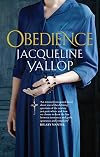
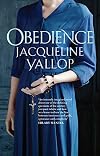
It also has a commendation from Hilary Mantel on both front and back covers 'An intensely imagined novel about one of the defining questions of the century just past: where and how we chose to draw the line between innocence and guilt, ignorance and complicity'. show less
Anyway, young Sister Bernard is lured into a relationship with a young German soldier not realising that he is using her to find out information about the villagers Resistance movement. Of course the consequences prove catastrophic. The tale then moves forward to modern day, where the once bustling convent is being show more closed and the three remaining nuns are being transferred to aged care homes. Sister Bernard, now in her nineties, is one of them. The changing timeline allows for the slow revelation of events both past and present and produces a few shocks and surprises.
It was an interesting look at a community that I have read little about, although all my education was at Catholic Schools and by nuns. Their obvious lack of worldliness and simple lifestyle and also the attitude of the slightly wider village community during a period of turmoil, is subtly portrayed.
It also has a commendation from Hilary Mantel on both front and back covers 'An intensely imagined novel about one of the defining questions of the century just past: where and how we chose to draw the line between innocence and guilt, ignorance and complicity'. show less
I found this novel well-written, interesting and thought-provoking.
I think the novel is about naivety, the abuse of power (the Nazi occupying forces, Mother Catherine, Corrine), one's faith and guilt.
I felt empathy for Sister Bernard. She was used by other characters for their own gain and then shunned by various groups. She is portrayed as a naive and lonely character.
I liked the way the novel went from past to present to slowly reveal different parts of Sister Bernard's life. I really enjoyed the symbolism of Sister Bernard losing God's voice from her head.
I do recommend this novel.
I think the novel is about naivety, the abuse of power (the Nazi occupying forces, Mother Catherine, Corrine), one's faith and guilt.
I felt empathy for Sister Bernard. She was used by other characters for their own gain and then shunned by various groups. She is portrayed as a naive and lonely character.
I liked the way the novel went from past to present to slowly reveal different parts of Sister Bernard's life. I really enjoyed the symbolism of Sister Bernard losing God's voice from her head.
I do recommend this novel.
It is difficult to determine the target market for this story.
Being non-religious, I found the relentless trope of a nagging peevish god that shadows Sister Bernard tedious and off-putting. The story is exceedingly slow to take off and Yallop seems to have difficulty carrying off telling the story of Sister Bernard's present when it is her past that might have made her interesting.
The euphemistic descriptions of Bernard's passion for the solider seem intended to force the reader to focus on the nun's present, where she is still being punished for the transgressions of her youth.
Bernard is depicted as a stupid person, without any real allegiance except to herself. She appears oblivious to the vows she made to become a nun and casually show more betrays her community and the village where she grew up to the occupying forces. She never fully accepts responsibility for anything; neither leaving the convent for love, nor giving up that love for the convent.
The characters are insipid, and for the most part petty. Bernard is a sad figure, surrounded by self-righteous and vindictive people. No one cares about her (including the reader!) and, ultimately, the only solace she finds is in her memories of what might have been. Religious readers will find her fall from grace objectionable, and non religious readers will find her piety and devotion tedious and incomprehensible. show less
Being non-religious, I found the relentless trope of a nagging peevish god that shadows Sister Bernard tedious and off-putting. The story is exceedingly slow to take off and Yallop seems to have difficulty carrying off telling the story of Sister Bernard's present when it is her past that might have made her interesting.
The euphemistic descriptions of Bernard's passion for the solider seem intended to force the reader to focus on the nun's present, where she is still being punished for the transgressions of her youth.
Bernard is depicted as a stupid person, without any real allegiance except to herself. She appears oblivious to the vows she made to become a nun and casually show more betrays her community and the village where she grew up to the occupying forces. She never fully accepts responsibility for anything; neither leaving the convent for love, nor giving up that love for the convent.
The characters are insipid, and for the most part petty. Bernard is a sad figure, surrounded by self-righteous and vindictive people. No one cares about her (including the reader!) and, ultimately, the only solace she finds is in her memories of what might have been. Religious readers will find her fall from grace objectionable, and non religious readers will find her piety and devotion tedious and incomprehensible. show less
Bitter and beautiful and deeply sad. Would be a great read along side of Naomi Alderman's Disobedience - another take on what happens when we follow what we think is God - or society's will.
The author made a huge risk of writing this because it tackles the stigma that the Catholic Church isn't perfect like what we assumed it to be. The author is really brave on writing a story about some members of the religious community who vowed celibacy yet they had issues like this. Moreover, she even incorporate on how the Church sometimes even hide and protect them just because they don't want people to be aware of it. A big round of applause for the author on making a leap and writing something like this.
Members
- Recently Added By
Author Information
8 Works 201 Members
Common Knowledge
- Canonical title
- Obedience
- Original publication date
- 2011
- People/Characters
- Sister Bernard
- Important events
- World War II
- Dedication
- For Mum and Dad
- First words
- Mother Catherine knew the devil.
- Last words
- (Click to show. Warning: May contain spoilers.)It was enough that her passion had not been wasted.
Classifications
Statistics
- Members
- 82
- Popularity
- 381,976
- Reviews
- 8
- Rating
- (3.69)
- Languages
- English
- Media
- Paper, Audiobook, Ebook
- ISBNs
- 14
- ASINs
- 3