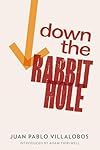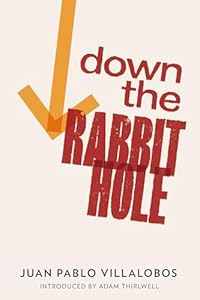
Down the Rabbit Hole
by Juan Pablo Villalobos
On This Page
Description
What Tochtli wants more than anything right now is a new pet for his private zoo: a pygmy hippopotamus from Liberia. But Tochtli is growing up in his drug baron father's luxury hideout, shared with hit men and dealers. Down the Rabbit Hole, a masterful and darkly-comic first novel, is the chronicle of a delirious journey to grant a child's wish.Tags
Recommendations





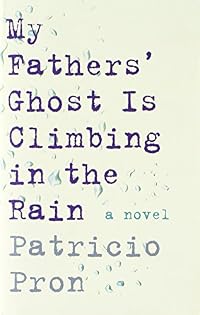
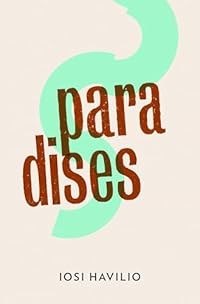
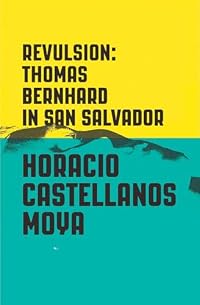
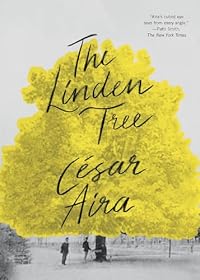
Member Recommendations
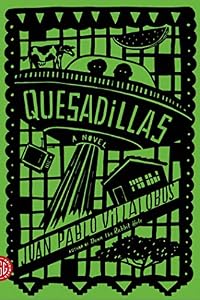
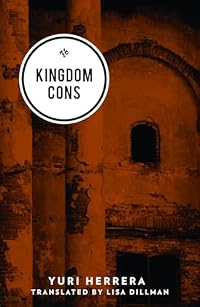
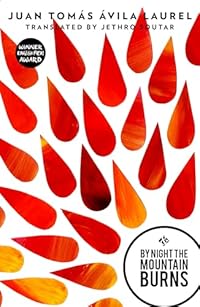
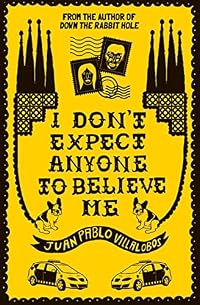
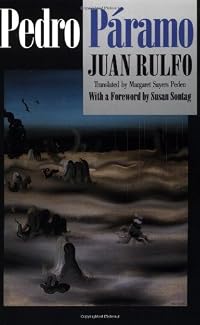
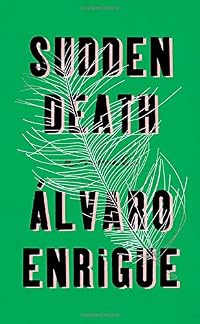
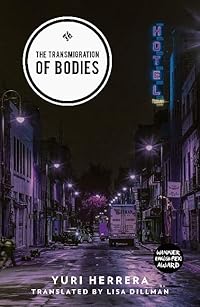
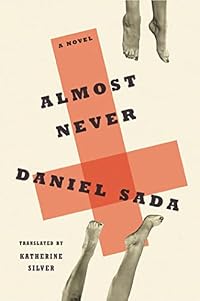
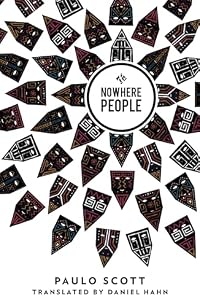
CecileB Ce sont deux romans qui dénoncent le climat qu'impose au Mexique le trafic de la drogue.
Member Reviews
Desconcertante talvez seja a melhor palavra para definir essa novela. Sob um véu de simplicidade o autor revela humor, cinismo, loucura enquanto desvenda a intimidade do "lar" de um narcotraficante. Trata-se de universo surrealista e ao mesmo tempo hiperrealista. A loucura é o protagonista que permeia as relações e as revelações se impondo com naturalidade de sanatório. Não é realismo fantástico latino americano nem surrealismo de Lewis Carrol, mas a dura loucura dos psicopatas com a leveza impossível de uma criança. Impossível não rir e impossível não ficar incomodado, perplexo e finalmente deprimido.
This short novel (more of a novella or novelette really) is a dark comedy about the isolated life of a paranoid drug lord as told by his 10 year old son. Tochti is a motherless kid with some odd interests: samurai, dictionaries and words, and hats, and he really wants a pygmy hippopotamus for his collection. He lives in isolation in a palatial estate, knowing only a few people. His tutor, the cook, the two bodyguards, his father's girlfriend. And Tochti is learning the lingo of the drug trade.
I thought the book an interesting and enjoyable read, a sad book because Tochti's innocence in being chipped away at before our eyes. Yet, it's darkly comic, taking something tragic and making it funny and often absurd. It's been highly praised and show more was short-listed for the Guardian first book prize, but I can't rave about it. Vilalobos is clearly a talented new writer and worth watching. show less
I thought the book an interesting and enjoyable read, a sad book because Tochti's innocence in being chipped away at before our eyes. Yet, it's darkly comic, taking something tragic and making it funny and often absurd. It's been highly praised and show more was short-listed for the Guardian first book prize, but I can't rave about it. Vilalobos is clearly a talented new writer and worth watching. show less
Rating: 4* of five
The Book Description: “A brief and majestic debut.” —Matías Néspolo, El Mundo
Tochtli lives in a palace. He loves hats, samurai, guillotines, and dictionaries, and what he wants more than anything right now is a new pet for his private zoo: a pygmy hippopotamus from Liberia. But Tochtli is a child whose father is a drug baron on the verge of taking over a powerful cartel, and Tochtli is growing up in a luxury hideout that he shares with hit men, prostitutes, dealers, servants, and the odd corrupt politician or two. Long-listed for The Guardian First Book Award, Down the Rabbit Hole, a masterful and darkly comic first novel, is the chronicle of a delirious journey to grant a child’s wish.
My Review: First, I show more must get this off my chest: THIS IS NOT A NOVEL. At ~35,000 words, it could be called a novella, a work of 15,000 to 40,000 words (definitions vary on this point, but ALL definitions include 30,000-40,000 words in them and this is that length) that features fewer conflicts than a full novel and more complex ones than a short story. I don't think it's a novella because it's a first-person story and features only one fully developed character, Tochtli (“Rabbit” in Nahuatl, relax we'll get there). It's a récit , a form of narrative that has a simple through line, is told from one PoV and quite often in first-person present and past, and offers little in the way of contextualization, of “world-building,” as it's all in the narrator's PoV. I hate the publisher and the trade folk yip-yapping NOVELNOVELNOVEL about a 70-page (generous margins, several blank pages in the text) so as to get over the reading public's aversion to “lesser” forms. How about we review the piece as it is, and urge the reading public to read it without misleading them? Someone buying a novel expects that it will do what novels do, really explore one or two conflicts with results and resultant changes in characters' lives. Not happenin' here.
Well, okay, I'm all shouted out now.
Terrific story, this one of a drug king's kid and the many oddities paranoia and isolation have allowed to blossom in him. The names, all taken from Mexico's major native tongue of Nahuatl (the Aztecs spoke it), are all of animals...the narrator's name means Rabbit, his father's name means Rattlesnake, his tutor's name means Deer, and on. They're all like gang nicknames, playing on the culture of nicknames that describe some major thing about a person. Rattlesnake? How can you not perceive a drug lord as a cold-blooded, dangerous, venomous critter? Rabbit? Scared, small, needs to be hidden away—suits our narrator's life to a T.
Translator Rosalind Harvey has done a marvelous, if British, job of rendering a precocious kid's usages and crotchets into spottily adult language. I haven't read the original Spanish, so I don't know how faithfully she's reproduced Villalobos's original, but I suspect quite well. The language has that certain “feel” that good translations do, a kind of smoothness and polished gleam that speak of quality made from quality. That Tochtli is an odd kid is to be expected, that he uses (frequently!) words he's just learning is to be expected, and since those words...sordid, pathetic, devastating...are a little above his actual grasp, the author's use of them in the kid's mouth makes several very trenchant points.
It's all part of building the reader's awareness of the twisted, strange, uncomfortably exaggerated natural parental protection of our kids. Other details include Tochtli's always painful stomach cramps that the doctor can't find a cause for, Tochtli's obsessive passions for things like being a Japanese samurai who's mute and therefore enigmatic (!), his endless list-making. The kid would've been strange no matter what, but Yolcaut (Nahuatl has no dipthongs, so say each letter as if it were a Spanish vowel or a Basque consonant) being what and who he is has made the problems giant-sized.
It's a disquieting little thing, and it's quite darkly amusing, and it's—Praise the Muses!—it's original. It's balm for a weary-of-~meh~ reader's soul. You'll love it, or you'll hate it, but you won't walk away wondering what it was that you just read. show less
The Book Description: “A brief and majestic debut.” —Matías Néspolo, El Mundo
Tochtli lives in a palace. He loves hats, samurai, guillotines, and dictionaries, and what he wants more than anything right now is a new pet for his private zoo: a pygmy hippopotamus from Liberia. But Tochtli is a child whose father is a drug baron on the verge of taking over a powerful cartel, and Tochtli is growing up in a luxury hideout that he shares with hit men, prostitutes, dealers, servants, and the odd corrupt politician or two. Long-listed for The Guardian First Book Award, Down the Rabbit Hole, a masterful and darkly comic first novel, is the chronicle of a delirious journey to grant a child’s wish.
My Review: First, I show more must get this off my chest: THIS IS NOT A NOVEL. At ~35,000 words, it could be called a novella, a work of 15,000 to 40,000 words (definitions vary on this point, but ALL definitions include 30,000-40,000 words in them and this is that length) that features fewer conflicts than a full novel and more complex ones than a short story. I don't think it's a novella because it's a first-person story and features only one fully developed character, Tochtli (“Rabbit” in Nahuatl, relax we'll get there). It's a récit , a form of narrative that has a simple through line, is told from one PoV and quite often in first-person present and past, and offers little in the way of contextualization, of “world-building,” as it's all in the narrator's PoV. I hate the publisher and the trade folk yip-yapping NOVELNOVELNOVEL about a 70-page (generous margins, several blank pages in the text) so as to get over the reading public's aversion to “lesser” forms. How about we review the piece as it is, and urge the reading public to read it without misleading them? Someone buying a novel expects that it will do what novels do, really explore one or two conflicts with results and resultant changes in characters' lives. Not happenin' here.
Well, okay, I'm all shouted out now.
Terrific story, this one of a drug king's kid and the many oddities paranoia and isolation have allowed to blossom in him. The names, all taken from Mexico's major native tongue of Nahuatl (the Aztecs spoke it), are all of animals...the narrator's name means Rabbit, his father's name means Rattlesnake, his tutor's name means Deer, and on. They're all like gang nicknames, playing on the culture of nicknames that describe some major thing about a person. Rattlesnake? How can you not perceive a drug lord as a cold-blooded, dangerous, venomous critter? Rabbit? Scared, small, needs to be hidden away—suits our narrator's life to a T.
Translator Rosalind Harvey has done a marvelous, if British, job of rendering a precocious kid's usages and crotchets into spottily adult language. I haven't read the original Spanish, so I don't know how faithfully she's reproduced Villalobos's original, but I suspect quite well. The language has that certain “feel” that good translations do, a kind of smoothness and polished gleam that speak of quality made from quality. That Tochtli is an odd kid is to be expected, that he uses (frequently!) words he's just learning is to be expected, and since those words...sordid, pathetic, devastating...are a little above his actual grasp, the author's use of them in the kid's mouth makes several very trenchant points.
Yolcaut (Rattlesnake) watched the news with me and when it was over he said some enigmatic things to me, First he said:(p21, American softcover edition)
“Ah, they suicided her.”
And then, when he'd stopped laughing:
“Think the worst and you'll be right.”
Sometimes Yolcaut speaks in enigmatic and mysterious sentences. When he does that it's pointless to ask him what he means, because he never tells me. He wants me to solve the enigma.
Before I went to sleep I looked up the word prestige in the dictionary. I learned that prestige is about people having a good idea about you, and thinking you're the best. In that case you have prestige. Pathetic.
It's all part of building the reader's awareness of the twisted, strange, uncomfortably exaggerated natural parental protection of our kids. Other details include Tochtli's always painful stomach cramps that the doctor can't find a cause for, Tochtli's obsessive passions for things like being a Japanese samurai who's mute and therefore enigmatic (!), his endless list-making. The kid would've been strange no matter what, but Yolcaut (Nahuatl has no dipthongs, so say each letter as if it were a Spanish vowel or a Basque consonant) being what and who he is has made the problems giant-sized.
It's a disquieting little thing, and it's quite darkly amusing, and it's—Praise the Muses!—it's original. It's balm for a weary-of-~meh~ reader's soul. You'll love it, or you'll hate it, but you won't walk away wondering what it was that you just read. show less
This book looks at drug lord life through the eyes of a seven-year-old son of a drug kingpin in Mexico. What starts out as potentially-charming narration by a precocious child quickly turns chilling & disturbing. I think the book is deceptively simple (since the narration mimics a 7yo, plus its short length) but the deeper observations & messages are heartbreaking. It hit hard for me. Maybe because I'm a parent? A simple, yet immensely hard, book.
I usually don't rate short novellas 4 stars, but this is so cleverly done and the language so matter of fact yet poignant all the same. A young boy whose father is a drug lord is the narrator of this book, and the way he accepts all facets of his strange life is at time humorous and at time appalling. He talks of corpses, guns, bullets, gangs, cocaine and all the things he sees living with his father. It is rather fascinating, a mix of precociousness and naivete. Yet the boy has stomach troubles which the doctor thinks is psychosomatic so obviously the boy does feel stress from his strange existence, though I am not sure that he considers it strange since he has known no other life. Anyway this is the first short novel that I actually show more consider rather complete. show less
There's no way I could believe that the narrator of this book was a 7 year old boy, even a precocious one. He could be a genius, which could as well be born to a Mexican drug lord as to anyone else, but still, beyond credulity. However the way Villalobos talks about morality through this boy's eyes is genius. Since his father is so very rich the boy lives in a secluded palace where he knows only about 14 people - not counting corpses, which he doesn't think he should count. Little Tochtli (Rabbit) knows lots about corpses since they seem to be one of his father's most important products. In fact he and his father play a little verbal game about how many bullets and where should they be placed in order to make a corpse. Being macho is show more the number one value of Tochtli and his father's little gang, the opposite of which is to be a faggot who cries when he is made into a corpse. Tochtli tries very hard not to be a faggot and usually succeeds. Tochtli's father, the king, doesn't discipline him but rather buys him presents to persuade correct behavior. The next present Tochtli wants is a Liberian pygmy hippopotamus, and he absolutely thinks he can acquire this prize.
The essence of Down the Rabbit Hole is the learning of morality, and this is expressed both lightly and with gut wrenching force. I've always said that you should teach your children about sex from the earliest age possible because their minds are open and they can accept all ideas without horror, shame or disgust if presented properly. Tochtli accepts his lessons in macho consciously, but, the book wonders, is there a part of humanity that has empathy - that rejects the idea of casual murder or than cannot accept such ideas without harm to the person? This book is a very quick read with very deep impact. show less
The essence of Down the Rabbit Hole is the learning of morality, and this is expressed both lightly and with gut wrenching force. I've always said that you should teach your children about sex from the earliest age possible because their minds are open and they can accept all ideas without horror, shame or disgust if presented properly. Tochtli accepts his lessons in macho consciously, but, the book wonders, is there a part of humanity that has empathy - that rejects the idea of casual murder or than cannot accept such ideas without harm to the person? This book is a very quick read with very deep impact. show less
Down the Rabbit Hole is narrated by Tochtli, the child of a Mexican drug lord who lives in a palace shut off from the outside world and surrounded by bodyguards. Tochtli is a precocious child who is fascinated with hats, samurai and the Liberian pygmy hippopotamus. He describes his life and observations in a disarming way that almost screens out the violence and paranoia that lurks close by.
Tochtli is not naive about his world, but he does represent it through his own particular lens of childish priorities. So the book merely alludes to the adult goings-on that serve to drive the plot, because Tochtli himself does not fully appreciate them. This childish narrative leads to a couple of real laugh-out-loud moments.
Tochtli is an appealing show more character in a situation that, while it is only hinted at, is really quite horrific on reflection. Villalobos has delivered a brilliantly subtle novel that conceals some disturbing elements behind the facade of a child talking about his own obsessions. show less
Tochtli is not naive about his world, but he does represent it through his own particular lens of childish priorities. So the book merely alludes to the adult goings-on that serve to drive the plot, because Tochtli himself does not fully appreciate them. This childish narrative leads to a couple of real laugh-out-loud moments.
Tochtli is an appealing show more character in a situation that, while it is only hinted at, is really quite horrific on reflection. Villalobos has delivered a brilliantly subtle novel that conceals some disturbing elements behind the facade of a child talking about his own obsessions. show less
Members
- Recently Added By
Published Reviews
ThingScore 100
A story told by the young son of a Mexican drug lord, it, like Room, is a study in isolation, and full of the pathos of the child's incomplete understanding. The child, Tochtli (or "rabbit" in Nahautl, Mexico's indigenous language), also has an occasionally precocious vocabulary – but we have a plausible explanation for this: he reads the dictionary before he goes to bed. And so his show more word-hoard includes, apart from the standard simple signifiers, such oddities as "sordid", "disastrous", "immaculate", "pathetic" and "devastating". show less
added by wandering_star
Lists

Top Five Books of 2013
1,562 works; 721 members

child hero ~ adult novel
60 works; 12 members

Authors from Mexico
4 works; 1 member
Author Information

15+ Works 992 Members
Some Editions
Awards and Honors
Awards
Distinctions
Notable Lists
Series
Belongs to Publisher Series
Common Knowledge
- Canonical title
- Down the Rabbit Hole
- Original title
- Fiesta en la madriguera
- Original publication date
- 2011 (English Translation) (English Translation); 2010
- People/Characters
- Tochtli; Yolcaut; Cinteotl; Miztli; Mazatzin
- Important places
- Mexico
- Dedication
- For Mateo
- First words
- Some people say I'm precocious.
- Last words
- (Click to show. Warning: May contain spoilers.)On the day of the coronation, me and my dad will have a party.
- Publisher's editor
- Lewis, Sophie; Pasha, Zaibun
- Blurbers
- Thirlwell, Adam; Popescu, Lucy; King, Edward; Shilling, Jane
- Original language
- Spanish
Classifications
- Genres
- General Fiction, Fiction and Literature
- DDC/MDS
- 863.7 — Literature & rhetoric Spanish Literature Spanish fiction 21st Century
- LCC
- PQ7298.432 .I428 .F5413 — Language and Literature French, Italian, Spanish and Portuguese literatures Spanish literature Provincial, local, colonial, etc. Spanish America
- BISAC
Statistics
- Members
- 419
- Popularity
- 73,507
- Reviews
- 24
- Rating
- (3.63)
- Languages
- 9 — Dutch, English, French, German, Hungarian, Italian, Portuguese, Spanish, Turkish
- Media
- Paper, Audiobook, Ebook
- ISBNs
- 22
- ASINs
- 6