On This Page
Description
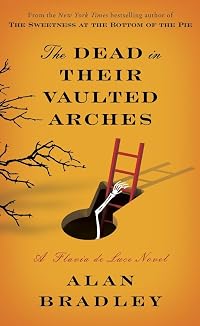
"On a spring morning in 1951, eleven-year-old chemist and aspiring detective Flavia de Luce gathers with her family at the railway station, awaiting the return of her long-lost mother, Harriet. Yet upon the train's arrival in the English village of Bishop's Lacey, Flavia is approached by a tall stranger who whispers a cryptic message into her ear. Moments later, he is dead, mysteriously pushed under the train by someone in the crowd. Who was this man, what did his words mean, and why were show more they intended for Flavia? Back home at Buckshaw, the de Luces' crumbling estate, Flavia puts her sleuthing skills to the test. Following a trail of clues sparked by the discovery of a reel of film stashed away in the attic, she unravels the deepest secrets of the de Luce clan, involving none other than Winston Churchill himself. Surrounded by family, friends, and a famous pathologist from the Home Office--and making spectacular use of Harriet's beloved Gypsy Moth plane, Blithe Spirit--Flavia will do anything, even take to the skies, to land a killer. Acclaim for Alan Bradley's beloved Flavia de Luce novels, winners of the Crime Writers' Association Debut Dagger Award, Barry Award, Agatha Award, Macavity Award, Dilys Winn Award, and Arthur Ellis Award: 'If ever there were a sleuth who's bold, brilliant, and, yes, adorable, it's Flavia de Luce.'--USA Today ; 'Irresistibly appealing.'--The New York Times Book Review, on A Red Herring Without Mustard; 'Original, charming, devilishly creative.'-- Bookreporter, on I Am Half-Sick of Shadows; 'Delightful and entertaining.'--San Jose Mercury News, on Speaking from Among the Bones"-- "Bishop's Lacey is never short of two things: Mysteries to solve and pre-adolescent detectives to solve them. In this New York Times bestselling series of cozy mysteries, young chemist and aspiring detective Flavia de Luce once again brings her knowledge of poisons and her indefatigable spirit to solve the most dastardly crimes the English countryside has to offer and, in the process, comes closer than ever to solving her life's greatest mystery--her mother's disappearance.."-- show lessTags
Recommendations







Member Recommendations

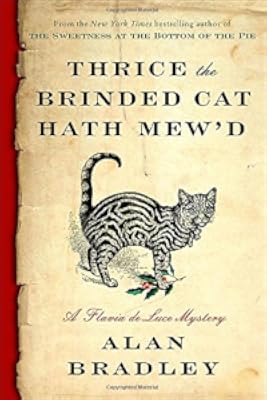
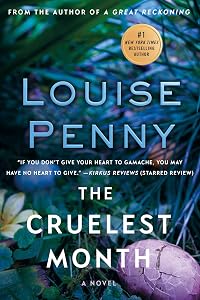
BookshelfMonstrosity Both of these cozy mysteries have darker aspects, with family secrets affecting young girls. Preteen Flavia de Luce, the intrepid sleuth in Dead in Their Vaulted Arches and adult Joanne Kilbourn investigating Love and Murder make and resolve astonishing discoveries.
Member Reviews
I have been waiting for this book for a long time. Some part of me must have sensed that the world at Buckshaw couldn't last, that it would be a bittersweet read, so I put off reading it until I finally had to succumb. Sweet because I love Flavia de Luce, that quirky almost 12 year old with her big wonderful glorious brain. Bitter because the way Bradley has set this one up it can stand as the last book in the series or it might possibly lead on to another book at some time. Whether the last or not, this is the end of the Flavia some of us have grown to know and love. This gawky prepubescent girl can never be that girl again in another book. No more haring off on Gladys, her bicycle. No more enchanting conversations with Dogger, her show more father's friend and saviour. No more skulking around her great rambling home with its lost and decaying rooms. No more going head to head with Feely and Daphne. Bradley draws all of it to a close in this book.
Some people have grumbled that no eleven year old girl could be so brilliant, so much of an autodidact about chemistry but I never had one whiff of this inability to suspend those disbeliefs. Bradley reached into that girl in me, that glorious creature who felt she could do anything before the continuous dousings of adult cold water had their eventual effect. He realised her in the character of Flavia. I rode my bike the same way, my first green one speed wonder as trusty a steed as Flavia felt her Gladys to be. Flavia was curious about things exactly the way my younger self was, with the firm exception of chemistry. So I had absolutely no problem believing in Flavia, none whatsoever. And now she's a wrap, teetering on the edge of puberty and having to step into a more adult world, to play a different role.
He may bring her back in an older incarnation but she won't be the same. And I will miss her. show less
Some people have grumbled that no eleven year old girl could be so brilliant, so much of an autodidact about chemistry but I never had one whiff of this inability to suspend those disbeliefs. Bradley reached into that girl in me, that glorious creature who felt she could do anything before the continuous dousings of adult cold water had their eventual effect. He realised her in the character of Flavia. I rode my bike the same way, my first green one speed wonder as trusty a steed as Flavia felt her Gladys to be. Flavia was curious about things exactly the way my younger self was, with the firm exception of chemistry. So I had absolutely no problem believing in Flavia, none whatsoever. And now she's a wrap, teetering on the edge of puberty and having to step into a more adult world, to play a different role.
He may bring her back in an older incarnation but she won't be the same. And I will miss her. show less
Rating: 3.9* of five
The Publisher Says: On a spring morning in 1951, eleven-year-old chemist and aspiring detective Flavia de Luce gathers with her family at the railway station, awaiting the return of her long-lost mother, Harriet. Yet upon the train's arrival in the English village of Bishop's Lacey, Flavia is approached by a tall stranger who whispers a cryptic message into her ear. Moments later, he is dead, mysteriously pushed under the train by someone in the crowd.
Who was this man, what did his words mean, and why were they intended for Flavia? Back home at Buckshaw, the de Luces' crumbling estate, Flavia puts her sleuthing skills to the test. Following a trail of clues sparked by the discovery of a reel of film stashed away in show more the attic, she unravels the deepest secrets of the de Luce clan, involving none other than Winston Churchill himself. Surrounded by family, friends, and a famous pathologist from the Home Office--and making spectacular use of Harriet's beloved Gypsy Moth plane, Blithe Spirit--Flavia will do anything, even take to the skies, to land a killer.
My Review: Childhood's end comes to each of us at very different times, and in very different ways, but always comes in a single moment. Nothing is ever the same again. No perception is unaltered, no thought is ever again innocent. One minute you are a child, and preoccupied with child things, and the next you are not.
It's memorable, I suspect, for all of us, no matter the event that precipitates it or the age at which it happens. In this sixth Flavia de Luce novel, she leaves childhood behind. Bradley's description of the moment, of a great wooden cog on a vast gear moving a notch, is spot-on. I can't quote it directly because it would spoiler a plot point.
Now let me address a fact of the series novel's life. Some books in a series are middle books, like middle children. They are there, but somehow not quite noticed enough or given a good space of their own to occupy. There is not a single series in which this is not, eventually, the case. Who remembers Framley Parsonage? Do you even know it's the fourth in Trollope's Chronicles of Barsetshire? When enumerating the series, I frequently have to search for this book in the Dead Letter Office of my brain. It's not as if nothing happens in the book, either. (And there's a character in this series names after a pivotal character in this book. More on that anon.) The marriages and the resultant intertwining of the fates of so many plot threads in the series make it a pivotal book. But who ever cites it as a favorite novel, or even a favorite in the series?
Middle Book Syndrome.
This is a middle book. It's not at all a bad book, just a middle book. And the fun is just beginning at the end. What the book is not is a mystery, in the puzzle-solving, here-are-the-clues sense. The mysteries Flavia is solving this time are, to put it simply and still not spoiler anything, the ones we all must resolve to discover what, now we are no longer children, we are. Flavia's extremely well-developed sense of herself, unusual in a child, is at last made part of a world that the girl must join. Herself is explained to herself, if you follow that convoluted thought process.
The world awaits. And that's a giant risk Bradley is taking: The world Flavia is joining will either cause people to put the series down for good, or will cause them to send him nastygrams for not writing faster. It is that polarizing a development.
I'm on the fence. I can see this going horribly wrong as we sink into the Swamps of Seriousness, and I can see it being amusingly fluffily unserious. But what I can't see is why this particular development surprised me so much. After all, an eleven-year-old sleuth isn't the set-up for a long-term cozy series, is it? So something had to tie the bow on the tushie of her childhood. And here it is. Heart it or hate it, the next books will not be the same kind of cotton candy, and won't be in the same world that child Flavia saw in Bishop's Lacey and Rook's End (there's a chess joke in that name which I only just got reading this book) and the Palings.
Having finished this book quite late last night, I was ruminating on its connection to Framley Parsonage and was struck by a thought: The character of Adam Sowerby, introduced earlier in the series, recurs here; and Sowerby is the name of a pivotal character in Framley Parsonage...could Bradley be creating his own corner and his own take on my dearly beloved Barsetshire? I have lamented in other threads the absence of a 21st-century Angela Thirkell, an extender of the deep and abiding Englishness of Barsetshire. Might Bradley, the Canadian, be weaving us some more tales from the rag ends of Trollope's beautiful creation?
Gosh, I hope so. show less
The Publisher Says: On a spring morning in 1951, eleven-year-old chemist and aspiring detective Flavia de Luce gathers with her family at the railway station, awaiting the return of her long-lost mother, Harriet. Yet upon the train's arrival in the English village of Bishop's Lacey, Flavia is approached by a tall stranger who whispers a cryptic message into her ear. Moments later, he is dead, mysteriously pushed under the train by someone in the crowd.
Who was this man, what did his words mean, and why were they intended for Flavia? Back home at Buckshaw, the de Luces' crumbling estate, Flavia puts her sleuthing skills to the test. Following a trail of clues sparked by the discovery of a reel of film stashed away in show more the attic, she unravels the deepest secrets of the de Luce clan, involving none other than Winston Churchill himself. Surrounded by family, friends, and a famous pathologist from the Home Office--and making spectacular use of Harriet's beloved Gypsy Moth plane, Blithe Spirit--Flavia will do anything, even take to the skies, to land a killer.
My Review: Childhood's end comes to each of us at very different times, and in very different ways, but always comes in a single moment. Nothing is ever the same again. No perception is unaltered, no thought is ever again innocent. One minute you are a child, and preoccupied with child things, and the next you are not.
It's memorable, I suspect, for all of us, no matter the event that precipitates it or the age at which it happens. In this sixth Flavia de Luce novel, she leaves childhood behind. Bradley's description of the moment, of a great wooden cog on a vast gear moving a notch, is spot-on. I can't quote it directly because it would spoiler a plot point.
Now let me address a fact of the series novel's life. Some books in a series are middle books, like middle children. They are there, but somehow not quite noticed enough or given a good space of their own to occupy. There is not a single series in which this is not, eventually, the case. Who remembers Framley Parsonage? Do you even know it's the fourth in Trollope's Chronicles of Barsetshire? When enumerating the series, I frequently have to search for this book in the Dead Letter Office of my brain. It's not as if nothing happens in the book, either. (And there's a character in this series names after a pivotal character in this book. More on that anon.) The marriages and the resultant intertwining of the fates of so many plot threads in the series make it a pivotal book. But who ever cites it as a favorite novel, or even a favorite in the series?
Middle Book Syndrome.
This is a middle book. It's not at all a bad book, just a middle book. And the fun is just beginning at the end. What the book is not is a mystery, in the puzzle-solving, here-are-the-clues sense. The mysteries Flavia is solving this time are, to put it simply and still not spoiler anything, the ones we all must resolve to discover what, now we are no longer children, we are. Flavia's extremely well-developed sense of herself, unusual in a child, is at last made part of a world that the girl must join. Herself is explained to herself, if you follow that convoluted thought process.
The world awaits. And that's a giant risk Bradley is taking: The world Flavia is joining will either cause people to put the series down for good, or will cause them to send him nastygrams for not writing faster. It is that polarizing a development.
I'm on the fence. I can see this going horribly wrong as we sink into the Swamps of Seriousness, and I can see it being amusingly fluffily unserious. But what I can't see is why this particular development surprised me so much. After all, an eleven-year-old sleuth isn't the set-up for a long-term cozy series, is it? So something had to tie the bow on the tushie of her childhood. And here it is. Heart it or hate it, the next books will not be the same kind of cotton candy, and won't be in the same world that child Flavia saw in Bishop's Lacey and Rook's End (there's a chess joke in that name which I only just got reading this book) and the Palings.
Having finished this book quite late last night, I was ruminating on its connection to Framley Parsonage and was struck by a thought: The character of Adam Sowerby, introduced earlier in the series, recurs here; and Sowerby is the name of a pivotal character in Framley Parsonage...could Bradley be creating his own corner and his own take on my dearly beloved Barsetshire? I have lamented in other threads the absence of a 21st-century Angela Thirkell, an extender of the deep and abiding Englishness of Barsetshire. Might Bradley, the Canadian, be weaving us some more tales from the rag ends of Trollope's beautiful creation?
Gosh, I hope so. show less
I adore this series about the young chemist Flavia de Luce. I would have loved to have a full-fledged chemistry lab complete with bunsen burners and UV lights and microscope when I was 11 years old. Sadly, I had to make do with a kit from Sears catalogue set up in a corner of the basement. Luckily for all of us wannabe chemists Alan Bradley has created Flavia.
At the end of Speaking from Among the Bones Flavia's father announced that his wife, Harriet, was coming home. Given that she had been missing in the Himalayas for ten years this was a bombshell. This book starts out with Flavia and her sisters and her father waiting at the train station for the train that is bringing Harriet home. It finally arrives, full of well-dressed people show more and military personnel and Winston Churchill too, but Flavia's mother is in a coffin. As the coffin is conveyed to Buckhurst, the de Luce family home, to be placed in Harriet's boudoir a man whispers a message to Flavia for her father. Moments later he falls under the train as it starts up. Back at Buckhurst Flavia, seeing how devastated her father is, decides to bring her mother back to life through chemistry. In the middle of the night she is able to take the lid off the coffin, snip through the metal inner coffin and see her mother's head. She also finds a small purse with Harriet's last will and testament inside but before she can go any further a pathologist from the Home Office takes charge of the body. Thwarted from her intention of revivifying Harriet Flavia turns her mind to the cause of her mother's death and the mysterious mission she was on in the Himalayas. Soon she is initiated into the de Luce family calling of serving the British government as secret agents, a career that she has been meant for since birth.
I can't wait to see what Flavia gets up to in her next adventure which will take place in Canada where she is going to attend her mother's old school. show less
At the end of Speaking from Among the Bones Flavia's father announced that his wife, Harriet, was coming home. Given that she had been missing in the Himalayas for ten years this was a bombshell. This book starts out with Flavia and her sisters and her father waiting at the train station for the train that is bringing Harriet home. It finally arrives, full of well-dressed people show more and military personnel and Winston Churchill too, but Flavia's mother is in a coffin. As the coffin is conveyed to Buckhurst, the de Luce family home, to be placed in Harriet's boudoir a man whispers a message to Flavia for her father. Moments later he falls under the train as it starts up. Back at Buckhurst Flavia, seeing how devastated her father is, decides to bring her mother back to life through chemistry. In the middle of the night she is able to take the lid off the coffin, snip through the metal inner coffin and see her mother's head. She also finds a small purse with Harriet's last will and testament inside but before she can go any further a pathologist from the Home Office takes charge of the body. Thwarted from her intention of revivifying Harriet Flavia turns her mind to the cause of her mother's death and the mysterious mission she was on in the Himalayas. Soon she is initiated into the de Luce family calling of serving the British government as secret agents, a career that she has been meant for since birth.
I can't wait to see what Flavia gets up to in her next adventure which will take place in Canada where she is going to attend her mother's old school. show less
Warning: this review contains spoilers
****
This book is a record-breaker here: it's probably my fastest read of the year, and it's certainly the only book I can recall where I cried almost the whole way through. We return to Buckshaw just as the de Luces have learned that Flavia's mother, Harriet, has been found in the Himalayas, after disappearing ten years previously in a climbing accident. Therefore, by necessity, most of the book deals with Harriet's repatriation and funeral, and less attention is given to the mystery of the man who is thrown under the train that brings her home. But as a book that deals with grief, and finding out things about your relatives that you'd never known (and may never know for sure), and having to grow up show more and move on, it is first-rate. Not to be missed if you're a fan of the series, but be sure you're in the right mood for it. show less
****
This book is a record-breaker here: it's probably my fastest read of the year, and it's certainly the only book I can recall where I cried almost the whole way through. We return to Buckshaw just as the de Luces have learned that Flavia's mother, Harriet, has been found in the Himalayas, after disappearing ten years previously in a climbing accident. Therefore, by necessity, most of the book deals with Harriet's repatriation and funeral, and less attention is given to the mystery of the man who is thrown under the train that brings her home. But as a book that deals with grief, and finding out things about your relatives that you'd never known (and may never know for sure), and having to grow up show more and move on, it is first-rate. Not to be missed if you're a fan of the series, but be sure you're in the right mood for it. show less
***This review assumes you’ve read the first 5 books in the series.***
The sixth book the Flavia de Luce series picks up right where the fifth book’s cliffhanger left off. Instead of once again following the new murder in a small town formula, this book breaks from tradition and reveals many of the answers that fans of the series have been waiting for. The payoff is everything I hoped it would be. Harriet de Luce, who was killed in a climbing accident in the Himalayas a decade earlier, has finally been found and is being returned home.
Honestly, the lack of focus on a regular murder didn’t bother me at all. I didn’t even miss that element. I loved seeing our heroine and her sisters attempt to cope with a grief they’ve never show more quite been able to verbalize. Feelings of abandonment and lack of closure tumble together and each of the members of the de Luce clan struggle to come to terms with these things in their own ways.
I’ve seen reviews where people say they hope the next book will return to the tired formula of the first five installments, but I hope it will not. Flavia is growing up and beginning a new chapter in her life. As much as I love her character, seeing that growth is much more rewarding than watching a character grow stale with repetition.
BOTTOM LINE: For me, this book rose above the rest of the series. It delved into the heart of the story it had been dancing around for so long. Harriet’s past and Flavia’s relationships with her father and siblings were what kept bringing me back to this series, not the victim of the week mysteries. This book was the rich reward for sticking with the characters.
“Silence is a question mark that cannot be ignored.” show less
The sixth book the Flavia de Luce series picks up right where the fifth book’s cliffhanger left off. Instead of once again following the new murder in a small town formula, this book breaks from tradition and reveals many of the answers that fans of the series have been waiting for. The payoff is everything I hoped it would be. Harriet de Luce, who was killed in a climbing accident in the Himalayas a decade earlier, has finally been found and is being returned home.
Honestly, the lack of focus on a regular murder didn’t bother me at all. I didn’t even miss that element. I loved seeing our heroine and her sisters attempt to cope with a grief they’ve never show more quite been able to verbalize. Feelings of abandonment and lack of closure tumble together and each of the members of the de Luce clan struggle to come to terms with these things in their own ways.
I’ve seen reviews where people say they hope the next book will return to the tired formula of the first five installments, but I hope it will not. Flavia is growing up and beginning a new chapter in her life. As much as I love her character, seeing that growth is much more rewarding than watching a character grow stale with repetition.
BOTTOM LINE: For me, this book rose above the rest of the series. It delved into the heart of the story it had been dancing around for so long. Harriet’s past and Flavia’s relationships with her father and siblings were what kept bringing me back to this series, not the victim of the week mysteries. This book was the rich reward for sticking with the characters.
“Silence is a question mark that cannot be ignored.” show less
I read this book out of sequence as I had read As Chimney Sweepers Come To Dust before this one. But that did not detract from this story. In this one, Flavia and her family are waiting for the return of Flavia’s mother’s body to Buckshaw. While at the train station, a man is killed after he fell under a train. Flavia knows that it might be somehow connected to her mother’s arrival, but with the preparations for the funeral fully underway and that keeping everyone busy, Flavia forgets the incident. She uses her chemistry skills to uncover some long-buried secrets of her mother’s life and death. During the funeral another piece of the puzzle is glaringly revealed and Flavia finds her life changing forever. She still isn’t even show more 12 years old yet. But she has the mind and soul of an adult and is forced to grow up in a hurry. , I can’t wait to read the next book and get back on track with our favourite young chemistry genius. show less
The Dead in Their Vaulted Arches is the 6th book in the Flavia de Luce series. Flavia is a lively and brilliant 11-year-old living with her father and sisters in a small village in England in the 1950s. In this book, Flavia is waiting at the train station when a stranger whispers something in her ear. Not long after, the stranger is pushed under the train and Flavia must figure out why he was murdered and what he has to do with the de Luce family.
Flavia is one of my favorite characters, and this series has quickly become one of my favorites, as well. I can identify with Flavia, who is something of a misfit and a loner, but in a rather heart-warming way. It is amazing that Alan Bradley can write about a young girl so wonderfully! The show more book is an easy and unfortunately quick read. (Why is it that the best books are read so quickly, while others just seem to drag along?) Bradley captures the quirkiness of the English town and this fallen-on-hard-times, upper-class family very well. I love visiting Bishop's Lacey and Buckshaw to find out what will happen next.
I highly recommend this book to any one who enjoys a funny and smart mystery with an absolutely enjoyable girl detective.
I received this book from NetGalley and the publisher in exchange for an honest review. show less
Flavia is one of my favorite characters, and this series has quickly become one of my favorites, as well. I can identify with Flavia, who is something of a misfit and a loner, but in a rather heart-warming way. It is amazing that Alan Bradley can write about a young girl so wonderfully! The show more book is an easy and unfortunately quick read. (Why is it that the best books are read so quickly, while others just seem to drag along?) Bradley captures the quirkiness of the English town and this fallen-on-hard-times, upper-class family very well. I love visiting Bishop's Lacey and Buckshaw to find out what will happen next.
I highly recommend this book to any one who enjoys a funny and smart mystery with an absolutely enjoyable girl detective.
I received this book from NetGalley and the publisher in exchange for an honest review. show less
Members
- Recently Added By
Lists

Recommend the 20 best books you've read in the last five years
2,168 works; 606 members

Crime and Mysteries to Read
746 works; 31 members

Top Five Books of 2014
1,064 works; 398 members

Teresa's favorite mystery series and authors
55 works; 2 members

Books Read in 2014
2,343 works; 89 members

Books Read in 2015
3,299 works; 129 members
Author Information

21 Works 27,953 Members
Some Editions
Awards and Honors
Distinctions
Series

Work Relationships
Common Knowledge
- Canonical title
- The Dead in Their Vaulted Arches
- Original title
- The Dead in Their Vaulted Arches
- Alternate titles
- The Nasty Light of Day
- Original publication date
- 2014-01-14
- People/Characters
- Flavia de Luce; Ophelia de Luce; Daphne de Luce; Haviland de Luce; Felicity de Luce; Arthur Wellesley Dogger (show all 26); Winston Churchill; Dieter Schrantz; Lena de Luce; Undine de Luce; Lavinia Puddock; Aurelia Puddock; Adam Tradescant Sowerby; Tristram Tallis; Bunny Spirling; Maude Spirling; Lancelot Cruikshank; Annabella Cruikshank; Sir Peregrine Darwin; Terence Alfristan Tardimon; Denwyn Richardson; Cynthia Richardson; Dame Agatha Dundurn; Antigone Hewitt; Jocelyn Ridley-Smith; Mildred Bannerman
- Important places
- Bishop's Lacey, England, UK (village)
- Epigraph
- The Marble Tombs that rise on high,
Whose Dead in vaulted Arches lye,
Whose Pillars swell with sculptur'd Stones,
Arms, Angels, Epitaphs and Bones
These (all the poor Remains of State)
Adorn the Rich, or praise... (show all) the Great;
Who while on Earth in Fame they live,
Are senseless of the Fame they give.
- Thomas Parnell, A Night-Piece on Death (1721) - Dedication
- Beloved Amadeus
- First words
- "Your mother has been found." (prologue)
To begin with, it was a perfect English morning: one of those dazzling days in early April when a new sun makes it seem suddenly like full-blown summer. - Last words
- (Click to show. Warning: May contain spoilers.)She has already taught me this: Never underestimate either an old woman--or old blood.
- Disambiguation notice
- Titles taken from official website.
Classifications
Statistics
- Members
- 1,880
- Popularity
- 11,429
- Reviews
- 148
- Rating
- (4.05)
- Languages
- 5 — English, Finnish, German, Italian, Polish
- Media
- Paper, Audiobook, Ebook
- ISBNs
- 33
- ASINs
- 14
