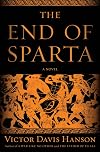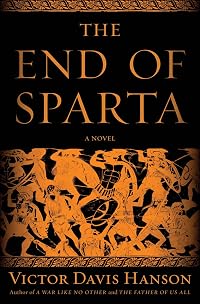
The End of Sparta
by Victor Davis Hanson
On This Page
Description
In this sweeping and deeply imagined historical novel, acclaimed classicist Victor Davis Hanson re-creates the battles of one of the greatest generals of ancient Greece, Epaminondas. At the Battle of Leuktra, his Thebans crushed the fearsome army of Sparta that had enslaved its neighbors for two centuries. We follow these epic historical events through the eyes of Mêlon, a farmer who has left his fields to serve with Epaminondas-swept up, against his better judgment, in the fever to spread show more democracy even as he yearns to return to his pastoral hillside. With a scholar's depth of knowledge and a novelist's vivid imagination, Hanson re-creates the ancient world down to its intimate details-from the weight of a spear in a soldier's hand to the peculiar camaraderie of a slave and master who go into battle side by side. show lessTags
Recommendations
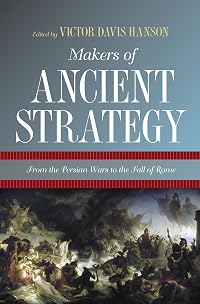
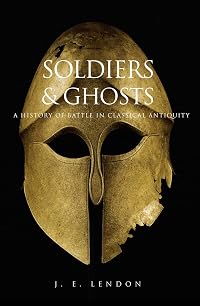
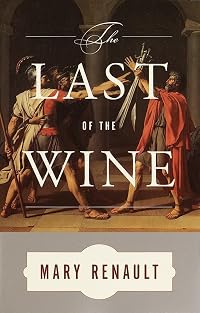

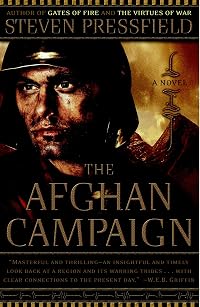
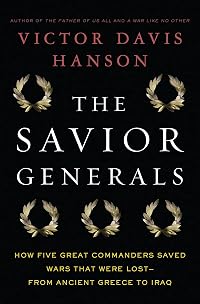
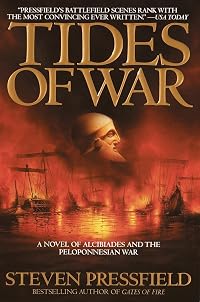
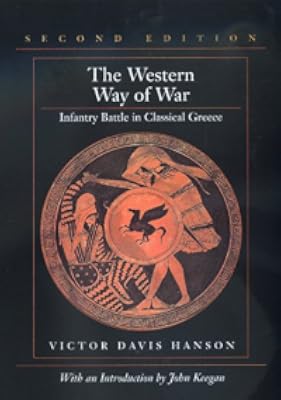





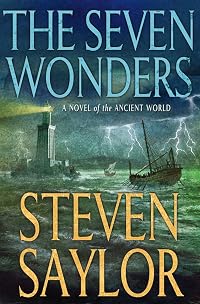

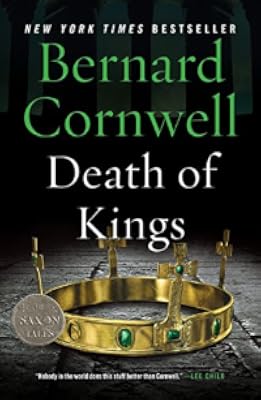
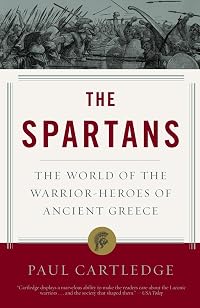
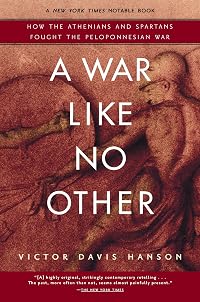


Member Recommendations
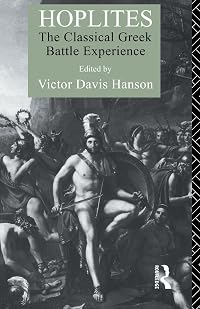
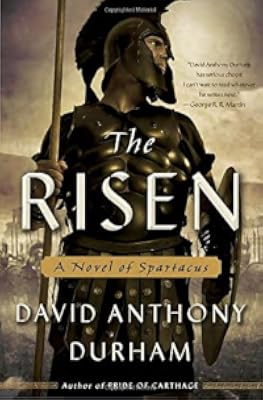
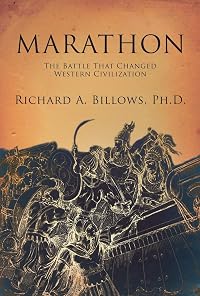
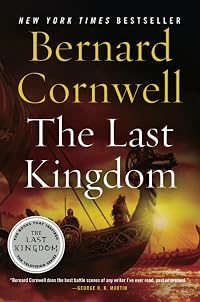
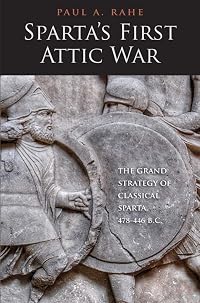
gwernin a more novelistic approach to Greek warfare.
themulhern Both books cover much the same period and events. "The End of Sparta" is fiction; "The Sacred Band" is non-fiction.

Member Reviews
I didn't know what to expect with this novel written by a historian, but I was not disappointed. It was utterly compelling and it was hard to pry myself away from it. The 400+ pages flew by and certainly didn't feel that long. I was sorry when it ended. The conclusion was bittersweet.
A fictional yeoman farmer, Mêlon of Thespiae, is our eyes and ears and represents the soldier-farmers who lived at that time [4th century B.C.]. His slave, Nêto, is a seer and prophetess. In fact, her master's presence at Leuctra will guarantee victory according to one of her prophecies about an apple [meaning of Mêlon]; afterwards, his fame follows him.
The novel tells the story of the beginning of the end of Spartan power and dominance through the show more 371 B.C. Battle of Leuctra ["White Creek"] when Sparta was badly defeated by the Thebans and the subsequent first invasion of Laconia by Epaminondas, commander of forces from several city-states of Hellas, aided by Pelopidas and the Sacred Band of Thebes. Three new Messenian towns are then established, with the helots setting up their own government. The men return to their homes. The generals and Mêlon all have the feeling they will have to go back several times to complete what they have started. In fact, Mêlon promises Epiminondas that he will be ready "when the red is on the grapes" in summer to march south with him again. Ainias the Tactician [famous military writer of the 4th century B.C.] is a main figure. The architect, Proxenos, is probably a fictional composite of the men who designed the towns.
The writing style was epic and larger-than-life: Homeric or Virgilian, but for modern readers. Hanson says he tried to strike the right balance between a bygone stuffy style and that of today's casual English usage. I had my doubts about his slipping in Greek phrases. It took me awhile to get used to his practice. He did make it easy for the most part to figure out the meaning from context or he did translate into English right near the Greek. I felt it was an affectation, but he probably meant it to add "atmosphere." I think he could have inserted only those for which there is no exact English equivalent--e.g., lochoi, syssitia, bibasis, then added a glossary.
In the first half, I felt characterization could have been improved. We see only hatred or anger and then we witness Ainias's devotion to his friend, Proxenos and deep sorrow at his death at the icy Eurotas. Friendship develops between some of the main characters. There is complete loyalty between Mêlon, Mêto and Chion and a certain fondness [love?] between Mêlon and Nêto, so much so that besides joining with the army, he is marching into the Peloponnese to rescue her from his traitorous and guileful helot slave, Gorgos, or as the Spartans term him, Kuniskos. They admit their feelings for each other only to themselves; they never express them to the other.
The section on Leuctra was amazing! Ainias plans unorthodox tactics, then a heated discussion follows. We see the battle from the perspectives of participants AND of Mêlon's slaves waiting on a hillside observing. Fighting all through the novel was bloody and graphic but not gratuitous. The description of the frightening hoplite warfare at Leuctra was the best I've ever read. I felt as though I was right in the front rank, terrified and pushing against the Spartan onslaught with my colleagues and trying to avoid injury. Also, I had my heart in my mouth at the final confrontation in the mountainside hut of which several characters had dreamt from the beginning of the story, not knowing why they had had these dreams or where the hut might be.
Although never boring, the middle of the novel did bog down somewhat; I felt there was repetition and the argument over whether or not to invade the Peloponnese was prolonged too much. The chapter on Phrynê and her brothel could have been cut way down. On the katabasis south into Laconia and at the Eurotas River there was too much conversation, too much repetition, too much drawing out of events. Mêlon was quite a different protagonist than the usual: an ordinary man of fifty, bald, and lame from a previous war wound [an intended hamstring] inflicted by a Spartan ephor. He was not the usual handsome young soldier we might have expected in military fiction. I wish there had been at least one sympathetic Spartan; all were negative stereotypes and odious. Not light reading, this novel takes concentration; but the story flows and overall I was pleased with the pacing. The author brought the period to life for me. I liked the presentation of the Pythagorean ethical system: equality of all men. I learned Pythagoras is more than mathematics.
I feel this book is a "must-read" about a little-known historical figure, Epaminondas and this whole period. show less
A fictional yeoman farmer, Mêlon of Thespiae, is our eyes and ears and represents the soldier-farmers who lived at that time [4th century B.C.]. His slave, Nêto, is a seer and prophetess. In fact, her master's presence at Leuctra will guarantee victory according to one of her prophecies about an apple [meaning of Mêlon]; afterwards, his fame follows him.
The novel tells the story of the beginning of the end of Spartan power and dominance through the show more 371 B.C. Battle of Leuctra ["White Creek"] when Sparta was badly defeated by the Thebans and the subsequent first invasion of Laconia by Epaminondas, commander of forces from several city-states of Hellas, aided by Pelopidas and the Sacred Band of Thebes. Three new Messenian towns are then established, with the helots setting up their own government. The men return to their homes. The generals and Mêlon all have the feeling they will have to go back several times to complete what they have started. In fact, Mêlon promises Epiminondas that he will be ready "when the red is on the grapes" in summer to march south with him again. Ainias the Tactician [famous military writer of the 4th century B.C.] is a main figure. The architect, Proxenos, is probably a fictional composite of the men who designed the towns.
The writing style was epic and larger-than-life: Homeric or Virgilian, but for modern readers. Hanson says he tried to strike the right balance between a bygone stuffy style and that of today's casual English usage. I had my doubts about his slipping in Greek phrases. It took me awhile to get used to his practice. He did make it easy for the most part to figure out the meaning from context or he did translate into English right near the Greek. I felt it was an affectation, but he probably meant it to add "atmosphere." I think he could have inserted only those for which there is no exact English equivalent--e.g., lochoi, syssitia, bibasis, then added a glossary.
In the first half, I felt characterization could have been improved. We see only hatred or anger and then we witness Ainias's devotion to his friend, Proxenos and deep sorrow at his death at the icy Eurotas. Friendship develops between some of the main characters. There is complete loyalty between Mêlon, Mêto and Chion and a certain fondness [love?] between Mêlon and Nêto, so much so that besides joining with the army, he is marching into the Peloponnese to rescue her from his traitorous and guileful helot slave, Gorgos, or as the Spartans term him, Kuniskos. They admit their feelings for each other only to themselves; they never express them to the other.
The section on Leuctra was amazing! Ainias plans unorthodox tactics, then a heated discussion follows. We see the battle from the perspectives of participants AND of Mêlon's slaves waiting on a hillside observing. Fighting all through the novel was bloody and graphic but not gratuitous. The description of the frightening hoplite warfare at Leuctra was the best I've ever read. I felt as though I was right in the front rank, terrified and pushing against the Spartan onslaught with my colleagues and trying to avoid injury. Also, I had my heart in my mouth at the final confrontation in the mountainside hut of which several characters had dreamt from the beginning of the story, not knowing why they had had these dreams or where the hut might be.
Although never boring, the middle of the novel did bog down somewhat; I felt there was repetition and the argument over whether or not to invade the Peloponnese was prolonged too much. The chapter on Phrynê and her brothel could have been cut way down. On the katabasis south into Laconia and at the Eurotas River there was too much conversation, too much repetition, too much drawing out of events. Mêlon was quite a different protagonist than the usual: an ordinary man of fifty, bald, and lame from a previous war wound [an intended hamstring] inflicted by a Spartan ephor. He was not the usual handsome young soldier we might have expected in military fiction. I wish there had been at least one sympathetic Spartan; all were negative stereotypes and odious. Not light reading, this novel takes concentration; but the story flows and overall I was pleased with the pacing. The author brought the period to life for me. I liked the presentation of the Pythagorean ethical system: equality of all men. I learned Pythagoras is more than mathematics.
I feel this book is a "must-read" about a little-known historical figure, Epaminondas and this whole period. show less
In the past, I have often felt that historians transitioning from academic writing to fiction have difficulty in maintaining the flow of plot over details so beloved in academia. Victor Davis Hanson, previously at the University of California – Fresno and currently Senior Fellow at Stanford’s Hoover Institute, has in my opinion suffered from this same difficulty in his inaugural novel, The End of Sparta. Displaying his wide expertise and depth in Greek historical minutia, it would seem that he has left the general layperson behind in a novel no doubt intended for a wide audience. Although my own knowledge of Greek history, literature and language have increased to maybe the level of a sophomore in Classical Studies due to reading show more this fictionalization of the Boeotian War, I believe that it would appeal mainly to those who have at least a superficial knowledge of such topics.
While reading it would would no doubt stir the interest of the ignorant (as I was) to further research this exciting period in the history of Western civilization, it suffers from a plot whereby at the end of the novel the fate of the main characters become, for me, seemly unimportant. The real strength of the story was at the beginning with the Battle of Leuctra. There, Hanson was able to display his capability as a wordsmith that had brought alive his previous works such as A Western Way of War: Infantry Battle in Ancient Greece and A War Like No Other: How the Athenians and Spartans Fought the Peloponnesian War. We can feel weight of the panoply, the mass at our backs, the dread of death or injury and the crunch of contact as two lines collide through his words. It is only in the story where he falters.
As other reviewers have noted, Hanson is not a writer laying down fiction so much as using fiction to flesh out history. He tries to lay open the mind of the Hellenes on paper, bring ancient motives out to be interpreted by modern readers. As a novel, it is marginal. As history, it is enlightening. show less
While reading it would would no doubt stir the interest of the ignorant (as I was) to further research this exciting period in the history of Western civilization, it suffers from a plot whereby at the end of the novel the fate of the main characters become, for me, seemly unimportant. The real strength of the story was at the beginning with the Battle of Leuctra. There, Hanson was able to display his capability as a wordsmith that had brought alive his previous works such as A Western Way of War: Infantry Battle in Ancient Greece and A War Like No Other: How the Athenians and Spartans Fought the Peloponnesian War. We can feel weight of the panoply, the mass at our backs, the dread of death or injury and the crunch of contact as two lines collide through his words. It is only in the story where he falters.
As other reviewers have noted, Hanson is not a writer laying down fiction so much as using fiction to flesh out history. He tries to lay open the mind of the Hellenes on paper, bring ancient motives out to be interpreted by modern readers. As a novel, it is marginal. As history, it is enlightening. show less
 This review was written for LibraryThing Early Reviewers.
The Battle of Leuctra (371 B.C.) and its aftermath were one of the great dramas in the history of Classical Greece. Sparta lost, first, its reputation for military invincibility, then most of its allies and satellites, finally over half of its territory. Though one more battle (Mantineia, 362 B.C.) was needed to confirm the verdict, Leuctra was truly "the end of Sparta". The minor state that lingered afterward, eventually a tourist destination for connoisseurs of exotic customs, shared only a name with the power that had been the hegemon of Hellas for nearly two centuries.
As Victor Davis Hanson observes in his author's notes, this story is now a blank to almost everyone without a professional (or eccentric personal) interest in Greek show more history. Most educated readers know something about the Persian Wars, the Peloponnesian War and Alexander the Great. Epaminondas and Pelopidas of Thebes, the destroyers of Spartan power, are not even names. Modern (non)education is not wholly to blame; the surviving sources give Sparta's demise scant attention - the result partly of chance, partly of the pro-Spartan bias of the leading contemporary historical writers, partly of the short duration of Thebes's reign as a dominant power. The End of Sparta is, so far as I know, the first historical novel to delve into this period with any depth or seriousness. It's certainly the only one written by an academic expert.
Knowledge of a subject is not, of course, a sufficient (maybe not even a necessary) condition for writing good fiction about it. Happily, the literary skill displayed in Professor Davis's historical and political works carries over into his debut novel. The book does, however, depart from the mainstream in a few ways, borrowing a number of stylistic devices from the Iliad, particularly in the battle scenes, and conforming to the Greek world view, in which the natural and the supernatural mingled freely. Hence, the fighting is brutal, and some incidents verge on fantasy. If an ancient Greek had been moved to pen a modern novel, this is what it might have read like.
One should note, too, that many issues pertinent to 4th Century B.C. Hellas resonate today. After Leuctra, Thebes undertook what could plausibly be called "nation building" among the former subjects of Sparta. New states emerged in Arcadia and Messenia. The novel's characters robustly debate whether democracy can be "imposed" on these formerly servile populations, pre-echoing arguments that we hear today, albeit in a vastly different context. Also of contemporary interest are the role of the media (represented by rival historians with sharply different points of view) and tensions between "modern" (in this case, Pythagorean) rationalism and traditional religion. On the other hand, some of the era's attitudes, such as casual vindictiveness, are alien to our era, and there is no effort to make them more palatable.
One point will strike many readers as implausible but is plain historical fact. Several characters, including the hero Melon, are in their 60's or older. That they should wield spears in battle may seem incredible. After all, wasn't life expectancy much shorter back then? Yes, it was. But those who made it to an advanced age were tough old birds who tended to go on practically forever. To take just one instance, Antigonos the One-Eyed, among the most famous of Alexander's generals, was killed in battle well after turning 80. Melon and his equally aged enemy, the Spartan Lichas, are relative youths.
Although, as noted, The End of Sparta deals with unfamiliar events, an untutored reader, aided by the historical notes, should have no trouble orienting himself. As for historicity, the author doesn't seem to have distorted the (not exactly abundant) established facts, though he has sometimes, as in the account of the pre-battle planning at Leuctra, chosen an account that makes a good story over the one that he himself believes to be most likely, and he engages in one piece of lexical stretching that I won't be so pedantic as to mention. Invented material is abundant but fits seamlessly, so much so that I'm willing to believe that there actually was a prophecy that putting an apple into their battle line would enable the Thebans to defeat the Spartans and that the architects of the walls of Messene calmed popular doubts about their blueprints by attributing them to a legendary hero. show less
As Victor Davis Hanson observes in his author's notes, this story is now a blank to almost everyone without a professional (or eccentric personal) interest in Greek show more history. Most educated readers know something about the Persian Wars, the Peloponnesian War and Alexander the Great. Epaminondas and Pelopidas of Thebes, the destroyers of Spartan power, are not even names. Modern (non)education is not wholly to blame; the surviving sources give Sparta's demise scant attention - the result partly of chance, partly of the pro-Spartan bias of the leading contemporary historical writers, partly of the short duration of Thebes's reign as a dominant power. The End of Sparta is, so far as I know, the first historical novel to delve into this period with any depth or seriousness. It's certainly the only one written by an academic expert.
Knowledge of a subject is not, of course, a sufficient (maybe not even a necessary) condition for writing good fiction about it. Happily, the literary skill displayed in Professor Davis's historical and political works carries over into his debut novel. The book does, however, depart from the mainstream in a few ways, borrowing a number of stylistic devices from the Iliad, particularly in the battle scenes, and conforming to the Greek world view, in which the natural and the supernatural mingled freely. Hence, the fighting is brutal, and some incidents verge on fantasy. If an ancient Greek had been moved to pen a modern novel, this is what it might have read like.
One should note, too, that many issues pertinent to 4th Century B.C. Hellas resonate today. After Leuctra, Thebes undertook what could plausibly be called "nation building" among the former subjects of Sparta. New states emerged in Arcadia and Messenia. The novel's characters robustly debate whether democracy can be "imposed" on these formerly servile populations, pre-echoing arguments that we hear today, albeit in a vastly different context. Also of contemporary interest are the role of the media (represented by rival historians with sharply different points of view) and tensions between "modern" (in this case, Pythagorean) rationalism and traditional religion. On the other hand, some of the era's attitudes, such as casual vindictiveness, are alien to our era, and there is no effort to make them more palatable.
One point will strike many readers as implausible but is plain historical fact. Several characters, including the hero Melon, are in their 60's or older. That they should wield spears in battle may seem incredible. After all, wasn't life expectancy much shorter back then? Yes, it was. But those who made it to an advanced age were tough old birds who tended to go on practically forever. To take just one instance, Antigonos the One-Eyed, among the most famous of Alexander's generals, was killed in battle well after turning 80. Melon and his equally aged enemy, the Spartan Lichas, are relative youths.
Although, as noted, The End of Sparta deals with unfamiliar events, an untutored reader, aided by the historical notes, should have no trouble orienting himself. As for historicity, the author doesn't seem to have distorted the (not exactly abundant) established facts, though he has sometimes, as in the account of the pre-battle planning at Leuctra, chosen an account that makes a good story over the one that he himself believes to be most likely, and he engages in one piece of lexical stretching that I won't be so pedantic as to mention. Invented material is abundant but fits seamlessly, so much so that I'm willing to believe that there actually was a prophecy that putting an apple into their battle line would enable the Thebans to defeat the Spartans and that the architects of the walls of Messene calmed popular doubts about their blueprints by attributing them to a legendary hero. show less
This review was written for LibraryThing Early Reviewers.Victor Davis Hanson is one of the most preeminent military historians of our day and often when scholars switch gears to novels the end result is less than stellar. However, Hanson is one of those gifted historians who writes with elan and verve so he is well prepared for the transition to a literary work. He plunges us into a mysterious yet intriguing little known period in ancient Greece which is sound fodder for a novelist since we have little actual historical evidence to cull. The ancient historian, such as Hanson, is particularly adept at teasing out the implications of a little known historical account so he is well equipped for this work.
"The End of Sparta" recreates the largely unknown story of one of ancient Greece's greatest show more generals Epaminondas. In the mid 300s B.C., he led an army of several thousand Thebans, made up mostly of part-time warriors and full-time farmers, in a series of heroic battles against Sparta, the highly militaristic city-state whose economy presumed the labor of slaves. The Thebans were fighting for what they understood to be in the ancient word, freedom. The Spartans were fighting for their own self-preservation and to maintain their dominance of the surrounding region and status quo.
The work is epic in scope and Hanson succeeds in explaining and creatively expounding about what could have happened in the historical Epaminondas. General readers of historical fiction would likely enjoy this work and readers who enjoy history would likely read this work with profit as well. I am glad to see that Hanson did not disappoint here with his first attempt at a novel.
The work builds in tension and Hanson involves the reader in learning some Greek along the way. A first-time novelist might be pedantic but Hanson rightly concentrates on writing an intriguing story. One additional positive note is that he simply includes the Sacred Band within the story without highlighting or allowing their existence to waylay the story into a direction that detracts from the plot. Hanson is not wearing modern, political positions on his sleeve and then imposes his ideas on the reader. The story is strong enough and compelling on its own merits.
As a side note, Hanson also has had direct experience as a farmer so he is in a unique position to write about a largely agricultural society and this lends to his voice of authenticity. show less
"The End of Sparta" recreates the largely unknown story of one of ancient Greece's greatest show more generals Epaminondas. In the mid 300s B.C., he led an army of several thousand Thebans, made up mostly of part-time warriors and full-time farmers, in a series of heroic battles against Sparta, the highly militaristic city-state whose economy presumed the labor of slaves. The Thebans were fighting for what they understood to be in the ancient word, freedom. The Spartans were fighting for their own self-preservation and to maintain their dominance of the surrounding region and status quo.
The work is epic in scope and Hanson succeeds in explaining and creatively expounding about what could have happened in the historical Epaminondas. General readers of historical fiction would likely enjoy this work and readers who enjoy history would likely read this work with profit as well. I am glad to see that Hanson did not disappoint here with his first attempt at a novel.
The work builds in tension and Hanson involves the reader in learning some Greek along the way. A first-time novelist might be pedantic but Hanson rightly concentrates on writing an intriguing story. One additional positive note is that he simply includes the Sacred Band within the story without highlighting or allowing their existence to waylay the story into a direction that detracts from the plot. Hanson is not wearing modern, political positions on his sleeve and then imposes his ideas on the reader. The story is strong enough and compelling on its own merits.
As a side note, Hanson also has had direct experience as a farmer so he is in a unique position to write about a largely agricultural society and this lends to his voice of authenticity. show less
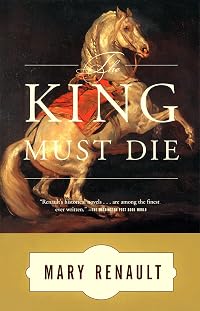
This review was written for LibraryThing Early Reviewers.I tried to start reading this book last night and couldn't get through the first chapter without skimming. The material is excellent but the delivery is dense and deadly dull, not so much an "expository lump" as an expository avalanche. Hanson is an excellent historian, but I'm afraid he's no novelist. I kept thinking longingly of what Mary Renault could have done with this story.
I won't rate the book just yet, because I'm going to try and read a bit more of it presently, but so far it's a big disappointment.
I won't rate the book just yet, because I'm going to try and read a bit more of it presently, but so far it's a big disappointment.
This review was written for LibraryThing Early Reviewers."The End of Sparta" is a fictionalized account of one of ancient Greece's generals, Epaminondas. In the mid 300s B.C., he led an army of several thousand Thebans against Sparta whose economy relied on the labor of slaves. The Thebans were fighting on the side of 'freedom' and the Spartans were fighting to maintain their dominance of the surrounding region and the status quo.
Hanson has written an engaging book here. He deals with the historical aspects of the story in such as way as to bring the novice in Greek history to an understanding of the culture and time without turning off readers who are more familiar with it. This is the military historians first novel and he does not disappoint.
His descriptions and dialogue flow smoothly and show more the characters are well developed. His battle scenes are particularly apt. Another reviewer stated that "this is what a Homeric poem would read like if it were written in modern times." I would have to agree. show less
Hanson has written an engaging book here. He deals with the historical aspects of the story in such as way as to bring the novice in Greek history to an understanding of the culture and time without turning off readers who are more familiar with it. This is the military historians first novel and he does not disappoint.
His descriptions and dialogue flow smoothly and show more the characters are well developed. His battle scenes are particularly apt. Another reviewer stated that "this is what a Homeric poem would read like if it were written in modern times." I would have to agree. show less
This review was written for LibraryThing Early Reviewers.I enjoyed this novel, but I suspect strongly that its not what you'd call a novel with mass appeal. Hanson, who writes brilliantly evocative history, has turned his hand to a fictionalized account of the Theban triumph over the Spartans. He evokes the period in a fashion which I suspect will be largely unappreciated unless one reads Thucydides for fun. His descriptions of battle consciously echo the battle scenes in the Iliad. Each character is sketched immediately prior to their painful death, even the minor characters enjoy their moment before being ushered off stage by spearhead or shield edge. This reflects the stylistic devices of the Homeric epic, but also reflects the obsession with Homer which characterized the historic Greeks. show more This is in a historian's understanding of how the Greeks themselves would have thought about themselves and their opponents. This impression is further driven home as character's describe others as character's from the Iliad, and experience visions of the mystical as they fight. Recent scholarship has suggested just how critical Homer was to the Greeks and Hanson tries to capture the lived experience of this obsession. I think he succeeds but if you weren't interested in this when you began I am not sure you will be when you finish. show less
This review was written for LibraryThing Early Reviewers.Members
- Recently Added By
Lists

Scholar Novels
26 works; 4 members

Books That Changed Our Perspective
423 works; 168 members
Author Information

45+ Works 7,818 Members
Victor Davis Hanson is the military historian who is a professor of classics at California State University, Fresno. He has written several popular books on classic warfare, including "The Other Greeks", "Who Killed Homer?", & "The Western Way of War". He lives in Selma, California. (Bowker Author Biography)
Common Knowledge
- Canonical title
- The End of Sparta
- Original publication date
- 2011-10-11
- People/Characters
- Epaminondas; Mêlon
- Important places
- Sparta, Greece; Greece; Ancient Greece
- Important events
- Battle of Leuktra
- Blurbers
- Shawcross, William
Classifications
Statistics
- Members
- 161
- Popularity
- 203,887
- Reviews
- 21
- Rating
- (3.34)
- Languages
- English
- Media
- Paper, Audiobook, Ebook
- ISBNs
- 5
- ASINs
- 3