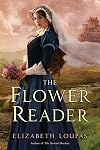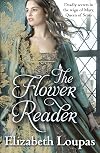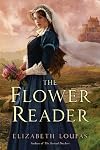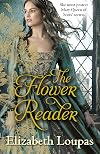
The Flower Reader
by Elizabeth Loupas 
On This Page
Description
A woman who can divine the future through flowers discovers the darkest secrets of Scotland but demands justice for the murder of her husband before she will give the information to the newly crowned Mary, Queen of Scots.Tags
Recommendations




Member Reviews
Fantastic. I absolutely love Elizabeth Loupas's novels. This book, in particular, seems to defy genre. It's very staunchly historical fiction, but it's not just that. I wouldn't exactly call it a mystery, but there is a lot of suspense and a lot of thrills. Even at its toughest moments, I couldn't put the book down! There's also a fantasy element due to the flower reading. In an interview, Loupas admits that she ended up making up most of the system on her own, which is incredible, if you ask me. There's also an unsuspecting romance, which is the best kind.
Marina Leslie/Rinette is a lady-in-waiting and prophetess first to Mary of Guise and then Mary of Scots. Readers are introduced to the beginning of Mary's reign as queen, which are show more turbulent yet glamorous. Marina has no interest in the glamour, though. She wants to find out who murdered her husband, and she plays a dangerous game when she bargains with Mary of Scot. See, Marina holds a special prophecy from Mary's mother written by the famed Nostradamus. Marina was supposed to hand this over as soon as Mary landed in Scotland, but one thing after another kept getting in the way, leading to her husband's untimely death. However, blinded by grief, Marina will resort to anything to have justice, including teaming up with the enigmatic and somewhat androgynous Nico de Clerac, an advisor first to Mary of Guise and then her daughter.
Marina is quick-thinking, romantic, headstrong, and not afraid of taking risks if the reward is the guaranteed safety of her loved ones. She was fascinating to read about, and the writing was so well done that I felt like I was next to her every step of the way.
The supporting cast was vibrant and really made the story come to life. Nico de Clerac is the epitome of the French diplomat: de-escalating situations with his words all while wearing earrings and fancy clothes. Queen Mary is in her late teens/early twenties throughout the story, and she comes off as very mercurial, the exact opposite of Saorise Ronan's portrayal in the biopic. Personally, I didn't mind this interpretation. According to Loupas, Mary of Scots was actually quite temperamental in real life, so it was interesting reading about this. The rest of the Scottish court is full of menacing men in what I imagine to be dark mustaches all vying for power and chafing at the fact that a young woman is queen while another young woman the same age holds Scotland's greatest secrets in her hands.
Indeed, women's rights, women's places in marriage, and women's roles in general take center stage in this novel. The reality is that women in this time period had very little power, and while both Marina Leslie and Queen Mary exercise great power over the course of the novel, they are both often shown to be quite powerless, and the results are often near fatal. However, the novel is overall very triumphant. It's definitely worth the read, as all of the trials and tribulations make the end that much sweeter. While we know the fate of Queen Mary of Scots does not end well (that isn't shown in this book but it is heavily implied), the fate of Marina Leslie is glorious. The heroine saves herself time and time again, making her the most inspirational of all of Loupas's heroines, in my opinion. And so, if you read any of Loupas's books, let it be The Flower Reader. show less
Marina Leslie/Rinette is a lady-in-waiting and prophetess first to Mary of Guise and then Mary of Scots. Readers are introduced to the beginning of Mary's reign as queen, which are show more turbulent yet glamorous. Marina has no interest in the glamour, though. She wants to find out who murdered her husband, and she plays a dangerous game when she bargains with Mary of Scot. See, Marina holds a special prophecy from Mary's mother written by the famed Nostradamus. Marina was supposed to hand this over as soon as Mary landed in Scotland, but one thing after another kept getting in the way, leading to her husband's untimely death. However, blinded by grief, Marina will resort to anything to have justice, including teaming up with the enigmatic and somewhat androgynous Nico de Clerac, an advisor first to Mary of Guise and then her daughter.
Marina is quick-thinking, romantic, headstrong, and not afraid of taking risks if the reward is the guaranteed safety of her loved ones. She was fascinating to read about, and the writing was so well done that I felt like I was next to her every step of the way.
The supporting cast was vibrant and really made the story come to life. Nico de Clerac is the epitome of the French diplomat: de-escalating situations with his words all while wearing earrings and fancy clothes. Queen Mary is in her late teens/early twenties throughout the story, and she comes off as very mercurial, the exact opposite of Saorise Ronan's portrayal in the biopic. Personally, I didn't mind this interpretation. According to Loupas, Mary of Scots was actually quite temperamental in real life, so it was interesting reading about this. The rest of the Scottish court is full of menacing men in what I imagine to be dark mustaches all vying for power and chafing at the fact that a young woman is queen while another young woman the same age holds Scotland's greatest secrets in her hands.
Indeed, women's rights, women's places in marriage, and women's roles in general take center stage in this novel. The reality is that women in this time period had very little power, and while both Marina Leslie and Queen Mary exercise great power over the course of the novel, they are both often shown to be quite powerless, and the results are often near fatal. However, the novel is overall very triumphant. It's definitely worth the read, as all of the trials and tribulations make the end that much sweeter. While we know the fate of Queen Mary of Scots does not end well (that isn't shown in this book but it is heavily implied), the fate of Marina Leslie is glorious. The heroine saves herself time and time again, making her the most inspirational of all of Loupas's heroines, in my opinion. And so, if you read any of Loupas's books, let it be The Flower Reader. show less
I enjoyed this book immensely. From start to finish I found Rinnette one of the most engaging and feisty of heroines historical fiction has offered in a good while. There are many strong historical women characters in recent historical fiction I've had the pleasure of reading, and I'm not meaning to take my praise from them. However, the character of Rinnette bursts forth from the start, showing her strong resolve to keep herself, her loved ones, her property and her resolve under murderous pressures! I loved her brave spirit and her willingness to stare down death and queens despite her youth, power and lack of weapons. Because of this beautiful, mystically talented and unabashedly strong woman this novel is one of my favorite show more historical novels this season.
Rinnette is a brilliant character who will endear herself to readers and keep you hungry to finish her story.
Played out on the world stage of the courts where such historic figures reigned such as Queen Mary of Guise, Mary Queen of Scots and the Scottish clans...not to mention such notables as Nostradamus,
Elizabeth Queen of England, and Catherine de Medicis, this is a tapestry of time and intrigue that is absorbing in and of itself. Elizabeth Loupas has then laid a set of secrets and mysteries that rival the CIA! It's a plot that kept me reading, and that moved at a steady, rapid pace.
I appreciated her writing style and her development of a world within the real world with adjunct characters that didn't really exist but seemed plausible!
The relationships between her characters; Rinnette with her husband and her children, for instance, was palpable, striking at my heart strings. I felt a deep sense of loss with her at times, and a joy at other times. Ms Loupas has a strong gift of portraying emotion and personal relationships that gives her book depth and character.
I really loved the element of the flowers and Rinnettes "reading" of them at every bend as she encountered friend and foe. This added a dimension to the book unlike any other historical fiction I'd read, obviously! In her section at the back of the book, Ms Loupas is interviewed about this element and she gives the history behind flower "discernment." I found it fascinating. The connection with herbal healing as we know it today and our use of "diffusion" for different states of relaxation and such, show us some small connection to the practice Rinnette must have been using.
On a deeper level, and with a immediate mystical response, Rinnette was a master "flower reader" foretelling the future constantly...it was so exciting to read this part of Elizabeth Loupas's story.
In summary, a great book of historical fiction which I absolutely adored reading. I highly recommend it to all lovers of the genre, and to others of you who are thinking of taking a step into historical fiction. It is a mystical, feminist, mystery and family dynamic of a book. Great reading! show less
Rinnette is a brilliant character who will endear herself to readers and keep you hungry to finish her story.
Played out on the world stage of the courts where such historic figures reigned such as Queen Mary of Guise, Mary Queen of Scots and the Scottish clans...not to mention such notables as Nostradamus,
Elizabeth Queen of England, and Catherine de Medicis, this is a tapestry of time and intrigue that is absorbing in and of itself. Elizabeth Loupas has then laid a set of secrets and mysteries that rival the CIA! It's a plot that kept me reading, and that moved at a steady, rapid pace.
I appreciated her writing style and her development of a world within the real world with adjunct characters that didn't really exist but seemed plausible!
The relationships between her characters; Rinnette with her husband and her children, for instance, was palpable, striking at my heart strings. I felt a deep sense of loss with her at times, and a joy at other times. Ms Loupas has a strong gift of portraying emotion and personal relationships that gives her book depth and character.
I really loved the element of the flowers and Rinnettes "reading" of them at every bend as she encountered friend and foe. This added a dimension to the book unlike any other historical fiction I'd read, obviously! In her section at the back of the book, Ms Loupas is interviewed about this element and she gives the history behind flower "discernment." I found it fascinating. The connection with herbal healing as we know it today and our use of "diffusion" for different states of relaxation and such, show us some small connection to the practice Rinnette must have been using.
On a deeper level, and with a immediate mystical response, Rinnette was a master "flower reader" foretelling the future constantly...it was so exciting to read this part of Elizabeth Loupas's story.
In summary, a great book of historical fiction which I absolutely adored reading. I highly recommend it to all lovers of the genre, and to others of you who are thinking of taking a step into historical fiction. It is a mystical, feminist, mystery and family dynamic of a book. Great reading! show less
A fascinating time period to begin with, I greatly enjoyed reading about life in Tudor Scotland, and both the compelling characters and the use of floromancy added to my interest and enthusiasm for this novel.
A fun piece of historical fiction set during the early years of Mary Queen of Scots' time in Scotland. The main character Rinette Leslie is entrusted by Mary of Guise, Mary Queen of Scots' mother, with a silver casket for her daughter. However, Rinette's attempts to give the casket into the queen's keeping lead to disaster and murder. While interesting, I couldn't get into the mystery very much and I felt as through some excellent potential characters could greatly benefit from more development and better writing. I would recommend this to fans of Mary Queen of Scots, although with the knowledge that the more scandalous portions of her reign are not covered in this novel.
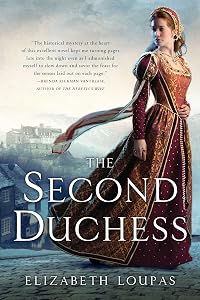
First, an admission: I was in love with Elizabeth Loupas’ first novel, The Second Duchess. It was one of the best books I read last year –even better than many of the offerings from more established historical fiction authors. I raved about the book to anyone who would listen and found virtually any excuse to recommend it to others. Needless to say, I was incredibly excited about Loupas’ follow-up novel, The Flower Reader.
Marina, known as Rinette, is the heir to a great Scottish estate, a relation to the French crown, and a close friend to Mary of Guise, the French-born Scottish queen. She also has the unique ability to divine the future from flowers, an ability that makes her an asset to the crown as well as a danger. When Mary show more of Guise trusts a casket filled with the secrets of the Scottish nobles and predictions from Nostradamas to Rinette, her life is changed forever. Rinette promises to protect the casket until it can reach the hands of Mary’s daughter, but soon finds the deadly consequence of that promise. Her beloved husband is killed, she becomes the target of numerous court schemes, and is forced to marry a man she hates.
The Flower Reader takes a more unique approach to historical fiction than just about everything else on the shelf right now. Rather than being primarily biographical, Flower Reader is a historical mystery surrounding the perilous court of Mary, Queen of Scots, but explored through the eyes of a purely fictional character. In fact, many of the characters in this book are fictional (more than the average historical fiction novel, I’d say), as is the plot. And honestly, I thought this was incredibly refreshing for the genre, especially since Loupas made the characters feel so real. They absolutely came alive on every page, and I got completely engrossed in Rinette’s story and struggles. I was cheering for her the entire time, even when it seemed like all was lost.
Would I say that The Flower Reader is as good as The Second Duchess? That’s a tough one. Both novels are very different and follow very different subjects with unique approaches, but Flower Reader is a worthwhile follow up that is easily one of the best book I’ve read so far this year. I’d recommend it to any fellow historical fiction reader. show less
Marina, known as Rinette, is the heir to a great Scottish estate, a relation to the French crown, and a close friend to Mary of Guise, the French-born Scottish queen. She also has the unique ability to divine the future from flowers, an ability that makes her an asset to the crown as well as a danger. When Mary show more of Guise trusts a casket filled with the secrets of the Scottish nobles and predictions from Nostradamas to Rinette, her life is changed forever. Rinette promises to protect the casket until it can reach the hands of Mary’s daughter, but soon finds the deadly consequence of that promise. Her beloved husband is killed, she becomes the target of numerous court schemes, and is forced to marry a man she hates.
The Flower Reader takes a more unique approach to historical fiction than just about everything else on the shelf right now. Rather than being primarily biographical, Flower Reader is a historical mystery surrounding the perilous court of Mary, Queen of Scots, but explored through the eyes of a purely fictional character. In fact, many of the characters in this book are fictional (more than the average historical fiction novel, I’d say), as is the plot. And honestly, I thought this was incredibly refreshing for the genre, especially since Loupas made the characters feel so real. They absolutely came alive on every page, and I got completely engrossed in Rinette’s story and struggles. I was cheering for her the entire time, even when it seemed like all was lost.
Would I say that The Flower Reader is as good as The Second Duchess? That’s a tough one. Both novels are very different and follow very different subjects with unique approaches, but Flower Reader is a worthwhile follow up that is easily one of the best book I’ve read so far this year. I’d recommend it to any fellow historical fiction reader. show less
Elizabeth Loupas' The Flower Reader takes place in Scotland during the mid-16th century, a time of great religious and political upheaval. When Rinette Leslie, a young ward of Marie Guise, is called to wait upon the dying regent, she has no idea that she will be asked to spirit away a silver casket containing secrets on Scotland's nobles and Nostradamus' marriage prophecies concerning Scotland's young queen, Mary. While the casket is in seemingly good hands with Rinette, who few would suspect of harbouring it, she miscalculates by telling her new husband, Alexander, about it. But when Alexander is murdered on the day Mary Queen of Scots returns home from France, Rinette's world comes crashing down. In an attempt to ensure her husband's show more killer is identified and captured, Rinette decides to bargain with the Queen -- she will hand the silver casket over to Mary only after Alexander's killer has been identified and captured. Mary accepts, setting into motion the events that serve as the basis for the rest of the novel.
Overall, The Flower Reader is an enjoyable novel. Rinette's quest to bring to justice the person behind her husband's assassination and, at the same time, prevent the silver casket from falling into the wrong hands, keep the narrative moving at a steady pace. I felt the characters in The Flower Reader to be well drawn. Aside from Rinette herself, I was especially interested in Loupas' portrayal of Mary, Queen of Scots. While Mary is characterized as a spoiled and indulged young monarch who is used to getting her way, she also comes across as naive and (somewhat) carefree. There is some hint at the turmoil to come in Mary's reign, but for the most part the period covered in this novel was one of relative calm and I appreciated reading about this period in Mary's life.
I think the greatest strength of this novel rests with how skillfully Loupas weaves the art of 'floromancy,' or flower-reading, into the story. I loved how Rinette associates each of the main characters with a particular flower, and learning the meaning behind each association. I'm not usually a fan of otherwise straight historical fiction incorporating bits of fantasy or mysticism into a storyline, mainly because I think if it's not done well it can leave a historical novel feeling less than authentic. Loupas, however, does a good job mixing mystical elements into this novel. I also appreciate the fact that while Rinette often finds herself in difficult situations, none of these seem improbable and, most importantly, neither does her ability to get out of them. While I would have liked the book to have delved deeper into some of the political happenings of the period by further incorporating key historical figures such as Queen Mary's half-brother, James Stewart, Earl of Moray, and Scottish Reformation leader John Knox into the story, the book does not suffer from either figure, especially Knox, being featured less prominently than some other characters.
The Flower Reader is sure to appeal to all fans of historical fiction, especially those interested in Scottish history and those who enjoy historical fiction mixed with a little fantasy/mysticism. show less
Overall, The Flower Reader is an enjoyable novel. Rinette's quest to bring to justice the person behind her husband's assassination and, at the same time, prevent the silver casket from falling into the wrong hands, keep the narrative moving at a steady pace. I felt the characters in The Flower Reader to be well drawn. Aside from Rinette herself, I was especially interested in Loupas' portrayal of Mary, Queen of Scots. While Mary is characterized as a spoiled and indulged young monarch who is used to getting her way, she also comes across as naive and (somewhat) carefree. There is some hint at the turmoil to come in Mary's reign, but for the most part the period covered in this novel was one of relative calm and I appreciated reading about this period in Mary's life.
I think the greatest strength of this novel rests with how skillfully Loupas weaves the art of 'floromancy,' or flower-reading, into the story. I loved how Rinette associates each of the main characters with a particular flower, and learning the meaning behind each association. I'm not usually a fan of otherwise straight historical fiction incorporating bits of fantasy or mysticism into a storyline, mainly because I think if it's not done well it can leave a historical novel feeling less than authentic. Loupas, however, does a good job mixing mystical elements into this novel. I also appreciate the fact that while Rinette often finds herself in difficult situations, none of these seem improbable and, most importantly, neither does her ability to get out of them. While I would have liked the book to have delved deeper into some of the political happenings of the period by further incorporating key historical figures such as Queen Mary's half-brother, James Stewart, Earl of Moray, and Scottish Reformation leader John Knox into the story, the book does not suffer from either figure, especially Knox, being featured less prominently than some other characters.
The Flower Reader is sure to appeal to all fans of historical fiction, especially those interested in Scottish history and those who enjoy historical fiction mixed with a little fantasy/mysticism. show less
Rinette Leslie of Granmuir is given a silver casket by the dying Mary of Guise, with strict instructions to give the casket to Mary's daughter, Mary Queen of Scots, upon her arrival in Scotland. Rinette, anxious for her home and loved ones, quickly returns to Granmuir with the casket and marries her childhood sweetheart, to whom she shows the casket. When Mary Queen of Scots arrives in Scotland, Rinette is ready to discharge her duty, but her beloved husband is assassinated. Demanding justice and protection in exchange for the casket, Rinette begins her own search for her husband's murderer. Betrayed by her dead husband and with no help, she allies herself with Mary's mysterious French Secretary, Nicolas de Clerac. The only thing show more Rinette can depend on in the mercurial Mary Queen of Scot's court is the flowers, which scream warnings of impending danger.
Rinette, the spunky heroine makes this book. Like Loupas' Barbra of Austria, Rinette is driven by self preservation and a determination to protect her family and home. This determination puts her at risk from the Queen herself and many others who want the casket's prophecies from Nostradamus. Mary Queen of Scots could make the most patient of people lose their temper, but she made the story more interesting. Her hardheartedness forced Rinette to face danger may times. Rinette has a very developed second sense that helps her avoid pitfalls as she tries to unravel the secrets behind the casket and her husband's murder. Loupas does a wonderful job of mixing revenge, love, loss, lust and mystery into this wonderful story. This book is a must read!! show less
Rinette, the spunky heroine makes this book. Like Loupas' Barbra of Austria, Rinette is driven by self preservation and a determination to protect her family and home. This determination puts her at risk from the Queen herself and many others who want the casket's prophecies from Nostradamus. Mary Queen of Scots could make the most patient of people lose their temper, but she made the story more interesting. Her hardheartedness forced Rinette to face danger may times. Rinette has a very developed second sense that helps her avoid pitfalls as she tries to unravel the secrets behind the casket and her husband's murder. Loupas does a wonderful job of mixing revenge, love, loss, lust and mystery into this wonderful story. This book is a must read!! show less
Members
- Recently Added By
Author Information

3 Works 493 Members
Elizabeth Loupas is a LibraryThing Author, an author who lists their personal library on LibraryThing.
Common Knowledge
- Canonical title
- The Flower Reader
- Original publication date
- 2012
- People/Characters
- Marina "Rinette" Leslie of Granmuir; Mary, Queen of Scots; Mary of Guise; Nostradamus
- Important places
- Scotland, UK
- First words
- 'I hated the queen, hated her down to the deepest marrow of my bones'.
Classifications
Statistics
- Members
- 129
- Popularity
- 254,600
- Reviews
- 18
- Rating
- (3.88)
- Languages
- English, German, Italian
- Media
- Paper, Ebook
- ISBNs
- 11
- ASINs
- 2