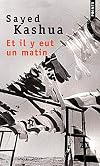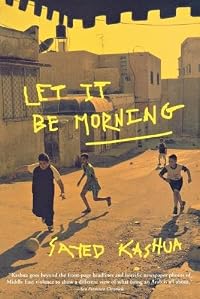
Let It Be Morning
by Sayed Kashua
On This Page
Description
A young Arab journalist returns to his hometown -- an Arab village within Israel -- where his already vexed sense of belonging is forced to crisis when the village becomes a pawn in the never-ending power struggle that is the Middle East. Hoping to reclaim the simplicity of life among kin, the prodigal son returns home to find that nothing is as he remembers: everything is smaller, the people are petty and provincial. But when Israeli tanks surround the village without warning or show more explanation, everyone inside is cut off from the outside world. As the situation grows increasingly dire, the village devolves into a Darwinian jungle, where paranoia quickly takes hold and threatens the community's fragile equilibrium. show lessTags
Recommendations



Member Reviews
A young journalist, his wife, and baby daughter leave their rented apartment in an Israeli city and move to the Arab village in which the couple grew up. Feeling not that much a part of the Jewish establishment in which he works anymore, this journalist thinks that returning to what was once familiar will be comforting. The sad realization overtakes him that he is not returning to the same place he left 10 years earlier.
It’s not so much that the writing is good, but it’s the fact that the words the author chooses so acutely and accurately convey his feelings--the most pervasive one being the burden of feeling at ease any place at all in Israel, be it in a Jewish or Arab environment. How odd that I should have chosen this book to show more read precisely during the Israeli invasion of Lebanon again in 2006. I really feel for the Israeli Arabs who seek a home in which they can feel comfortable and secure at all times.
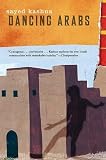
This book takes a a further and more painful step into the uncomfortable world between Jew and Arab. In Dancing Arabs, the author tread lightly on this precarious relationship. In Let it be Morning, Kashua heads from the psychological problems to the threat of physical harm as well. Where can the line be drawn into comfortably fitting Arabs into the life of the Jewish state? That’s the issue this difficult, but engrossing read is trying to express.
The story left me breathless. The tension was unbelievable as the author drove deeply into me what it must feel like to be in the limbo of the Arab Israeli world. I greatly look forward to reading more work by this amazingly talented writer. show less
It’s not so much that the writing is good, but it’s the fact that the words the author chooses so acutely and accurately convey his feelings--the most pervasive one being the burden of feeling at ease any place at all in Israel, be it in a Jewish or Arab environment. How odd that I should have chosen this book to show more read precisely during the Israeli invasion of Lebanon again in 2006. I really feel for the Israeli Arabs who seek a home in which they can feel comfortable and secure at all times.
This book takes a a further and more painful step into the uncomfortable world between Jew and Arab. In Dancing Arabs, the author tread lightly on this precarious relationship. In Let it be Morning, Kashua heads from the psychological problems to the threat of physical harm as well. Where can the line be drawn into comfortably fitting Arabs into the life of the Jewish state? That’s the issue this difficult, but engrossing read is trying to express.
The story left me breathless. The tension was unbelievable as the author drove deeply into me what it must feel like to be in the limbo of the Arab Israeli world. I greatly look forward to reading more work by this amazingly talented writer. show less
This was a slow burner, but well worth sticking with. At the start it appeared to be about an Arab, living in Israel, who exudes dissatisfaction about everything - his career, his home village, the city where he used to live, his parents, his wife....the list goes on.
As the story progressed, I found it increasingly informative. I like a book that challenges my ignorance - and for starters I didn't realise there were Arabs who counted themselves Israeli citizens, and were happy to remain so. This book is all about such people, and what happens when a village is surrounded by tanks and effectively cut off from civilization by its own government, without explanation.
The results of this action go beyond cultural considerations, and there show more were scenes, increasingly shocking in nature, that reminded me of one of my fave novels 'The Grapes of Wrath'. By the closing chapters I was on the edge of my seat. Beware, incidentally, of reading the 'Sewage' section on a full stomach. There is a scene in there that would make James Herriot's Sunday teatime forays into the nether regions of a pregnant cow look like very small beer.
All in all I have finished this book feeling a great deal better informed about affairs in the Middle East than I was when I first picked it up. As someone who believes the West can learn an awful lot from moderate Islam, I found it fascinating to learn about normal everyday life in the village, where there were wars but generally 'over parking spaces', and where the first concern among many people when the power was cut off was that they would miss the next episode of their favourite Egyptian soap opera. The story's conclusion, though abrupt, provided further food for thought. show less
As the story progressed, I found it increasingly informative. I like a book that challenges my ignorance - and for starters I didn't realise there were Arabs who counted themselves Israeli citizens, and were happy to remain so. This book is all about such people, and what happens when a village is surrounded by tanks and effectively cut off from civilization by its own government, without explanation.
The results of this action go beyond cultural considerations, and there show more were scenes, increasingly shocking in nature, that reminded me of one of my fave novels 'The Grapes of Wrath'. By the closing chapters I was on the edge of my seat. Beware, incidentally, of reading the 'Sewage' section on a full stomach. There is a scene in there that would make James Herriot's Sunday teatime forays into the nether regions of a pregnant cow look like very small beer.
All in all I have finished this book feeling a great deal better informed about affairs in the Middle East than I was when I first picked it up. As someone who believes the West can learn an awful lot from moderate Islam, I found it fascinating to learn about normal everyday life in the village, where there were wars but generally 'over parking spaces', and where the first concern among many people when the power was cut off was that they would miss the next episode of their favourite Egyptian soap opera. The story's conclusion, though abrupt, provided further food for thought. show less
Another book difficult to rate. It's beautifully written and translated. A frankly unlikable narrator who is a journalist and has moved back to the Arab village where he grew up. The village is barricaded, water and electricty turned off, and life quickly becomes chaotic. The ending is a bit of a twist, turning the whole narrative on it's head. I didn't really like it but I am intrigued and want to read more.
It’s a pivotal time in Israel and an Arab-Israeli village comes under siege. What would you do if your perfectly normal existence comes to a halt without any explanation? One Arab tells what happens to his immediate and extended family. Scary and somehow real. Unfortunately the MC is not likeable and he strays from the story to talk about childhood experiences, which feel out of place. A fine story but for that.
The protagonist of the novel is an Israeli-Arab journalist. The protagonist has been working in Tel Aviv, but the anti-Arab sentiment gets so bad he decides to move back to his Arabic hometown. Once there, Israeli tanks blockade the town, and phone service, electricity, and water are cut. Nobody knows why. Those that try to leave are shot.
The story then becomes one of those Lord of the Flies-esque 'look what normal people turn into in times of terror' things. There's stoning, thievery, practically murder. The book also adds yet another layer to the Israel-Palestinians conflict. The protagonist and his family, as Arab-Israelis, do not identify with the Palestinians of the West Bank, but are not accepted by the majority of Israelis show more either. It's an interesting perspective on the conflict. It's definitely worth the read. show less
The story then becomes one of those Lord of the Flies-esque 'look what normal people turn into in times of terror' things. There's stoning, thievery, practically murder. The book also adds yet another layer to the Israel-Palestinians conflict. The protagonist and his family, as Arab-Israelis, do not identify with the Palestinians of the West Bank, but are not accepted by the majority of Israelis show more either. It's an interesting perspective on the conflict. It's definitely worth the read. show less
Un excellent roman, une écriture agréable, bien traduit, l'histoire d'un homme entre deux cultures, deux traditions, une forme de journal d'un retour au pays natal.
Il montre la complexité d'être un arabe israélien. Il raconte remarquablement bien la vie dans un village tiraillé entre modernité et archaisme, entre désir d'intégration et refus. Il explore la noirceur de l'ame humaine sous toutes ses facettes. Aucun des protagonistes n'est franchement sympathique ou totalement antipathique. Ils sont juste humains, terriblement humain.
J'avais découvert l'auteur en lisant une chronique écrite par lui dans libération sur son départ d'israel.
Pour comprendre un peu la complexité de la région, il faut le lire.
Il montre la complexité d'être un arabe israélien. Il raconte remarquablement bien la vie dans un village tiraillé entre modernité et archaisme, entre désir d'intégration et refus. Il explore la noirceur de l'ame humaine sous toutes ses facettes. Aucun des protagonistes n'est franchement sympathique ou totalement antipathique. Ils sont juste humains, terriblement humain.
J'avais découvert l'auteur en lisant une chronique écrite par lui dans libération sur son départ d'israel.
Pour comprendre un peu la complexité de la région, il faut le lire.
Sep 28, 2014French
Members
- Recently Added By
Lists

International IMPAC Dublin Literary Award
179 works; 6 members

Book Riot's 100 must-read works of Jewish Fiction
100 works; 8 members
Author Information

5+ Works 699 Members
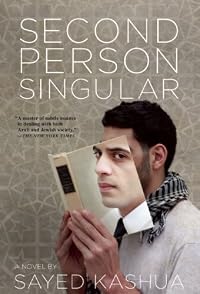
Sayed Kashua is the author of the novels Dancing Arabs; Let It Be Morning, which was shortlisted for the International IMPAC Dublin Literary Award; and Second Person Singular, winner of the prestigious Bernstein Prize. He is a columnist for Haaretz and the creator of the prizewinning sitcom, Arab Labor. Now living in the United States with his show more family, he teaches at the University of Illinois. show less
Some Editions
Awards and Honors
Notable Lists
Common Knowledge
Classifications
- Genres
- Fiction and Literature, General Fiction, Children's Books
- DDC/MDS
- 892.4 — Literature & rhetoric Literatures of other languages Afro-Asiatic literatures Jewish, Israeli, and Hebrew
- LCC
- PJ5055.38 .A84 .V313 — Language and Literature Oriental languages and literatures Oriental philology and literature Hebrew Literature Individual authors and works
- BISAC
Statistics
- Members
- 170
- Popularity
- 190,671
- Reviews
- 7
- Rating
- (3.95)
- Languages
- 5 — English, French, German, Hebrew, Italian
- Media
- Paper, Ebook
- ISBNs
- 13
- ASINs
- 2