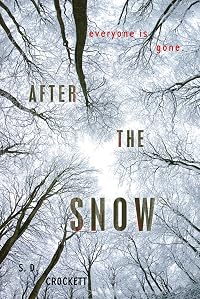
After the Snow
by S. D. Crockett
On This Page
Description
Fifteen-year-old Willo Blake, born after the 2059 snows that ushered in a new ice age, encounters outlaws, halfmen, and an abandoned girl as he journeys in search of his family, who mysteriously disappeared from the freezing mountain that was their home.Tags
Recommendations
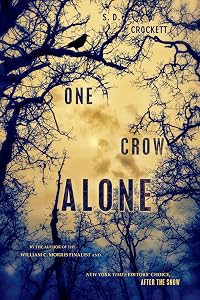
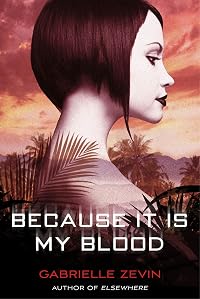


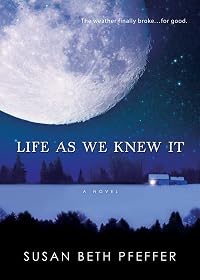
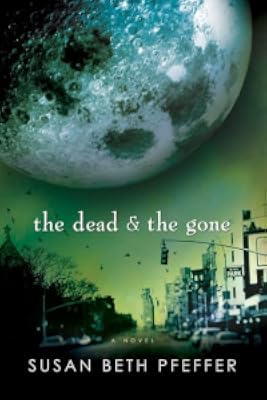
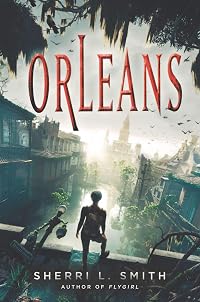

Member Recommendations
Member Reviews
Title: After the Snow
By: S.D. Crockett
Genre: YA Post-Apocalyptic
Rating: PG-13 (language and violent/gore content)
Coffee Beans: 2/5. For reals
Spoilers: yes, some.
Favorite Line: The whole world and everything in it shining in the weak sun like it just been born. (pg 277, ebook) & “I’m sorry. I am.” I put out my hand. But it’s just a flame in that beating rain. (pg 281, ebook)
Disclaimer: I was given a free copy of this book from Netgalley in exchange for this honest review
To date, there‘s only one book I’ve ever not finished, and it’s Brenna Yovanoff’s The Replacement. You can read my BR to find out why. So, I was very discouraged when I started reading After the Snow, and by page 4 I was thinking to myself, DANG IT! This show more is going to be another book I won’t be able to finish. But, I plowed through, and I'm just going to come out and say it:
I didn't like this book.
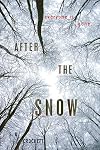
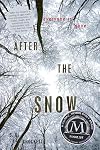
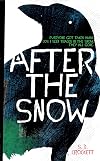
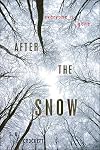
I wanted to like this book. I really did. The cover’s pretty awesome. The summary sounded promising. But for me, it fell far short of being a good book. The first half was boring, slow, and uneventful. The second half was exponentially better, filled with action, substance, and characters, but it was too little, too late and couldn't make up for the first half.
I'm going to save you some valuable reading time.
Ready? Here we go.
Skip chapters 1 – 16. Trust me. You won't miss anything. Only a whole lot of backstory. In fact, to make you feel better, I'll sum up what happens so you feel like you know what's going on when you start reading at chapter 17:
Summary for the first half of the book (Ch. 1 – 16):
*Eh-hem*
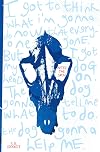
15-year-old boy (Willo) is crazy. Like, certifiable. Talks to himself & wears a dead dog’s head on top of his to get strength and power. The dog talks to him and he talks back. Willo goes home, finds his entire family and everyone else (it’s vague as to who that is) missing and decides to go after them. On his way to the neighbors’ (whom he suspects of being involved), he meets and takes with him a girl named Mary. They fight off some wolves, then run and hide. Then he takes her to a cave, then they walk some more (in the snow, of course) towards the neighbor’s.
I have just summed up the first 102 pages.
Now you can start reading the book from chapter 17 on, where it gets substantially better.
The book wasn't all bad, just mostly. And that's strictly my opinion. There are A LOT of 4 and 5 star reviews out there of this book. Go and read them. Some people really liked what was between pages 1 and 304. I, however, was not one of them. Let me explain why I chose the lowest rating I've ever given a book:
· Let’s start with the setting. I know it’s snowing. I know it’s cold. I know Willo is in the mountains. But that’s all I know. What year is it? What’s the “world” this story takes place in like? Besides the few vague stereotypical description for a post-apocalyptic setting I had no idea what I was supposed to be picturing, which made it hard for me to be really invested into the story
· I found the main character, Willo, to be confusing at best. He’s insane with moments of clarity, but he’s constantly contradicting himself to the point of confusing the reader. And these contradictions happen only sentences apart. Which leads me to believe the author is giving credence to the protag’s craziness, but it’s not streamlined enough to be smooth.
· The first 102 pages were a waste of my time that I could have spent reading something else. Absolutely nothing pivotal to the story happened that couldn't have been summed up by the in a few sentences from the protag’s POV
Willo's 15/16 in this book, but the maturity of the character that comes through is far younger. In fact, Mary, who's 13/14, seems far more mature than her traveling partner. Plus, Willo's one crazy cat (and not in an artsy kind of way). Talks to himself. A lot. Talks to a dead dog that sits on his head. A lot. Hmmm…hard to get around and accept for me. And he seems very unemotional about the fact that his family is missing. In fact, I wasn’t invested into any of the characters until page 151. 151, people. That ain’t good
The voice of the story—the style it's written in—is difficult to adjust to. It's written in a very primitive, uneducated style—which I can understand because Willo's lived in the mountains his entire life and isn't all that educated—but it's overdone to the point of being annoying and distracting. I thought that maybe it would be like Blood Red Road by Moira Young and I’d get used to it and fall in love with it, but here, I found myself skimming over a majority of the narrative, kinda like I did in Spanish class during tests. I got the main idea of the page, but didn’t care to understand anymore. And the text is sectioned off weird at times; I still haven’t figured out why
What the heck is Willo's goal? It's all over the place, and when he does have one, it's unfocused. Meandering. When he discovers his family missing, he wants to find them. Then, when he thinks he knows who the traitor is ("married" to his sister) he wants revenge. Then he comes across Mary, one thing leads to another, and they find themselves in the city. He still has his distracted goal of getting to the culprit (and his sister). Then he gets separated from Mary. Then he bunks with a nice old man and his wife for the winter. His new goal is to find Mary. Wait, what about that goal of finding his family? He gets back to that. Then his goal is escape and heading back up to the hills. But wait, Mary! Once reunited, their goal is to get to the sea to get on the ships with the Resistance to get to some islands. Then they change their minds and want to go south. See what I mean?
The ending made me mad. NOTHING was resolved. NOTHING
What I liked:
Crockett, at times, has beautiful imagery and a very simple way of saying things that resonates truth (thanks to Willo's simple way of thinking and isolation from the "real" world)
The second half of the book was packed with tension and action and all-around great writing and storytelling. If the book had held that impact from the beginning, this would've been a VERY different BR
The cover
I almost didn't finish this book. Almost. But, I'm determined not to have one DNF book on my list in 2012, if I can help it.
Look, as always, read it for yourself. It wasn't for me, but it may be for you. It's never fun writing BR's for books I didn't like. The author worked hard on the book. They love it. I just hope there are more people out there that love it more than me.
Happy reading, my friends!
http://RaeLynnFry.Blogspot.com show less
By: S.D. Crockett
Genre: YA Post-Apocalyptic
Rating: PG-13 (language and violent/gore content)
Coffee Beans: 2/5. For reals
Spoilers: yes, some.
Favorite Line: The whole world and everything in it shining in the weak sun like it just been born. (pg 277, ebook) & “I’m sorry. I am.” I put out my hand. But it’s just a flame in that beating rain. (pg 281, ebook)
Disclaimer: I was given a free copy of this book from Netgalley in exchange for this honest review
To date, there‘s only one book I’ve ever not finished, and it’s Brenna Yovanoff’s The Replacement. You can read my BR to find out why. So, I was very discouraged when I started reading After the Snow, and by page 4 I was thinking to myself, DANG IT! This show more is going to be another book I won’t be able to finish. But, I plowed through, and I'm just going to come out and say it:
I didn't like this book.
I wanted to like this book. I really did. The cover’s pretty awesome. The summary sounded promising. But for me, it fell far short of being a good book. The first half was boring, slow, and uneventful. The second half was exponentially better, filled with action, substance, and characters, but it was too little, too late and couldn't make up for the first half.
I'm going to save you some valuable reading time.
Ready? Here we go.
Skip chapters 1 – 16. Trust me. You won't miss anything. Only a whole lot of backstory. In fact, to make you feel better, I'll sum up what happens so you feel like you know what's going on when you start reading at chapter 17:
Summary for the first half of the book (Ch. 1 – 16):
*Eh-hem*
15-year-old boy (Willo) is crazy. Like, certifiable. Talks to himself & wears a dead dog’s head on top of his to get strength and power. The dog talks to him and he talks back. Willo goes home, finds his entire family and everyone else (it’s vague as to who that is) missing and decides to go after them. On his way to the neighbors’ (whom he suspects of being involved), he meets and takes with him a girl named Mary. They fight off some wolves, then run and hide. Then he takes her to a cave, then they walk some more (in the snow, of course) towards the neighbor’s.
I have just summed up the first 102 pages.
Now you can start reading the book from chapter 17 on, where it gets substantially better.
The book wasn't all bad, just mostly. And that's strictly my opinion. There are A LOT of 4 and 5 star reviews out there of this book. Go and read them. Some people really liked what was between pages 1 and 304. I, however, was not one of them. Let me explain why I chose the lowest rating I've ever given a book:
· Let’s start with the setting. I know it’s snowing. I know it’s cold. I know Willo is in the mountains. But that’s all I know. What year is it? What’s the “world” this story takes place in like? Besides the few vague stereotypical description for a post-apocalyptic setting I had no idea what I was supposed to be picturing, which made it hard for me to be really invested into the story
· I found the main character, Willo, to be confusing at best. He’s insane with moments of clarity, but he’s constantly contradicting himself to the point of confusing the reader. And these contradictions happen only sentences apart. Which leads me to believe the author is giving credence to the protag’s craziness, but it’s not streamlined enough to be smooth.
· The first 102 pages were a waste of my time that I could have spent reading something else. Absolutely nothing pivotal to the story happened that couldn't have been summed up by the in a few sentences from the protag’s POV
Willo's 15/16 in this book, but the maturity of the character that comes through is far younger. In fact, Mary, who's 13/14, seems far more mature than her traveling partner. Plus, Willo's one crazy cat (and not in an artsy kind of way). Talks to himself. A lot. Talks to a dead dog that sits on his head. A lot. Hmmm…hard to get around and accept for me. And he seems very unemotional about the fact that his family is missing. In fact, I wasn’t invested into any of the characters until page 151. 151, people. That ain’t good
The voice of the story—the style it's written in—is difficult to adjust to. It's written in a very primitive, uneducated style—which I can understand because Willo's lived in the mountains his entire life and isn't all that educated—but it's overdone to the point of being annoying and distracting. I thought that maybe it would be like Blood Red Road by Moira Young and I’d get used to it and fall in love with it, but here, I found myself skimming over a majority of the narrative, kinda like I did in Spanish class during tests. I got the main idea of the page, but didn’t care to understand anymore. And the text is sectioned off weird at times; I still haven’t figured out why
What the heck is Willo's goal? It's all over the place, and when he does have one, it's unfocused. Meandering. When he discovers his family missing, he wants to find them. Then, when he thinks he knows who the traitor is ("married" to his sister) he wants revenge. Then he comes across Mary, one thing leads to another, and they find themselves in the city. He still has his distracted goal of getting to the culprit (and his sister). Then he gets separated from Mary. Then he bunks with a nice old man and his wife for the winter. His new goal is to find Mary. Wait, what about that goal of finding his family? He gets back to that. Then his goal is escape and heading back up to the hills. But wait, Mary! Once reunited, their goal is to get to the sea to get on the ships with the Resistance to get to some islands. Then they change their minds and want to go south. See what I mean?
The ending made me mad. NOTHING was resolved. NOTHING
What I liked:
Crockett, at times, has beautiful imagery and a very simple way of saying things that resonates truth (thanks to Willo's simple way of thinking and isolation from the "real" world)
The second half of the book was packed with tension and action and all-around great writing and storytelling. If the book had held that impact from the beginning, this would've been a VERY different BR
The cover
I almost didn't finish this book. Almost. But, I'm determined not to have one DNF book on my list in 2012, if I can help it.
Look, as always, read it for yourself. It wasn't for me, but it may be for you. It's never fun writing BR's for books I didn't like. The author worked hard on the book. They love it. I just hope there are more people out there that love it more than me.
Happy reading, my friends!
http://RaeLynnFry.Blogspot.com show less
After the Snow is pretty near perfect. The idea of the storyline is unique, the plot rarely drags, and the author's writing is nice and cohesive. I found the writing style and overall content to be more of a middle-grade read than a YA one (minus a bit of profanity towards the end), though it's certainly a great read for either target group.
I loved Crockett's idea for the apocalypse/dystopia. It picks up on current issues over global warming, sustainable practices, and ethics, but these are rather muted and a background to the characters' adventures. Every once in a while, the author will delve deeper into the issues running behind everything. Part of what's unique about After the Snow as a dystopia is also the method of resistance, show more based more on a utopian theory than fighting the oppressors. The novel becomes more about a teenage boy finding himself and understanding the world, unlike other YA sci-fi books where the characters are just trying to bust the system. show less
I loved Crockett's idea for the apocalypse/dystopia. It picks up on current issues over global warming, sustainable practices, and ethics, but these are rather muted and a background to the characters' adventures. Every once in a while, the author will delve deeper into the issues running behind everything. Part of what's unique about After the Snow as a dystopia is also the method of resistance, show more based more on a utopian theory than fighting the oppressors. The novel becomes more about a teenage boy finding himself and understanding the world, unlike other YA sci-fi books where the characters are just trying to bust the system. show less
After the Snow by S. D. Crockett is a coming-of-age Dystopian story set in the far future. The story is located in an England that is experiencing a renewed Ice Age. It also appears that people have forgotten many skills from modern day. There are references to past oil shortages, wind farms and solar power, but this very cold world has no heat source other than fire. People huddle together afraid of the dark and cold. What government there is appears to be of a totalitarian type with everyone needing “papers” in order to live in the cities, or if they live outside the law and fend for themselves they are in danger of being rounded up and being forced into slavery.
Fifteen year old Willo and his family live in the hills. He wears a show more hand-stitched coat of skins and a dog skull as a hat. In fact he relies on communication with the dog skull to help him in his hunting and trapping. He returns home one day to find that his family have been taken away by the government and he decides to follow and save them. While travelling he encounters a young girl and after dangerous encounters with both wild dogs and cannibals they head into the city.
Unfortunately I found After the Snow a rather disjointed and confusing story. The conflict between those that live in an official settlement and those who live on their own didn’t make sense. There appears to be violence and starvation no matter where people lived. I also didn’t enjoy that the author chose to have Willo relate this post-apocalyptic story in a coarse, broken, ungrammatical style. Overall this dark story frustrated me and I was glad to see the end of it. show less
Fifteen year old Willo and his family live in the hills. He wears a show more hand-stitched coat of skins and a dog skull as a hat. In fact he relies on communication with the dog skull to help him in his hunting and trapping. He returns home one day to find that his family have been taken away by the government and he decides to follow and save them. While travelling he encounters a young girl and after dangerous encounters with both wild dogs and cannibals they head into the city.
Unfortunately I found After the Snow a rather disjointed and confusing story. The conflict between those that live in an official settlement and those who live on their own didn’t make sense. There appears to be violence and starvation no matter where people lived. I also didn’t enjoy that the author chose to have Willo relate this post-apocalyptic story in a coarse, broken, ungrammatical style. Overall this dark story frustrated me and I was glad to see the end of it. show less
Like many survivor stories, After the Snow isn’t exactly fun, per se. It’s gritty and tough; Willo’s life after losing his family is pretty darn hard (and it was that way before he lost them, too). S.D. Crockett isn’t afraid to show her readers blood, gore, and suffering. This can be a good thing, because it increases our emotional reaction to Willo’s struggle, but it’s also tough to read through. I enjoyed the harsh realism to a point, but there were certain parts of the story that were tough to stomach. If you’re sensitive, you might want to be wary of After the Snow.
S.D. Crockett’s writing style is a bit reminiscent of Patrick Ness’ in The Knife of Never Letting Go: it’s close to steam-of-consciousness, and it’s show more written in a dialect that takes some getting used to. This kind of writing really adds to the experience of the novel; it helps us understand a bit more about the culture in which Willo was raised (that is, the groups that survived S.D. Crockett’s imagined apocalypse scenario). This style also gives us a better feel for Willo as a character: we access his inner thoughts and doubts though internal dialects he holds with a dog skull he wears on his head. Aside from this subtle characterization, Willo isn’t the easiest to connect with, but he’s still quite a trouper, and it’s easy to sympathize with him.
After the Snow didn’t quite impress me as much as I’d hoped. The story focused more on the struggle of a single boy, rather than on that of a people as a whole. It was interesting, but not gripping. If survival stories are your thing, I think you’ll enjoy S.D. Crockett’s debut. show less
S.D. Crockett’s writing style is a bit reminiscent of Patrick Ness’ in The Knife of Never Letting Go: it’s close to steam-of-consciousness, and it’s show more written in a dialect that takes some getting used to. This kind of writing really adds to the experience of the novel; it helps us understand a bit more about the culture in which Willo was raised (that is, the groups that survived S.D. Crockett’s imagined apocalypse scenario). This style also gives us a better feel for Willo as a character: we access his inner thoughts and doubts though internal dialects he holds with a dog skull he wears on his head. Aside from this subtle characterization, Willo isn’t the easiest to connect with, but he’s still quite a trouper, and it’s easy to sympathize with him.
After the Snow didn’t quite impress me as much as I’d hoped. The story focused more on the struggle of a single boy, rather than on that of a people as a whole. It was interesting, but not gripping. If survival stories are your thing, I think you’ll enjoy S.D. Crockett’s debut. show less
While reading this book I didn't love it but now that I've finished I realize, I love it.
What makes it tough to get into this book is the unique voice that Crockett gives to Willo, her main character but this is what also makes the story so engaging. Willo's interior mental world is just as strange and alien as the outside world where, maybe climate change, maybe something else has caused a constant winter in the UK. Willo has learned to hunt, forge and live in the wild, isolated with his family and few others who also chose this lifestyle.
It would be easy to call this dystopian or post-apocalyptic but I feel the world Crockett creates is more realistic and less fantasy which is a welcome change. It reminded me of Children of Men which show more I loved.
pg 96. "And kneeling there with out cold hands together brings a feeling that wash over me like a warm wind. I forgot I been hungry and tired and alone with this pesky girl. I reckon that feeling gonna stay written on my heart forever, I really do."
pg.255 "But I do call. I call out to the mountain. And the fear got so strong I lose myself. Just like a dead cold stone lying there alone. And when I wake up, I still been alive and the mountain sighing and whispering to me. I'm only a mountain. I'm only a lump of rock. It's your thoughts you've been scared of. show less
What makes it tough to get into this book is the unique voice that Crockett gives to Willo, her main character but this is what also makes the story so engaging. Willo's interior mental world is just as strange and alien as the outside world where, maybe climate change, maybe something else has caused a constant winter in the UK. Willo has learned to hunt, forge and live in the wild, isolated with his family and few others who also chose this lifestyle.
It would be easy to call this dystopian or post-apocalyptic but I feel the world Crockett creates is more realistic and less fantasy which is a welcome change. It reminded me of Children of Men which show more I loved.
pg 96. "And kneeling there with out cold hands together brings a feeling that wash over me like a warm wind. I forgot I been hungry and tired and alone with this pesky girl. I reckon that feeling gonna stay written on my heart forever, I really do."
pg.255 "But I do call. I call out to the mountain. And the fear got so strong I lose myself. Just like a dead cold stone lying there alone. And when I wake up, I still been alive and the mountain sighing and whispering to me. I'm only a mountain. I'm only a lump of rock. It's your thoughts you've been scared of. show less
In a post-apocalyptic world plunged into an ice age after a period of dramatically shifting climate society is coming unglued. On the outskirts of this society, independent and surviving on their own, lives Willo and his family. They eke out an existence in a world turned cold by hunting, trapping and working what little farm land there is in the very brief spring and summer. Willo has gone half-savage in many ways. He wears the skull of a dog on his head, doesn’t read very much or very well, and spends most of his days out setting traps in the freezing, driving snow with an instinct for hunting honed from growing up in the midst of an ice age. It’s the only world he has ever known.
One day his family is taken by men in trucks while show more Willo is gone and he comes back to find that he is now all alone in this freezing wilderness. What follows is his journey to survive in the cold while finding answers for where his family has gone. What he discovers is ultimately almost more than he can understand, but is chilling for the reader that understands all too well.
This is another novel that uses phonetic spelling in speech to convey how Willo communicates and relates to the world. His thoughts are also simply arranged and laid out. This did not bother me in After the Snow as much as it did in Blood Red Road. I think, in that case, the punctuation was a deal breaker for me. In After the Snow the quote marks were left intact so it increased the readability for me and as I was able to enjoy the spelling for its original purpose, gaining more insight into the speaker by being able to read not just what they said but how they said it.
We see things from Willo’s point of view throughout and his point of view is pretty limited since he grew up outside of main stream society. He is left in the dark a lot about what is really going on and further more often doesn’t care because so much of what happened to bring about the ice age and society’s collapse is just completely outside of his circle of things he cares about. Willo is very practical, they are in an ice age now and that’s what needs to be dealt with, he’s concerned with survival not politics. That being said there is a lot of politics between the lines that is sailing right over Willo’s head but is there for the reader to understand and piece together. The final picture will leave you cold.
After the Snow was written in response to Snowmageddon back in 2009, when the U.K. found itself buried alive and London simply shut down for a few days. What if it kept on snowing? What if winter never ended? What would modern society do, and how would it function and survive, in the midst of an ice age? You’ll have to read the book yourself to find out.
I received this book for free to review. show less
One day his family is taken by men in trucks while show more Willo is gone and he comes back to find that he is now all alone in this freezing wilderness. What follows is his journey to survive in the cold while finding answers for where his family has gone. What he discovers is ultimately almost more than he can understand, but is chilling for the reader that understands all too well.
This is another novel that uses phonetic spelling in speech to convey how Willo communicates and relates to the world. His thoughts are also simply arranged and laid out. This did not bother me in After the Snow as much as it did in Blood Red Road. I think, in that case, the punctuation was a deal breaker for me. In After the Snow the quote marks were left intact so it increased the readability for me and as I was able to enjoy the spelling for its original purpose, gaining more insight into the speaker by being able to read not just what they said but how they said it.
We see things from Willo’s point of view throughout and his point of view is pretty limited since he grew up outside of main stream society. He is left in the dark a lot about what is really going on and further more often doesn’t care because so much of what happened to bring about the ice age and society’s collapse is just completely outside of his circle of things he cares about. Willo is very practical, they are in an ice age now and that’s what needs to be dealt with, he’s concerned with survival not politics. That being said there is a lot of politics between the lines that is sailing right over Willo’s head but is there for the reader to understand and piece together. The final picture will leave you cold.
After the Snow was written in response to Snowmageddon back in 2009, when the U.K. found itself buried alive and London simply shut down for a few days. What if it kept on snowing? What if winter never ended? What would modern society do, and how would it function and survive, in the midst of an ice age? You’ll have to read the book yourself to find out.
I received this book for free to review. show less
Since the end of the use of fossil fuels, the ocean currents slowed resulting in constant winter on the island of England. Most people have chosen to stay in the cities where marshal law prevails and gangs rule. A few people chose to make their own way in nearby mountains as is the case of Willo's family. They hunt and trap and trade their pelts for food as they struggle to survive and stay together in a small isolated house. One day, however, Willo comes home and finds his family has been taken. He packs up a sled and tries to follow them.
This is a survival story of a young boy whose most valuable belonging is his fur coat. He meets people he can trust and those who try to hurt him. Along the way he discovers a secret about his father show more that may mean survival for many people. Guided by an inner voice (that is strangely more literate than his own) Willo discovers his strength and self-reliance, and of course, love. show less
This is a survival story of a young boy whose most valuable belonging is his fur coat. He meets people he can trust and those who try to hurt him. Along the way he discovers a secret about his father show more that may mean survival for many people. Guided by an inner voice (that is strangely more literate than his own) Willo discovers his strength and self-reliance, and of course, love. show less
Members
- Recently Added By
Author Information
5 Works 419 Members
Some Editions
Awards and Honors
Common Knowledge
- Important places
- Snowdonia, Wales, UK
Classifications
Statistics
- Members
- 337
- Popularity
- 93,994
- Reviews
- 18
- Rating
- (3.11)
- Languages
- English, German, Spanish, Turkish
- Media
- Paper, Ebook
- ISBNs
- 14
- ASINs
- 2