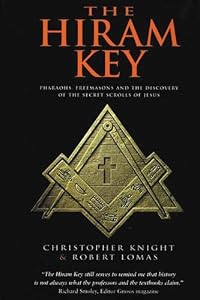
The Hiram Key: Pharaohs, Freemasons and the Discovery of the Secret Scrolls of Jesus
by Christopher Knight, Robert Lomas (Author)
The Hiram Key (1)
On This Page
Description
Was Jesus a Freemason? The discovery of evidence of the most secret rites of Freemasonry in an ancient Egyptian tomb led authors Chris Knight and Bob Lomas into and extraordinary investigation of 4, 000 years of history. This astonishing bestseller raises questions that have challenged some of Western civilisation's most cherished beliefs- Were scrolls bearing the secret teachings of Jesus buried beneath Herod's Temple shortly before the destruction of Jerusalem by the Roman's? Did the show more Knights Templar, the forerunners of modern Freemasonry, excavate these scrolls in the twelfth century? And were these scrolls subsequently buried underneath a reconstruction of Herod's Temple, Rosslyn Chapel in Scotland - where they are now awaiting excavation? The authors' discoveries shed a new light on Masonic ceremony and overturn out understanding of history. show lessTags
Recommendations















Member Recommendations

Member Reviews
I loved this book. I have no idea whether anything that the authors claim is true or even accurately researched, but it reads well and the ideas are largely plausible. I'm certain that Dan Brown derived a lot of his material from this book. But most essentially it is a gripping yarn.
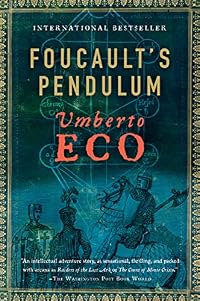
I also have a soft spot for this book as I was reading it in conjunction with Umberto Eco's Foucault's Pendulum, which is not only an extremely concise and informative text on the Abrahamic cults, sects and religious orders since time immemorial but also the greatest piss-take thereof. So yes, I would recommend Hiram Key, but do yourself a favour, and if you have the patience, and read Foucault's Pendulum.
I also have a soft spot for this book as I was reading it in conjunction with Umberto Eco's Foucault's Pendulum, which is not only an extremely concise and informative text on the Abrahamic cults, sects and religious orders since time immemorial but also the greatest piss-take thereof. So yes, I would recommend Hiram Key, but do yourself a favour, and if you have the patience, and read Foucault's Pendulum.
This book has been the source of some heat, if little light, among students of esoteric history.
The scholarship in The Hiram Key is not profound, and it compares poorly with other books that treat similar themes and topics, such as Robertson's Born in Blood or Assmann's Moses the Egyptian. It is certainly wide-ranging, and seems to incorporate a dozen other recent theories on the Shroud of Turin, Templar survival in Scotland, Egyptian elements in Hebrew religion, lost Christian scriptures, and Masonic origins.
The picture of Gnosticism presented by Knight and Lomax is a caricature. Their theories of Egyptian origins for Masonry are in many cases laughable, such as using the ancient Egyptian doctrine of Ma'at (denoting both show more physical/architectural and metaphysical/moral order) as proof that the central metaphors of Masonry must descend directly from Egypt.
Perhaps the most novel and interesting material in the book concerns the authors' readings of Hebrew scripture, and their theories of Hebrew custody of "the Sequenere resurrection ritual." Fortunately for serious students who may become impatient with the irritating journalistic style of the book, each chapter has a single-page "Conclusion" which can substitute as a summary for the chapter as a whole. I recommend reading the "Conclusions," and only going back to the actual details of the chapter for those that strike a personal interest.
The authors state in their first chapter that they "are very aware that the information which [they] give here may be considered by some Masons a betrayal of those secrets" which they have sworn to conceal. In fact, they give very detailed accounts of the Craft ceremonies as they received them in English lodges. We are expected to forgive them these willful exposures and violations of their oaths for two reasons:
1. "The United Grand Lodge of England considers only the means of recognition to be the protected secrets of the Order." (So much the worse for the United Grand Lodge of England! Masonry benefits from a stricter reading of the obligation of secrecy, where initiates acquire and demonstrate the discipline of confidentiality.)
2. The authors took their obligations on the condition that "they would not interfere with [their] freedom as moral, civil or religious agents," and they claim that to maintain secrecy on the matters discussed in the book would violate that condition.
Having read the book, I can find nothing in it which would create a moral, civil, or religious imperative for ritual exposure. The action agenda to which the authors' thesis builds, is to excavate under Rosslyn Chapel in search of early Christian MSS. The real imperative for the authors must surely have been the prospect of making some money off of a book to be sold to the general public. That being so, I recommend that Masons interested in the book check it out of a public library or buy a used copy, in order to avoid contributing to the royalty stream for the authors. show less
The scholarship in The Hiram Key is not profound, and it compares poorly with other books that treat similar themes and topics, such as Robertson's Born in Blood or Assmann's Moses the Egyptian. It is certainly wide-ranging, and seems to incorporate a dozen other recent theories on the Shroud of Turin, Templar survival in Scotland, Egyptian elements in Hebrew religion, lost Christian scriptures, and Masonic origins.
The picture of Gnosticism presented by Knight and Lomax is a caricature. Their theories of Egyptian origins for Masonry are in many cases laughable, such as using the ancient Egyptian doctrine of Ma'at (denoting both show more physical/architectural and metaphysical/moral order) as proof that the central metaphors of Masonry must descend directly from Egypt.
Perhaps the most novel and interesting material in the book concerns the authors' readings of Hebrew scripture, and their theories of Hebrew custody of "the Sequenere resurrection ritual." Fortunately for serious students who may become impatient with the irritating journalistic style of the book, each chapter has a single-page "Conclusion" which can substitute as a summary for the chapter as a whole. I recommend reading the "Conclusions," and only going back to the actual details of the chapter for those that strike a personal interest.
The authors state in their first chapter that they "are very aware that the information which [they] give here may be considered by some Masons a betrayal of those secrets" which they have sworn to conceal. In fact, they give very detailed accounts of the Craft ceremonies as they received them in English lodges. We are expected to forgive them these willful exposures and violations of their oaths for two reasons:
1. "The United Grand Lodge of England considers only the means of recognition to be the protected secrets of the Order." (So much the worse for the United Grand Lodge of England! Masonry benefits from a stricter reading of the obligation of secrecy, where initiates acquire and demonstrate the discipline of confidentiality.)
2. The authors took their obligations on the condition that "they would not interfere with [their] freedom as moral, civil or religious agents," and they claim that to maintain secrecy on the matters discussed in the book would violate that condition.
Having read the book, I can find nothing in it which would create a moral, civil, or religious imperative for ritual exposure. The action agenda to which the authors' thesis builds, is to excavate under Rosslyn Chapel in search of early Christian MSS. The real imperative for the authors must surely have been the prospect of making some money off of a book to be sold to the general public. That being so, I recommend that Masons interested in the book check it out of a public library or buy a used copy, in order to avoid contributing to the royalty stream for the authors. show less
If you are a fan of Dan Brown-style conspiracy theories; if you think there is a secret society that holds the forbidden secrets of ‘real history;’ or if you enjoy a rollicking good trip around the looney bin, then you will love this book. If you are interested in actual history—be it the history of Christianity, the Church, the Templars, the Freemasons, or pretty much anything else—don’t even bother with this book (or anything else by its author, come to think of it). After all, if some historian actually DID prove that history isn’t like we always thought, historians everywhere would be scrambling for a piece of that pie. Who doesn’t want to the be actual academic that blows the lid off of a historical mystery? It’s show more the same principle by which if things like acupuncture really worked, acupuncturists would be richer than MDs. Of course, the author of this book would counter that the ‘establishment’ is trying to suppress the truth for….well, reasons. They’re not really clear on the advantage of this monumental cover up, but it must be a doozie, to have kept it all secret this long, right?
The author, Christopher Knight, together with Robert Lomas, Michael Baigent, and a small handful of loosely related armchair historians have all contributed to this field of pseudo-history. The essential narrative is that Freemasonry has its origins not in the bored upper classes of Victorian England, but in the mystical initiations of ancient Egyptian priests. This magical knowledge was so powerful that it was hidden in coded allegories and mysterious rituals, and eventually its true meaning was lost over time to all but a tiny, persecuted few, who jealously guarded their secret knowledge. From there, you can really improvise at will; toss in a wife and child for Christ, make Jesus a Freemason, whatever suits your fancy. In this book, it’s an unidentified Egyptian mummy that provides the missing link between the long-lost mysteries of the ancients and the opaque rituals of Freemasonry. But don’t stop there; you more or less have to get the Templars involved somehow, and bonus points if you can work in the Priory of Scion, the Cathars, Rosslyn Chapel, the Dead Sea Scrolls, some highly improbable astronomy, or time-traveling space aliens.
OK, maybe that’s a little hyperbolic; I don’t think there are actually time traveling space aliens in *this* book, but the rest are there. But Christopher Knight IS known for his claim that humans from the future traveled back in time to build the moon. (I am not making this up; click here if you doubt me!) And really, that’s all you need to know about this “history.” (I gave it three stars for entertainment value!) show less
The author, Christopher Knight, together with Robert Lomas, Michael Baigent, and a small handful of loosely related armchair historians have all contributed to this field of pseudo-history. The essential narrative is that Freemasonry has its origins not in the bored upper classes of Victorian England, but in the mystical initiations of ancient Egyptian priests. This magical knowledge was so powerful that it was hidden in coded allegories and mysterious rituals, and eventually its true meaning was lost over time to all but a tiny, persecuted few, who jealously guarded their secret knowledge. From there, you can really improvise at will; toss in a wife and child for Christ, make Jesus a Freemason, whatever suits your fancy. In this book, it’s an unidentified Egyptian mummy that provides the missing link between the long-lost mysteries of the ancients and the opaque rituals of Freemasonry. But don’t stop there; you more or less have to get the Templars involved somehow, and bonus points if you can work in the Priory of Scion, the Cathars, Rosslyn Chapel, the Dead Sea Scrolls, some highly improbable astronomy, or time-traveling space aliens.
OK, maybe that’s a little hyperbolic; I don’t think there are actually time traveling space aliens in *this* book, but the rest are there. But Christopher Knight IS known for his claim that humans from the future traveled back in time to build the moon. (I am not making this up; click here if you doubt me!) And really, that’s all you need to know about this “history.” (I gave it three stars for entertainment value!) show less
I love ideas that involve thinking outside the box. Ergo, I have a soft spot for alternative history, especially that involving religion, secret societies, and events beyond the canon of history we are taught in school.
Therefore, I found this book to be an interesting and plausible account of the history and origins of Freemasonry. However, there is very little in the way of serious scholarship here -- no citing of sources, no bibliography, and some of the leaps they take and the connections they make are giant steps indeed.
So, the book is entertaining, plausible as far as it goes, but unless some further discovery is made, still extremely speculative.
Therefore, I found this book to be an interesting and plausible account of the history and origins of Freemasonry. However, there is very little in the way of serious scholarship here -- no citing of sources, no bibliography, and some of the leaps they take and the connections they make are giant steps indeed.
So, the book is entertaining, plausible as far as it goes, but unless some further discovery is made, still extremely speculative.
Christopher Knight’s and Robert Lomas’s The Hiram Key is a laughable “history” of secret societies, the Freemasons, Judeo-Christian historical figures, and Egyptian Gnosticism. Therein lies the problem with writing about secret societies. Not much can either be proven or disproven. Their very clandestine nature requires that they do not leave a lot of historical documentation in their wake. Lomas and Knight try unflaggingly to connect small clues in artifacts and letters together to illustrate an alternate reading of history. They include the classic story of Jesus’s hidden family and the Rosslyn Chapel conspiracy along with evidence of an Egyptian influence on Judaism and the existence of secret scrolls that tell the true show more story of Freemasonry.
This book is laced with conspiracies, conjecture, and confusion. Luckily, each chapter has a handy-dandy conclusion section that you can skip to when you get too overwhelmed by the writers’ avalanche of secret knowledge. The whole book is basically a call to arms to dig up a church so that they can “prove” some of the more outlandish theories that they propose. There is little here by way of a bibliography or even footnotes, so tracing their scholarship is nearly impossible. You just have to sit back and enjoy the ride they take you on. And trust me: it is quite a wild ride. show less
This book is laced with conspiracies, conjecture, and confusion. Luckily, each chapter has a handy-dandy conclusion section that you can skip to when you get too overwhelmed by the writers’ avalanche of secret knowledge. The whole book is basically a call to arms to dig up a church so that they can “prove” some of the more outlandish theories that they propose. There is little here by way of a bibliography or even footnotes, so tracing their scholarship is nearly impossible. You just have to sit back and enjoy the ride they take you on. And trust me: it is quite a wild ride. show less
I came to "Hiram Key" thinking "this will be a particularly woolly conspiracy theory" and I was dead-on right. To the best of my understanding the thesis is that Freemasonry comes from ancient Egypt rather than eighteenth century Britain, and that Jesus was a Freemason (and had a wife and kid) and that pretty much every shadowy organisation in history gets a mention (including the Priory of Sion and the Cathars). Somehow Rosslyn Chapel and the Dead Sea Scrolls also get shout outs.
There's some entertainment to be had in "Hiram Key" but to be honest Knight didn't sway my beliefs around the Freemasons.
There's some entertainment to be had in "Hiram Key" but to be honest Knight didn't sway my beliefs around the Freemasons.
The theory put forward in this book rests on a very important linchpin, as they state here: "One of the strangest and yet most important in our reconstruction of the Babylonian exile was the prophet Ezekiel... Ezekiel was the architect of the imaginary or idealised Temple of Yahweh, and we would argue that it was the most important of them all!"
However, most scholars disagree with them as they state, "Many twentieth-century experts have concluded that these works were the output of several much later people, circa 230 BC onwards. This would place it close to the dating as the oldest 'Dead Sea Scrolls' found at Qumran, thought to date from around 187 BC to AD 70."
If this were true, then it would totally screw up their theory. How do show more they respond? Like this, "If this is the case it would affect our thesis, serving only to confirm the already massive links between these writings and the Qumran Community, so FOR CONVENIENCE WE ASSUME at this stage that the Book of Ezekiel was indeed written by one man whilst in captivity in Babylon." (Caps are mine for emphasis.) In other words, "since most scholars have demonstrated facts that don't jive with our theory, we're just going to ignore them." What this all means to me, is that this book is utter garbage!
What I have quoted from the 'The Hiram Key' can be found on page 176. show less
However, most scholars disagree with them as they state, "Many twentieth-century experts have concluded that these works were the output of several much later people, circa 230 BC onwards. This would place it close to the dating as the oldest 'Dead Sea Scrolls' found at Qumran, thought to date from around 187 BC to AD 70."
If this were true, then it would totally screw up their theory. How do show more they respond? Like this, "If this is the case it would affect our thesis, serving only to confirm the already massive links between these writings and the Qumran Community, so FOR CONVENIENCE WE ASSUME at this stage that the Book of Ezekiel was indeed written by one man whilst in captivity in Babylon." (Caps are mine for emphasis.) In other words, "since most scholars have demonstrated facts that don't jive with our theory, we're just going to ignore them." What this all means to me, is that this book is utter garbage!
What I have quoted from the 'The Hiram Key' can be found on page 176. show less
Members
- Recently Added By
Published Reviews
Otkriće da je najvažnija inkantacija slobodnog zidarstva, govoreno još u starom Egiptu, bila je tačka preokreta šestogodišnjeg traganja za korenima izgubljenog Poretka. Kris Najt i Robert Lomas, obojica slobodni zidari, po njihovim rečima, upustili su se u istraživanja porekla masonstva. U središtu njihovog istraživanja je zagonetna ličnost, Hiram Abif zidar Solomonovog hrama, čija show more je smrt opisana u istoriji masonstva, mada se ne pominje u Starom zavetu. Istražujući ritual postavljanja kralja, praktikovan u Starom Egiptu četiri hiljade godina, i niza događaja od Tebe do Jerusalima, kao i otkriće jednog ubistva iz 1670., pored otkrića da Hiram nije nikakva mistifikacija, već stvarna ličnost, istraživači su došli do novog viđenja istorije Zapada. Zapadni svet se, po uvidima autora, razvio na staroj filozofiji sadržanoj na tajnom sistemu, koji je isplivao na površinu u tri ključna momenta u poslednje tri hiljade godina. show less
added by Sensei-CRS
Otkriće da je najvažnija inkantacija slobodnog zidarstva, govoreno još u starom Egiptu, bila je tačka preokreta šestogodišnjeg traganja za korenima izgubljenog Poretka. Kris Najt i Robert Lomas, obojica slobodni zidari, po njihovim rečima, upustili su se u istraživanja porekla masonstva. U središtu njihovog istraživanja je zagonetna ličnost, Hiram Abif zidar Solomonovog hrama, čija show more je smrt opisana u istoriji masonstva, mada se ne pominje u Starom zavetu. Istražujući ritual postavljanja kralja, praktikovan u Starom Egiptu četiri hiljade godina, i niza događaja od Tebe do Jerusalima, kao i otkriće jednog ubistva iz 1670., pored otkrića da Hiram nije nikakva mistifikacija, već stvarna ličnost, istraživači su došli do novog viđenja istorije Zapada. Zapadni svet se, po uvidima autora, razvio na staroj filozofiji sadržanoj na tajnom sistemu, koji je isplivao na površinu u tri ključna momenta u poslednje tri hiljade godina. show less
added by Sensei-CRS
Author Information

11+ Works 3,010 Members
Christopher Knight is the co-author of The Hiram Key, Uriel's Machine, Civilization One, Who Built The Moon? and many more. He is the chairman of an international technology innovations company.

Robert Lomas gained a first-class honors degree in electrical engineering before earning a Ph.D. for research into solid state physics and crystalline structures. In 1986, he became a Freemason and quickly became a popular lecturer on Masonic history. He currently lectures in Information Systems at Bradford University School of Management
Series

Work Relationships
Has the (non-series) sequel
Common Knowledge
- Canonical title*
- Hiramov Ključ : Faraoni, Slobodni Zidari i otkriće Isusovih tajnih svitaka
- Original title
- The Hiram Key: Pharaohs, Freemasons, and the Discovery of the Secret Scrolls of Jesus
- Original publication date
- 1996
- People/Characters
- Freemasons; Knights Templar; Jesus Christ; Cathars
- Important places
- Rosslyn Chapel, Scotland, UK
- Dedication
- Dedicated to the memory of John Marco Allegro -a man 20 years ahead of his time.
- First words
- (extra long sentence from an article in THE DAILY TELEGRAPH, London, 1871.)
- Last words
- (Click to show. Warning: May contain spoilers.)For most non-Masonic readers that is the end of the story- at least until an archeological dig has been completed and the contents of the scrolls are at last available to the world.
- Blurbers
- Hancock, Graham; Davies, Philip R.; Temple, Robert
*Some information comes from Common Knowledge in other languages. Click "Edit" for more information.
Classifications
- Genres
- Religion & Spirituality, Nonfiction, History, General Nonfiction
- DDC/MDS
- 366.1 — Society, Government, and Culture Social problems and social services Clubs, Associations, Insurance Freemasonry
- LCC
- HS403 .K55 — Social sciences Societies: secret, benevolent, etc. Societies: secret, benevolent, etc. Freemasons
- BISAC
Statistics
- Members
- 1,245
- Popularity
- 19,676
- Reviews
- 16
- Rating
- (3.10)
- Languages
- 10 — Dutch, English, Estonian, French, German, Hungarian, Italian, Portuguese, Serbian, Spanish
- Media
- Paper, Ebook
- ISBNs
- 26
- UPCs
- 1
- ASINs
- 4