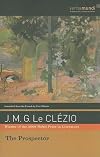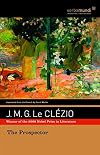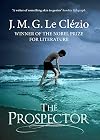
The Prospector
by Jean-Marie Gustave Le Clézio
On This Page
Description
Obsessed with the idea of finding the Corsair treasure he heard about in his youth, Alexis L'Etang abandons his job and family, setting off on a quest that will take him from remote tropical islands to the hell of the First World War, and from a love affair with the elusive Ouma to a momentous confrontation with the search that has consumed his life.Tags
Recommendations










































Member Reviews
Loosely based on Le Clézio's grandfather, the narrator of this novel, Alexis, grows up on a cane plantation in Mauritius in the 1890s. After the family fortunes are destroyed by a hurricane, Alexis follows his father's unrealised dream of searching for pirate treasure on Rodrigues island. Naturally enough, it doesn't turn out to be a simple matter of yo ho ho and a bottle of rum, the treasure resolves itself into something more complicated and symbolic, and along the way Alexis has to confront the evils of colonialism, the horrors of the First World War, and a curiously innocent relationship with a (possibly imaginary) young woman, Ouma.
More than anything else, this seems to be a book in which the narrator's experience of the natural show more world around him — the tropical landscape of Mauritius and Rodrigues, the Indian Ocean, the night sky, even the shell-blasted mud of Flanders — is forever taking over from any merely human interactions and pushing them into the background. It's all very beautiful, you can really lose yourself in the descriptive passages, but on stepping back a little you do have to keep wondering about the selfishness of this man who can lose himself in contemplation of rocks, trees and stars and forget all about his sister, mother and girlfriend for dozens of pages at a time. show less
More than anything else, this seems to be a book in which the narrator's experience of the natural show more world around him — the tropical landscape of Mauritius and Rodrigues, the Indian Ocean, the night sky, even the shell-blasted mud of Flanders — is forever taking over from any merely human interactions and pushing them into the background. It's all very beautiful, you can really lose yourself in the descriptive passages, but on stepping back a little you do have to keep wondering about the selfishness of this man who can lose himself in contemplation of rocks, trees and stars and forget all about his sister, mother and girlfriend for dozens of pages at a time. show less
Despite the lovely writing and imagery of Mautitius and its ocean in the opening sections, I had trouble getting in to this; I was bored. But then on page 14 of my copy Le Clézio writes: “Everything I felt and everything I saw seemed eternal. I did not know that soon all of it would be gone.” And that’s all it took to get me engaged through the end—through the narrator’s childhood experiences on Mauritius, his travels around the Indian Ocean islands, his long search for a lost treasure on an unnamed island (Rodrigues), and his somehow, for me, anti-climatic WWI experiences.
I guess this in epic of sorts, without much a plot. We simply follow Alexis through his life and his continued search. His childhood serves as a mystical show more golden age, highlighted by a magically described natural world which he explores with Denis, a black descendant of escaped slaves, and Laure, his older sister. This life is abruptly halted when a typhoon ruins his father’s ongoing project in which he invested everything. Alexis is unable to come to terms with the change, and unable to live a normal life. So, his long search for treasure serves a purpose much different than a search for wealth. He is looking within himself, looking for the self he once was, and trying to find something that simply isn’t and can never be there—namely his past.
Having ensnared me early on, Le Clézio could do no wrong. I rolled along the ocean waves with Alexis, explored the wondrous islands with him, searched for his treasure and loved the whole thing. He simply took me away with him.
2010
http://www.librarything.com/topic/90167#2169812 show less
I guess this in epic of sorts, without much a plot. We simply follow Alexis through his life and his continued search. His childhood serves as a mystical show more golden age, highlighted by a magically described natural world which he explores with Denis, a black descendant of escaped slaves, and Laure, his older sister. This life is abruptly halted when a typhoon ruins his father’s ongoing project in which he invested everything. Alexis is unable to come to terms with the change, and unable to live a normal life. So, his long search for treasure serves a purpose much different than a search for wealth. He is looking within himself, looking for the self he once was, and trying to find something that simply isn’t and can never be there—namely his past.
Having ensnared me early on, Le Clézio could do no wrong. I rolled along the ocean waves with Alexis, explored the wondrous islands with him, searched for his treasure and loved the whole thing. He simply took me away with him.
2010
http://www.librarything.com/topic/90167#2169812 show less
This, then, is the story: Boy leaves home in search of treasure. He eventually returns, but “home” is no longer what he remembers. And yet despite the fact that Ali’s journey involves storms and sea voyages, treasure hunts and surviving Ypres and the Battle of Somme, the story is almost equally one of internal voyages as it is external adventure. It is one of those books where even when apparently nothing happens it seems like everything has happened. Where long years seem packed into tiny moments of epiphany; an account of a walk to the beach is just as fraught as an account of a typhoon sweeping over the island. A description of slaughtering sea turtles for dinner as horrific as walking through a field of battle piled with the show more bloated corpses of dead horses. A man thrown into a furnace during a labor riot and a girl grilling fish on a beach both carry a kind of shattering, bright clarity. Perhaps because the voice is almost entirely in the present tense, it makes even the smallest moments seem immediate and vivid, and the smallest actions weighted with intensity—as if things could fly off into unknown directions at any point, since the future is as unknown and mysterious to Ali as he is telling his story, as it is to us in our own lives. full review show less
This novel about a man's search for a lost treasure and personal fulfillment begins on the island of Mauritius in 1892, where the eight year old Alexis L'Estang lives with his parents and beloved older sister Laure in an isolated house, surrounded by rich foliage and close to the sea, which nurtures and draws him in every night. His older friend Denis, the son of the black cook who lives nearby, teaches him about the mysteries of the sea and the local flora in the mountainous forest above it. His father also passes on to him his dream to find the hidden treasure of the Unknown Corsair, through maps and stories.
The family's idyllic existence is disrupted by tragedy, causing it to sink into poverty, and Alexis is forced to take on show more responsibilities in advance of his years. However, he does not abandon his father's dream, and he eventually travels to the island of Rodrigues to seek the treasure that will ensure his family's good standing. There he meets Ouma, the love of his life, but his search is disrupted by the onset of the Great War, and he must abandon his search, and Ouma. Eventually he is able to return, as an older man whose dream and love have not been diminished by time, but his family's continued poverty and changes in the region cause his dual goals to become more distant and seemingly unachievable.
The Prospector is filled with evocative descriptions of the sea and island life, which was its main strength, along with the love that Alexis and Ouma shared for each other, and the description of the horrors of trench warfare. However, the other characters, especially Laure and Alexis' mother, were not portrayed as richly, and I had some difficulty in understanding Alexis' motivations and actions. Despite this, I thoroughly enjoyed, and would highly recommend, this beautifully told story. show less
The family's idyllic existence is disrupted by tragedy, causing it to sink into poverty, and Alexis is forced to take on show more responsibilities in advance of his years. However, he does not abandon his father's dream, and he eventually travels to the island of Rodrigues to seek the treasure that will ensure his family's good standing. There he meets Ouma, the love of his life, but his search is disrupted by the onset of the Great War, and he must abandon his search, and Ouma. Eventually he is able to return, as an older man whose dream and love have not been diminished by time, but his family's continued poverty and changes in the region cause his dual goals to become more distant and seemingly unachievable.
The Prospector is filled with evocative descriptions of the sea and island life, which was its main strength, along with the love that Alexis and Ouma shared for each other, and the description of the horrors of trench warfare. However, the other characters, especially Laure and Alexis' mother, were not portrayed as richly, and I had some difficulty in understanding Alexis' motivations and actions. Despite this, I thoroughly enjoyed, and would highly recommend, this beautifully told story. show less
For the most part I found this book riveting and hauntingly beautiful, but at times I just wanted to shake the narrator and tell him to stop mooning around. The novel starts with the narrator, Alexis L'Etang, reflecting on his idyllic childhood, particularly in the year 1892 when he was 8, on the island of Mauritius. With his mother and sister, he reads and becomes engrossed in mythic tales; with his father he learns about the stars and the Unknown Corsair, who left clues to a treasure buried on a nearby island; with his childhood friend, Denis, from a family of freed slaves, he explores the amazingly beautiful natural wonders of the island and goes out on a boat for the first time. Of course, such a paradise cannot last, and Alexis show more spends the remainder of the book trying to recapture it, first by compulsively continuing his father's obsession with finding the treasure of the Unknown Corsair and then through his own obsession with Ouma, a beautiful and mysterious member of an isolated indigenous group. The spell is broken when Alexis serves in the first world war, a world utterly different from Mauritius in every respect, but of course he returns.
But the book is not really about this plot. It is really a paean to the natural world -- unspoiled landscapes, the stars, birds and plants, weather, and above all the sea -- and an exploration of how we search for meaning and purpose. Le Clézio is a wonderful writer who drew me in with his language and the images of this almost mythic tropical world; the section depicting the power of a hurricane is dramatic, and the many portraits of the sea and its power over humans are compelling. The book also examines, mostly subtly, the impact of colonialism and racism.
For most of the book, I was completely drawn in to Alexis's world and his quest (and I must agree with the other LT reviewer who said that the English title is not a good reflection of what Alexis is doing, that he is much more a searcher as in the French title than a prospector as in the English). But the World War I section, the ambiguous character of Ouma (who at times seems real and at times doesn't), and the novel's conclusion all left me puzzled as to how they fit with the rest of the book. In the end, the novel made me think, and that's good. show less
But the book is not really about this plot. It is really a paean to the natural world -- unspoiled landscapes, the stars, birds and plants, weather, and above all the sea -- and an exploration of how we search for meaning and purpose. Le Clézio is a wonderful writer who drew me in with his language and the images of this almost mythic tropical world; the section depicting the power of a hurricane is dramatic, and the many portraits of the sea and its power over humans are compelling. The book also examines, mostly subtly, the impact of colonialism and racism.
For most of the book, I was completely drawn in to Alexis's world and his quest (and I must agree with the other LT reviewer who said that the English title is not a good reflection of what Alexis is doing, that he is much more a searcher as in the French title than a prospector as in the English). But the World War I section, the ambiguous character of Ouma (who at times seems real and at times doesn't), and the novel's conclusion all left me puzzled as to how they fit with the rest of the book. In the end, the novel made me think, and that's good. show less
This is an interesting book. In one sense not much happens—there is very little dialogue and the locales of action shift in chunks of time—but in another sense much happens to the protagonist, through whose eyes we experience the story. In this respect, I would quibble with the translation of the title; in the original French, the book was called Le Chercheur d’or ; chercheur can be translated as prospector, but I would argue that in English “prospector” has a fairly narrow connotation tied to mineral exploration, and this is misleading in the context of this book; Alexis L’Etang is more of a searcher than a prospector, and though an obsession with finding buried treasure occupies a fair bit of the story, in the end, Alexis show more is searching for much more than that, although it takes him a long time to realize it himself: he is searching for meaning in his life which is something far more precious and far more elusive than gold.
The story opens in 1892 on the island of Mauritius when Alexis is about eight years old: “As far back as I can remember I have listened to the sea: to the sound of it mingling with the wind in the filao needles, the wind that never stops blowing….It is the sound that cradled my childhood. I can hear it now, deep inside me; it will come with me wherever I go…” . The last lines of the book are: “Now night has fallen. To the depths of my being I hear the living sound of the rising sea.” Although most of the action takes place on land, the sea is a centerpiece of this book, the sea as a living, eternal thing that can be beautiful and sublime and then dark, dangerous and destructive; the latter sense always lurking, always potential in even the calmest days; it can serve mankind as a conduit for transportation, as a link for far-flung places and a source of food and sustenance for millions, but it can never be subjugated; the sea breathes through the unchanging, regular rhythms of its tides, just as a man breathes for life, and this sense of a slowness, a regularity of breath permeates the very writing and telling of this story.
The bare bones of the story are easily given: Alexis lives with his sister, Laure, and their parents in an isolated house on the island of Mauritius, a bucolic, idyllic existence of sun and sea, exploration, home teaching by a loving mother, a benevolent but often absent father bent on his schemes that will ultimately see his bankruptcy and the eviction of the family to poverty in a nearby town. Upon the death of his father, Alexis takes to the sea and an island where he is convinced (a passion of his father’s) that there is a buried treasure for which he has the map if he can figure out the clues. This occupies Alexis for some years, during which time he meets Ouma, a beautiful young woman from a local indigenous people who live isolated in the mountains and shun contact; Ouma herself has an interesting history as she lived for some years in France before returning to the island. Alexis does not find the pirate’s treasure; he joins the army in 1914 and serves in the trenches with distinction; returns home to his sister and mother, but is always drawn to finding Ouma again…and perhaps I won’t spoil the rest of the plot for those who might like to read it for themselves.
There is a powerful description of a hurricane that destroys the country home and hastens the departure of the family, and other descriptions of raging storms on land and at sea—but there is, in a sense, something clean in the naturalness of destruction by nature, as opposed to the obscene destructiveness of manmade slaughters such as the trenches of WWI. In this story nature is always the final refuge, the repository of what is good and clean and individual; almost all contacts with society or civilization are marked by greed, racism, struggles, bloody conflicts; the “reality” of the world keeps imposing whether through class struggles, economic disasters, epidemics, institutionalized racism ,and try as they might, neither Alexis nor Ouma, in the end, can continue to live in their splendid isolation.
This is a story about Alexis’s search for himself. It begins with his mad quest for the pirate gold which he thinks will close the circle with his dead father: “…everything at last will be put in order. I am finally going to fulfill the dream my father had for so long, the one that kept him searching and which haunted my childhood. My father’s will, not my own, must be carried out…I left to put an end to the dream, so that my life might begin…I know I will find something.” What he finds, eventually, is that life paths cannot be predicted or foreseen or controlled; he becomes estranged from his beloved sister, not out of malice, but because, “I suddenly realize that in the course of my years of exile I lost her. She has followed another path and become someone else; our lives no longer coincide.” It is the more pragmatic, more realistic Laure who tells Alexis: “It’s no good wanting what no longer exists.”
In the end, although Alexis has a clearer idea of life and what he can expect from it, he learns that there is no endpoint, there is only constant looking and experiencing of life, and for him, that means a return to the sea: “We’ll go to the other side of the earth, to a place where we need fear neither signs in the sky nor the wars of men. Now night has fallen. To depths of my being I hear the living sound of the rising sea.” show less
The story opens in 1892 on the island of Mauritius when Alexis is about eight years old: “As far back as I can remember I have listened to the sea: to the sound of it mingling with the wind in the filao needles, the wind that never stops blowing….It is the sound that cradled my childhood. I can hear it now, deep inside me; it will come with me wherever I go…” . The last lines of the book are: “Now night has fallen. To the depths of my being I hear the living sound of the rising sea.” Although most of the action takes place on land, the sea is a centerpiece of this book, the sea as a living, eternal thing that can be beautiful and sublime and then dark, dangerous and destructive; the latter sense always lurking, always potential in even the calmest days; it can serve mankind as a conduit for transportation, as a link for far-flung places and a source of food and sustenance for millions, but it can never be subjugated; the sea breathes through the unchanging, regular rhythms of its tides, just as a man breathes for life, and this sense of a slowness, a regularity of breath permeates the very writing and telling of this story.
The bare bones of the story are easily given: Alexis lives with his sister, Laure, and their parents in an isolated house on the island of Mauritius, a bucolic, idyllic existence of sun and sea, exploration, home teaching by a loving mother, a benevolent but often absent father bent on his schemes that will ultimately see his bankruptcy and the eviction of the family to poverty in a nearby town. Upon the death of his father, Alexis takes to the sea and an island where he is convinced (a passion of his father’s) that there is a buried treasure for which he has the map if he can figure out the clues. This occupies Alexis for some years, during which time he meets Ouma, a beautiful young woman from a local indigenous people who live isolated in the mountains and shun contact; Ouma herself has an interesting history as she lived for some years in France before returning to the island. Alexis does not find the pirate’s treasure; he joins the army in 1914 and serves in the trenches with distinction; returns home to his sister and mother, but is always drawn to finding Ouma again…and perhaps I won’t spoil the rest of the plot for those who might like to read it for themselves.
There is a powerful description of a hurricane that destroys the country home and hastens the departure of the family, and other descriptions of raging storms on land and at sea—but there is, in a sense, something clean in the naturalness of destruction by nature, as opposed to the obscene destructiveness of manmade slaughters such as the trenches of WWI. In this story nature is always the final refuge, the repository of what is good and clean and individual; almost all contacts with society or civilization are marked by greed, racism, struggles, bloody conflicts; the “reality” of the world keeps imposing whether through class struggles, economic disasters, epidemics, institutionalized racism ,and try as they might, neither Alexis nor Ouma, in the end, can continue to live in their splendid isolation.
This is a story about Alexis’s search for himself. It begins with his mad quest for the pirate gold which he thinks will close the circle with his dead father: “…everything at last will be put in order. I am finally going to fulfill the dream my father had for so long, the one that kept him searching and which haunted my childhood. My father’s will, not my own, must be carried out…I left to put an end to the dream, so that my life might begin…I know I will find something.” What he finds, eventually, is that life paths cannot be predicted or foreseen or controlled; he becomes estranged from his beloved sister, not out of malice, but because, “I suddenly realize that in the course of my years of exile I lost her. She has followed another path and become someone else; our lives no longer coincide.” It is the more pragmatic, more realistic Laure who tells Alexis: “It’s no good wanting what no longer exists.”
In the end, although Alexis has a clearer idea of life and what he can expect from it, he learns that there is no endpoint, there is only constant looking and experiencing of life, and for him, that means a return to the sea: “We’ll go to the other side of the earth, to a place where we need fear neither signs in the sky nor the wars of men. Now night has fallen. To depths of my being I hear the living sound of the rising sea.” show less
C'est comme toujours avec les 'grands' auteurs: la description du texte du rabat, je ne la retrouve que de facon déformée ou trop vague ans le livre même. Je trouve cette cryptisation d'un contenu assez simple difficile à supporter. Ou bien c'est le texte du rabat qui est une simplification méconnaisable du contenu. En tout cas, les deux ne coincident pas.
J'aime bien le style, mais n'arrive pas à comprendre le protagoniste.
J'aime bien le style, mais n'arrive pas à comprendre le protagoniste.
Members
- Recently Added By
Published Reviews
ThingScore 75
The Prospector offers a wonderful one-volume compendium of all the grand myths rooted in the European colonial experience, combining elements from Paul et Virginie, Robinson Crusoe, and Indiana Jones. Alexis, known as Ali, and his beloved sister, Laure, live in an Eden nestled on the island of Mauritius. A child drawn to nature, he is nevertheless most enthralled by his father's dreams of a show more privateer's treasure. Yet this same father's vision of bringing electricity to the island leads to the family's ruin (thanks to a ferocious hurricane, brilliantly described). To recover his family's paradise lost, the adult Ali embarks upon a hunt for the pirate's gold. "I left to put an end to the dream, in order that my life might begin. I am going to take this journey to its conclusion. I know that I will find something." show less
added by kidzdoc
The present tense seems to be more frequently employed by modern French novelists than by their British or American counterparts; but few contemporary writers can have resorted to it so consistently as Le Clézio. Concomitant with his absorption in a continuous present is an impulse to unrestrained extension. "Comme il est long, le temps de la mer!" exclaims the narrator of his latest show more novel, the Mauritian Alexis L'Estang, resuming his obsessive search for pirate gold in the Indian Ocean on returning from service in the trenches of the First World War. His story begins in 1892, when he is eight, and spans thirty years; yet despite the dates, the novel is in no sense a historical one, but could be most fittingly described as a fable. Its characters are of quasi-archetypal simplicity, and they communicate in dialogue of taciturn breviloquence. Apart from the narrator's abiding but tenuous relationship with his sister Laure, the novel's principal human interest centres on his chastely erotic idyll with Ouma, the young native girl or "manaf" he finds on the island of Rodrigues, to which plans left him by his father have led him in search of a hoard of plundered gold concealed there by a legendary corsair. show less
added by kidzdoc
Author Information

112+ Works 6,273 Members
Jean-Marie Gustave Le Clézio, who was born in Nice, France on April 13, 1940, is usually identified as J. M. G. Le Clézio. After studying at the University of Bristol in England from 1958 to 1959, he finished his undergraduate degree at Institut d'etudes Litteraires in Nice. In 1964, he received a master's degree from the University of show more Aix-en-Provence with a thesis on Henri Michaux and wrote a doctoral thesis in 1983 on Mexico's early history for the University of Perpignan. He has taught at numerous universities throughout the world and has written around 30 books including novels, essays, and short stories. He received the Prix Renaudot Prize for his novel Le Procès-Verbal in 1963 and the Nobel Prize for Literature in 2008. (Bowker Author Biography) show less
Some Editions
Awards and Honors
Awards
Series
Belongs to Publisher Series
Common Knowledge
- Canonical title
- The Prospector
- Original title
- Le Chercheur d'or
- Original publication date
- 1985; 1993 (English Translation) (English Translation)
- People/Characters
- Alexis L'Etang; Laure; Ouma
- Important places
- Mauritius
- Dedication
- For my grandfather, Léon
- First words
- As far back as I can remember I have listened to the sea: to the sound of it mingling with the wind in the filao needles, the wind that never stopped blowing, even whn one left the shore behind and crossed the sugarcane field... (show all)s.
- Last words
- (Click to show. Warning: May contain spoilers.)Now night has fallen. To the depths of my being I hear the living sound of the rising sea.
- Original language
- French
Classifications
Statistics
- Members
- 508
- Popularity
- 58,885
- Reviews
- 13
- Rating
- (3.77)
- Languages
- 8 — Danish, English, French, German, Italian, Portuguese, Spanish, Swedish
- Media
- Paper, Ebook
- ISBNs
- 25
- ASINs
- 4