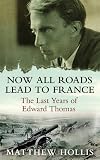
Now All Roads Lead to France: The Last Years of Edward Thomas
by Matthew Hollis
On This Page
Description
Edward Thomas was perhaps the most beguiling and influential of First World War poets. Now All Roads Lead to France is an account of his final five years, centred on his extraordinary friendship with Robert Frost and Thomas's fatal decision to fight in the war. The book also evokes an astonishingly creative moment in English literature, when London was a battleground for new, ambitious kinds of writing. A generation that included W. B. Yeats, Ezra Pound, Robert Frost and Rupert Brooke were show more 'making it new' - vehemently and pugnaciously. These larger-than-life characters surround a central figure, tormented by his work and his marriage. But as his friendship with Frost blossomed, Thomas wrote poem after poem, and his emotional affliction began to lift. In 1914 the two friends formed the ideas that would produce some of the most remarkable verse of the twentieth century. But the War put an ocean between them: Frost returned to the safety of New England while Thomas stayed to fight for the Old. It is these roads taken - and those not taken - that are at the heart of this remarkable book, which culminates in Thomas's tragic death on Easter Monday 1917. show lessTags
Recommendations










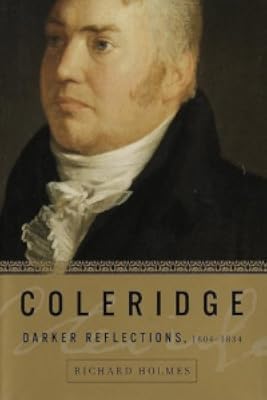

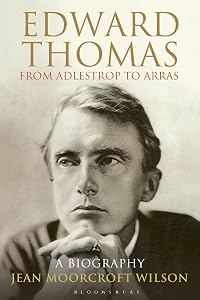
Member Recommendations


Member Reviews
‘Now all roads lead to France’ is a beautifully written and rather unique biography of the poet Edward Thomas.
Thomas was a rather difficult and diffident man, albeit one plagued with insecurities and uncertainties. His peaceable calm in the countryside was offset by his need to sustain his family on a meagre writer’s income. But it was not until 1914 that Thomas – who would die at the Battle of Arras in 1917 – began to write poetry, encouraged by his friend and mentor, Robert Frost.
It is an amazing feat that Thomas emerged as a brilliant and mature poet in a matter of months. Certainly he’d written before that time; prose criticism, reviews, and other odd commissions, but there was always a sense that Thomas was ‘better show more than this’. Frost was right when he pointed out to Thomas that really his prose, evocative of spring and nature, was really very poetical and quite complex. Thomas’ prose – including travelogues of the Icknield way – were peppered with poetical observations and dogged by the ghostly figure of an Other man – Thomas’ alter ego.
Thomas would undergo what we’d now call cognitive psychotherapy. He was an alienated and dissatisfied man, whose unhappiness only deepened when he projected his inner pain onto his nearest and dearest. His long-suffering wife, Helen, loved him all the same, even encouraged, or attempted to temper, his infatuations with other women (which would never become adulterous).
Hollis’ biography is clever in that it is about Thomas’ emergence as a poet, and so charts really the final five or so years before his death in France. Sure it casts an eye back to his earlier life, his childhood and time at Oxford, but it is really a story of a developing creativity. Hollis does some masterful comparisons, taking selections of Thomas’ prose and showing how poems, as it were, sprouted out of them. We’re almost sitting there looking over Thomas’ shoulder, the bare bushes of Old Man and empty, brown trees of the Hampshire countryside framed by the study window.
Hollis is careful and attentive; but he is also playful. While Thomas was a difficult man, he was also loving and calm. Hollis paints a picture of him that draws in the major players in his life. At the same time, Hollis has to be commended for his brilliant mini-essays on the contemporary poetic scene; Imagism and Georgian poetry are put in their combative context, and Georgian poetry emerges as more than the trite tripe that it is often dismissed as.
Overall, this is a thoroughly intimate and successful study of a poet and the poet’s becoming.
If you want to see a bit of Thomas’ Hampshire, then Matthew Hollis serves as an excellent guide in this video: http://www.guardian.co.uk/books/video/2012/mar/01/poet-edward-thomas-hampshire-v... show less
Thomas was a rather difficult and diffident man, albeit one plagued with insecurities and uncertainties. His peaceable calm in the countryside was offset by his need to sustain his family on a meagre writer’s income. But it was not until 1914 that Thomas – who would die at the Battle of Arras in 1917 – began to write poetry, encouraged by his friend and mentor, Robert Frost.
It is an amazing feat that Thomas emerged as a brilliant and mature poet in a matter of months. Certainly he’d written before that time; prose criticism, reviews, and other odd commissions, but there was always a sense that Thomas was ‘better show more than this’. Frost was right when he pointed out to Thomas that really his prose, evocative of spring and nature, was really very poetical and quite complex. Thomas’ prose – including travelogues of the Icknield way – were peppered with poetical observations and dogged by the ghostly figure of an Other man – Thomas’ alter ego.
Thomas would undergo what we’d now call cognitive psychotherapy. He was an alienated and dissatisfied man, whose unhappiness only deepened when he projected his inner pain onto his nearest and dearest. His long-suffering wife, Helen, loved him all the same, even encouraged, or attempted to temper, his infatuations with other women (which would never become adulterous).
Hollis’ biography is clever in that it is about Thomas’ emergence as a poet, and so charts really the final five or so years before his death in France. Sure it casts an eye back to his earlier life, his childhood and time at Oxford, but it is really a story of a developing creativity. Hollis does some masterful comparisons, taking selections of Thomas’ prose and showing how poems, as it were, sprouted out of them. We’re almost sitting there looking over Thomas’ shoulder, the bare bushes of Old Man and empty, brown trees of the Hampshire countryside framed by the study window.
Hollis is careful and attentive; but he is also playful. While Thomas was a difficult man, he was also loving and calm. Hollis paints a picture of him that draws in the major players in his life. At the same time, Hollis has to be commended for his brilliant mini-essays on the contemporary poetic scene; Imagism and Georgian poetry are put in their combative context, and Georgian poetry emerges as more than the trite tripe that it is often dismissed as.
Overall, this is a thoroughly intimate and successful study of a poet and the poet’s becoming.
If you want to see a bit of Thomas’ Hampshire, then Matthew Hollis serves as an excellent guide in this video: http://www.guardian.co.uk/books/video/2012/mar/01/poet-edward-thomas-hampshire-v... show less
I don't know that I came away from this book with any transformative insights. I am interested in Thomas as a walker and a cyclist and as he writes about his experiences moving through the English landscape. This book certainly helped me get to know Thomas a lot better.
The core of the book is the relationship between Thomas and Robert Frost. That relationship was key for both Thomas and Frost. This book helped me to understand how the poetry of Frost and Thomas related to some of the other directions of poetry at the time, the Georgians and the Imagists.
I am not a big reader of poetry. This book gave me some good tools for reading poetry and for seeing how it can work.
The core of the book is the relationship between Thomas and Robert Frost. That relationship was key for both Thomas and Frost. This book helped me to understand how the poetry of Frost and Thomas related to some of the other directions of poetry at the time, the Georgians and the Imagists.
I am not a big reader of poetry. This book gave me some good tools for reading poetry and for seeing how it can work.
I knew very little about the Poet Edward Thomas. The reviews encouraged me to read this book. I was not disappointed. The book charts Thomas's friendship with Robert Frost and his relationships with other poets. Beautifully written.
Ratings
Members
- Recently Added By
Lists

Tonikat reading completed on Librarything journals
329 works; 2 members

BBC Radio 4 Bookclub
340 works; 13 members
Author Information
11+ Works 513 Members
Awards and Honors
Work Relationships
Inspired
Common Knowledge
- Original title
- Now all roads lead to France : the last years of Edward Thomas
- Original publication date
- 2011
- People/Characters
- Edward Thomas; Robert Frost
- Important places
- Steep, Hampshire, England, UK; Dymock, Gloucestershire, England, UK; High Beech, Essex, England, UK; Arras, Pas-de-Calais, Hauts-de-France, France
- Important events
- World War I; Battle of Arras
- Epigraph
- and I rose up, and knew that I was tired, and continued my journey
EDWARD THOMAS, Light and Twilight - Dedication
- for Mum
- First words
- Edward Thomas spent the day before he died under particularly heavy bombardment.
(Foreword).
At the cramped premises off Theobald's Road in Bloomsbury, Harold Monro was preparing for the opening of his new bookshop. - Last words
- (Click to show. Warning: May contain spoilers.)Ted Hughes would put it most clearly of anyone. 'He is the father of us all.'
Classifications
Statistics
- Members
- 212
- Popularity
- 154,000
- Reviews
- 3
- Rating
- (4.16)
- Languages
- English
- Media
- Paper, Ebook
- ISBNs
- 7
- ASINs
- 4