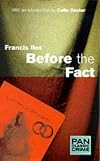
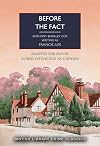
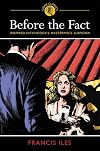
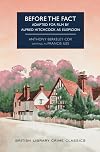
Before the Fact
by Francis Iles
On This Page
Description
Unsettling and gripping, this innovative classic first published in 1932 was the basis for Alfred Hitchcock's film Suspicion, and remains an arresting and unique work of literary artistry. Anthony Berkeley Cox, writing as Francis Iles, flips the traditional mystery model of the crime genre to delve into the psychology, fears, and motives of a suspecting victim. This edition includes an introduction by CWA Diamond Dagger and Edgar® Award–winning author Martin Edwards."Written with show more refrigerated violence. Disturbing, exciting." —The Listener
"Magnificent—a masterpiece of cruelty and wit." —Christopher Morley
"One of the finest studies of murder ever written." —John C. Farrar
"Some women give birth to murderers, some go to bed with them, and some marry them. Lina Aysgarth had lived with her husband for nearly eight years before she realized that she was married to a murderer."
With these opening words, Before the Fact ushers the reader into the dark and experimental world of Francis Iles's crime fiction.
Written in the wake of his ground-breaking murderer's-perspective novel Malice Aforethought, Before the Fact sees the author applying his signature flair for thrilling suspense and human insight. The twisting narrative is told from the viewpoint of a wife as she navigates a life with her disquieting yet charismatic husband—and the mounting peril of his murderous intentions.
. Historical Fiction. Fiction. Mystery. show less
Tags
Recommendations





















Member Reviews
I was looking forward to reading Before the Fact by Francis Iles as the Alfred Hitchcock movie ‘Suspicion” was based upon this book. Also I had read a book by this author before and really enjoyed it. Luckily, I was very taken with this story, although I admit that there were times when I had strong reactions to the choices the characters made and found myself talking aloud to it.
When spinster Lina McLaidlaw marries the charming Johnnie Aysgarth, she thought she must be the happiest person alive. As the marriage progressed, the layers were slowly peeled back and revealed that she had married a total cad. Addicted to gambling and women, eventually Lina leaves him only to go back when he crooks his finger in her direction. Johnnie was show more always able to turn on the charm and work his magic on his “Monkeyface” and she, moronically went along with him. She finds out even more despicable things about him, but not only stays in the marriage, she also finds reasons to excuse his behaviour. Eventually, she realizes that Johnnie will stoop to anything even murder.
I applaud the author on a very clever and well crafted plot. As rotten as Johnnie is, Lina is the character that drove me crazy and there were many times when I felt like wringing her neck. Basically this is a dark comedy about what happens when a no-good rotter and the ultimate masochist come together. Although I suspect that many prefer the kinder, less offensive movie version, I loved every cruel and vile moment of Before The Fact and highly recommend it. show less
When spinster Lina McLaidlaw marries the charming Johnnie Aysgarth, she thought she must be the happiest person alive. As the marriage progressed, the layers were slowly peeled back and revealed that she had married a total cad. Addicted to gambling and women, eventually Lina leaves him only to go back when he crooks his finger in her direction. Johnnie was show more always able to turn on the charm and work his magic on his “Monkeyface” and she, moronically went along with him. She finds out even more despicable things about him, but not only stays in the marriage, she also finds reasons to excuse his behaviour. Eventually, she realizes that Johnnie will stoop to anything even murder.
I applaud the author on a very clever and well crafted plot. As rotten as Johnnie is, Lina is the character that drove me crazy and there were many times when I felt like wringing her neck. Basically this is a dark comedy about what happens when a no-good rotter and the ultimate masochist come together. Although I suspect that many prefer the kinder, less offensive movie version, I loved every cruel and vile moment of Before The Fact and highly recommend it. show less
I read this because it is the novel that the Hitchcock film Suspicion is based on. In my thoughts on that film, I said that the ending felt false, and someone put me onto this.
This may be rather spoiler ridden.
From the first there is an air of menace over the book. We see it from Lina's perspective, as we review her marriage to Johnnie, who we believe to be a murderer from the first.
Lina is unmarried at the books' beginning. She is supposed to be the intelligent sister, and suffers somewhat in the rather stifling local social scene. Into this comes Johnnie Asgarth, a ne'er do well with local family connections. He latches on to Lina and plays the inexperienced woman to perfection. She falls for him and will brook no opposition in show more marrying him. It turns out that he has, as suspected, no money, but that doesn't stop him blowing a loan on the honeymoon and a house too large for them.
Johnnie is presented as charming and a product of the upper middle class in the early part of the 20th century, he expects the best in life but doe not expect to have to do any work to get it. He's also, probably, a compulsive gambler. He lies and steals to fulfill his habit.
While presented as intelligent, Lina is rather naive and sheltered, her upbringing having done her no favours in this regard. The relationship is presented from Lina's perspective. She seems to crave any sign of affection and appreciation, seeming to lack in self confidence. Johnnie may be charming, but is manipulative, and the relationship might be characterised as abusive. Lina at one stage makes a break, and there is a potential to turn things around, only she returns to Johnnie and so returns to the same situation. She has a couple of occasions when she could be an agent of her own fate, but rejects the opportunity each time.
You could view her as being simply foolish, but I think the abusive relationship has to be taken into account. She is so conditioned to her state that she is unable to take action to change her fate. I think this is darker than the film, there is no hiding from the denouement. show less
This may be rather spoiler ridden.
From the first there is an air of menace over the book. We see it from Lina's perspective, as we review her marriage to Johnnie, who we believe to be a murderer from the first.
Lina is unmarried at the books' beginning. She is supposed to be the intelligent sister, and suffers somewhat in the rather stifling local social scene. Into this comes Johnnie Asgarth, a ne'er do well with local family connections. He latches on to Lina and plays the inexperienced woman to perfection. She falls for him and will brook no opposition in show more marrying him. It turns out that he has, as suspected, no money, but that doesn't stop him blowing a loan on the honeymoon and a house too large for them.
Johnnie is presented as charming and a product of the upper middle class in the early part of the 20th century, he expects the best in life but doe not expect to have to do any work to get it. He's also, probably, a compulsive gambler. He lies and steals to fulfill his habit.
While presented as intelligent, Lina is rather naive and sheltered, her upbringing having done her no favours in this regard. The relationship is presented from Lina's perspective. She seems to crave any sign of affection and appreciation, seeming to lack in self confidence. Johnnie may be charming, but is manipulative, and the relationship might be characterised as abusive. Lina at one stage makes a break, and there is a potential to turn things around, only she returns to Johnnie and so returns to the same situation. She has a couple of occasions when she could be an agent of her own fate, but rejects the opportunity each time.
You could view her as being simply foolish, but I think the abusive relationship has to be taken into account. She is so conditioned to her state that she is unable to take action to change her fate. I think this is darker than the film, there is no hiding from the denouement. show less
The plot has been summarised but to me the most striking thing about the story itself is its ambiguity: Readers might strongly suspect that Johnny, the husband, has caused the death of others but they can't be sure of it. This is partly because although the narration is 3rd-person all that transpires is shown from Lina's perspective, and given that she lacks insight and, probably, credibility, her perspective is a distorted one. Certainly Johnny commits crimes. Just as certainly, he comes do so with Lina's connivance.
That's one aspect of her apparent deterioration: In the beginning an ostensibly naive woman with rigid moral standards, Lina becomes over the years willing to overlook and even justify crimes for the sake of holding on to show more Johnny. Iles gives the character such depth that one searches for her motivation; after being reared by parents who were forever reminding her of her plainness, does her self-esteem depend upon keeping so handsome and charming a husband? or perhaps saving face before the village is a factor? or--and as the story develops this seems most likely to me--perhaps Johnny is really more a prize possession than a beloved partner?
And that in turn ties in with another element of Lina's decline/unmasking, her ever more prounounced high-handed disregard of others, going hand in hand with unjustified pride. (It's telling that the greatest pain of discovering Johnny's infidelities is that of hurt pride: he fails to seem jealous when accusing Lina herself of having an affair.) She takes an abominable deception of her sister in her stride, she treats a man in love with her very cruelly indeed, and by the end she's habitually barking commands and reprimands at Johnny. Far from being passive or abused, it's she who seems to have the upper hand in the marriage. Iles does a wonderful job of portraying these changes even whilst maintaining Lina's perspective thoughout; the clues to them are easily overlooked and in fact I suspect he might well have dropped clues early on that Lina is not altogether what she seems, ones that would jump out only on a second reading.
This isn't by any means a Great Novel but it's a good one with unexpected psychological depth. You'll be disappointed if you can't enjoy novels with unlikeable characters or if you regard it as a crime novel, or indeed if you're expecting the equivalent of a Hitchcock film; otherwise you might be pleasantly surprised by it. show less
That's one aspect of her apparent deterioration: In the beginning an ostensibly naive woman with rigid moral standards, Lina becomes over the years willing to overlook and even justify crimes for the sake of holding on to show more Johnny. Iles gives the character such depth that one searches for her motivation; after being reared by parents who were forever reminding her of her plainness, does her self-esteem depend upon keeping so handsome and charming a husband? or perhaps saving face before the village is a factor? or--and as the story develops this seems most likely to me--perhaps Johnny is really more a prize possession than a beloved partner?
And that in turn ties in with another element of Lina's decline/unmasking, her ever more prounounced high-handed disregard of others, going hand in hand with unjustified pride. (It's telling that the greatest pain of discovering Johnny's infidelities is that of hurt pride: he fails to seem jealous when accusing Lina herself of having an affair.) She takes an abominable deception of her sister in her stride, she treats a man in love with her very cruelly indeed, and by the end she's habitually barking commands and reprimands at Johnny. Far from being passive or abused, it's she who seems to have the upper hand in the marriage. Iles does a wonderful job of portraying these changes even whilst maintaining Lina's perspective thoughout; the clues to them are easily overlooked and in fact I suspect he might well have dropped clues early on that Lina is not altogether what she seems, ones that would jump out only on a second reading.
This isn't by any means a Great Novel but it's a good one with unexpected psychological depth. You'll be disappointed if you can't enjoy novels with unlikeable characters or if you regard it as a crime novel, or indeed if you're expecting the equivalent of a Hitchcock film; otherwise you might be pleasantly surprised by it. show less
Warning: this review contains spoilers
****
This is the story of Lina McLaidlaw and her irresponsible cad of a husband, Johnnie Aysgarth. He steals, cheats, and forges, and he's used to the finer things in life but not having to work to pay for them. But as reprehensible as his actions are, could he go so far as to commit murder to get what he wants? And even if she manages to divorce him, could she escape his manipulative clutches?
This was indeed a very suspenseful book. However, I refused to read any further once Lina had decided to go back to Johnnie instead of moving on with her lover, Ronald. I was reading this in public and when I read the sentence "I would take Johnnie back, with conditions", I actually slammed the book shut and show more said (out loud!) "NO. No more of that." I give Iles credit for creating such a thoroughly amoral man who provokes strong reactions in the reader, but I was not interested in following his nefarious schemes to completion. I would still definitely recommend this book if you're interested in it, but I personally couldn't bring myself to finish it. show less
****
This is the story of Lina McLaidlaw and her irresponsible cad of a husband, Johnnie Aysgarth. He steals, cheats, and forges, and he's used to the finer things in life but not having to work to pay for them. But as reprehensible as his actions are, could he go so far as to commit murder to get what he wants? And even if she manages to divorce him, could she escape his manipulative clutches?
This was indeed a very suspenseful book. However, I refused to read any further once Lina had decided to go back to Johnnie instead of moving on with her lover, Ronald. I was reading this in public and when I read the sentence "I would take Johnnie back, with conditions", I actually slammed the book shut and show more said (out loud!) "NO. No more of that." I give Iles credit for creating such a thoroughly amoral man who provokes strong reactions in the reader, but I was not interested in following his nefarious schemes to completion. I would still definitely recommend this book if you're interested in it, but I personally couldn't bring myself to finish it. show less
SPOILERS ABOUND
If Before the Fact is remembered other than by enthusiasts of the “alternate” murder mysteries that were relatively popular in England in the 1930s it is as the inspiration of Hitchcock’s Suspicion. .
BTF was published in 1932 and for the reader who knows only the England of Marsh, Allingham and Christie it may come as a shock to find a story which deals so openly, if with a somewhat oblique form of openness, with matters of sexuality. The POV character, Lina, is clearly frigid during the first weeks of her marriage before finding pleasure in sex. Her husband, Johnnie, describes her then as having been like a wet fish in bed. We learn that, if Lina had allowed, Johnnie would have experimented unspecified sexual show more ‘abnormalities.’ Lina, during a time when she is estranged from her husband, frankly considers the possibility of not just taking a lover but of living openly with him.
The ‘twist’ of the book is that the ‘murderee’ as she comes to think of herself, is aware ‘ Before the Fact’ that her husband intends to murder her. Indeed she knowingly takes the poisoned drink from her husband only after she is sure that he will ‘get away’ with murdering her.
My lack of patience with the book is that after one gets over its novelty one realizes that it is a comparatively well written exercise in making the victim to complicit in her victimization that one ceases to blame her victimizer for his actions. Indeed one finishes the book blaming neither the murderer or the person who stood by watching his actions. The Lina whose mind the reader sees into is suffering from masochism so great that she talks herself into seeing her husband, a man of ruthless egotism who has robbed and murdered his way through life, as a child for whom she is responsible. How many women who end up in battered women’s shelters have bought into this idea that somehow it is their fault that they were not able to reign in the weaknesses of the man in their lives? Though Iles works hard to make Johnnie an attractive cad to this reader he is merely a man who preyed on other people. The author may have written the book to explore why people stay in such oppressive relationships but on rereading it seems more like a paean to wifely martyrdom. Rather than seeing Lina as a martyr or a woman who loved not wisely but too well this reader saw her as a woman who had a weak a moral compass as her husband. This reader ended the book feeling more sorry for the other people that Johnnie will murder after he has run through every last cent of his dead wife’s money than she did for Lina.
There was, at this time in England, an amazing amount of affection for the aristocratic cad. Had Johnnie been from the working class one cannot doubt that he would have been thrown into prison and any of Lina’s set who read about his exploits would have seen him as nothing but a common thief and murderer. It is this same affection one sees in Marsh’s A Surfeit of Lampreys wherein the reader is invited to find the fact that the titular family lives by not paying the money they owe to tradespeople and servants charming. Looking back over almost eighty years one sees the enormous degree of entitlement still enjoyed by members of the gentry and aristocracy at that time and one wonders if anything short of the intervention of a World War could have prevented serious class violence from erupting in England. show less
If Before the Fact is remembered other than by enthusiasts of the “alternate” murder mysteries that were relatively popular in England in the 1930s it is as the inspiration of Hitchcock’s Suspicion. .
BTF was published in 1932 and for the reader who knows only the England of Marsh, Allingham and Christie it may come as a shock to find a story which deals so openly, if with a somewhat oblique form of openness, with matters of sexuality. The POV character, Lina, is clearly frigid during the first weeks of her marriage before finding pleasure in sex. Her husband, Johnnie, describes her then as having been like a wet fish in bed. We learn that, if Lina had allowed, Johnnie would have experimented unspecified sexual show more ‘abnormalities.’ Lina, during a time when she is estranged from her husband, frankly considers the possibility of not just taking a lover but of living openly with him.
The ‘twist’ of the book is that the ‘murderee’ as she comes to think of herself, is aware ‘ Before the Fact’ that her husband intends to murder her. Indeed she knowingly takes the poisoned drink from her husband only after she is sure that he will ‘get away’ with murdering her.
My lack of patience with the book is that after one gets over its novelty one realizes that it is a comparatively well written exercise in making the victim to complicit in her victimization that one ceases to blame her victimizer for his actions. Indeed one finishes the book blaming neither the murderer or the person who stood by watching his actions. The Lina whose mind the reader sees into is suffering from masochism so great that she talks herself into seeing her husband, a man of ruthless egotism who has robbed and murdered his way through life, as a child for whom she is responsible. How many women who end up in battered women’s shelters have bought into this idea that somehow it is their fault that they were not able to reign in the weaknesses of the man in their lives? Though Iles works hard to make Johnnie an attractive cad to this reader he is merely a man who preyed on other people. The author may have written the book to explore why people stay in such oppressive relationships but on rereading it seems more like a paean to wifely martyrdom. Rather than seeing Lina as a martyr or a woman who loved not wisely but too well this reader saw her as a woman who had a weak a moral compass as her husband. This reader ended the book feeling more sorry for the other people that Johnnie will murder after he has run through every last cent of his dead wife’s money than she did for Lina.
There was, at this time in England, an amazing amount of affection for the aristocratic cad. Had Johnnie been from the working class one cannot doubt that he would have been thrown into prison and any of Lina’s set who read about his exploits would have seen him as nothing but a common thief and murderer. It is this same affection one sees in Marsh’s A Surfeit of Lampreys wherein the reader is invited to find the fact that the titular family lives by not paying the money they owe to tradespeople and servants charming. Looking back over almost eighty years one sees the enormous degree of entitlement still enjoyed by members of the gentry and aristocracy at that time and one wonders if anything short of the intervention of a World War could have prevented serious class violence from erupting in England. show less
Lina is in her late twenties and known as the smart sister while her younger sister, Joyce, is the pretty one. Lina is smart enough to know her looks aren't getting her anywhere but she isn't a genius, just a young woman from a very wealthy family who desperately wants to have a husband who loves her. Johnnie is introduced to Lina just when she'd about given up hope, and he's perfect: remarkably handsome, charming, fun and very interested in Lina. He sweeps her off her feet and they are quickly married, with Lina wondering how she could be so lucky. But as charming as he is, Lina finds that year after year, Johnnie's breezy charm comes from the fact that nothing matters to him and he's capable of smiling through anything.
Published in show more 1932, this book was the inspiration for Hitchcock's movie Suspicion. It's often surprisingly modern, with it's characterization of a sociopath. It's also frustrating, as Lina goes from an intelligent woman to a simpering fool who loves Johnnie a ridiculous amount. Iles is a good storyteller though, so I kept reading and hoping that Lina would figure out what to do about her terrible husband. show less
Published in show more 1932, this book was the inspiration for Hitchcock's movie Suspicion. It's often surprisingly modern, with it's characterization of a sociopath. It's also frustrating, as Lina goes from an intelligent woman to a simpering fool who loves Johnnie a ridiculous amount. Iles is a good storyteller though, so I kept reading and hoping that Lina would figure out what to do about her terrible husband. show less
"This is not a novel to be tossed aside lightly. It should be thrown with great force."
Amen.
Francis Iles (Anthony Berkeley Cox) must have been a complete misogynist to have created such a hopeless, useless, idiotic female character as Lina McLaidlaw Aysgarth. I purely hated this book. I bought it & read it because I actually loved Trial and Error, written by this author as Anthony Berkeley.
I'm donating it to Goodwill in hopes that it may find a reader who can stand it better than I can.
Amen.
Francis Iles (Anthony Berkeley Cox) must have been a complete misogynist to have created such a hopeless, useless, idiotic female character as Lina McLaidlaw Aysgarth. I purely hated this book. I bought it & read it because I actually loved Trial and Error, written by this author as Anthony Berkeley.
I'm donating it to Goodwill in hopes that it may find a reader who can stand it better than I can.
Members
- Recently Added By
Lists

Read the book and saw the movie
1,170 works; 192 members

Survey of Mysteries and Crime Fiction
96 works; 17 members

H.R.F. Keating's 100 Best Crime & Mystery Books
100 works; 8 members

Haycraft Queen Cornerstones
181 works; 3 members

Books mentioned in Julian Symons’ Bloody Murder
438 works; 6 members

#JustTheFacts2021Gold
60 works; 1 member

To Read
140 works; 1 member

Books Read in 2025
4,091 works; 97 members
Author Information

44+ Works 3,065 Members
A journalist as well as a novelist, Anthony Berkeley was a founding member of the Detection Club and one of crime fiction's greatest innovators. He was one of the first to predict the development of the 'psychological' crime novel and he sometimes wrote under the pseudonym of Francis Iles. He wrote twenty-four novels, ten of which feature his show more amateur detective, Roger Sheringham show less
Some Editions
Awards and Honors
Notable Lists
Series
Belongs to Publisher Series
Work Relationships
Is contained in
Has the adaptation
Common Knowledge
- Canonical title*
- Rakkaani, paholainen
- Original title
- Before the Fact
- Original publication date
- 1932
- Related movies
- Suspicion (1941 | IMDb); Suspicion (1987 | IMDb)
- Dedication
- For Helen
- First words
- Some women give birth to murderers, some go to bed with them, and some marry them.
- Last words
- (Click to show. Warning: May contain spoilers.)It did seem a pity that she had to die, when she would have liked so much to live.
- Blurbers
- Keating, H. R. F.
- Original language*
- englanti
*Some information comes from Common Knowledge in other languages. Click "Edit" for more information.
Classifications
Statistics
- Members
- 333
- Popularity
- 95,377
- Reviews
- 17
- Rating
- (3.72)
- Languages
- 6 — Dutch, English, Finnish, French, Italian, Spanish
- Media
- Paper, Audiobook, Ebook
- ISBNs
- 29
- ASINs
- 16