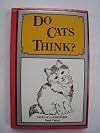
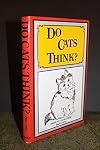
Do Cats Think?: Notes of a Cat-Watcher
by Paul Corey
On This Page
Description
Cats remember, cats communicate. Cats learn but do cats--think? Paul Corey believes they so. And in this fascinating book, filled with anecdotes and descriptions of cat behavior from decades of personal observation, he points the way to learning more about your cat and perhaps yourself.He also makes a strong case for cat-watching as adelightful, productive hobby in an automated age.Tags
Recommendations















Member Reviews
This is one of those books that feels difficult to appreciate outside its timeframe- the seventies. Contrary to prevailing notions of the time that animals merely act on instinct without thought or feeling, the author roundly claims that cats are intelligent and expressive. He also has points to make about them being just as smart as dogs, even though most people can’t teach them to do tricks or follow commands. The first chapter is a bit heavy-handed with these arguments (even though they’re for cats, it’s painful to read- feels very dated) and the last chapter gets weird, with the author encouraging the reader to compile observations of cat behavior with other dedicated cat-watchers into computer databases that will prove to the show more world once and for all how superior cats can be (also claiming to have a kind of ESP connection with his cats).
But! all the stuff in the middle is fairly good reading, if you like cats. The author most certainly did not like cats at first, especially since the first cat he lived with as an adult, was an unspayed female who spent weeks yowling and shrieking around the house when in heat. He also complains about tomcats making a stink, but at the same time seems to be proud of how far they roam and of evidence that they won battles. These first few chapters are likewise a bit difficult reading, since in his early years of keeping cats (after one unexpectedly won his heart) most people didn’t neutered their cats, or keep them indoors, so excess kittens and short lives ending abruptly, abounded. Don’t read if you want to know all the unfortunate and awful things that can happen to cats. So they had quite a few cats that went through rough times, before they started getting their cats fixed. Even then they still roamed, so there’s a lot about their cats’ hunting, and prey they brought home. There's some really remarkable incidents about cats apparently understanding what people were talking about, of learning the “house rules”, of passing the information on to other cats that joined them. There’s one female cat that seemed to prefer pale ginger toms for her mates. There’s stories about cats who visit all the neighbors for extra meals, about cats with serious illness or injury (they don’t always survive), one about a cat who learned to pose for photographs and would sit still until the flash went off. There’s stories of cats recognizing the dangers of snakes, and dealing with incursions from civets into the house, and warding off rivals until they suddenly became friends, and so much more. It’s a good read, but again, you have to remember when it was written, and take a lot with a grain of salt, and likewise be able to stomach some suffering. Also, the guy and his wife thought nothing of smacking their cats to teach them to stay off the counters, leave human food alone, not crawl into the baby’s crib, etc. Not admirable. show less
But! all the stuff in the middle is fairly good reading, if you like cats. The author most certainly did not like cats at first, especially since the first cat he lived with as an adult, was an unspayed female who spent weeks yowling and shrieking around the house when in heat. He also complains about tomcats making a stink, but at the same time seems to be proud of how far they roam and of evidence that they won battles. These first few chapters are likewise a bit difficult reading, since in his early years of keeping cats (after one unexpectedly won his heart) most people didn’t neutered their cats, or keep them indoors, so excess kittens and short lives ending abruptly, abounded. Don’t read if you want to know all the unfortunate and awful things that can happen to cats. So they had quite a few cats that went through rough times, before they started getting their cats fixed. Even then they still roamed, so there’s a lot about their cats’ hunting, and prey they brought home. There's some really remarkable incidents about cats apparently understanding what people were talking about, of learning the “house rules”, of passing the information on to other cats that joined them. There’s one female cat that seemed to prefer pale ginger toms for her mates. There’s stories about cats who visit all the neighbors for extra meals, about cats with serious illness or injury (they don’t always survive), one about a cat who learned to pose for photographs and would sit still until the flash went off. There’s stories of cats recognizing the dangers of snakes, and dealing with incursions from civets into the house, and warding off rivals until they suddenly became friends, and so much more. It’s a good read, but again, you have to remember when it was written, and take a lot with a grain of salt, and likewise be able to stomach some suffering. Also, the guy and his wife thought nothing of smacking their cats to teach them to stay off the counters, leave human food alone, not crawl into the baby’s crib, etc. Not admirable. show less
Author Paul Corey didn’t always like cats, but when one adopted him he was hooked. Do Cats Think is based on the following forty years of his life, a life shared with various cats, of various desires and natures. And the author invites his readers to see through different, maybe feline eyes.
One of my favorite stories tells of a cat demanding a much-loved place to sit and fighting off another cat’s incursions. When the battle’s done, the victor gives a gift to the loser—how much humans could learn from this.
Perhaps we shouldn’t anthropomorphize our pets. But that doesn’t stop us learning from them, and the cats in these stories might have much to teach… patience, forgiveness, focus, hope, love… I certainly enjoyed the show more read, finding it alternately intriguing, amusing, absorbing and thought-provoking.
Disclosure: A friend loaned me the book after a visit to a cat cafe. show less
One of my favorite stories tells of a cat demanding a much-loved place to sit and fighting off another cat’s incursions. When the battle’s done, the victor gives a gift to the loser—how much humans could learn from this.
Perhaps we shouldn’t anthropomorphize our pets. But that doesn’t stop us learning from them, and the cats in these stories might have much to teach… patience, forgiveness, focus, hope, love… I certainly enjoyed the show more read, finding it alternately intriguing, amusing, absorbing and thought-provoking.
Disclosure: A friend loaned me the book after a visit to a cat cafe. show less
The author denigrates the scientific method and suggests that all of his readers become cat-watchers, collect anecdotes, compile them using super-computers, and show the scientists how real science is done. Of course, this leads to suggestions such as opening your brain channel to communicate with your cat via ESP (pg 145).
Luckily, people will have the time to study their cats in detail, because "... before the year 2000, computers and automation will create an age when people will work only a few job-hours a week" (pg 1).
Even if you don't enjoy reading kooks, the anecdotes he shares here are worth a read if you love cats and their sometimes-inexplicable antics.
Now if you'll excuse me, I have to open my brain channel and discuss dining show more options with Hunter. show less
Luckily, people will have the time to study their cats in detail, because "... before the year 2000, computers and automation will create an age when people will work only a few job-hours a week" (pg 1).
Even if you don't enjoy reading kooks, the anecdotes he shares here are worth a read if you love cats and their sometimes-inexplicable antics.
Now if you'll excuse me, I have to open my brain channel and discuss dining show more options with Hunter. show less
Curious book about cat observations. Cat lovers will be supported in their belief that all cats are brilliant!
3872. Do Cats Think? Notes of a cat-watcher, by Paul Corey (read 5 Apr 2004) The author was born in the same county that I was, and wrote a fictional trilogy (Three Miles Square [read 14 Jan 1973], The Road Returns [read 7 Jan 1974], and County Seat [read 13 Jan 1974]) having its setting in Shelby County. He tells of his cats--over the years he has had 15--and of what they have done. But the book was of limited interest, and our cat, Pestie, never does the notable things his did, so I wondered if he made some things up.
Do Cats Think?: Notes of a Cat-Watcher by Paul Corey (1991)
Ratings
Members
- Recently Added By
Author Information
14+ Works 252 Members
Paul Corey teaches in the religious studies department at McMaster University.
Common Knowledge
- Original publication date
- 1977
- Dedication
- This book is for my grandson Alex David Mathews
- First words
- [Introduction] Did you ever wonder whether you have been missing a great opportunity in the way you relate to the cat you live with?
There are all sorts of "watchers" - bird-watchers, people-watchers, star-watchers. - Last words
- (Click to show. Warning: May contain spoilers.)And get to know other cat-watchers around you for a fuller and more exciting life.
Classifications
Statistics
- Members
- 190
- Popularity
- 172,969
- Reviews
- 6
- Rating
- (3.67)
- Languages
- Dutch, English
- Media
- Paper
- ISBNs
- 6
- ASINs
- 4