On This Page
Description
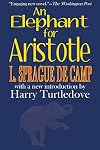
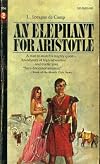
What finer way for Alexander the Great to honor his old tutor Aristotle than to send him an actual Indian elephant? *** After capturing a magnificent specimen from an Indian ruler, Alexander tasks Leon of Atrax, a cavalry commander, to deliver the animal to Aristotle in Athens. *** Leon leads a motley crew of companions (and the elephant) from India to Greece, encountering all sorts of dangers and adventures while attempting the long and arduous journey. *** "An amazing narrative vehicle for show more the display of ... a fairly complete composite of the life and times of which the author writes."-The Chicago Daily Tribune *** "By hybridizing a Middle-Eastern travelogue with an Alexandrine comedy of manners, the author has produced a specimen only slightly less rare then elephants in Westchester-to wit, a historical novel with a sense of humor."-The New York Times show lessTags
Recommendations
















Member Reviews
Delightful novel, gently humorous, about how Alexander the Great sends an elephant to his old tutor, Aristotle, along with other curiosities from India; Aristotle has always been curious about elephants. A varied band of men, mostly Thessalians and other Greeks, but also including Persians, a philosopher, a Syrian sutler, and two Indians in charge of the elephant, led by Hipparch Leon of Atrax makes the journey from India to Athens. The novel tells of their adventures on the way--skirmishes with natives, navigating a narrow pass through the mountains where the elephant blocks traffic coming the other way, a stopover in Babylon and its Hanging Gardens, run ins with bureaucracy, a final sea crossing across the Aegean to Athens with final show more reunion of Leon and his family in Leon's home town.
I especially thought clever how the author delineated by dialect where the different Greeks hailed from--northern Greeks such as Leon by heavy use of Scots, Attic Greeks by "posh" words, Ionians by Cockney [dropping H's], and Doric-speaking Greeks by an American Southern drawl. The novel was very readable; the story just flowed along.
Highly recommended. show less
I especially thought clever how the author delineated by dialect where the different Greeks hailed from--northern Greeks such as Leon by heavy use of Scots, Attic Greeks by "posh" words, Ionians by Cockney [dropping H's], and Doric-speaking Greeks by an American Southern drawl. The novel was very readable; the story just flowed along.
Highly recommended. show less
After defeating King Phoros at the Battle of the Hydaspes, Alexander decides to send Phorus' war elephant to Aristotle. This is the story of the successful journey from the Punjab to Athens.
How true this incident is, nobody knows, but Aristotle did describe the elephant as though he had first-hand knowledge of the beast. This may have happened when he lived in Assos, but could equally have happened as de Camp posits.
Well written and a fun read. Recommended.
How true this incident is, nobody knows, but Aristotle did describe the elephant as though he had first-hand knowledge of the beast. This may have happened when he lived in Assos, but could equally have happened as de Camp posits.
Well written and a fun read. Recommended.
Ratings
Members
- Recently Added By
Author Information

325+ Works 25,061 Members
L. Sprague de Camp, winner of the World Fantasy Award for Life Achievement, was fluent in several languages and traveled the world. He was chased by a hippopotamus in Uganda and sea lions in the Galapagos Islands. He saw tigers and rhinoceroses from elephantback in India, and he was bitten by a lizard in the jungles of Guatemala. His fascinating show more autobiography. Time and Chance, won the 1997 Hugo Award for best nonfiction. L. Sprague de Camp passed away in May 2000 show less
Awards and Honors
Awards
Series

Common Knowledge
- Original publication date
- 1958
- People/Characters
- Alexander the Great; Aristotle, 384-322
- Important places
- Ancient Greece
Classifications
- Genres
- Fiction and Literature, General Fiction, Historical Fiction, Science Fiction, Fantasy
- DDC/MDS
- 823.914 — Literature & rhetoric English & Old English literatures English fiction 1900- 1901-1999 1945-1999
- LCC
- PZ3 .D3555 — Language and Literature Fiction and juvenile belles lettres Fiction and juvenile belles lettres Fiction in English
- BISAC
Statistics
- Members
- 79
- Popularity
- 400,142
- Reviews
- 3
- Rating
- (3.95)
- Languages
- English, German
- Media
- Paper, Ebook
- ISBNs
- 4
- ASINs
- 4