The Queen of the South
by Arturo Pérez-Reverte
On This Page
Description
When she discovers that her boyfriend Guero, a Mexican drug smuggler, has been killed by rivals and that she is the next target, Teresa Mendoza must give up her old life and become a member of a dark and deadly world in order to survive.Tags
Recommendations








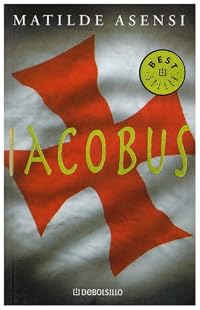
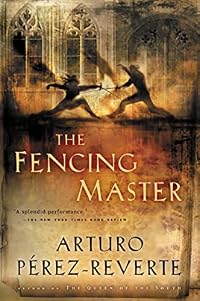






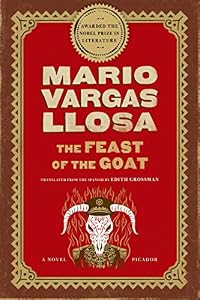
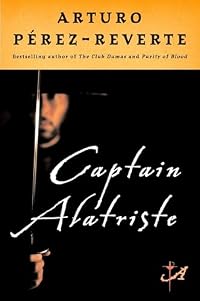















Member Recommendations

lilisin "Queen of the South" is a modern retake on "The Count". Not my favorite read but you can definitely see the parallels.
21

At the Devil's Table: The Untold Story of the Insider Who Brought Down the Cali Cartel by William C. Rempel
srdr For readers looking for a non-fiction title on the same topic, this one has even more suspense.
Member Reviews
“The telephone rang, and she knew she was going to die.”
If the old publishing axiom is true, that the opening sentence can make or break a novel, then Arturo Perez-Reverte has nothing to worry about.
Long before The Da Vinci Code made cryptic mysteries popular, the Spanish author was mining the arcane to tremendous acclaim. Combining the historical passion of Umberto Eco with the intricate mystery sensibilities of Dashiell Hammett, readers were assured of byzantine mysteries of both captivating style and astonishing substance.
A painting of a chess match may solve a hundred-years old murder in The Flanders Panel. A long-sought-after missing chapter of The Three Musketeers leads to devil worship in The Club Dumas (later made into the show more supremely disappointing film The Ninth Gate).
Based on these past efforts, fans may be slightly frustrated with his latest, The Queen of the South. Abandoning his usual reliance on secret texts and ancient conspiracies, Perez-Reverte instead substitutes crime for mystery, venturing into James Ellroy territory with a tale of drug smugglers and codes of honour.
Yet while, on the surface, it seems a more sedate affair, Perez-Reverte is simply incapable of writing a bad novel. Exhaustively researched and penned in riveting prose (masterfully translated by Andrew Hurley), The Queen of the South quickly becomes a mystery of character, and an incisive glimpse at a world all the more terrifying for its realism.
‘The Queen’ is Teresa Mendoza, a Mexican from Sinaloa, where “dying violently was dying a natural death.” Evolving from unassuming moll into an enigmatic leader whose detached focus on her situation “was virtually mathematical, so unemotional it chilled the heart,” Teresa builds a Spanish criminal empire of power and cunning, while remaining a figure of intrigue to the nation.
Perez-Reverte marries the story of Mendoza’s rise with a journalist’s investigation into her past, resulting in a Citizen Kane-styled mixture of personal reminiscences and expert foreshadowing. Think Orson Welles’ classic by way of Brian DePalma’s Scarface, with a soupcon of The Count of Monte Cristo for exotic flavour.
As always, Perez-Reverte brings his worlds into being with unparalleled vigour. Teresa’s life, filled with possible treachery and unlikely allies, alive with music that venerates the criminal, is animated in a manner few can match. It is a place of hideous plausibility, where a remark such as “I’ll have his skin peeled off him in strips” is par for the course, and “overconfidence kills more people than bullets.”
Teresa herself is one of Perez-Reverte’s finest creations, a deeply complicated woman whose hidden depths of strength are unlimited. Much like Brazilian author Paulo Coelho’s recent novel Eleven Minutes, The Queen is a portrait of a woman finding the centre of her self. Unlike Coelho’s exercise in superficiality, fortunately, Perez-Reverte never lets the story become a treatise on female empowerment, making sure both story and character are integral to each other.
Even for such a pre-eminent master, The Queen of the South is superlative. At once a marvellous character study and a fast-paced criminal thriller, this is Perez-Reverte at his best. show less
If the old publishing axiom is true, that the opening sentence can make or break a novel, then Arturo Perez-Reverte has nothing to worry about.
Long before The Da Vinci Code made cryptic mysteries popular, the Spanish author was mining the arcane to tremendous acclaim. Combining the historical passion of Umberto Eco with the intricate mystery sensibilities of Dashiell Hammett, readers were assured of byzantine mysteries of both captivating style and astonishing substance.
A painting of a chess match may solve a hundred-years old murder in The Flanders Panel. A long-sought-after missing chapter of The Three Musketeers leads to devil worship in The Club Dumas (later made into the show more supremely disappointing film The Ninth Gate).
Based on these past efforts, fans may be slightly frustrated with his latest, The Queen of the South. Abandoning his usual reliance on secret texts and ancient conspiracies, Perez-Reverte instead substitutes crime for mystery, venturing into James Ellroy territory with a tale of drug smugglers and codes of honour.
Yet while, on the surface, it seems a more sedate affair, Perez-Reverte is simply incapable of writing a bad novel. Exhaustively researched and penned in riveting prose (masterfully translated by Andrew Hurley), The Queen of the South quickly becomes a mystery of character, and an incisive glimpse at a world all the more terrifying for its realism.
‘The Queen’ is Teresa Mendoza, a Mexican from Sinaloa, where “dying violently was dying a natural death.” Evolving from unassuming moll into an enigmatic leader whose detached focus on her situation “was virtually mathematical, so unemotional it chilled the heart,” Teresa builds a Spanish criminal empire of power and cunning, while remaining a figure of intrigue to the nation.
Perez-Reverte marries the story of Mendoza’s rise with a journalist’s investigation into her past, resulting in a Citizen Kane-styled mixture of personal reminiscences and expert foreshadowing. Think Orson Welles’ classic by way of Brian DePalma’s Scarface, with a soupcon of The Count of Monte Cristo for exotic flavour.
As always, Perez-Reverte brings his worlds into being with unparalleled vigour. Teresa’s life, filled with possible treachery and unlikely allies, alive with music that venerates the criminal, is animated in a manner few can match. It is a place of hideous plausibility, where a remark such as “I’ll have his skin peeled off him in strips” is par for the course, and “overconfidence kills more people than bullets.”
Teresa herself is one of Perez-Reverte’s finest creations, a deeply complicated woman whose hidden depths of strength are unlimited. Much like Brazilian author Paulo Coelho’s recent novel Eleven Minutes, The Queen is a portrait of a woman finding the centre of her self. Unlike Coelho’s exercise in superficiality, fortunately, Perez-Reverte never lets the story become a treatise on female empowerment, making sure both story and character are integral to each other.
Even for such a pre-eminent master, The Queen of the South is superlative. At once a marvellous character study and a fast-paced criminal thriller, this is Perez-Reverte at his best. show less
Teresa, the “Queen,” is just the girlfriend of a drug runner pilot in Mexico until he gets himself killed. Given an escape to Spain, and a stint in prison, she and her prison-mate Patty enter the big business of running drugs themselves especially between Spain and Morocco. Oddly Teresa comes off a hero and the audience cheers for her. The novel is complex and exquisitely told. The level of detail of running drugs and the enemies it creates demonstrates the level of skill of this author and his research. The author is quite simply brilliant.
Arturo Perez-Reverte has a reputation for writing superior literary thrillers, and The Queen of the South is a fine example of this. As translated by Andrew Hurley, this is an ambitious, wordy and fascinating story about one woman’s rise through the drug smuggling world. The point of view switches between the Queen of the South, Teresa Mendoza and an anonymous writer who is researching material on her life in order to write a book.
The book opens with a bang as Teresa Mendoza, learns of the death of her boyfriend who delivers shipments of drugs across the border. He has warned her that there could come a time when she has to drop everything and run, and this was that time. She starts to build a new life for herself in southern Spain show more but gets involved with another drug runner and soon finds herself accompanying him on his trips across the Strait of Gibraltar. The boyfriend is eventually set up as a patsy and he is killed. She is captured and goes to prison. While in prison she meets a woman who not only teaches her everything to survive prison, they also form a partnership and are able to recover a huge shipment of cocaine. Using this to build her power base, she soon is controlling much of the drugs that are moved between Morocco and Spain for eventual distribution throughout Europe. But coming full circle she eventually runs afoul of the Mexican drug cartels once again.
Lies, deception, violence, treachery and corruption are the frame upon which the life of Teresa Mendoza is based on. The story of how a small time narco’s girlfriend became the rich and powerful Queen of the South was quite the read. The book has been meticulously researched and at times there is simply too much information being laid out. I also had some difficulties with both too many characters to keep track of, and a lack of character definition. However, the story was so interesting that I was able to overlook these flaws and simply enjoy the book. show less
The book opens with a bang as Teresa Mendoza, learns of the death of her boyfriend who delivers shipments of drugs across the border. He has warned her that there could come a time when she has to drop everything and run, and this was that time. She starts to build a new life for herself in southern Spain show more but gets involved with another drug runner and soon finds herself accompanying him on his trips across the Strait of Gibraltar. The boyfriend is eventually set up as a patsy and he is killed. She is captured and goes to prison. While in prison she meets a woman who not only teaches her everything to survive prison, they also form a partnership and are able to recover a huge shipment of cocaine. Using this to build her power base, she soon is controlling much of the drugs that are moved between Morocco and Spain for eventual distribution throughout Europe. But coming full circle she eventually runs afoul of the Mexican drug cartels once again.
Lies, deception, violence, treachery and corruption are the frame upon which the life of Teresa Mendoza is based on. The story of how a small time narco’s girlfriend became the rich and powerful Queen of the South was quite the read. The book has been meticulously researched and at times there is simply too much information being laid out. I also had some difficulties with both too many characters to keep track of, and a lack of character definition. However, the story was so interesting that I was able to overlook these flaws and simply enjoy the book. show less
I picked up this book on a whim. I've previously read the first Captain Alatriste novel and The Club Dumas, and loved them both, so I was confident that I'd enjoy Perez-Reverte's work in a more contemporary setting. The Queen of the South is a novel about the rise and fall of a female nacrotrafficante and her journey from Sinaloa to Gibraltar & Spanish North Africa and finally back to Sinaloa.
The book had all the things I've come to love about Perez-Reverte's work: a fictionalized journalistic style, solidly written action with clearly drawn characters, and swashbuckling heros described with philosophical and literary allusions.
What I didn't expect (although I should have after the Club Dumas) was that the Queen of the South is a loving show more homage to The Count of Monte Christo. Perez-Reverte did not just copy the plot arc of Dumas Pere's classic. He wrote a love story to it. Each character is drawn with painstaking strokes to capture something essential about the archetype without slavishly copying or over-simplifying.
What Perez-Reverte does extraordinarily well is to choose his parallels so that they highlight central human characters and flaws that tie the 19th century romance with contemporary happenings. He also builds emotional weight slowly and without sentimentality or hyperbole. This allows him to pre-weight a scene with emotional impact and then deliver a terse, journalistic paragraph that merely states facts and yet breaks this readers' heart. show less
The book had all the things I've come to love about Perez-Reverte's work: a fictionalized journalistic style, solidly written action with clearly drawn characters, and swashbuckling heros described with philosophical and literary allusions.
What I didn't expect (although I should have after the Club Dumas) was that the Queen of the South is a loving show more homage to The Count of Monte Christo. Perez-Reverte did not just copy the plot arc of Dumas Pere's classic. He wrote a love story to it. Each character is drawn with painstaking strokes to capture something essential about the archetype without slavishly copying or over-simplifying.
What Perez-Reverte does extraordinarily well is to choose his parallels so that they highlight central human characters and flaws that tie the 19th century romance with contemporary happenings. He also builds emotional weight slowly and without sentimentality or hyperbole. This allows him to pre-weight a scene with emotional impact and then deliver a terse, journalistic paragraph that merely states facts and yet breaks this readers' heart. show less
The best from a most talented writer (and credit must be given to the translators). Perez-Riverte takes the reader inside the complicated mind of a Spanish-Mexican girl who, by good luck and bad, becomes the head of a drug cartel in Spain. Teresa's thoughts always encompass survival and then the ever-existential "why I am here and why I am I doing what I do?" She falls under the influence of two men and a woman who use her and then are themselves discarded. And she always sees and feels all the Teresas that she is and was and surround her still. A most memorable and brilliant novel.
The Queen of the South starts with the ominous ringing of a cellphone that tells Teresa Mendoza that her drug-running boyfriend has been killed and that his enemies are now searching for her in order to mete out a similar fate. She begins running and doesn’t stop for 125 pages full of intrigue, courage, corruption, danger, and honor and dishonor among thieves. It’s great reading, beautifully written and thrillingly fast-paced.
But then the pace slows to a crawl. We learn the details of drug-running in the Mediterranean, the perils of the sea, the boredom of prison, and the slow and careful building of an empire. We read about friendship and betrayal, the logistics of transporting kilo upon kilo of hashish and cocaine, the show more international cooperation among crooks that makes illegal drugs such a huge industry. It’s like reading a treatise on the drug trade. The prose remains lovely, but the momentum is lost, and soon it becomes easy to put the book down and hard to pick it up.
Why this should happen is bewildering, as at base this is the story of a woman’s rise to the top of the drug trade, becoming an ardent reader and an excellent businesswoman along the way. One would think such a story would be inherently interesting, especially because one grows to like Teresa a good deal despite her choice of profession – an authorial feat in itself. Perhaps the problem is one of translation, either of language or of culture, as Perez-Reverte is Spanish and writes in that language.
Or perhaps it is because Perez-Reverte chooses to use a framing device that fails altogether. Every now and then, Teresa’s story is interrupted by the maunderings of a reporter who is researching an article on Teresa, supposedly to culminate in an interview with her. These digressions recount his research seeking to interview Teresa, describing his interviews with key figures in Teresa’s life along the way. No information is conveyed in these passages that could not have been woven into the plot directly, and the reporter’s conclusion is unsatisfactory. This would have been a much tighter novel without the use of the frame.
Even so, the reader who slogs through the 200 pages of slow and careful character development and the interruptions of Perez-Reverte’s reporter is ultimately rewarded by a final 100 pages of sophisticated political dealing and a settling of old scores. The book once again becomes exciting, and one no longer feels the urge to put it down and not pick it up again.
Ultimately, this book is well worth reading. But the reader should make sure to approach it with expectations set to “mainstream literature” rather than “mystery” or “thriller.” show less
But then the pace slows to a crawl. We learn the details of drug-running in the Mediterranean, the perils of the sea, the boredom of prison, and the slow and careful building of an empire. We read about friendship and betrayal, the logistics of transporting kilo upon kilo of hashish and cocaine, the show more international cooperation among crooks that makes illegal drugs such a huge industry. It’s like reading a treatise on the drug trade. The prose remains lovely, but the momentum is lost, and soon it becomes easy to put the book down and hard to pick it up.
Why this should happen is bewildering, as at base this is the story of a woman’s rise to the top of the drug trade, becoming an ardent reader and an excellent businesswoman along the way. One would think such a story would be inherently interesting, especially because one grows to like Teresa a good deal despite her choice of profession – an authorial feat in itself. Perhaps the problem is one of translation, either of language or of culture, as Perez-Reverte is Spanish and writes in that language.
Or perhaps it is because Perez-Reverte chooses to use a framing device that fails altogether. Every now and then, Teresa’s story is interrupted by the maunderings of a reporter who is researching an article on Teresa, supposedly to culminate in an interview with her. These digressions recount his research seeking to interview Teresa, describing his interviews with key figures in Teresa’s life along the way. No information is conveyed in these passages that could not have been woven into the plot directly, and the reporter’s conclusion is unsatisfactory. This would have been a much tighter novel without the use of the frame.
Even so, the reader who slogs through the 200 pages of slow and careful character development and the interruptions of Perez-Reverte’s reporter is ultimately rewarded by a final 100 pages of sophisticated political dealing and a settling of old scores. The book once again becomes exciting, and one no longer feels the urge to put it down and not pick it up again.
Ultimately, this book is well worth reading. But the reader should make sure to approach it with expectations set to “mainstream literature” rather than “mystery” or “thriller.” show less
Quite a departure for Perez-Reverte (not an art-mystery or an historical swashbuckler) - but possibly his most heavy-hitting work to date. After the first couple of chapters, my first thought was, 'this is just like a Quentin Tarantino film!' However, the book as a whole is much more insightful and thoughtful - if just as violent.
This story of the rise of a female drug-runner, told both from her perspective and that of an investigative journalist writing a book of her life, may show the author's past as a war journalist. One comes away from this book feeling that you truly know the milieu, the danger, the people and the motivations... and that likely a lot of the book is fact.
Pulls no punches.. and while a lot of it is exciting and show more suspenseful, it is also tense, disturbing, and often sad.
One of the best parts of reading is that it can truly open windows into other cultures, other perspectives - this book definitely succeeded in doing that for me. show less
This story of the rise of a female drug-runner, told both from her perspective and that of an investigative journalist writing a book of her life, may show the author's past as a war journalist. One comes away from this book feeling that you truly know the milieu, the danger, the people and the motivations... and that likely a lot of the book is fact.
Pulls no punches.. and while a lot of it is exciting and show more suspenseful, it is also tense, disturbing, and often sad.
One of the best parts of reading is that it can truly open windows into other cultures, other perspectives - this book definitely succeeded in doing that for me. show less
Members
- Recently Added By
Lists

Best 21st Century Books (So Far)
670 works; 86 members

Books translated from Romance Languages into English
102 works; 6 members

Leídos 2025
18 works; 1 member
Author Information

74+ Works 37,766 Members
Novelist and former journalist Arturo Pérez-Reverte Gutiérrez was born in Cartagena, Spain on November 25, 1951. He started his journalistic career writing for the Spanish newspaper Pueblo and later for Television Espanola - the Spanish state owned television, in the role of war correspondant. He worked as a war correspondent from 1973 to1994 show more before becoming a full-time writer. His first novel, El húsar, which was set in the Napoleonic Wars, was published in 1986, and he is well-known internationally for his popular Captain Alatriste fiction series, which takes place in 17th-century Europe. Pérez-Reverte has been elected to the Spanish Royal Academy. (Bowker Author Biography) show less
Some Editions
Work Relationships
Has as a commentary on the text
Common Knowledge
- Canonical title
- The Queen of the South
- Original title
- La reina del sur
- Alternate titles
- The Queen of the South
- Original publication date
- 2002
- People/Characters
- Teresa Mendoza; Guero Davila; Ruço; Santiago Fisterra; Pati O'Farrell; Oleg Yasikov (show all 7); Eddie Alvarez
- Important places
- Culiacan, Sinaloa, Mexico; Melilla, Spain; Mexico; Spain; Sinaloa, Mexico
- Related movies
- La reina del sur (2011 | IMDb); La reina del sur (2011)
- First words
- O telefone tocou e ela compreendeu que iam matá-la.
- Last words
- (Click to show. Warning: May contain spoilers.)O "corrido" de Teresa Mendoza.
- Canonical DDC/MDS
- 863.67
Classifications
- Genres
- Fiction and Literature, General Fiction, Mystery
- DDC/MDS
- 863.67 — Literature & rhetoric Spanish, Portuguese, Galician literatures Spanish fiction 20th Century
- LCC
- PQ6666 .E765 .R4513 — Language and Literature French, Italian, Spanish and Portuguese literatures Spanish literature Individual authors, 1961-2000
- BISAC
Statistics
- Members
- 2,523
- Popularity
- 7,538
- Reviews
- 60
- Rating
- (3.73)
- Languages
- 20 — Czech, Danish, Dutch, English, Estonian, Finnish, French, German, Greek, Hungarian, Italian, Lithuanian, Norwegian (Bokmål), Polish, Romanian, Russian, Slovak, Spanish, Turkish, Portuguese (Portugal)
- Media
- Paper, Audiobook, Ebook
- ISBNs
- 84
- UPCs
- 1
- ASINs
- 23