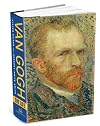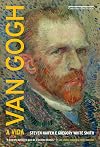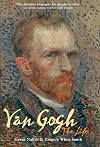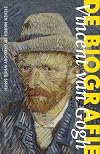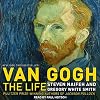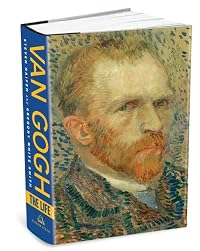
Van Gogh: The Life
by Steven Naifeh, Gregory White Smith
On This Page
Description
Draws on newly available primary sources to present an in-depth, accessible profile that offers revisionist assessments of the influential artist's turbulent life and genius works.Tags
Recommendations









Member Reviews
Vincent Van Gogh is one of the Western world's most well-known artists, and works such as Starry Night and The Bedroom are icons of the post-impressionist transition. Equally well-known are the stories about his life and personality, the infamous mutilation of his ear, and his close yet tumultuous relationship with his brother, Theo. Naifeh and Smith's new biography both explores in detail the development of Vincent's art and brings new light to the widely accepted version of Theo's life, which is largely based on Irving Stone's fictionalized biography and subsequent movie, [Lust for Life].
Ten years in the making, Van Gogh: A Life is a masterpiece of meticulous research and detailed writing. The authors had unparalleled access to the show more archives of the Van Gogh Museum, as well as the Museum's new translation of Van Gogh's letters. The only previous English translation was by Vincent's sister-in-law, who of course had a certain agenda. In addition to authoritative research and documentation (over 5000 pages of notes available at www.vangoghbiography.com), the authors bravely contradict some of the most widely held beliefs about Vincent's life and death. They do so in the full knowledge that there will be controversy, and document their reasoning so that others may follow their line of thought. While paying homage to the scholarship that has come before, they forge ahead into new territory.
The book is divided into three parts: The Early Years (1853-1880), The Dutch Years (1880-1886), and The French Years (1886-1890). I delved into the first part with eager enthusiasm and was not disappointed. Vincent's childhood was scarred by his relationships with his cold, class-conscious mother and his domineering pastor father. People found Vincent odd, unsocial, and erratic even in his youth. Unable to make friends, unsatisfied with any of the schools he attended, Vincent became increasingly cyclical in his emotions: thwarted at some task or project, he would become increasingly angry and arrogant until he failed and then fell into a fit of despair and depression. Then he would latch onto some new, grander project and frenetically try to persuade everyone to his new passion.
I found reading The Dutch Years to be more of a struggle. The pattern of Vincent's emotional life played over and over, even as he moved (or was evicted) from place to place and passion to passion. His relationship with his brother, Theo, had solidified into complete financial dependence and the same cycle of anger, guilt, and passion that dominated his emotional life. His art was stuck in a dark rut, and he continued to refuse to view Impressionist art or explore the ideas of his contemporary artists. For a couple of hundred pages, I despaired of finishing this 900 page tome.
Then I reached The French Years, and my reading picked up pace. Vincent finally moved to Paris to live with his brother, a financial imperative, and for the first time began interacting with the Impressionists and their successors. Key relationships were formed, broken, and reformed, and his art began to show the effects of exposure to new ideas and methods. Then he reached Arles and began to paint in his own impassioned way, expressing his emotions through the wild brush strokes and colors that would eventually make him famous. These last few years were extremely productive, even while he fought ill health and the escalation of his disease (now believed to have been temporal lobe epilepsy). His greatest dream of all, a brotherhood of artists living together at the Yellow House, resulted in a brief co-habitation with Paul Gauguin, and ended in tragedy. The last year of his life was spent in asylums and in and out of lucidity, yet he continued to paint. His work garnered some acclaim at the very end of his life, but he died denying that he was worthy of that praise.
There are many things to praise about this new biography: its detail and authority, the way the authors weave Vincent's own words from his letters into the text, the occasional eye-catching turn of phrase. One thing that I found particularly interesting was the focus on Vincent's expansive reading and how it informed his life and his work. At various times, the following authors played an especially important role in his thinking: George Eliot, Charles Dickens, Victor Hugo, Guy de Maupassant, and Emile Zola; but he read widely and deeply on many subjects, especially religion and the history of art. He used the books he read as a source of solace, inspiration, support for his arguments, vindication, and self-definition. He even painted books into his art as a way to make a point or convey a message.
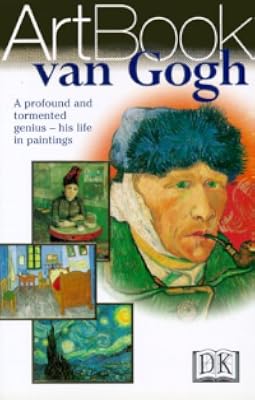
Overall, I think Van Gogh: The Life is an important contribution to art scholarship and well worth reading, despite its length and sometimes uneven delivery. It's a book that leaves you wanting to know even more, and I found myself browsing the web for more information on fellow artists, various movements, and especially more examples of Vincent's paintings. Of help to me in this last was a small book of Van Gogh's drawings and paintings entitled [Van Gogh] by Josephine Cutts and James Smith, published by MetroBooks. Arranged somewhat chronologically, it supplemented the plates included in the biography. show less
Ten years in the making, Van Gogh: A Life is a masterpiece of meticulous research and detailed writing. The authors had unparalleled access to the show more archives of the Van Gogh Museum, as well as the Museum's new translation of Van Gogh's letters. The only previous English translation was by Vincent's sister-in-law, who of course had a certain agenda. In addition to authoritative research and documentation (over 5000 pages of notes available at www.vangoghbiography.com), the authors bravely contradict some of the most widely held beliefs about Vincent's life and death. They do so in the full knowledge that there will be controversy, and document their reasoning so that others may follow their line of thought. While paying homage to the scholarship that has come before, they forge ahead into new territory.
The book is divided into three parts: The Early Years (1853-1880), The Dutch Years (1880-1886), and The French Years (1886-1890). I delved into the first part with eager enthusiasm and was not disappointed. Vincent's childhood was scarred by his relationships with his cold, class-conscious mother and his domineering pastor father. People found Vincent odd, unsocial, and erratic even in his youth. Unable to make friends, unsatisfied with any of the schools he attended, Vincent became increasingly cyclical in his emotions: thwarted at some task or project, he would become increasingly angry and arrogant until he failed and then fell into a fit of despair and depression. Then he would latch onto some new, grander project and frenetically try to persuade everyone to his new passion.
I found reading The Dutch Years to be more of a struggle. The pattern of Vincent's emotional life played over and over, even as he moved (or was evicted) from place to place and passion to passion. His relationship with his brother, Theo, had solidified into complete financial dependence and the same cycle of anger, guilt, and passion that dominated his emotional life. His art was stuck in a dark rut, and he continued to refuse to view Impressionist art or explore the ideas of his contemporary artists. For a couple of hundred pages, I despaired of finishing this 900 page tome.
Then I reached The French Years, and my reading picked up pace. Vincent finally moved to Paris to live with his brother, a financial imperative, and for the first time began interacting with the Impressionists and their successors. Key relationships were formed, broken, and reformed, and his art began to show the effects of exposure to new ideas and methods. Then he reached Arles and began to paint in his own impassioned way, expressing his emotions through the wild brush strokes and colors that would eventually make him famous. These last few years were extremely productive, even while he fought ill health and the escalation of his disease (now believed to have been temporal lobe epilepsy). His greatest dream of all, a brotherhood of artists living together at the Yellow House, resulted in a brief co-habitation with Paul Gauguin, and ended in tragedy. The last year of his life was spent in asylums and in and out of lucidity, yet he continued to paint. His work garnered some acclaim at the very end of his life, but he died denying that he was worthy of that praise.
There are many things to praise about this new biography: its detail and authority, the way the authors weave Vincent's own words from his letters into the text, the occasional eye-catching turn of phrase. One thing that I found particularly interesting was the focus on Vincent's expansive reading and how it informed his life and his work. At various times, the following authors played an especially important role in his thinking: George Eliot, Charles Dickens, Victor Hugo, Guy de Maupassant, and Emile Zola; but he read widely and deeply on many subjects, especially religion and the history of art. He used the books he read as a source of solace, inspiration, support for his arguments, vindication, and self-definition. He even painted books into his art as a way to make a point or convey a message.
Overall, I think Van Gogh: The Life is an important contribution to art scholarship and well worth reading, despite its length and sometimes uneven delivery. It's a book that leaves you wanting to know even more, and I found myself browsing the web for more information on fellow artists, various movements, and especially more examples of Vincent's paintings. Of help to me in this last was a small book of Van Gogh's drawings and paintings entitled [Van Gogh] by Josephine Cutts and James Smith, published by MetroBooks. Arranged somewhat chronologically, it supplemented the plates included in the biography. show less
An astonishing and redefining portrait of a tormented and brilliant artist. Covers literally everything - family life and troubles, alienating personality, the books and painters he adored, everything.
Van Gogh does not come across as a too sympathetic person - his personality, ingratiating and tempestuous, has driven away all but a few of his most devoted friends and his brother. His early forays with jobs and art education are embarrassing to read. He is fragile, wracked with his desires and the epilepsy and depression which tormented him, but audacious, producing brilliant portraits within days. His output is astonishing. One wonders about the old adages about the costs of genius, and how van Gogh himself says "I put my heart and soul show more into my work, and have lost my mind in the process."
The madness of genius. Despite everything, he is praised and immortalized.
Excellent choice of pictures accompany the text - the color reproductions are excellent, and you can see the clumps of paint from the individual brush strokes. show less
Van Gogh does not come across as a too sympathetic person - his personality, ingratiating and tempestuous, has driven away all but a few of his most devoted friends and his brother. His early forays with jobs and art education are embarrassing to read. He is fragile, wracked with his desires and the epilepsy and depression which tormented him, but audacious, producing brilliant portraits within days. His output is astonishing. One wonders about the old adages about the costs of genius, and how van Gogh himself says "I put my heart and soul show more into my work, and have lost my mind in the process."
The madness of genius. Despite everything, he is praised and immortalized.
Excellent choice of pictures accompany the text - the color reproductions are excellent, and you can see the clumps of paint from the individual brush strokes. show less
By far the saddest biography I have ever read, VAN GOGH is also one of the most stirring and superbly detailed biographies I have ever read. That Vincent van Gogh's life was such a brutally painful and difficult one should not deter readers from embarking on this massive journey, yet the fact that a 951-page book reaches page 750 before the subject has what could genuinely be called a period of happiness is a testament to the skill with which the book is written, for despite the utterly depressing nature of Van Gogh's life, the authors make it a terrifically compelling one to read about. The amount of detail, in no small part but not entirely due to the prodigious correspondence that exists between Vincent and his brother Theo, is as show more complete as any biography could (or should) aspire to, and by the end of the book, one feels as though as though one has lived alongside Vincent through almost his entire life. The book approaches yet manages to skirt oppressiveness of detail, a superb feat given the consistency of the arc of Van Gogh's tortured life, and while the repetitious nature of Van Gogh's behavior and follies becomes almost as tiresome as it must have for his family, there is nothing in the book that should have been left out. The authors, too, have a splendid sense of art and how Van Gogh's mind was reflected in his art, and all this is described with clarity and, and at the same time, poetry. I wept as I reached the end of Vincent's life, in part because it was such a sad and unhappy life, but also because by the book's end, I felt as though I knew and understood the man behind some of the greatest art in history. Such should be the goal of every biography. show less
Steven Naifeh and Gregory White Smith galvanized readers with their astonishing Jackson Pollock: An American Saga, winner of the Pulitzer Prize for biography, a book acclaimed for its miraculous research and overwhelming narrative power. Now Naifeh and Smith have written another tour de force—an exquisitely detailed, compellingly readable, and ultimately heartbreaking portrait of creative genius Vincent van Gogh.
Working with the full cooperation of the Van Gogh Museum in Amsterdam, Naifeh and Smith have accessed a wealth of previously untapped materials. While drawing liberally from the artist’s famously eloquent letters, they have also delved into hundreds of unpublished family correspondences, illuminating with poignancy the show more wanderings of Van Gogh’s troubled, restless soul. Naifeh and Smith bring a crucial understanding to the larger-than-life mythology of this great artist—his early struggles to find his place in the world; his intense relationship with his brother Theo; his impetus for turning to brush and canvas; and his move to Provence, where in a brief burst of incandescent productivity he painted some of the best-loved works in Western art.
The authors also shed new light on many unexplored aspects of Van Gogh’s inner world: his deep immersion in literature and art; his erratic and tumultuous romantic life; and his bouts of depression and mental illness.
Though countless books have been written about Van Gogh, and though the broad outlines of his tragedy have long inhabited popular culture, no serious, ambitious examination of his life has been attempted in more than seventy years. Naifeh and Smith have re-created Van Gogh’s life with an astounding vividness and psychological acuity that bring a completely new and sympathetic understanding to this unique artistic genius whose signature images of sunflowers and starry nights have won a permanent place in the human imagination. show less
Working with the full cooperation of the Van Gogh Museum in Amsterdam, Naifeh and Smith have accessed a wealth of previously untapped materials. While drawing liberally from the artist’s famously eloquent letters, they have also delved into hundreds of unpublished family correspondences, illuminating with poignancy the show more wanderings of Van Gogh’s troubled, restless soul. Naifeh and Smith bring a crucial understanding to the larger-than-life mythology of this great artist—his early struggles to find his place in the world; his intense relationship with his brother Theo; his impetus for turning to brush and canvas; and his move to Provence, where in a brief burst of incandescent productivity he painted some of the best-loved works in Western art.
The authors also shed new light on many unexplored aspects of Van Gogh’s inner world: his deep immersion in literature and art; his erratic and tumultuous romantic life; and his bouts of depression and mental illness.
Though countless books have been written about Van Gogh, and though the broad outlines of his tragedy have long inhabited popular culture, no serious, ambitious examination of his life has been attempted in more than seventy years. Naifeh and Smith have re-created Van Gogh’s life with an astounding vividness and psychological acuity that bring a completely new and sympathetic understanding to this unique artistic genius whose signature images of sunflowers and starry nights have won a permanent place in the human imagination. show less
Eight hundred pages to cover 37 years? You bet!
There was a lot to draw from, since Vincent Van Gogh wrote many many letters, especially to his brother Theo. Inevitably, it becomes the story of both brothers, since they were so important to each other's existence.
I can't imagine Vincent was a man who'd be easy to get along with, what with his constant bridge burning, but I really felt bad for him. Nothing went right for him in his life, and though eventually he was treated for mental illness, there was no true happiness for him, and certainly not the companionship that he so desired. Yet he is now one of the most beloved painters of all time. Every time I go into the Metropolitan Museum of Art, any time of day, the area containing his show more paintings draws the most people. But what a journey that led to this point!
I most enjoyed reading the sections covering his early years, particularly his time in England, didn't like his Dutch period as much (his relationship with his parents was painful) and of course was most intrigued by his later (French) years. show less
There was a lot to draw from, since Vincent Van Gogh wrote many many letters, especially to his brother Theo. Inevitably, it becomes the story of both brothers, since they were so important to each other's existence.
I can't imagine Vincent was a man who'd be easy to get along with, what with his constant bridge burning, but I really felt bad for him. Nothing went right for him in his life, and though eventually he was treated for mental illness, there was no true happiness for him, and certainly not the companionship that he so desired. Yet he is now one of the most beloved painters of all time. Every time I go into the Metropolitan Museum of Art, any time of day, the area containing his show more paintings draws the most people. But what a journey that led to this point!
I most enjoyed reading the sections covering his early years, particularly his time in England, didn't like his Dutch period as much (his relationship with his parents was painful) and of course was most intrigued by his later (French) years. show less
A very comprehensive biography of an intense and passionate man that provides a deep insight into his mind and creative process. A thoroughly researched portrait of Vincent's tragic life. Vincent initially comes off as an arrogant and self-destructive man. But he was as much a victim of the society that rejected him for being different. Vincent would start his career as an art dealer. But he was neither smooth talking nor good with people, which would mean an end to his career as an art dealer. Faced with his failure and rejection from his family, he would try to find solace in religion. But his later foray into a career as a missionary would also end in a similar failure. The intensity and passion that he brought to his attempted show more career as a missionary or a preacher, and his constant search for meaning would alienate most of his peers.
Faced with his failure in all his career endeavors, and having been rejected and shunned by family and friends and women, his life would soon spiral downward into intense melancholy and guilt that would mark his painting career. Throughout his artistic career, he would search for solace and meaning, often keeping emotional crisis and complete breakdown at bay by his furious dedication to his work and delusions of future success. It is remarkable the amount of intensity with which he worked despite being rejected and ridiculed at every step. His art was his solace and his mode of expression. He puoured his emotional and spiritual feelings into his work. He may not have been a good draftsman but his passion and intensity speaks through his colours.
The authors here also make a good case that the gunshot wound that killed Vincent might infact have been an accident, a result of an altercation rather than suicide.
A remarkable and heartbreaking biography. show less
Faced with his failure in all his career endeavors, and having been rejected and shunned by family and friends and women, his life would soon spiral downward into intense melancholy and guilt that would mark his painting career. Throughout his artistic career, he would search for solace and meaning, often keeping emotional crisis and complete breakdown at bay by his furious dedication to his work and delusions of future success. It is remarkable the amount of intensity with which he worked despite being rejected and ridiculed at every step. His art was his solace and his mode of expression. He puoured his emotional and spiritual feelings into his work. He may not have been a good draftsman but his passion and intensity speaks through his colours.
The authors here also make a good case that the gunshot wound that killed Vincent might infact have been an accident, a result of an altercation rather than suicide.
A remarkable and heartbreaking biography. show less
This is a massive and wonderful book about an amazing person. I've read several books about Vincent, both fiction and non-fiction and I thought I knew a lot about Vincent's life, but Naifeh and Smith provide a lot more information than any of the others I've read and do it well.
Having recently read Carol Wallace's Leaving Van Gogh with Goodread's Art Lovers group, I must say that I think her book should be banned for using real people in a fiction that is so far from the known facts.
Naifeh and White make a thoroughly convincing case for Vincent's illness having been temporal lobe epilepsy. In fact, that was the diagnosis at the hospital in Arles where he was first treated for his mental illness after he mutilated his ear. Why so many show more other theories about his illness clouded the issue is unclear to me, when the original diagnosis and all his symptoms pointed directly to temporal lobe epilepsy.
And finally, the short discussion about Vincent's death and why the authors do not believe it was a suicide, is also totally convincing. Reading their assertions and the reasons for them (both pertaining to the diagnosis of his illness and the cause of his death) leaves no room for any other theory, as far as I'm concerned. If for no other reason, the fact that all the painting gear that he had taken with him that day as well as the revolver that he was shot with were never found would point to it NOT being a suicide. Poor wonderful, talented, brilliant Vincent.
This is an essential book for anyone who is truly interested in Vincent van Gogh. show less
Having recently read Carol Wallace's Leaving Van Gogh with Goodread's Art Lovers group, I must say that I think her book should be banned for using real people in a fiction that is so far from the known facts.
Naifeh and White make a thoroughly convincing case for Vincent's illness having been temporal lobe epilepsy. In fact, that was the diagnosis at the hospital in Arles where he was first treated for his mental illness after he mutilated his ear. Why so many show more other theories about his illness clouded the issue is unclear to me, when the original diagnosis and all his symptoms pointed directly to temporal lobe epilepsy.
And finally, the short discussion about Vincent's death and why the authors do not believe it was a suicide, is also totally convincing. Reading their assertions and the reasons for them (both pertaining to the diagnosis of his illness and the cause of his death) leaves no room for any other theory, as far as I'm concerned. If for no other reason, the fact that all the painting gear that he had taken with him that day as well as the revolver that he was shot with were never found would point to it NOT being a suicide. Poor wonderful, talented, brilliant Vincent.
This is an essential book for anyone who is truly interested in Vincent van Gogh. show less
Members
- Recently Added By
Author Information

23 Works 1,917 Members
Steven Naifeh was born in Tehran, Iran, June 19, 1952, to parents in the U.S. Diplomatic Service. He attended Princeton University receiving an A.B. summa cum laude in American History, Harvard Law School receiving a J.D., Harvard Graduate School of School of Arts and Sciences, receiving both an M.A. and a PhD, and University of South Carolina show more receiving a Ph.D. in Humane Letters. Naifeh co-authored, with Gregory White Smith, Jackson Pollock: An American Saga which received the Pulitzer Prize for Biography in 1991 and was a finalist for National Book Award Nonfiction in 1990. He and Smith also co-authored Final Justice which was an Edgar Allan Poe Award Finalist in Fact Crime in 1994. Naifeh's other books include Culture Making (Princeton University Press, 1978); Gene Davis (The Arts Publisher, 1982); New York Times bestsellers, The Mormon Murders (Weidenfeld & Nicolson, 1988) and, with Phil Donahue, The Human Animal (Simon & Schuster, 1985); and Vincent van Gogh, with Gregory White Smith (Random House, 2011). (Bowker Author Biography) show less

15 Works 1,932 Members
Gregory White Smith was born in Ithaca, New York on October 4, 1951. He received a degree in English literature from Colby College in 1973 and a law degree from Harvard University in 1977. He worked in San Francisco for Morrison & Foerster, where he was quickly assigned the task of editing the writing of other lawyers. He quit after two months show more because he wanted to write things that numerous people would read. He wrote more than 15 books with his spouse and co-author Steven Naifeh. They won the Pulitzer Prize in biography for Jackson Pollock: An American Saga. There other works include Moving Up in Style: The Successful Man's Guide to Impeccable Taste, The Mormon Murders: A True Story of Greed, Forgery, Deceit and Death, Making Miracles Happen, and Van Gogh: The Life. He also partnered with Naifeh to launch businesses connecting consumers with top legal and medical services. They published The Best Lawyers in America and The Best Doctors in America. He died from hemangiopericytoma, a rare and aggressive brain tumor, on April 10, 2014 at the age of 62. (Bowker Author Biography) show less
Some Editions
Awards and Honors
Awards
Common Knowledge
- Original title
- Van Gogh, The life
- Original publication date
- 2011
- People/Characters
- Vincent van Gogh; Theo van Gogh
- Important places
- The Netherlands; Paris, Île-de-France, France; Arles, Bouches-du-Rhône, Provence-Alpes-Côte d'Azur, France; Saint-Rémy-de-Provence, Provence-Alpes-Côte d'Azur, France
- Important events
- Post-Impressionism; 19th century
- Dedication
- To our mothers,
Marion Naifeh and Kathryn White Smith,
who first showed us the joy of art,
and to all the artists of THE JUILLIARD SCHOOL,
who have since brought so much joy into our lives,
this book is gratefu... (show all)lly dedicated.
S.N.
G.W.S. - First words
- Theo imagined the worst.
- Last words
- (Click to show. Warning: May contain spoilers.)Finally, Vincent had his reunion on the heath.
- Blurbers
- Jansen, Leo
Classifications
Statistics
- Members
- 927
- Popularity
- 28,783
- Reviews
- 15
- Rating
- (4.20)
- Languages
- 8 — Dutch, English, French, German, Polish, Portuguese, Spanish, Vietnamese
- Media
- Paper, Audiobook, Ebook
- ISBNs
- 17
- ASINs
- 9