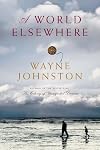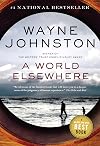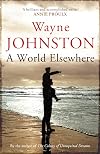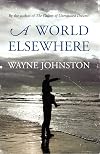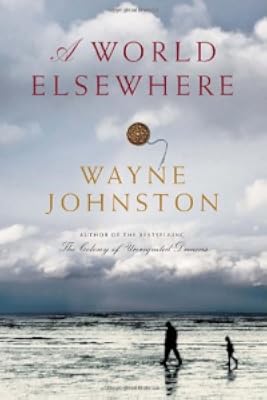
A World Elsewhere
by Wayne Johnston
On This Page
Description
"A World Elsewhere has all the hallmarks of Wayne Johnston's most beloved and acclaimed novels: outsiders yearning for acceptance, dreams that threaten to overpower their makers, and unlikely romance. It is an astounding work of literature that questions the loyalties of friends, family and the heart. At the centre of this story is a mystery: the suspected murder of a child. This sweeping tale immerses us in St. John's, Princeton and North Carolina at the close of the nineteenth century. show more Landish Druken is a formidable figure: broader than most doorways, quick-witted and sharp-tongued. As a student at Princeton, he is befriended by George Vandermill, son of one of the wealthiest men in America. Years later, when Landish and his adopted son turn to Vandermill for help, he invites them to his self-constructed castle and pulls them into his web of lies and deceit. "--Fantastic Fiction. show lessTags
Recommendations

















Member Reviews
Another great read from Wayne Johnston. This is a story of the relationships of fathers and sons -- chosen, dysfunctional, unacknowledged. It's a story about the corruption of money, and the corruption of poverty. How we can be prisoners of our own minds, or of someone else's conceptions of us. Very powerful themes.
The character of Van is especially well revealed. I found myself feeling a wide range of emotions for him as his story unfolded...eventually turning almost 180 degrees and then partly (minimally) back again.
And the wordplay! A meagre meal described as "sham chowder and lack of lamb". Stewards who serve stew. Broth fresh from the brothel. The Victorian error. Cain Unable. A real delight for any word lover.
The character of Van is especially well revealed. I found myself feeling a wide range of emotions for him as his story unfolded...eventually turning almost 180 degrees and then partly (minimally) back again.
And the wordplay! A meagre meal described as "sham chowder and lack of lamb". Stewards who serve stew. Broth fresh from the brothel. The Victorian error. Cain Unable. A real delight for any word lover.
Landish B. Druken is a struggling Newfoundland writer who adopts Deacon, a child whose father died while sealing with Landish's father. Destitute because he is disowned by his father for not taking up sealing, Landish contacts his one-time friend, the ultra-wealthy Padget (Van) Vanderluyden, for help. Their friendship ended because of a plagiarism scandal in Princeton but their relationship, albeit a toxic one, is resumed when Van "rescues" Landish and Deacon by bringing them to Vanderland, his great American castle in North Carolina. (Yes, the Vanderbilt's Biltmore is the inspiration.)
Landish is totally unsuccessful as a novelist; he made a vow to "'write a book that will put in their places everyone who has ever lived'" (1) but show more "Landish wrote every night, and every night burned what he wrote because it wasn't good enough" (10). His best stories are those he tells Deacon to explain the world. For example, he explains the duties of a ship's crew: ". . . the men in charge of engines had what were known as 'engine ears,' which meant that they were deaf from the noise the engines made. Also there were pursers who made sure that no one's purse was stolen. There were men called stewards who were in charge of serving stew. And other men called porters who were in charge of serving port" (109). Landish is a drunkard and wastrel, but one cannot but admire his quick wit, and his love for Deacon is certainly a redeeming quality.
Van, on the other hand, is an emotional cripple. He is a totally selfish man who sees people as possessions which he can control with his money. He will stop at nothing to get what or who he wants. In Princeton he devises a scheme to have Landish expelled in the hopes that Landish will then have no choice but to join him as his "'lifelong guest'" (22) in the Vanderland he proposes to build. When the two are eventually reunited, Van tells Landish, "'You may not leave Vanderland for any reason without my permission . . .'" (138). Likewise, he keeps his daughter a prisoner: "'[Godwin] has lived all her life at Vanderland and will not leave it, not even for a minute, until she is twenty-one . . . '" (138). Deceit, bribery and blackmail are techniques he employs with skill.
A major theme is father-son relationships. Van's father rarely spoke to him and treated him with scorn when he did; he even left him only one-tenth of what the other children received. Abram Druken disowns Landish and bequeaths him only a whitecoat hat. It is the relationship between Landish and Druken that seems to be the exception.
The outstanding quality of the book is its prose. Anagrams, puns, rhymes and neologisms abound. Food is a pre-occupation when Landish and Deacon have barely enough to survive; to take his mind off his hunger pangs, Landish makes up food puns: "The Merchant of Venison. Broth fresh from the brothel. A sacrificial lamb was a mutton for punishment. . . . He would write Van and tell him they had dined tonight on Sham Chowder, Lack of Lamb, Crazed Ham and Duck a Mirage. Steam of Mushroom Soup and Perish Jubilee" (52). Landish's description of the stages of life is ingenious: "You go from the Womb of Time into the womb of your mother and from there into the world. The world leads to the Tomb of Time, the place from which no one knows the way back home. . . . [Y]ou passed from the Womb of Time into what he called your birth 'Murk,' which was the interval between your 'commencement screech' and the first moment of your life that you remembered. . . . Landish also told Deacon about Just Mist - the realm of things that at one time were possible but had never happened" (35 - 37).
It is this wonderful prose that makes the book worthy of reading. It is not my favourite of Johnston's books, but I would recommend it for its wonderful playfulness with language. show less
Landish is totally unsuccessful as a novelist; he made a vow to "'write a book that will put in their places everyone who has ever lived'" (1) but show more "Landish wrote every night, and every night burned what he wrote because it wasn't good enough" (10). His best stories are those he tells Deacon to explain the world. For example, he explains the duties of a ship's crew: ". . . the men in charge of engines had what were known as 'engine ears,' which meant that they were deaf from the noise the engines made. Also there were pursers who made sure that no one's purse was stolen. There were men called stewards who were in charge of serving stew. And other men called porters who were in charge of serving port" (109). Landish is a drunkard and wastrel, but one cannot but admire his quick wit, and his love for Deacon is certainly a redeeming quality.
Van, on the other hand, is an emotional cripple. He is a totally selfish man who sees people as possessions which he can control with his money. He will stop at nothing to get what or who he wants. In Princeton he devises a scheme to have Landish expelled in the hopes that Landish will then have no choice but to join him as his "'lifelong guest'" (22) in the Vanderland he proposes to build. When the two are eventually reunited, Van tells Landish, "'You may not leave Vanderland for any reason without my permission . . .'" (138). Likewise, he keeps his daughter a prisoner: "'[Godwin] has lived all her life at Vanderland and will not leave it, not even for a minute, until she is twenty-one . . . '" (138). Deceit, bribery and blackmail are techniques he employs with skill.
A major theme is father-son relationships. Van's father rarely spoke to him and treated him with scorn when he did; he even left him only one-tenth of what the other children received. Abram Druken disowns Landish and bequeaths him only a whitecoat hat. It is the relationship between Landish and Druken that seems to be the exception.
The outstanding quality of the book is its prose. Anagrams, puns, rhymes and neologisms abound. Food is a pre-occupation when Landish and Deacon have barely enough to survive; to take his mind off his hunger pangs, Landish makes up food puns: "The Merchant of Venison. Broth fresh from the brothel. A sacrificial lamb was a mutton for punishment. . . . He would write Van and tell him they had dined tonight on Sham Chowder, Lack of Lamb, Crazed Ham and Duck a Mirage. Steam of Mushroom Soup and Perish Jubilee" (52). Landish's description of the stages of life is ingenious: "You go from the Womb of Time into the womb of your mother and from there into the world. The world leads to the Tomb of Time, the place from which no one knows the way back home. . . . [Y]ou passed from the Womb of Time into what he called your birth 'Murk,' which was the interval between your 'commencement screech' and the first moment of your life that you remembered. . . . Landish also told Deacon about Just Mist - the realm of things that at one time were possible but had never happened" (35 - 37).
It is this wonderful prose that makes the book worthy of reading. It is not my favourite of Johnston's books, but I would recommend it for its wonderful playfulness with language. show less
This book was witty and it treated the business of life in the book with humour. Although it is not the best writing I have read, it was a good read, and the story was heartwarming. It took place in Newfoundland and North Carolina in the late 1890's .
An absolutely unique read. The main characters Landish B Druken and his Princeton friend/nemesis Padgett Vanderluyden- "Van", are both dismissed by their fathers and seek recognition on their own merits. Landish, seeks to become a novelist but succeeds only in writing and burning every page he writes, and adopting the son of a whaler whose death is the responsibility of his father. "Van" designs and has built an enormous estate in North Carolina which he calls Vanderworld. The humour and play on words is hysterical. The last part of the book holds together best. Worth reading for the experience, the freshness of the characters and the unlikeliness of their situations.
Landish Druken is from Newfoundland and, while attending Princeton, meets George Vanderluyden. They have a falling out, but years later, Vanderluyden has since built a mansion, is married, and has a daughter. He takes in Landish and the boy Landish has taken in, Deacon.
I have to admit to being quite distracted as I read the first 2/3 of the book, so I know I missed some things. For the first 1/3 of the book, I kept reading Landish’s last name as “Drunken”. Oops! It got better (though still wasn’t terribly exciting) for the last 1/3 of the book, when I was able to better focus on it. There were a few twists at the end.
I actually smiled at the dedication and the acknowledgments: I knew his parents and it was dedicated “in show more loving memory” of them. I was a good friend of his youngest sister so have met some of her siblings, as well (all mentioned in the acknowledgments), though I’ve never met Wayne. Of course, that’s just a personal reaction to those parts of the book that really don’t have to do with the book itself! show less
I have to admit to being quite distracted as I read the first 2/3 of the book, so I know I missed some things. For the first 1/3 of the book, I kept reading Landish’s last name as “Drunken”. Oops! It got better (though still wasn’t terribly exciting) for the last 1/3 of the book, when I was able to better focus on it. There were a few twists at the end.
I actually smiled at the dedication and the acknowledgments: I knew his parents and it was dedicated “in show more loving memory” of them. I was a good friend of his youngest sister so have met some of her siblings, as well (all mentioned in the acknowledgments), though I’ve never met Wayne. Of course, that’s just a personal reaction to those parts of the book that really don’t have to do with the book itself! show less
A book by a Canadian Author, this was on the list for one of the book prizes, Giller i think. It's about two men, Landish and Padget (Van) Vanderluyden who meet at Princeton just at the end of the 19th century. Landish comes from Newfoundland and Van is rich, based on one of the Vanderbilts. Van and Landish are close but Van seems to use that friendship. Van is spoiled and selfish and Landish is a bit of a hanger on and a bit over fond of the drink but otherwise not a bad fellow. Van's actions cause Landish to be expelled and he goes back to St. John's but since he will not follow in his father's footsteps and become a fishermen on the seal boats, he is disowned. His father is responsible for the death of some of his crew and one of show more them has a little boy. Landish feels somewhat responsible and when the boy's mother dies, he takes the child in though he is barely able to feed himself let alone take care of a child.
They are very poor but manage to get on. Soon, however, he's desperate enough to write to Van for help. He is refused at first and then is sent tickets on a ship and train to come to the huge estate Van has built in North Carolina, called Vanderland, based on the Biltmore estate the Vanderbilts built. He is beholden to Van and is one of a band of tutors that live there to teach Van's little girl. The little boy, Deacon, takes classes with her.
The book has a lot of father-son themes running through it, not just about Deacon and Landish but the relationships the two men had with their fathers also plays an important part in their lives. The book is well written though there's not a huge amount of plot. Lots of play with words and expressions and the characters are drawn quite well. show less
They are very poor but manage to get on. Soon, however, he's desperate enough to write to Van for help. He is refused at first and then is sent tickets on a ship and train to come to the huge estate Van has built in North Carolina, called Vanderland, based on the Biltmore estate the Vanderbilts built. He is beholden to Van and is one of a band of tutors that live there to teach Van's little girl. The little boy, Deacon, takes classes with her.
The book has a lot of father-son themes running through it, not just about Deacon and Landish but the relationships the two men had with their fathers also plays an important part in their lives. The book is well written though there's not a huge amount of plot. Lots of play with words and expressions and the characters are drawn quite well. show less
A tale of a sealer's son from Newfoundland at the turn of the
A tale set in late 1890's of a sealer's son from Newfoundland who meets a wealth man when they attend Princeton together. The story revolves around their relationship and betrayal by the wealthy man and how they continue to be in each other's lives to the detriment of both.
A tale set in late 1890's of a sealer's son from Newfoundland who meets a wealth man when they attend Princeton together. The story revolves around their relationship and betrayal by the wealthy man and how they continue to be in each other's lives to the detriment of both.
Members
- Recently Added By
Lists

Favourite Books
1,820 works; 316 members
Author Information

14+ Works 3,105 Members
Wayne Johnston was born in Goulds, Newfoundland in 1958. He graduated with a B.A. in English from Memorial University of Newfoundland in 1978. He worked from 1978-1981 as a newspaper reporter with the St. John's Daily News. In 1981, he decided to write fiction full-time. In 1983, he graduated with an M.A. in creative writing from the University of show more New Brunswick. His first book, The Story of Bobby O'Malley, won the W.H. Smith/Books in Canada First Novel Award in 1985. His other works include The Divine Ryans, which won the 1991 Thomas Head Raddall Award and was adapted into a movie, Baltimore's Mansion, which won the Charles Taylor Prize, The Colony of Unrequited Dreams, The Navigator of New York, and The Custodian of Paradise. (Bowker Author Biography) Wayne Johnston was born and raised in Newfoundland and now lives in Toronto. show less
Awards and Honors
Awards
Distinctions
Common Knowledge
- Original publication date
- 2011
- People/Characters
- Landish Druken; Deacon Carson Druken; Van; Godwin
- Important places
- Newfoundland, Canada; North Carolina, USA; Princeton University, Princeton, New Jersey, USA
- Epigraph
- In loving memory of my Mom and Dad: Jennie Johnston and Arthur Johnston.
- First words
- Landish Druken lived in the two-room attic of a house near the end of Dark Marsh Road that was in no way remindful of any other place he'd ever lived.
- Last words
- (Click to show. Warning: May contain spoilers.)After reading them aloud to Esse as Deacon slept, he stored them in the box with Gen of Eve and Captain Druken's hat.
- Blurbers
- Walsh, Mary; Ford, Richard; Proulx, Annie; Ferguson, Will; Dillard, Annie
Classifications
- Genres
- General Fiction, Fiction and Literature, Historical Fiction
- DDC/MDS
- 813.54 — Literature & rhetoric American literature in English American fiction in English 1900-1999 1945-1999
- LCC
- PR9199.3 .J599 .W67 — Language and Literature English English Literature English literature: Provincial, local, etc.
- BISAC
Statistics
- Members
- 133
- Popularity
- 244,888
- Reviews
- 7
- Rating
- (3.46)
- Languages
- English
- Media
- Paper, Ebook
- ISBNs
- 7
- ASINs
- 2