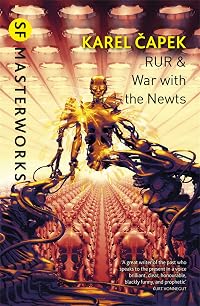
RUR & War with the Newts
by Karel Čapek
On This Page
Description
Written against the background of the rise of Nazism, War With the Newts concerns the discovery in the South Pacific of a sea-dwelling race, which is enslaved and exploited by mankind. In time they rebel, laying siege to the strongholds of their former masters in a global war for supremacy. R.U.R., or Rossum's Universal Robots, seen by many as a modern interpretation of the 'golem' myth, is regarded as the most important play in the history of SF. It introduced the word 'robot' and gave the show more genre one of its most enduring tropes. show lessTags
Recommendations





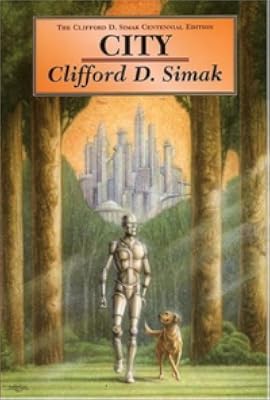
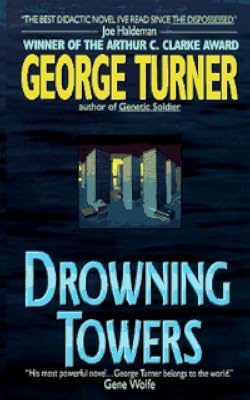
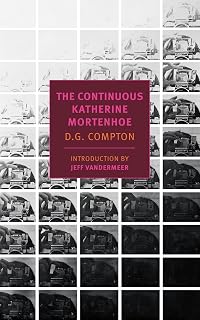
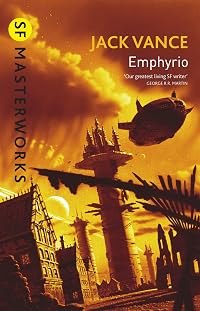


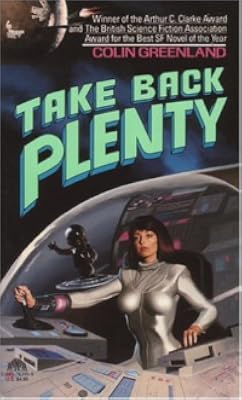
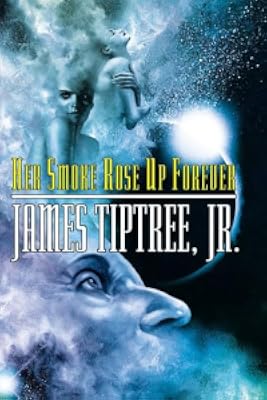

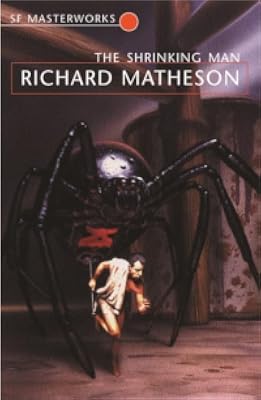
Member Reviews
I really enjoyed 'R.U.R.'. It surely is a naïve play with a simplistic plot and one-dimensional characters but, it's playful, witty, fun and highly entertaining. I don't know if Capek wanted here to raise an alarm or if, on the contrary, he just wanted to dabble and amuse himself with the usual technophobic fears. In any case he managed to pack into a few pages and in a fun way some serious questions about technological progress, its means, and possible (I personally don't think so, but?) consequences. Here are indeed some clever darts being thrown around and, it would be a pity to miss such a read.
'War with the Newts' is in the same vein -an humour both dark and plain silly serving an intelligent satire. Written during the rise of show more Nazism and its obsession with 'lebensraum', it's also a merciless slap into greed's face and what capitalism's worst aspects have to offer. The human race itself is here not portrayed kindly! It's too long at times but, Capek had so much fun writing it (it feels on every page!) that it always remains entertaining.
Don't be fooled by its omnipresent humour (at turns dark or quite childish), here's the work of a writer who knows how to make his readers laugh while, at the same time, giving them food for thoughts. Highly recommended! show less
'War with the Newts' is in the same vein -an humour both dark and plain silly serving an intelligent satire. Written during the rise of show more Nazism and its obsession with 'lebensraum', it's also a merciless slap into greed's face and what capitalism's worst aspects have to offer. The human race itself is here not portrayed kindly! It's too long at times but, Capek had so much fun writing it (it feels on every page!) that it always remains entertaining.
Don't be fooled by its omnipresent humour (at turns dark or quite childish), here's the work of a writer who knows how to make his readers laugh while, at the same time, giving them food for thoughts. Highly recommended! show less
Imagine that a new species of animal life was discovered that lived in the ocean but could adapt to working on land. It could walk upright and its small forepaws could carry out most tasks done by humans; it was super intelligent, could talk and was only too pleased to be trained for work. What would happen to it? Karel Carpek writing in the 1930’s imagined that it would be exploited unmercifully both for its commercial value and for its potential as an armed warrior and I think that would be no different today in the 21st century and so this satirical novel has not lost much of its edge.
Satire needs to be amusing if not down right “laugh out loud” funny and War with the Newts is both of these things and for the most part has a show more lightness of touch that makes it fun to read. It has moments of pathos, it has a little adventure, but once the Dutch Captain van Toch (the discoverer of the newts) disappears from the scene and the story opens up, then the book feels a little episodic. Capek’s attempt to hold it all together with the Povondra family is only partially successful, but this is not really the point because we are enthralled by the full-on satire and wonder where Capek will take us next. He has all the world and all of civilisation to aim at and he gives both a sound drubbing. Nationalism, commercial exploitation, sexuality, muddled thinking especially among scientists and academics and the recording of history are hot topics that feature throughout the book.
The story of the War with the Newts we learn has come to us from Mr Povondra’s mania for collecting information:
“As is well known, all collectors are prepared to steal or murder if it is a question for their collection; but this does not lower their moral character in the least.”
It comprised of newspaper clippings, but Mr Povondra was no academic and he did not know exactly what he was collecting, which was especially true of the foreign articles. He also tended to keep longer articles because they seemed more important; short notes he threw away. He soon ran out of room and his wife got fed up with the clutter and so she would from time to time go to the files that bulged the most and throw away items to make more room. Is this how history is recorded? one wonders.
Rich satire indeed on the human condition and it stretches to plenty of footnotes concerning individual items that appear below the story line and some of these are the funniest things in the novel.
The SF Masterworks edition also includes Capeks short play R.U.R.(Rossum’s Universal Robots) written in 1920 some 16 years earlier than War with the Newts. It is famous for introducing the word “robot” and tells the story of the manufacture of Robot machines that soon spiralled out of control so that the robots took over the world. Again it is both funny and satirical and charmingly takes place in a suite of rooms above the robot factory.
This is science fiction for readers who don’t like science fiction, hugely enjoyable and great fun 4 stars. show less
Satire needs to be amusing if not down right “laugh out loud” funny and War with the Newts is both of these things and for the most part has a show more lightness of touch that makes it fun to read. It has moments of pathos, it has a little adventure, but once the Dutch Captain van Toch (the discoverer of the newts) disappears from the scene and the story opens up, then the book feels a little episodic. Capek’s attempt to hold it all together with the Povondra family is only partially successful, but this is not really the point because we are enthralled by the full-on satire and wonder where Capek will take us next. He has all the world and all of civilisation to aim at and he gives both a sound drubbing. Nationalism, commercial exploitation, sexuality, muddled thinking especially among scientists and academics and the recording of history are hot topics that feature throughout the book.
The story of the War with the Newts we learn has come to us from Mr Povondra’s mania for collecting information:
“As is well known, all collectors are prepared to steal or murder if it is a question for their collection; but this does not lower their moral character in the least.”
It comprised of newspaper clippings, but Mr Povondra was no academic and he did not know exactly what he was collecting, which was especially true of the foreign articles. He also tended to keep longer articles because they seemed more important; short notes he threw away. He soon ran out of room and his wife got fed up with the clutter and so she would from time to time go to the files that bulged the most and throw away items to make more room. Is this how history is recorded? one wonders.
Rich satire indeed on the human condition and it stretches to plenty of footnotes concerning individual items that appear below the story line and some of these are the funniest things in the novel.
The SF Masterworks edition also includes Capeks short play R.U.R.(Rossum’s Universal Robots) written in 1920 some 16 years earlier than War with the Newts. It is famous for introducing the word “robot” and tells the story of the manufacture of Robot machines that soon spiralled out of control so that the robots took over the world. Again it is both funny and satirical and charmingly takes place in a suite of rooms above the robot factory.
This is science fiction for readers who don’t like science fiction, hugely enjoyable and great fun 4 stars. show less
Brilliant. Finally got to read the coining term Robot book. Surprised it was a play in 4 acts, and very short, but so effective. Made me think of the Henry Ford production lines, the mass production and perfection of androids to eliminate work for the humans; and the danger (like the result of cars causing pollution to kill off the planet), the robots in 20 years caused the destruction of humankind, but a flame of hope remained as the latest androids produced, Primus and Helena, showed human feelings, so although man would no longer exist, perhaps the shadow of man could still live on. There was something of an Oscar Wilde - element to the play, with things going on behind the scenes that were talked about in the stage settings, and the show more viewers knowing already the main female human had destroyed the blue-prints to the robots before the other humans declared the blueprints were their only hope to save humankind. A tragic but hopeful story. Powerful and prophetic. I particulary loved the way the robots were engineered organically, so the better models could be mistaken for humans show less
Ratings
Members
- Recently Added By
Lists

SF Masterworks
193 works; 8 members

SF & Fantasy in Translation
95 works; 18 members

S.F. Masterworks (Complete)
229 works; 15 members
Author Information

255+ Works 7,160 Members
Karel Capek is best known abroad for his plays, but at home he is also revered as an accomplished novelist, short-story writer, essayist, and writer of political articles. His bitingly satirical novel The War with the Newts (1936) reveals his understanding of the possible consequences of scientific advance. The novel Krakatit (1924), about an show more explosive that could destroy the world, foreshadows the feared potential of a nuclear disaster. In his numerous short stories he depicts the problems of modern life and common people in a humorous and whimsically philosophical fashion. The plays of Karel Capek presage the Theater of the Absurd. R.U.R. (Rossum's Universal Robots) (1921) was a satire on the machine age. He created the word robot from the Czech noun robota, meaning "work" for the human-made automatons who in that play took over the world, leaving only one human being alive. The Insect Comedy (1921), whose characters are insects, is an ironic fantasy on human weakness. The Makropoulos Secret (1923), later used as the basis for Leos Janacek's opera, was an experimental piece that questioned whether immortality is really desirable. All the plays have been produced successfully in New York. Most deal satirically with the modern machine age or with war. Underlying all his work, though, is a faith in humanity, truth, justice, and democracy, which has made him one of the most beloved of all Czech writers. (Bowker Author Biography) show less
All Editions
Series
Belongs to Publisher Series
SF Masterworks (New design)
Work Relationships
Contains
Common Knowledge
- Canonical title
- RUR & War with the Newts
- Original publication date
- 1920 (RUR) (RUR); 1936 (War with the Newts) (War with the Newts); 2011 (Gollancz omnibus) (Gollancz omnibus)
- Original language
- Czech
Classifications
- Genres
- Science Fiction, Fiction and Literature
- DDC/MDS
- 891.8625 — Literature & rhetoric Literatures of other languages East Indo-European and Celtic literatures West and South Slavic languages (Bulgarian, Slovene, Polish, Czech, Slovak, Serbo-Croatian, and Macedonian) Czech Czech drama 1900–1989
- LCC
- PG5038 .C3 .A2 — Language and Literature Slavic languages and literatures. Baltic languages. Albanian language Slavic. Baltic. Albanian Slavic Czech
- BISAC
Statistics
- Members
- 146
- Popularity
- 224,403
- Reviews
- 3
- Rating
- (3.71)
- Languages
- English
- Media
- Paper
- ISBNs
- 1
- ASINs
- 1