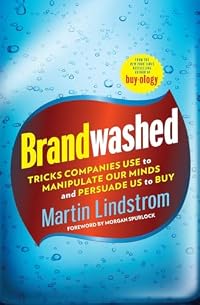
Brandwashed: Tricks Companies Use to Manipulate Our Minds and Persuade Us to Buy
by Martin Lindstrom
On This Page
Description
From the bestselling author of Buyology comes a shocking insider's look at how today's global giants conspire to obscure the truth and manipulate our minds, all in service of persuading us to buy.Marketing visionary Martin Lindstrom has been on the front lines of the branding wars for over twenty years. Here, he turns the spotlight on his own industry, drawing on all he has witnessed behind closed doors, exposing for the first time the full extent of the psychological tricks and traps that show more companies devise to win our hard-earned dollars.
Picking up from where Vance Packard's bestselling classic, The Hidden Persuaders, left off more than half-a-century ago, Lindstrom reveals how advertisers and corporations:
• Intentionally target children at an alarmingly young age
• Stoke the flames of public panic and capitalize on paranoia over global contagions, extreme weather events, and food contamination scares.
• Are secretly mining our digital footprints to uncover some of the most intimate details of our private lives
• Purposely adjust their formulas in order to make their products chemically addictive
• And much, much more.
This searing expose introduces a new class of tricks, techniques, and seductions—the Hidden Persuaders of the 21st century—and shows why they are more insidious and pervasive than ever. show less
Tags
Recommendations









Member Reviews
I have a lot of criticisms of this, but I'll stick with my gravest. First, the way Lindstrom interprets psychological and other research doesn't always match how I'd interpret it. For example, if you were to hook me up to a plethysmograph (you can't, but that's not the point), you might find that I was physiologically aroused by a stimulus. That's a far different phenomenon than my acting on that arousal. Lindstrom consistently conflates the two. Second, his idea of consumers as essentially mindless bumpkins who are easily suckered and misled doesn't inspire my trust his motives. Third, based on this world view, Lindstrom assigns warrantless motivations to consumers. For example, he asserts that we don't choose the first item from a show more shelf but reach behind it for the second because we think it's cleaner. To test this hypothesis, I surveyed random family members and friends in situ at the grocery. I didn't interview those who took the first item. They are evidently outliers, even though it was true of most of them. I asked those who reached behind for the second item why they were doing so. Nobody said it was because it was cleaner. For perishables, they said it was because items with a longer time to pull date were further back. For shelved items, they said it was because the ones in the front were dented or dinged (which they were). The only person to cite cleanliness pointed out the filthy children being allowed to paw at the lower cans and boxes. I'd like a million dollars for my fab-o study, please.
There's not a lot here that's not obvious or that you didn't read in an expose 40 years ago. Producers want to sell things. Advertisers misrepresent their products. I'm as easy to influence as anybody, but my behaviors aren't those of Lindstrom's herds of moo-cow consumers who don't seem to read the labels or Consumer Reports, or consider whether products actually work. show less
There's not a lot here that's not obvious or that you didn't read in an expose 40 years ago. Producers want to sell things. Advertisers misrepresent their products. I'm as easy to influence as anybody, but my behaviors aren't those of Lindstrom's herds of moo-cow consumers who don't seem to read the labels or Consumer Reports, or consider whether products actually work. show less
“Still, nothing is as wildly age-inappropriate as a toy that Tesco, the UK retailer, released in 2006: the Peekaboo Pole Dancing Kit, a pole-dancing play set marketed to females under ten—as something that will help them “unleash the sex kitten inside.”
This is the most disturbing example of marketing gone to a gross extreme in this book, but it’s far from the only one. Lindstrom tells the story of how marketing takes advantage of understanding the brain to push your buttons and sell products. He starts with research indicating that you can start to form brand attachments by babies in utero and continues with efforts grooming kids into perfect little customers, and influencers of parent purchases, before getting into how they show more target adults.
Then, while this book is about a decade old at this point, he starts to discuss all the ways big companies are tracking you with technology. Many more people are aware of some of the ways big data is used for advertising now, but it’s likely you’ll learn things about how deep those tentacles go reading this book as well, even though it’s starting to slow its age a little.
Finally, he discusses an experiment where he set up a family in a new neighborhood to test the efficacy of guerrilla word of mouth marketing to friends and neighbors. This also serves to demonstrate why astroturfing is such big business in the tech driven world of today.
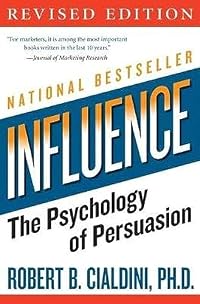
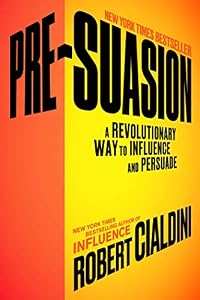
As it’s partly driven by his personal involvement in the industry, not every claim is sourced to academic research, but a decent bit is. For additional science backed information on the subject, Influence or Presuasion by Robert Cialdini are the way to go, but Lindstrom’s insider perspective is worth reading as well.
Very good book. You’ll find it disturbing, but knowing is the only way to protect yourself from manipulation. show less
This is the most disturbing example of marketing gone to a gross extreme in this book, but it’s far from the only one. Lindstrom tells the story of how marketing takes advantage of understanding the brain to push your buttons and sell products. He starts with research indicating that you can start to form brand attachments by babies in utero and continues with efforts grooming kids into perfect little customers, and influencers of parent purchases, before getting into how they show more target adults.
Then, while this book is about a decade old at this point, he starts to discuss all the ways big companies are tracking you with technology. Many more people are aware of some of the ways big data is used for advertising now, but it’s likely you’ll learn things about how deep those tentacles go reading this book as well, even though it’s starting to slow its age a little.
Finally, he discusses an experiment where he set up a family in a new neighborhood to test the efficacy of guerrilla word of mouth marketing to friends and neighbors. This also serves to demonstrate why astroturfing is such big business in the tech driven world of today.
As it’s partly driven by his personal involvement in the industry, not every claim is sourced to academic research, but a decent bit is. For additional science backed information on the subject, Influence or Presuasion by Robert Cialdini are the way to go, but Lindstrom’s insider perspective is worth reading as well.
Very good book. You’ll find it disturbing, but knowing is the only way to protect yourself from manipulation. show less
There is an oft-cited study of children in which they were offered identical meals — a hamburger, carrot sticks, a beverage — but one wrapped in plain packaging and one wrapped in McDonald’s packaging. The children chose the branded items over the plainly packaged items, claiming that they tasted better, despite the fact that the items were identical. In his book, “Brandwashed: Tricks Companies Use to Manipulate Our Minds and Persuade Us to Buy,” industry expert Martin Lindstrom, who has been involved in many a marketing campaign, examines the subtle and not-so-subtle ways that marketers and companies trick consumers into thinking they are making choices on their own and subverting “the man.” He begins with a well-used show more tactic for books on consumer culture — a “detox” in which he swears off all branded items for a certain period of time, and, predictably, fails. As is par for this type of book, Lindstrom segments his topic into chapters on marketing to children, using sex as a selling point, target markets and customized ads, online advertising and data mining, and so forth. Other topics that Lindstrom address include that of nostalgia marketing and the creation of addictive properties in products. One of the most interesting sections in the book details an experiment that Lindstrom conducted; he chose a young woman who worked behind the scenes at NBC’s Today, outfitted her with the trappings of a celebrity, including make-up, hair, a designer handbag and a fluffy dog, and put her outside Saks Fifth Avenue with a fake entourage. Almost immediately, a crowd was drawn to her, asking for her autograph and talking about having seen her perform — despite the fact that she had never been on stage, performed, or done any of the things which they claimed for her. Along these same lines, Lindstrom plants a family in a southern California community for the express purpose of seeing how much they can influence the buying and consuming habits of those around them — and in conclusion, makes the argument that the path to a more educated, responsible consumption can only come about through peer pressure and setting good examples in the community.
Although most of what he writes about has been covered in individual books already, Lindstrom writes in witty and engaging prose, not blaming the consumer for having bought into the marketers’ tricks, but rather in an attempt to educate and enlighten. As someone who does not often buy branded merchandise anyway, I found this to be a fascinating look at how marketers and corporations manipulate even the most savvy consumers — myself included. The concluding remarks do come up rather abruptly, with the argument about responsible consumption seeming rather broad, and really needing an entire book to unpack. This book, with its many references to current and prominent campaigns, companies, and celebrities, may not age well, although its overarching points should remain relevant for some time. show less
Although most of what he writes about has been covered in individual books already, Lindstrom writes in witty and engaging prose, not blaming the consumer for having bought into the marketers’ tricks, but rather in an attempt to educate and enlighten. As someone who does not often buy branded merchandise anyway, I found this to be a fascinating look at how marketers and corporations manipulate even the most savvy consumers — myself included. The concluding remarks do come up rather abruptly, with the argument about responsible consumption seeming rather broad, and really needing an entire book to unpack. This book, with its many references to current and prominent campaigns, companies, and celebrities, may not age well, although its overarching points should remain relevant for some time. show less
This book is not for the faint-hearted! It was distressing to hear about how gullible and naive people are, perhaps at times (but rarely) me included. Lindstrom wrote this book to educate buyers/shoppers to be wary of the tricks marketers use to make us buy and buy more of what they are selling; but my take is this - if people are really this stupid and slave to their own senses, perhaps there is nothing wrong with taking advantage of them.
Like I said, the book is distressing. No, it's frustrating to read page after page thinking to yourself, "who falls for that crap? and why?" (at least I did). If someone did and FMRI on my brain right now, most likely the parts of my brain that lit up were the same as those that might have lit up when show more you see someone cross the road without even passing a glance at the oncoming car.
However, the book is a good read. It is well documented with examples, studies and psychological and neurological biases that people have. And it opened my eyes to a few things that I have fallen prey to. I'd say its a book that every person with a shopping crave must read! show less
Like I said, the book is distressing. No, it's frustrating to read page after page thinking to yourself, "who falls for that crap? and why?" (at least I did). If someone did and FMRI on my brain right now, most likely the parts of my brain that lit up were the same as those that might have lit up when show more you see someone cross the road without even passing a glance at the oncoming car.
However, the book is a good read. It is well documented with examples, studies and psychological and neurological biases that people have. And it opened my eyes to a few things that I have fallen prey to. I'd say its a book that every person with a shopping crave must read! show less
For years, I have tried to find a book that made me gasp as many times as Freaknomics did. I remember thinking about that book years after I read it...I’m still thinking about it now. I tried Super Freakanomics and other books that people thought were comparable but none of them made me gasp and do a triple take. None of them until “Brandwashing”. This book does for marketing and advertising what Freaknomics did for economics and Fast Food Nation did for food. It made my brain hurt in a way far surpassing the brain freeze of milkshakes and Slurpees. In fact, it has taken me over a week to even sit down to write this review because I have been too busy telling all of my friends to pre-order their copies!
Author Martin Lindstorm is a show more veteran advertising agents with clients that range from McDonald’s to Microsoft. It say that Lindstorm knows that ins-and-outs of marketing is to say that Steve Jobs can use a computer. Here he takes us behind the scenes to show the reader how companies use MRIs to figure out the areas in the brain that they want their marketing to hit. He tells of how advertising can affect use before we are even born; how smells that our mothers experienced when pregnant with us can condition us to buy certain detergents and eat certain foods. He explains why panic and fear sells more than happiness and peace. Lindstrom gives credence to the idea that people can be addicted to their smartphones and lip balm. Tactics of using nostalgia to buy a certain brand of soda or candy bar are explored. What does Justin Bieber and the British royal family have in common? They’re both brands that dictate our tastes and purchases. In his final chapter, Lindstrom carries through with an experiment like that in the movie “Jones” in which he has a family peddle certain items to their friends in an effort to see how keeping up with the Jones’ really works. Spoiler: it works!
I could go on for pages and pages about this book but at about 275 pages, this book can stand for itself. It reads like a thriller that you won’t be able to put down. Sadly, the horrors that are inflicted in the “story” are on us...the consumers. Just in case the reader doesn’t believe his theories, he backs them up with copious case studies. Once I finished this book, I immediately ran out and bought his other book (which I now know is a marketing ploy). I know people will be talking about this book for years to come. I know I will!
www.iamliteraryaddicted.blogspot.com show less
Author Martin Lindstorm is a show more veteran advertising agents with clients that range from McDonald’s to Microsoft. It say that Lindstorm knows that ins-and-outs of marketing is to say that Steve Jobs can use a computer. Here he takes us behind the scenes to show the reader how companies use MRIs to figure out the areas in the brain that they want their marketing to hit. He tells of how advertising can affect use before we are even born; how smells that our mothers experienced when pregnant with us can condition us to buy certain detergents and eat certain foods. He explains why panic and fear sells more than happiness and peace. Lindstrom gives credence to the idea that people can be addicted to their smartphones and lip balm. Tactics of using nostalgia to buy a certain brand of soda or candy bar are explored. What does Justin Bieber and the British royal family have in common? They’re both brands that dictate our tastes and purchases. In his final chapter, Lindstrom carries through with an experiment like that in the movie “Jones” in which he has a family peddle certain items to their friends in an effort to see how keeping up with the Jones’ really works. Spoiler: it works!
I could go on for pages and pages about this book but at about 275 pages, this book can stand for itself. It reads like a thriller that you won’t be able to put down. Sadly, the horrors that are inflicted in the “story” are on us...the consumers. Just in case the reader doesn’t believe his theories, he backs them up with copious case studies. Once I finished this book, I immediately ran out and bought his other book (which I now know is a marketing ploy). I know people will be talking about this book for years to come. I know I will!
www.iamliteraryaddicted.blogspot.com show less
In my opinion this book is about 80% "bull-hooey" and the rest is sort of interesting. I do believe that many companies have their devious ways to sucker the consumer into buying their products and a lot of the time they are very successful. It is a fact that these same companies do an unbelievable amount of data-mining (scary stuff) and know way too much about us, our families and our purchases. All of that is covered in this book and it makes for some interesting reading. However ----- some of the points Lindstrom tries to make are just mind-bogglingly outlandish. He states that most people who choose to own a Toyota Prius do so as a status symbol, not because they want to help the environment. Apparently everyone will look at a Prius show more owner and be full of admiration and good will even though said owner only wants the recognition. Lindstrom also says that most people only buy "green" when other people are looking; otherwise they will buy the cheap light bulbs, etc. Celebrity endorsements make people think they can be just like the celebrity if they buy that particular brand. Really? I will be gorgeous like Jennifer Lopez if I wear her perfume? I am not a 12 year old who needs a celebrity to tell me what I want. Just because Oprah recommends a book does not mean I will read it. I don't need a coach purse to carry my stuff and I don't care that people know I bought my purse at Kohl's. Yes, there certainly are people in this world who are enamored of anything with an exclusive brand name, but I don't think the majority of humanity is a herd of lemmings no matter what Lindstrom writes. show less
Lindstrom, a marketer with decades of experience at shaping the images of McDonald's, Microsoft and even an unnamed royal family (but you can guess who), explains how retailers get you to buy and how brands get you to buy their products. It even more invasive than you'd think. Lindstrom details the use of fear, peer pressure and nostalgia to sell things like iTunes downloads and soda, how the success of expensive fruits like acai and goji have been a result of marketing over science, how some grocery stores have your shopping cart wired to tell them everything you choose and how long you spend shopping, and that digital coupons and loyalty cards are sending your personal info to the stores permanent data banks.
This was published in show more 2011, so I don't know if all the procedures are still being used, but I would guess that the majority are. It's a very interesting subject and Lindstrom explains the marketing tactics very well. show less
This was published in show more 2011, so I don't know if all the procedures are still being used, but I would guess that the majority are. It's a very interesting subject and Lindstrom explains the marketing tactics very well. show less
Members
- Recently Added By
Lists

Best Library Reads of 2013
114 works; 1 member

Penguin Random House
458 works; 4 members
Author Information

12 Works 1,840 Members
Martin Lindstrom was born in Denmark in 1970. He is the author of Brand Building on the Internet, Clicks, Bricks and Brands, Brandchild: Insights into the Minds of Today's Global Kids: Understanding Their Relationship with Brands, Brandsense: Building Powerful Brands Through Touch, Taste, Smell, Sight & Sound, Buyology: The Truth About Why We Buy, show more Brandwash: Tricks Companies Use to Manipulate Our Minds and Persuade Us to Buy, and Small Data: The Tiny Clues that Uncover Huge Trends. He is a columnist for Fast Company, Time Magazine, and Harvard Business Review. His work can also be seen on NBC's Today show. He has appeared in a movie documentary and has made other movie and television appearances. In 2009, Time Magazine included him in their list of the top 100 Most Influential People in The World. He is the founding partner and Chairman of the Board of Buyology Inc. and Director of Brand Sense Agency. show less
Classifications
Statistics
- Members
- 366
- Popularity
- 85,394
- Reviews
- 23
- Rating
- (3.46)
- Languages
- 8 — Dutch, English, German, Italian, Portuguese (Portugal), Romanian, Slovenian, Spanish
- Media
- Paper, Audiobook, Ebook
- ISBNs
- 21
- ASINs
- 5