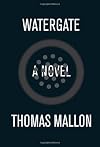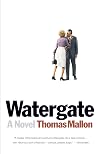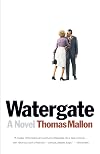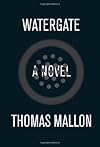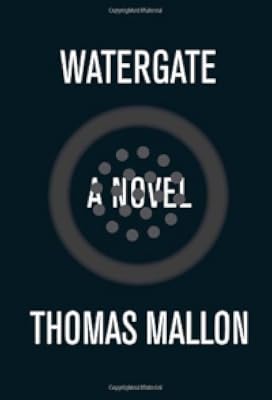
Watergate: A Novel
by Thomas Mallon
On This Page
Description
From one of our most esteemed historical novelists, a remarkable retelling of the Watergate scandal, as seen through a kaleidoscope of its colorful perpetrators and investigators.For all the monumental documentation that Watergate generated—uncountable volumes of committee records, court transcripts, and memoirs—it falls at last to a novelist to perform the work of inference (and invention) that allows us to solve some of the scandal’s greatest mysteries (who did erase those show more eighteen-and-a-half minutes of tape?) and to see this gaudy American catastrophe in its human entirety.
In Watergate, Thomas Mallon conveys the drama and high comedy of the Nixon presidency through the urgent perspectives of seven characters we only thought we knew before now, moving readers from the private cabins of Camp David to the klieg lights of the Senate Caucus Room, from the District of Columbia jail to the Dupont Circle mansion of Theodore Roosevelt’s sharp-tongued ninety-year-old daughter (“The clock is dick-dick-dicking”), and into the hive of the Watergate complex itself, home not only to the Democratic National Committee but also to the president’s attorney general, his recklessly loyal secretary, and the shadowy man from Mississippi who pays out hush money to the burglars.
Praised by Christopher Hitchens for his “splendid evocation of Washington,” Mallon achieves with Watergate a scope and historical intimacy that surpasses even what he attained in his previous novels, as he turns a “third-rate burglary” into a tumultuous, first-rate entertainment.
. show less
Tags
Recommendations















Member Reviews
(Writing this review as I watch the "Snowflake Day" episode of Daniel Tiger.) This is my favorite kind of historical fiction, that focuses more on the supporting cast. Reading Michael Shaara's _The Killer Angels_ in high school started my obsession with Civil War history, because of its insight into the lives of minor figures Joshua Chamberlain, Daniel Sickles, and James Longstreet. Mallon's _Watergate_ pays quite a lot of attention to Rosemary Woods (Nixon's secretary) and Fred LaRue, an advisor from the deep South with his own sordid past.
Mallon's Nixon is more sympathetic and inscrutable than one would expect, considering he is the main figure in this kind of stupid episode in American history. The entire scandal was predicated on a show more petty burglary, which is quaint considering the fraudsters and traitors currently in power, who seem intent on destroying our system of governance. There is no discussion 0f the tapes that revealed Nixon's (and Billy Graham's) anti-semitism and racism. Regardless, Mallon effectively captures the slowly building sense that the break-in, and ensuing coverup, would eventually topple Nixon's presidency. show less
Mallon's Nixon is more sympathetic and inscrutable than one would expect, considering he is the main figure in this kind of stupid episode in American history. The entire scandal was predicated on a show more petty burglary, which is quaint considering the fraudsters and traitors currently in power, who seem intent on destroying our system of governance. There is no discussion 0f the tapes that revealed Nixon's (and Billy Graham's) anti-semitism and racism. Regardless, Mallon effectively captures the slowly building sense that the break-in, and ensuing coverup, would eventually topple Nixon's presidency. show less
One would think that there is nothing new to say about the Watergate scandal, now ancient history to most Americans, but Thomas Mallon’s historical novel proves this point wrong by a considerable margin. His book, WATERGATE, is an utterly enthralling look back at events and a Presidency that altered American history forever, from some never before considered perspectives. Mallon’s book is a reimagining of the scandal, told from the view of many characters, all principle players to some extent in the scandal. I think the genius of the book is that Mallon creates fictional versions of Nixon and his people which seem totally real, they live and breathe and rage and hurt, all while feeling utter dismay that things have taken such a show more turn.
Mallon’s book is not a particularly long one and the narrative flows smoothly from one character to the next; this is not a “and then this happened” retelling of historical events, it does help if the reader has at least a working knowledge of the scandal and who was who and where they were at certain points in the story. Those unfamiliar with history may have to do a lot of wiki-ing before they reach the last page, but Mallon does provide a list of players at the beginning of his book that helps a lot.
What I found so striking about WATERGATE was Mallon’s sympathetic portrait of so many characters who have been written off as villains or worse, fools, by most historical accounts; he does not apologize for their actions or carry water like so many of the “Nixon didn’t do anything wrong” bitter enders, but lets us see them as they, perhaps, saw themselves. It is a refreshing take; one thankfully free of the snark and irony so prevalent in much contemporary political fiction.
In the pages of Mallon’s book, we meet a flawed Richard Nixon who lives in perpetual fear that his many, many enemies will yet find a way to bring him down, a fear that infected his White House and all who were part of his inner circle. There is a fascinating portrait of Pat Nixon, the woman who was always so reserved in public, never letting her mask slip, yet capable of surprising secrets in private. There is John and Martha Mitchell, an incredible mismatch of a marriage, one that crumbled under the weight of revelations of his criminal activities as head of Nixon’s re-election campaign. Equally memorable is Rose Mary Woods, Nixon’s long time and ever loyal secretary, the person responsible of the infamous 18 ½ minute gap on one Nixon’s incriminating tapes. Mallon comes up with a surprising and poignant explanation for this act and what was on the tape, one of the enduring mysteries of the 20th Century. Another interesting relationship explored is the marriage of outward tough guy E. Howard Hunt and his formidable wife, Dorothy, who skillfully negotiated with the men in the Nixon White House to get hush money for her family after her husband’s arrest for his role in the break in. Every reader’s favorite is Alice Roosevelt Longworth, the daughter of Theodore and Washington’s long time Grande Dame, who sees through everyone, yet holds a deep affection for Richard Nixon, whose act of kindness in an hour of need is not forgotten. Mallon does an exceptional job with his women characters, making them every bit as compelling as the men who were on the front pages.
Much space is given to Fred LaRue, the genial Southerner who became the White House’s bagman after the Watergate break in; in Mallon’s hands, this relativity minor character in history, takes front and center often in the narrative. Like many of the others involved in Watergate, LaRue simply cannot understand how his life, which was on such a successful trajectory, has taken such a wrong turn, but is helpless in the face of impending disaster as one illegal act and lie leads to another with the inevitable set down with the Federal Attorney waiting at the end. Like most of the characters in Mallon’s book, LaRue suppresses a private pain they would never dare show in public; only a brief reunion with long ago love offers him any solace as the firestorm engulfs the Nixon Administration.
If there is a real villain in this book, it is the fatuous Elliot Richardson, who thinks he will walk over Richard Nixon’s political corpse to the Oval Office.
I would never claim that Mallon’s book is history, there is plenty in the historical record that condemns Nixon and his crew as the most corrupt, venal and downright mean group of characters to ever hold power in America (and I include Donald Trump in that judgment), but as historical fiction, the book is of the highest order, making us see very familiar history in a different light. I am a self published author of two alternate history novels, both featuring a fictional Nixon among others, and I fully respect the hard work and attention to detail Thomas Mallon must have put in to write this book. All readers of good fiction should seek it show less
Mallon’s book is not a particularly long one and the narrative flows smoothly from one character to the next; this is not a “and then this happened” retelling of historical events, it does help if the reader has at least a working knowledge of the scandal and who was who and where they were at certain points in the story. Those unfamiliar with history may have to do a lot of wiki-ing before they reach the last page, but Mallon does provide a list of players at the beginning of his book that helps a lot.
What I found so striking about WATERGATE was Mallon’s sympathetic portrait of so many characters who have been written off as villains or worse, fools, by most historical accounts; he does not apologize for their actions or carry water like so many of the “Nixon didn’t do anything wrong” bitter enders, but lets us see them as they, perhaps, saw themselves. It is a refreshing take; one thankfully free of the snark and irony so prevalent in much contemporary political fiction.
In the pages of Mallon’s book, we meet a flawed Richard Nixon who lives in perpetual fear that his many, many enemies will yet find a way to bring him down, a fear that infected his White House and all who were part of his inner circle. There is a fascinating portrait of Pat Nixon, the woman who was always so reserved in public, never letting her mask slip, yet capable of surprising secrets in private. There is John and Martha Mitchell, an incredible mismatch of a marriage, one that crumbled under the weight of revelations of his criminal activities as head of Nixon’s re-election campaign. Equally memorable is Rose Mary Woods, Nixon’s long time and ever loyal secretary, the person responsible of the infamous 18 ½ minute gap on one Nixon’s incriminating tapes. Mallon comes up with a surprising and poignant explanation for this act and what was on the tape, one of the enduring mysteries of the 20th Century. Another interesting relationship explored is the marriage of outward tough guy E. Howard Hunt and his formidable wife, Dorothy, who skillfully negotiated with the men in the Nixon White House to get hush money for her family after her husband’s arrest for his role in the break in. Every reader’s favorite is Alice Roosevelt Longworth, the daughter of Theodore and Washington’s long time Grande Dame, who sees through everyone, yet holds a deep affection for Richard Nixon, whose act of kindness in an hour of need is not forgotten. Mallon does an exceptional job with his women characters, making them every bit as compelling as the men who were on the front pages.
Much space is given to Fred LaRue, the genial Southerner who became the White House’s bagman after the Watergate break in; in Mallon’s hands, this relativity minor character in history, takes front and center often in the narrative. Like many of the others involved in Watergate, LaRue simply cannot understand how his life, which was on such a successful trajectory, has taken such a wrong turn, but is helpless in the face of impending disaster as one illegal act and lie leads to another with the inevitable set down with the Federal Attorney waiting at the end. Like most of the characters in Mallon’s book, LaRue suppresses a private pain they would never dare show in public; only a brief reunion with long ago love offers him any solace as the firestorm engulfs the Nixon Administration.
If there is a real villain in this book, it is the fatuous Elliot Richardson, who thinks he will walk over Richard Nixon’s political corpse to the Oval Office.
I would never claim that Mallon’s book is history, there is plenty in the historical record that condemns Nixon and his crew as the most corrupt, venal and downright mean group of characters to ever hold power in America (and I include Donald Trump in that judgment), but as historical fiction, the book is of the highest order, making us see very familiar history in a different light. I am a self published author of two alternate history novels, both featuring a fictional Nixon among others, and I fully respect the hard work and attention to detail Thomas Mallon must have put in to write this book. All readers of good fiction should seek it show less
I guess you could call this historical fiction. It is a fictionalized retelling of the Watergate scandal, from the break-in of the Democratic Campaign Headquarters to the resignation of Richard Nixon from the presidency. The story is told from several unusual points of view, including Fred LaRue (the "bagman"--he distributed the hush money for the burglars to ensure their silence), E. Howard Hunt (the Republican aide in charge of the burglary, ex-CIA agent, and the link to the White House), Alice Roosevelt Longworth, Pat Nixon, Rosemary Woods, and others. All the larger than life characters are there: the out-of-control Martha Mitchell, the dour Henry Kissinger, the stern H.R. Haldeman. Each of the characters becomes human, and even show more Nixon is rather sympathetically portrayed. Unlike her public persona as "Plastic Pat", Pat Nixon is developed as a warm and loving woman, who incidentally is carrying on an affair. (This is one element that Mallon in the afterword points out was entirely made up by him.)
This entire novel--more fact than fiction--is entirely believable and despite the scandal's horror and tragedy at the time, the novel is strangely entertaining. It is plotted like an intricate thriller, moving seamlessly from one point of view character to the next. When Mallon fills in the blanks he comes up with entirely plausible theories and details. One caveat I have is that the novel assumes some background knowledge on the part of the reader, or at least a passing familiarity with the gist of the scandal. And, if you have a decent grasp of the facts, either from living through the scandal (as I did, spending the summer enthralled with the Watergate hearings), or from reading, it would seem to me that the novel would be so much more rewarding. For example, knowing how stunning the discovery of the 18 minute gap on the tapes (or even how stunning the discovery that Nixon secretly taped everything said in his office) would enhance a reader's appreciation of the explanation Mallon imagines for that erasure.
Highly recommended. show less
This entire novel--more fact than fiction--is entirely believable and despite the scandal's horror and tragedy at the time, the novel is strangely entertaining. It is plotted like an intricate thriller, moving seamlessly from one point of view character to the next. When Mallon fills in the blanks he comes up with entirely plausible theories and details. One caveat I have is that the novel assumes some background knowledge on the part of the reader, or at least a passing familiarity with the gist of the scandal. And, if you have a decent grasp of the facts, either from living through the scandal (as I did, spending the summer enthralled with the Watergate hearings), or from reading, it would seem to me that the novel would be so much more rewarding. For example, knowing how stunning the discovery of the 18 minute gap on the tapes (or even how stunning the discovery that Nixon secretly taped everything said in his office) would enhance a reader's appreciation of the explanation Mallon imagines for that erasure.
Highly recommended. show less
As a journalist, I’ve struggled in some previous attempts to immerse myself in historical fiction. The problem has been especially glaring when I delve into historical periods or events that I yearn to know more about.
Perhaps my problem could be best illustrated with an analogy. To me, devouring historical fiction can sometimes be similar to sitting down at a burger joint and having the chef tell you that the juicy hamburger you’re about to enjoy is 90 percent pure beef – and 10 percent synthetic meat. Hmmm. Was that bite I just took the real thing? Or did it have a disproportionate amount of “fake stuff” blended into it? I’m starting to think that bite tasted kind of funny…
But I’m rambling. You get the idea why I show more approached Thomas Mallon’s novel Watergate with some hesitation. After all, I lived through the era – albeit as a teenager. My stint in journalism school was filled with class discussions about Woodward and Bernstein, dissections of their landmark tome All the President’s Men and screenings of the movie version. Many of students enrolled in journalism studies in the late 70s were there because they had become enthralled with investigative arenas dominated by characters like Deep Throat (the Washington informant – not the adult film icon.)
Despite these concerns, I loved Mallon’s book. His brilliant ability to show how tiny blunders can change the course of history kept me interested through the final chapters. The author’s vivid depictions of Nixon, John and Martha Mitchell, Rose Mary Woods and – the book’s central character – Fred LaRue, gave me a new perspective and a rekindled interest in this political tragedy.
True, I found myself continually asking “okay, is that twist what really happened?” Or wondering how much license Mallon took with the proclivities of this character or that character. But to the author’s credit, my preoccupation with avoiding fake meat took a holiday. I enjoyed reliving some of Watergate’s milestone moments – even relishing the literary license that Mallon took in imagining what some of the key players were thinking, and how they were feeling.
I’m quite sure that many historians will take issue with Mallon’s theory that Nixon had no advance knowledge of the burglary that changed history. I’m not sure I even buy this premise, and I was founder of a tiny local group called “Kids for Nixon” back in the early 70s. Please cut me some slack. I was 12 or 13 at the time!
If you’re interested in the Watergate saga, pick up Mallon’s work. And just enjoy the burger. Don’t obsess over the recipe. show less
Perhaps my problem could be best illustrated with an analogy. To me, devouring historical fiction can sometimes be similar to sitting down at a burger joint and having the chef tell you that the juicy hamburger you’re about to enjoy is 90 percent pure beef – and 10 percent synthetic meat. Hmmm. Was that bite I just took the real thing? Or did it have a disproportionate amount of “fake stuff” blended into it? I’m starting to think that bite tasted kind of funny…
But I’m rambling. You get the idea why I show more approached Thomas Mallon’s novel Watergate with some hesitation. After all, I lived through the era – albeit as a teenager. My stint in journalism school was filled with class discussions about Woodward and Bernstein, dissections of their landmark tome All the President’s Men and screenings of the movie version. Many of students enrolled in journalism studies in the late 70s were there because they had become enthralled with investigative arenas dominated by characters like Deep Throat (the Washington informant – not the adult film icon.)
Despite these concerns, I loved Mallon’s book. His brilliant ability to show how tiny blunders can change the course of history kept me interested through the final chapters. The author’s vivid depictions of Nixon, John and Martha Mitchell, Rose Mary Woods and – the book’s central character – Fred LaRue, gave me a new perspective and a rekindled interest in this political tragedy.
True, I found myself continually asking “okay, is that twist what really happened?” Or wondering how much license Mallon took with the proclivities of this character or that character. But to the author’s credit, my preoccupation with avoiding fake meat took a holiday. I enjoyed reliving some of Watergate’s milestone moments – even relishing the literary license that Mallon took in imagining what some of the key players were thinking, and how they were feeling.
I’m quite sure that many historians will take issue with Mallon’s theory that Nixon had no advance knowledge of the burglary that changed history. I’m not sure I even buy this premise, and I was founder of a tiny local group called “Kids for Nixon” back in the early 70s. Please cut me some slack. I was 12 or 13 at the time!
If you’re interested in the Watergate saga, pick up Mallon’s work. And just enjoy the burger. Don’t obsess over the recipe. show less
How one perceives Thomas Mallon's latest work of historical fiction could well depend not so much on the merits of the work itself, but what one brings to it. Much of this novel may not make sense if one didn't live through 1972-73, when a third-rate burglary either took down a presidency or revealed a cancer on the honor of the nation.
For those of us who were amazed at the events and people of those times as they unfolded, Watergate (and Vietnam) remain definitive. For anyone to take on the whole scope of Watergate -- the burglars, the politicians, CRP (or CREEP, or Committe to Re-Elect the President), Woodward and Bernstein, Mrs. Nixon and the girls, and, at the dark center of it all, Richard Milhous Nixon, the drinking and cussing show more Quaker who carpet bombed Vietnam during peace talks -- how could all that fit into one novel? And be readable?
Mallon has found a way to make it work by focusing on several characters. But they are not all the usual ones. There is as much from the viewpoint of Alice Roosevelt Longworth as there is from both Nixons. Unexpectedly, the central character to the whole story, the one who can put all the pieces together, is Fred LaRue. Mallon says LaRue's life is the one most tampered with. The results are the stuff of which conjecture is used to make sense of events.
The same can be said for Rose Mary Woods and the infamous erasure of 18 1/2 minutes of Oval Office tapes. Mallon comes up with a way that it could have happened that fits perfectly with one way to look at Woods's character and also plays into the way so many people were ready to believe the worst of Nixon and his inner circle. This storyline also makes Woods a woman of her time, so there is trope of women's liberation and how some women who didn't believe in it limited themselves. Pat Nixon is treated with dignity and has an even sadder storyline than the tragedy of being married to Nixon.
The acts of both LaRue and Woods, and reactions to their acts, are used by Mallon to create not a tragedy, but a farce. This is how a presidency self-destructs? Are you kidding? Well, no. And that's why using Alice Roosevelt as a character also makes great sense. This woman of one liners who says late in the novel that someone should have seen that the great promise she had was wasted demonstrates both sides of the coin for both Nixon and his presidency. There is tawdry pettiness and there is the dark desire to not be overshadowed hanging over the characters of this novel and the real Watergate scandal as clearly as any storm cloud that blocks the sun.
Both Woods and LaRue are moved late in the book to read about themselves in books written by others in the scandal's aftermath. Both are crushed by what they read. Both see injustice done to them.
If the novel was adapted into a movie, it would have to pay homage to the TV program Mad Men. That's because the novel is practically an homage to the end of that era, and not just because of all the hard liquor and distaste expressed by so many characters about how the times are changing. The female characters are remarkable portraits of intelligent, ambitious and loving people trapped by their societal roles. Those who try to break the mold are either punished or, at the least, don't win.
This is where the farce Mallon has constructed shows its sturdy underpinnings in tragedy. What if Pat Nixon had had a chance to be happy? What if Rose Mary Woods had not been put down by an ad executive? What if Alice Roosevelt Longworth had forged a life with the man she really loved? How fulfilling would their lives have been? How might history have been different? And how might the men in their lives have messed it all up any way? That's only one way to look at not only Mallon's novel, but also the real people portrayed in it.
And that, regardless of where one stands on Watergate and its aftermath, makes this a novel worth reading, its characters worth caring about and its events worth pondering. show less
For those of us who were amazed at the events and people of those times as they unfolded, Watergate (and Vietnam) remain definitive. For anyone to take on the whole scope of Watergate -- the burglars, the politicians, CRP (or CREEP, or Committe to Re-Elect the President), Woodward and Bernstein, Mrs. Nixon and the girls, and, at the dark center of it all, Richard Milhous Nixon, the drinking and cussing show more Quaker who carpet bombed Vietnam during peace talks -- how could all that fit into one novel? And be readable?
Mallon has found a way to make it work by focusing on several characters. But they are not all the usual ones. There is as much from the viewpoint of Alice Roosevelt Longworth as there is from both Nixons. Unexpectedly, the central character to the whole story, the one who can put all the pieces together, is Fred LaRue. Mallon says LaRue's life is the one most tampered with. The results are the stuff of which conjecture is used to make sense of events.
The same can be said for Rose Mary Woods and the infamous erasure of 18 1/2 minutes of Oval Office tapes. Mallon comes up with a way that it could have happened that fits perfectly with one way to look at Woods's character and also plays into the way so many people were ready to believe the worst of Nixon and his inner circle. This storyline also makes Woods a woman of her time, so there is trope of women's liberation and how some women who didn't believe in it limited themselves. Pat Nixon is treated with dignity and has an even sadder storyline than the tragedy of being married to Nixon.
The acts of both LaRue and Woods, and reactions to their acts, are used by Mallon to create not a tragedy, but a farce. This is how a presidency self-destructs? Are you kidding? Well, no. And that's why using Alice Roosevelt as a character also makes great sense. This woman of one liners who says late in the novel that someone should have seen that the great promise she had was wasted demonstrates both sides of the coin for both Nixon and his presidency. There is tawdry pettiness and there is the dark desire to not be overshadowed hanging over the characters of this novel and the real Watergate scandal as clearly as any storm cloud that blocks the sun.
Both Woods and LaRue are moved late in the book to read about themselves in books written by others in the scandal's aftermath. Both are crushed by what they read. Both see injustice done to them.
If the novel was adapted into a movie, it would have to pay homage to the TV program Mad Men. That's because the novel is practically an homage to the end of that era, and not just because of all the hard liquor and distaste expressed by so many characters about how the times are changing. The female characters are remarkable portraits of intelligent, ambitious and loving people trapped by their societal roles. Those who try to break the mold are either punished or, at the least, don't win.
This is where the farce Mallon has constructed shows its sturdy underpinnings in tragedy. What if Pat Nixon had had a chance to be happy? What if Rose Mary Woods had not been put down by an ad executive? What if Alice Roosevelt Longworth had forged a life with the man she really loved? How fulfilling would their lives have been? How might history have been different? And how might the men in their lives have messed it all up any way? That's only one way to look at not only Mallon's novel, but also the real people portrayed in it.
And that, regardless of where one stands on Watergate and its aftermath, makes this a novel worth reading, its characters worth caring about and its events worth pondering. show less
When I first heard about Thomas Mallon's fictional take on the Watergate scandal, my first reaction, revealing my extreme old age, was "too soon?" I wondered why Mallon would try his hand at this material when most of the nonfiction books about the subject read like thrillers anyway. I needn't have worried, because Mallon creates something new and worthwhile, and makes you feel sympathy for some of these long-reviled characters. Aside from Nixon himself, most of the major players in the scandal - Haldeman, Ehrlichman, Dean, Mitchell - are cameos, while the substantial characters, such as Fred LaRue, are less well known to the casual reading public. That choice allows Mallon freedom to invent, and the tale he spins is an engrossing one. show more The actual Watergate affair was, of course, a masculine business, but Mallon gives women some starring roles in this book, including Pat Nixon (her story is definitely fictionalized here), Rosemary Woods, and the bitingly funny Alice Roosevelt Longworth. Old-school Watergate aficionados will pick out some factual errors, but nothing that should hinder enjoyment of the story. show less
Well, this is a bit of a twist. It is not unusual for writers to put together what they think might have happened at a particular time, filling in gaps with imagination. Thus Mallon might have taken what we know about Watergate and turned it into a story that tries to tell the truth.
That is not what happened here. Certainly there is a lot of truth in the book, but some things are fabricated entirely. It's a mixture of real and unreal, where the essence is still very much real.
Told with a great deal of humor and insight, the story kept my interest and made me laugh at times. We know so much about Watergate that I found myself going to Google to ask "Did Pat Nixon have an affair?" and "Did X kill himself?" and a few more questions. The show more book also drew my attention to the many peripheral characters in this drama, many I had not known existed. The story here reminds us that it wasn't only Nixon who was affected. show less
That is not what happened here. Certainly there is a lot of truth in the book, but some things are fabricated entirely. It's a mixture of real and unreal, where the essence is still very much real.
Told with a great deal of humor and insight, the story kept my interest and made me laugh at times. We know so much about Watergate that I found myself going to Google to ask "Did Pat Nixon have an affair?" and "Did X kill himself?" and a few more questions. The show more book also drew my attention to the many peripheral characters in this drama, many I had not known existed. The story here reminds us that it wasn't only Nixon who was affected. show less
Members
- Recently Added By
Published Reviews
ThingScore 100
A sure winner, for its subject and Mallon's proven track record as a historical novelist, and because it's good.
added by Christa_Josh
Lists

Historical Fiction
889 works; 91 members

Pen/Faulkner Winners and Finalists
178 works; 9 members
Author Information

21+ Works 3,084 Members
Thomas Mallon, author of "In Fact", is a frequent contributor to many magazines & journals. His column, "Doubting Thomas" ran for six years in GQ. His novels Dewey Defeats Truman & Henry & Clara were New York Times Notable Books. A recipient of Guggenheim & Rockefeller fellowships, he lives in Westport, Connecticut. (Bowker Author Biography)
Some Editions
Awards and Honors
Common Knowledge
- Original publication date
- 2012
Classifications
Statistics
- Members
- 368
- Popularity
- 85,358
- Reviews
- 22
- Rating
- (3.59)
- Languages
- English
- Media
- Paper, Audiobook, Ebook
- ISBNs
- 11
- ASINs
- 5