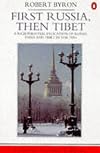
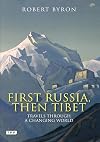
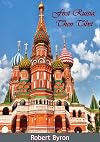
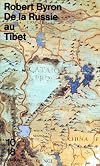
First Russia, Then Tibet
by Robert Byron
On This Page
Description
Over the course of several months during 1931 and 1932, Robert Byron journeyed to three countries teetering on the brink of change. In Russia, which was stricken by famine, Lenin had just died, Stalin's dictatorship was in its infancy and the Great Terror had yet to begin. Having taken the first commercial flight to India, which took an astounding seven days, Byron was thrown into the tumultuous last years of the British Raj. Gandhi was imprisoned, while rioting and clashes between Hindus show more and Muslims had become commonplace. Finally Byron entered Tibet, the forbidden country. Exploring "The Land of Snows", he saw Tibet as it was when the then Dalai Lama was still ensconced in the Potala Palace, twenty years before China's invasion. First Russia, Then Tibet is an invaluable first-hand account of transformative moments in periods of change and upheaval. show lessTags
Recommendations




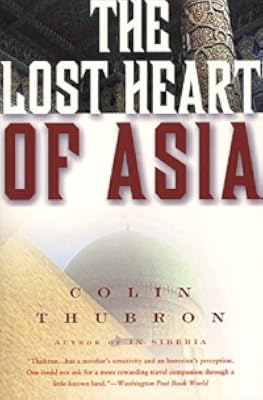

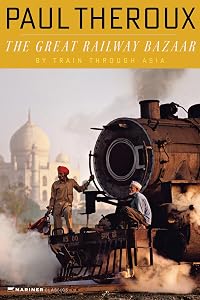

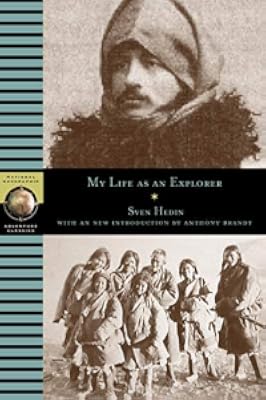


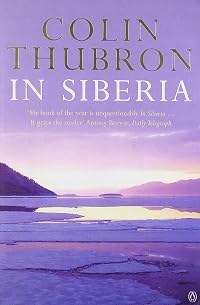

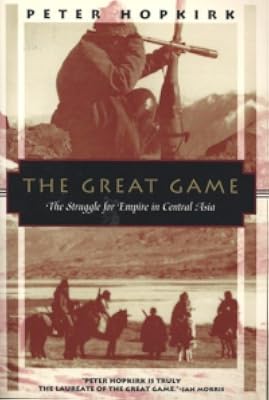

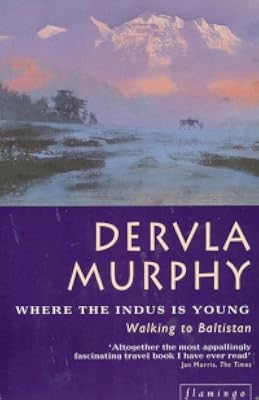
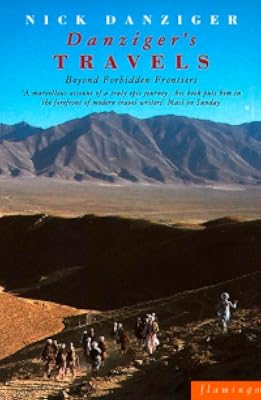












Member Recommendations


Member Reviews
This work is like the rotten "Curate's Egg" in the old Punch cartoon. Parts of it are excellent. Equal parts for this reader. I have enjoyed Byron's books, some of which are considered 'difficult' - I rarely found them so. But the first part "First Russia' was difficult, not recognisably by this author at all, great deep discussions in detail on "dialectical materialism' and such, little on Russia and rather light on the actual Russians. Perhaps it was the period, and that fashionable obsession with the 'brave new world' just after the revolution?
But the second half, "Then Tibet" sings. Bryon steps quickly into that "voice" that I love, sets feelings aglow, even revulsion as he describes the teams 'yellow, peeling, superating faces' in show more the bleak high altitude cold. His prose lyrically describes the wonders of Tibet, its people and mountains, the reluctant ponies, the 'off-sick' porters.
Makes you want to go there, read more, visit ... no, better not, just read the second half, tear off and toss the first part and look forward to re-reading this wonderful author. show less
But the second half, "Then Tibet" sings. Bryon steps quickly into that "voice" that I love, sets feelings aglow, even revulsion as he describes the teams 'yellow, peeling, superating faces' in show more the bleak high altitude cold. His prose lyrically describes the wonders of Tibet, its people and mountains, the reluctant ponies, the 'off-sick' porters.
Makes you want to go there, read more, visit ... no, better not, just read the second half, tear off and toss the first part and look forward to re-reading this wonderful author. show less
Ratings
Members
- Recently Added By
Published Reviews
The balance of the two contradictory journeys, the order implying an ironic inversion of the Russian establishment's assertion of progress – first Russia, then Tibet – makes this a difficult book, two in one, but for the patient reader a rewarding volume. As Byron comments: "This book presents two excursions whose very diversity is symbolic of those formidable contradictions which make it show more a privilege and a puzzle to be alive in the twentieth century."
Among Byron's 'Brideshead' contemporaries Evelyn Waugh and Peter Fleming, who outsold him at the time, he has proved far more influential on later writers. Byron's subsequent Road to Oxiana was declared by Bruce Chatwin to be a "sacred text" and "beyond criticism", and in the witty Byron – a camp aesthete with an amateur brilliance in art history and a penchant for exotica – it is not hard to see why Chatwin became a devotee.
Many of the qualities admired in Oxiana are present in First Russia, then Tibet: the passages of intensely beautiful description or the deft ability to generalise epigrammatically about a culture; but it lacks the episodic, mosaic quality of Oxiana, which appears to be so carelessly put down but is, in fact, rigorously studied. show less
Among Byron's 'Brideshead' contemporaries Evelyn Waugh and Peter Fleming, who outsold him at the time, he has proved far more influential on later writers. Byron's subsequent Road to Oxiana was declared by Bruce Chatwin to be a "sacred text" and "beyond criticism", and in the witty Byron – a camp aesthete with an amateur brilliance in art history and a penchant for exotica – it is not hard to see why Chatwin became a devotee.
Many of the qualities admired in Oxiana are present in First Russia, then Tibet: the passages of intensely beautiful description or the deft ability to generalise epigrammatically about a culture; but it lacks the episodic, mosaic quality of Oxiana, which appears to be so carelessly put down but is, in fact, rigorously studied. show less
added by John_Vaughan
Author Information

16+ Works 1,804 Members
Robert Byron serving as a correspondent for a London newspaper during World War II
Series
Belongs to Publisher Series
Work Relationships
Common Knowledge
Classifications
- Genres
- Travel, Nonfiction, General Nonfiction, Biography & Memoir
- DDC/MDS
- 914.7 — History & geography Geography & travel Geography of and travel in Europe Russia and neighbouring east European countries
- LCC
- DK267 .B9 — History of Europe, Asia, Africa and Oceania Russia. Soviet Union. Former Soviet Republics – Poland History of Russia. Soviet Union. Former Soviet Republics History Soviet regime, 1918-1991
- BISAC
Statistics
- Members
- 96
- Popularity
- 335,625
- Reviews
- 1
- Rating
- (3.50)
- Languages
- English, French, Italian
- Media
- Paper, Ebook
- ISBNs
- 8
- ASINs
- 2