

The Road to Oxiana
by Robert Byron
On This Page
Description
In 1933, the delightfully eccentric Robert Byron set out on a journey through the Middle East via Beirut, Jerusalem, Baghdad and Teheran to Oxiana - the country of the Oxus, the ancient name for the river Amu Darya which formed part of the border between Afghanistan and the Soviet Union. While his arrival at his destination, the legendary tower of Qabus, is a wonder, the journey itself is a captivating, quirky record of his adventures and a rare account of the architectural treasures of a show more region now inaccessible to most Western travellers. show lessTags
Recommendations



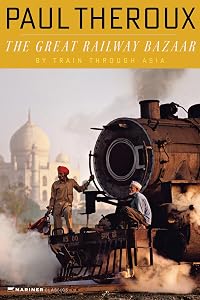
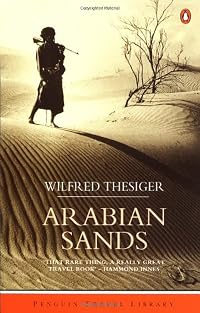
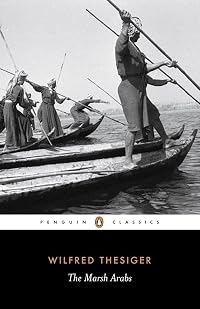
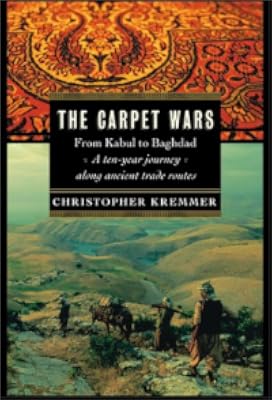










Member Recommendations

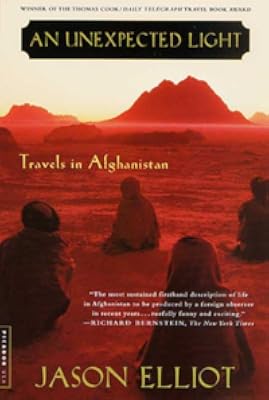
rakerman Both The Road to Oxiana and The Places In Between are very personal explorations of the people and the places encountered. Oxiana covers travels in Persia and Afghanistan in 1933, while The Places In Between is a walk across Afghanistan in 2002. Both writers are keen observers of a region little-known to most of the west.
20




Member Reviews
This is a hard one to review. It's certainly not going to be a travel book embraced by a lot of people; it has a lot of detailed descriptions of Islamic architecture for which you must have some background, or like I did, look up the buildings on the Internet so I could see photos. If you take the time to do that, you'll no doubt be impressed with the masterpieces built in the 14th through 15th centuries, what Byron calls their Renaissance.
It was never quite clear to me why he was so obsessed with seeing the Oxus river. Perhaps because it was so inaccessible to Westerners? He had to deal with mistrust by the Afghanis, some of whom thought he was an English spy wanting to map the southern Russian border (which is Turkmenistan these show more days).
Its most entertaining entries (it is written in diary form) have to do with people, the landscape, and the almost endless obstacles to travel in a remote part of the world. Hired lorries swept away in flooded rivers, or primitive living arrangements, for instance.
Toward the end of his journey, he comes across the Buddhas of Bamiyan. After being stunned by the beauty of the mosques of Persia and northwest Afghanistan, he is harsh in his critique, calling them primitive and not having any artistic value -- only historical. These enormous stone (although he calls them compressed gravel) sculptures were blown up by the Taliban in March of 2001, some sixty plus years after his visit. show less
It was never quite clear to me why he was so obsessed with seeing the Oxus river. Perhaps because it was so inaccessible to Westerners? He had to deal with mistrust by the Afghanis, some of whom thought he was an English spy wanting to map the southern Russian border (which is Turkmenistan these show more days).
Its most entertaining entries (it is written in diary form) have to do with people, the landscape, and the almost endless obstacles to travel in a remote part of the world. Hired lorries swept away in flooded rivers, or primitive living arrangements, for instance.
Toward the end of his journey, he comes across the Buddhas of Bamiyan. After being stunned by the beauty of the mosques of Persia and northwest Afghanistan, he is harsh in his critique, calling them primitive and not having any artistic value -- only historical. These enormous stone (although he calls them compressed gravel) sculptures were blown up by the Taliban in March of 2001, some sixty plus years after his visit. show less
Reading a bit of back story on Robert Byron along with this book, it seems he was once met, never forgotten. Expelled from Oxford for his 'rebellious and hedonistic ways', he evidently was fascinating and tiresome in equal measure. Labelled as one of the 'Brideshead generation' by a number of biographers, he was unapologetically snobbish and outspoken, often full of vitriol for places and people so often revered by others. 13 years after his death, Evelyn Waugh was quoted as saying "It is not yet the time to say so but I greatly disliked Robert in his last years & think he was a dangerous lunatic better off dead."
It is his character that makes his writing in this iconic travel book all the more wonderful. The success of this book is the show more very thing that got him sent down from Oxford - his natural recklessness and single-mindedness. Although only 27 when he embarked on this trip through the Middle East, Byron had firm surety in himself, his social position and his travel goals, and as a result had gumption in spades.
Travel through 1930s Persia and Afghanistan was not for the faint-hearted. To begin with, political tensions in the Middle East were... well, tense. Whilst political facts could be bad enough, the rumours were almost always worse, therefore paranoia and suspicion abounded wherever he went. Byron's travel progress was often hampered by the bureaucracy of waiting for letters to be sent here and there so he had permission to travel, and managing guards who were regularly sent to escort him to ensure he didn't take photographs or infringe any other supposed priceless intellectual property they imagined he was going to make away with. This was all handled with brilliant abject disregard by Byron which was comedy gold. Dealing often with armed and potentially volatile locals, it's impossible not to admire his total chutzpah. He was so intent on his travel goals that no one or no thing was going to get in his way, and with an old-fashioned British colonial attitude he bulldozed through any resistance he encountered. For sure he was prejudiced in many of his opinions which would not be acceptable by 21st century standards, but I took that as an interestingly honest window to social thought and class divide from a bygone era.
In addition to the political hurdles, Byron encountered numerous physical hurdles on his journey, from perilous overhangs to weak bridges made extra lethal by floods of biblical proportions. En route axles broke on cars and lorries skidded towards the edge of precipices, and when destinations were reached there were mosquitos and bed bugs and difficult hosts to deal with. What I loved most about this book was Byron being Byron. All of these were minor trifles and inconveniences which he hardly took under his notice, such was his fascination with the physical natural beauty he encountered and the architectural wonder of the archaeological sites he visited. He was almost a parody of that upper-class no-nonsense British gentleman seen in so many black and white movies, and his intolerance for annoyances is recounted with superb dry wit.
My own travels in the Middle East have been limited to those of the touristy type in Israel and Egypt, therefore I read The Road to Oxiana with a profound sense of regret that my limited personal knowledge of Iran and Afghanistan - so tainted by the news headlines - means I can never appreciate this book to the fullness that it deserves. It would be wonderful to be able to compare the sights Byron saw with one's own experiences, but like many readers I am limited to the power of Google, which at least I should be grateful for. Various civil wars in the Middle East over the past few decades have meant that sadly a number of the archaeological sites Byron visited have now been destroyed, such as the giant Buddhas of Bamiyan, dating from the 6th century, which were destroyed by the Taliban in 2001 for being 'heretical idols'. I don't think Byron would be too upset though. Describing them he said:
"Neither has any artistic value. But one could bear that; it is their negation of sense, the lack of any pride in their monstrous flaccid bulk, that sickens. Even their material is unbeautiful, for the cliff is made, not of stone, but of compressed gravel. A lot of monastic navvies were given picks and told to copy some frightful semi-Hellenistic image from India or China. The result has not even the dignity of labour."
Such is Byron - say what you think.
I admit to glazing over a little at times when he went into over-detail of some of the architecture he encountered on his travels, but overall this book was a wonderful armchair ride, not only into an unknown (for me) land but also into a past era. Interestingly, many of the sites Byron visited were already in ruins, destroyed by previous conflicts and mad men in previous centuries, and he describes many times unprecedented weather patterns. I couldn't help but ponder that observed with modern eyes we would approach this with a completely different attitude, theorising to the nth degree until we convince ourselves that this is all evidence of us being on the peak of self-destruction. Alternatively, perhaps such events have happened since the beginning of time and are simply part of the crazy circle of life here in Earth.*
*Before anyone shoots me down, I do know that climate change is a thing... I'm just noting that Byron encountered many crazy weather patterns which were more extreme than anything that had been seen for a very long time, and they just took it for what it was - the unpredictability of Mother Earth.
4 stars - a wonderful and amusing experience (for to read this book is to feel like you've had a travel experience). show less
It is his character that makes his writing in this iconic travel book all the more wonderful. The success of this book is the show more very thing that got him sent down from Oxford - his natural recklessness and single-mindedness. Although only 27 when he embarked on this trip through the Middle East, Byron had firm surety in himself, his social position and his travel goals, and as a result had gumption in spades.
Travel through 1930s Persia and Afghanistan was not for the faint-hearted. To begin with, political tensions in the Middle East were... well, tense. Whilst political facts could be bad enough, the rumours were almost always worse, therefore paranoia and suspicion abounded wherever he went. Byron's travel progress was often hampered by the bureaucracy of waiting for letters to be sent here and there so he had permission to travel, and managing guards who were regularly sent to escort him to ensure he didn't take photographs or infringe any other supposed priceless intellectual property they imagined he was going to make away with. This was all handled with brilliant abject disregard by Byron which was comedy gold. Dealing often with armed and potentially volatile locals, it's impossible not to admire his total chutzpah. He was so intent on his travel goals that no one or no thing was going to get in his way, and with an old-fashioned British colonial attitude he bulldozed through any resistance he encountered. For sure he was prejudiced in many of his opinions which would not be acceptable by 21st century standards, but I took that as an interestingly honest window to social thought and class divide from a bygone era.
In addition to the political hurdles, Byron encountered numerous physical hurdles on his journey, from perilous overhangs to weak bridges made extra lethal by floods of biblical proportions. En route axles broke on cars and lorries skidded towards the edge of precipices, and when destinations were reached there were mosquitos and bed bugs and difficult hosts to deal with. What I loved most about this book was Byron being Byron. All of these were minor trifles and inconveniences which he hardly took under his notice, such was his fascination with the physical natural beauty he encountered and the architectural wonder of the archaeological sites he visited. He was almost a parody of that upper-class no-nonsense British gentleman seen in so many black and white movies, and his intolerance for annoyances is recounted with superb dry wit.
My own travels in the Middle East have been limited to those of the touristy type in Israel and Egypt, therefore I read The Road to Oxiana with a profound sense of regret that my limited personal knowledge of Iran and Afghanistan - so tainted by the news headlines - means I can never appreciate this book to the fullness that it deserves. It would be wonderful to be able to compare the sights Byron saw with one's own experiences, but like many readers I am limited to the power of Google, which at least I should be grateful for. Various civil wars in the Middle East over the past few decades have meant that sadly a number of the archaeological sites Byron visited have now been destroyed, such as the giant Buddhas of Bamiyan, dating from the 6th century, which were destroyed by the Taliban in 2001 for being 'heretical idols'. I don't think Byron would be too upset though. Describing them he said:
"Neither has any artistic value. But one could bear that; it is their negation of sense, the lack of any pride in their monstrous flaccid bulk, that sickens. Even their material is unbeautiful, for the cliff is made, not of stone, but of compressed gravel. A lot of monastic navvies were given picks and told to copy some frightful semi-Hellenistic image from India or China. The result has not even the dignity of labour."
Such is Byron - say what you think.
I admit to glazing over a little at times when he went into over-detail of some of the architecture he encountered on his travels, but overall this book was a wonderful armchair ride, not only into an unknown (for me) land but also into a past era. Interestingly, many of the sites Byron visited were already in ruins, destroyed by previous conflicts and mad men in previous centuries, and he describes many times unprecedented weather patterns. I couldn't help but ponder that observed with modern eyes we would approach this with a completely different attitude, theorising to the nth degree until we convince ourselves that this is all evidence of us being on the peak of self-destruction. Alternatively, perhaps such events have happened since the beginning of time and are simply part of the crazy circle of life here in Earth.*
*Before anyone shoots me down, I do know that climate change is a thing... I'm just noting that Byron encountered many crazy weather patterns which were more extreme than anything that had been seen for a very long time, and they just took it for what it was - the unpredictability of Mother Earth.
4 stars - a wonderful and amusing experience (for to read this book is to feel like you've had a travel experience). show less
Like most travellers, Robert Byron spends a good deal of his time in this account of his 1937 journey to Iran and Afghanistan uncomfortable, inconvenienced, and indignant. Byron is irritated in roughly equal measure by the foreignness of foreigners and the Britishness of his compatriots. He finds a great deal to be irritated by in Iran, in particular Reza Shah (whom he calls "Marjoribanks" throughout, as a sort of code-name to protect himself in case someone reads his diary) and his modernisation programme. In Afghanistan he is, if anything, even more uncomfortable, but marginally less irritated, because what he encounters from the Afghan authorities is good honest obstruction and inefficiency, somehow more attractive to him than the show more political paranoia he finds in Iran.
On one level, you do have to wonder why he didn't just stay at home, if he dislikes travel so much, but you're rather glad he didn't: there's a very engaging quality about his artfully spontaneous prose, which really sounds as though it has been taken straight from his diary (he spent about a year selecting and polishing to get this effect). You can't help seeing things fleetingly from his point of view, even though you probably would consider him opinionated, snobbish, self-centred, or just plain arrogant if you had the misfortune to be stuck somewhere remote with him.
Theoretically, we are reading the book for his account of the remnants of Timurid architecture that he finds in Herat and northern Afghanistan, but I suspect that most of us skate over the details of this, just revelling in his rare moments of pleasure when he finds a building that satisfies his exacting standards. What we really read the book for, apart from the wonderfully vivid descriptions of upsets and accidents along the way, is the superb irritation, which makes even Dr Johnson and George Borrow (no slouches when it comes to losing their patience with foreigners) look positively mild-mannered. Colin Thubron points out in his introduction (to the current Penguin edition) that there are at least three incidents where Byron resorts to physical violence - remarkably, no-one seems to have had the nerve to hit him back. show less
On one level, you do have to wonder why he didn't just stay at home, if he dislikes travel so much, but you're rather glad he didn't: there's a very engaging quality about his artfully spontaneous prose, which really sounds as though it has been taken straight from his diary (he spent about a year selecting and polishing to get this effect). You can't help seeing things fleetingly from his point of view, even though you probably would consider him opinionated, snobbish, self-centred, or just plain arrogant if you had the misfortune to be stuck somewhere remote with him.
Theoretically, we are reading the book for his account of the remnants of Timurid architecture that he finds in Herat and northern Afghanistan, but I suspect that most of us skate over the details of this, just revelling in his rare moments of pleasure when he finds a building that satisfies his exacting standards. What we really read the book for, apart from the wonderfully vivid descriptions of upsets and accidents along the way, is the superb irritation, which makes even Dr Johnson and George Borrow (no slouches when it comes to losing their patience with foreigners) look positively mild-mannered. Colin Thubron points out in his introduction (to the current Penguin edition) that there are at least three incidents where Byron resorts to physical violence - remarkably, no-one seems to have had the nerve to hit him back. show less
This book tells of Byron’s travel through the Middle East, particularly Persia (Iran) and Afghanistan in search of architecture. It’s more than the normal travelogue, more like a detailed diary of culture observations. Byron can be witty, snobbish, and even cruel (speaking). His traveling partner, Christopher Sykes, seems to be the exact opposite, he seems to be Jerry Lewis to the author’s Dean Martin. His descriptions of the mosques are particularly “breathtaking.” However, he is very opinionated, and his judgements of cultures would today be classified as almost racist, but for 1937, I feel that it would be labeled “harsh.” In addition to harsh, I would also suggest that his writing at times could also be apologetic or show more dismissive towards the local people and customs. If one wants to read an interesting book about Middle Eastern travel, this is it. If one wants to read an unbiased book about Middle Eastern travel, this is NOT it. I listened to this on audio, 11 hours 26 mins (322 pages) show less
Some books just stop you in your reading tracks. I mean by that, that instead of reading further, picking up the next book, intrigued, you keep lingering on the pages you just read. You reread, you go back to certain passages, you check-out the credentials of the author, look up the settings that are described, the people he meets, to finally lose yourself meandering through the most obscure reviews on the web.
When this happens, as it recently did when I read Robert’s Byron’s “The Road to Oxiana”, you know the book has struck a nerve…
°°°
“The Road to Oxiana” recounts the voyage Byron undertook, in the company of Christopher Sykes, from August 1933 to July 1934, to the legendary Oxania, the region surrounding the Amu show more Darya River whose flow effectively delineates the northern border of Afghanistan with Tajikistan and Uzbekistan. Their adventurous expedition made them cross Palestine ( Israel and Lebanon ), Syria, Iraq, Persia ( Iran ), Afghanistan to finally end in British ruled Pakistan.
“The road to Oxiana”, was first published in London in 1937 by Macmillan. It was an attractive first edition, bound in blue cloth with gilt spine lettering. Its dated entries, the detailed index, the map and the photographs enhanced the innovative journal format, Byron had chosen for his book.
Commercially the book was no success. James Knox, in his recent Byron biography, reported sales of a mere eight hundred copies in the first three months. By the end of 1938, the total sales amounted to no more than fourteen hundred volumes. Compare that with “News from Tartary”, written by Robert’s literary rival, Peter Flemming, which appeared at the same time and needed eight reprints in four months.
Although “The road to Oxiana” was awarded a gold medal at the National Book Fair that year and that it was lauded as the most outstanding travel book of the year, Byron’s book soon slipped into obscurity.
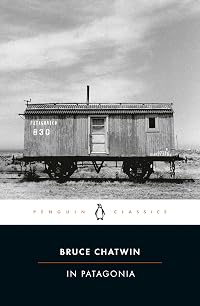
Today however, thanks to the praise of modern fellow travellers, “The road to Oxiana” is back in the limelight as a travel-classic. Quite a few travel writers have acknowledged Byron’s influence on their own work. But, rather than just an influence, for some of those celebrated travel writers, “The road” was a genuine template for their own work. Chatwin and Stewart for instance are hugely indebted to Byron, as is Patrick Leigh Fermor, albeit to a lesser degree. Chatwin, whose mimicry of Robert Byron was not only restricted to his writings, described the book as "a sacred text, a writing beyond criticism," and he boasted that he had carried his copy with him, since he was fifteen years old, "spineless and flood stained" on four journeys through central Asia. While Geoffrey Moorhouse summed up the general appreciation: “A book like no other that went before it…an enduring classic… a reference point in travel writing”, it is Paul Fussell, the professor with the purple heart from the University of Pennsylvania, who went as far to claim that “The Road to Oxiana was to the travel book what "Ulysses had been to the novel and what The Waste Land had been to poetry." While that may sound a bit hyperbolic, there is no doubt that Byron’s work effectively had changed the way travel books were written. There are for instance, quite a few identifiable differences in the way the narrative is told in Bruce Chatwin’s “In Patagonia” and Norman Douglas’s “Old Calabria”. There is indeed a before and an after “The Road to Oxiana”.
°°°
What made Robert Byron’s writing so new? Wherein exactly could one find what Evelyn Waugh would describe as its “Modernity”?
The modernity was twofold. First and most important was that Byron created the illusion that his book was a barely edited journal, a collection of jottings, a first hand account of all his impressions during the voyage.
The second “innovation” was his carefully handed mix of raw journal entries of harrowing travel memories with elaborated descriptions of archaeological lore and displays of cultural and historical erudition.
The result was uncompromising. While “The road to Oxiana” still had the immediacy of an original diary, the reader at the same time learned about unknown architectural masterpieces and with the guidance of Byron appreciated its esthetical value.
In his memory, “Four studies in Loyalty”, Byron’s travel companion, Christopher Sykes wrote that “The road to Oxiana” was far from a collection of jottings or raw journal entries. On the contrary, it was a carefully contrived and painstaking piece of writing that went through many drafts before Byron was satisfied with the effect it produced.
The work, Sykes claimed, occupied three full years of Byron’s life.
And work it was. Instead of following the traditional conventions of storytelling, retelling one’s experiences as a continuous narrative like Fleming or Douglas would do, Byron did model his book to the format of his journal. He kept the structure for instance; five parts for each of his journals; and rigidly adhered to its dated diary entries.
Occasionally he would rearrange de sequence of events to improve their narrative flow but he tightened the prose and cut the redundant material. He worked on expressing himself in a more concise, yet more conversational way.
Here are some examples of the “raw journal entries”, incidents from his trip:
Zinjan, October 22nd – “Grand Hotel – town hall”again…
“Christopher is in a sad state. His legs are swollen up to the knee and covered with water blisters. We have taken seats in a car which leaves here this afternoon, and should reach Teheran by midnight.
Bandar Shah ( sea-level), April 26th – Under arrest ! I am writing on a bed in the police-station.
Damghan ( 3900 foot ), April 28th – More disasters.
Twenty miles from Samnan the back axle broke. We had a spare one, but it took five hours to fit…
But then suddenly, unannounced, he lightens up his text by mixing these kind of entries with a discourse on a “lost” architectural masterpiece to end flamboyantly with an aesthetic appreciation…
Here is an example: first a normal entry of a travel diary…
Securing a bowl of curds and a flap of bread as big as a tent from a teahouse, we entered the mausoleum…
Then he sees and describes what others haven’t seen before…
This remarkable building was finished by the Mongol prince Uljaitu in 1313. […] The brick is pinkish. But the minarets were originally turquoise, and trefoils of the same colour, outlined in lapis, glitter round the base of the dome. […]
Byron gives the impression that he has an impressive command of the ancient Timurid architectural heritage and deploys it with great effect. In reality Byron, like most of us, was totally ignorant of the history and architecture of the region. The knowledge he exhibits in his book was acquired after his trip, on return to London, when researching his essay on the architecture of Afghanistan.
He continues…
But it still breaths power and content, while its offspring achieve only scenic refinement. It has the audacity of true invention; the graces are sacrificed to the idea, and the result, imperfect as it may be, represents the triumph of the idea over technical limitations. Much great architecture is of this kind. One thinks of Brunelleschi.
Brilliant! Who would not want Byron to be his travel companion?
°°°
Although the first entry reads: “Venice, 20 August 1933, here as a Joy-hog”, a sense of gloom permeates the first chapter.
From the first sentences, I had no doubt that in “The road to Oxiana”, there was as much to be understood “between the lines”, as was printed in black and white on the pages. This too picked my curiosity and I started to concentrate on the “blind spots”, on what was not mentioned in the book. More than just “close” reading, I tried to understand the lived reality that unfolded beyond the text. Who was involved and who send Byron money when he was in Bagdad? Was it just cultural curiosity that drove Byron and Sykes into Persia and Afghanistan? Why was his travelling companion Christopher Sykes locked up in Teheran, refused visa’s to certain areas while Byron kept his freedom?
Like all diaries, Byron s journal has its secrets.
The first entries for instance are punctuated with sexual imagery, indiscernible for those who read too fast. Byron is clearly feeling uneasy. More than just the departure blues, it seems like Byron has double feelings about leaving.
Byron claims to enjoy his last weekend with his friends in the Italian city before heading to the Orient. Christopher Sykes, his travel companion is not there. It has been agreed that he will join Byron a week later in Cyprus. Still Byron is in good company: The famous Ukrainian dancer Serge Lifar is there and so is Bertie Landsberg, who has just rescued and renovated the villa Foscari. But it is the companions Byron does not mention in his book which are most interesting. There is for instance the elusive Diane, who “is a living proof” for the writer “that it is a mistake to leave”. She is not identified in the book, but she is Lady Diane Abdy, wife of the famous art –collector and dealer. Byron’s host is William Odom, an American millionaire who introduces his guests to Harry (of Harry’s bar fame). Most important, Byron’s great love, Desmond Parsons, is there too. The writer and his younger lover have agreed to meet for a last farewell. Enhancing the gloom of the separation, Byron cannot convince himself that his love for Desmond is fully returned. On top of that, it looks like the separation will be definitive with Byron leaving for the Oxus and Desmond with plans to leave for China. Although it is not mentioned in the book, one can safely assume that the introspective mood that occasionally surfaces during Byron’s lonely moments in the Persian outback, is influenced by this separation.
Both lovers will meet again in 1935, only to hear that Desmond had been affected by a fatal case of Hodgkin disease. Desmond will tragically die in ‘37, a mere twenty six years old. It is odd how in his diary-book the homosexual Byron gives the impression that there is something between Diane and him. More than an unintentionally created false impression it looks like a cover-up for the sake of his family and especially his mother, acute reader of her son’s writings.
There are financial worries too. Byron and his family are broke. Over the years the huge fortune and estate of Robert’ grandfather has withered away. To finance his trip, Byron can only rely on a meagre advance on his book. But there is more. Byron and Sykes have agreed to join a highly publicized British expedition about to test a “charcoal – burning” device powering the cars. If successful, these engines could effectively replace petrol fuelled combustion engines. Robert, who has no money, has refused to participate in financing the expedition but he has agreed to be their unpaid “official” writer of the expedition and that he can use the lodgings and food arranged for the expedition for free . All this is not explained in the book and the Charcoal burners are only mentioned cryptically from time to time.
In fact the expedition would have months of delay and will only catch up with Byron half a year later. In Venice Robert is unaware of the huge problems the expedition is facing. By the time he gets to Palestine, he has understood that his sponsor will not be there and that without their support his enterprise might fall in the water. Because of the high secretive nature of the Charcoal Burner expedition, and the fear of the organisations that Byron would talk to the press, they agree to send him money, which he gets in Bagdad. A row would later explode when the Charcoal burners accuse him of spending the money for his own goal rather than for the benefit of the expedition.
°°°
The part of the world Byron travels through, Iraq – Iran - Afghanistan was as forbidding then as it is today. The expedition was adventurous enough. The voyage, let’s not underestimate it, would, even today, have been something of a challenge. That two educated and refined men, from a relatively pampered background would not only succeed in their project , but enjoy themselves while travelling, work hard on jotting down their experiences in rigorously kept journals, documenting every worthwhile building, ruin and landscape with hundreds of photographs ( more than 1000 in total ) is surprising.
Byron interacted with the locals and negotiated transport, including motor vehicles, horses and asses to carry him on his journey. He encountered heat, cold, hunger and thirst and suffered the inconvenience of bugs, fleas, lice and physical illness.
Byron himself appears to be a rather complex character. A product of Eton and Oxford, one of Waugh’s “Bright young things”, “breedin’ and arrogance written all over him”, he is also at the same time a true adventurer with a fair part of stamina and courage.
Christopher Sykes describes him in a funny way, when they meet in Palestine:
“…a round figure dressed in jodhpurs and a tweed jacket, and with a cigarette dangling from his lower lip, fairly charging along the jetty to the sound of clattering cameras, pencil cases and folio which hung about him…”
Byron, with his Eton – Oxford education, is both highly intelligent and arrogant.
It is his intelligence which makes me like the character. His foresightedness in how Germany and Russia are developing in the early thirties is chilling. Years before Europe discovers the true face of Nazism and Stalinism, Byron warns the “intellectuals” of what might be expected. But nobody seems to listen, on the contrary, his aggressive reaction against anybody with Nazi sympathies soon enough makes him “persona non grata” in quite a few social circles. It was as if he had a premonition, for it was the Nazis in the end who got him. Byron disappeared in 1941, when the ship on which he was travelling to Egypt was torpedoed by a U-Boat off Cape Wrath, Scotland.
His arrogance, especially in artistic esthetical manners, is of the cultivated kind. It is a pose, an attitude. He is outspoken in his dislikes, strong in his prejudices: the Dutch masters? Rubbish! Rembrandt? Disgusting! Shakespeare? Grocer’ writings! Michelangelo? Hah!
Such prejudices have that effect in a young man that he has to replace them by something else. And he does. Against general appreciation, he prefers El Greco to Michelangelo. Then he is the first to point to Byzantine art rather than the Roman and Greek classicist examples. When he realizes nobody knows about Timurian Art, Umayyad Art, Abbasid Art, Mughal Art, Safavid Art, he makes it his speciality and its fierce defender.
And it is this introduction to and appreciation of these lesser known heritages, which makes up the heart of this book and its most fascinating attraction. Byron’s book uncovers a hidden world.
Around the Mediterranean, we are still able to visualize the world he describes: Venice, Jerusalem, Cyprus, Beirut. But once we enter Iraq, most of the readers, I guess, are lost. The Arch of Ctesiphon, the Mosque of Sheikh Lutfullah, the Mausoleum of Uljaitu, can you conjure these masterpieces in front of your Mind’s eye? How about the shrine of Khoja Abdullah in Herat, the shrine of Imam Reza in Meshed, the Mithrab of the main sanctuary of the shrine of Bayazid in Bostam? No ? Again, have you ever heard of the beauty of the Friday Mosque in Shiraz, the elegance of the tomb of Zoroaster, the height of the portal of the Fiday Mosque in Yezd, the massive tower of Kabus or the towers of Victory in Ghazni.
I for one, had not a clue. With the fascinating hypnotic pictures made by Byron, I looked up all these masterpieces on the net and I discovered a world. I was struck dumb, so much beauty, so much unknown… Iran, Iraq, Pakistan. These countries have been demonized in Western press and politics as rogue states. And now I understand that they have hidden the treasures of these countries and people too.
With his book Byron, not only modernized the literary form of the cultivated travel book. By donning himself the mantle of the Scholar traveller, expert in Persia’s lost and hidden Art, he also claimed his position as heir to Norman Douglas, the then greatest exponent of travel as a learned pursuit, the most civilized man alive.
The copy I read, gives credit to the beauty of Byron’s disclosed world. It is my cherished beautiful Folio Society edition, aptly bound in a truly splendid teal – blue coloured cloth, embellished with a silvery Islamic foliage design, as if inspired by the lines out of “The road to Oxiana”
“Suddenly, from far across a valley, came the flash of a turquoise jar, bobbing along on a donkey. Its owner walked beside it, clad in a duller blue. And seeing the two lost in that gigantic stony waste, I understood why blue is the Persian colour, and why the Persian word for it means water as well”. show less
When this happens, as it recently did when I read Robert’s Byron’s “The Road to Oxiana”, you know the book has struck a nerve…
°°°
“The Road to Oxiana” recounts the voyage Byron undertook, in the company of Christopher Sykes, from August 1933 to July 1934, to the legendary Oxania, the region surrounding the Amu show more Darya River whose flow effectively delineates the northern border of Afghanistan with Tajikistan and Uzbekistan. Their adventurous expedition made them cross Palestine ( Israel and Lebanon ), Syria, Iraq, Persia ( Iran ), Afghanistan to finally end in British ruled Pakistan.
“The road to Oxiana”, was first published in London in 1937 by Macmillan. It was an attractive first edition, bound in blue cloth with gilt spine lettering. Its dated entries, the detailed index, the map and the photographs enhanced the innovative journal format, Byron had chosen for his book.
Commercially the book was no success. James Knox, in his recent Byron biography, reported sales of a mere eight hundred copies in the first three months. By the end of 1938, the total sales amounted to no more than fourteen hundred volumes. Compare that with “News from Tartary”, written by Robert’s literary rival, Peter Flemming, which appeared at the same time and needed eight reprints in four months.
Although “The road to Oxiana” was awarded a gold medal at the National Book Fair that year and that it was lauded as the most outstanding travel book of the year, Byron’s book soon slipped into obscurity.
Today however, thanks to the praise of modern fellow travellers, “The road to Oxiana” is back in the limelight as a travel-classic. Quite a few travel writers have acknowledged Byron’s influence on their own work. But, rather than just an influence, for some of those celebrated travel writers, “The road” was a genuine template for their own work. Chatwin and Stewart for instance are hugely indebted to Byron, as is Patrick Leigh Fermor, albeit to a lesser degree. Chatwin, whose mimicry of Robert Byron was not only restricted to his writings, described the book as "a sacred text, a writing beyond criticism," and he boasted that he had carried his copy with him, since he was fifteen years old, "spineless and flood stained" on four journeys through central Asia. While Geoffrey Moorhouse summed up the general appreciation: “A book like no other that went before it…an enduring classic… a reference point in travel writing”, it is Paul Fussell, the professor with the purple heart from the University of Pennsylvania, who went as far to claim that “The Road to Oxiana was to the travel book what "Ulysses had been to the novel and what The Waste Land had been to poetry." While that may sound a bit hyperbolic, there is no doubt that Byron’s work effectively had changed the way travel books were written. There are for instance, quite a few identifiable differences in the way the narrative is told in Bruce Chatwin’s “In Patagonia” and Norman Douglas’s “Old Calabria”. There is indeed a before and an after “The Road to Oxiana”.
°°°
What made Robert Byron’s writing so new? Wherein exactly could one find what Evelyn Waugh would describe as its “Modernity”?
The modernity was twofold. First and most important was that Byron created the illusion that his book was a barely edited journal, a collection of jottings, a first hand account of all his impressions during the voyage.
The second “innovation” was his carefully handed mix of raw journal entries of harrowing travel memories with elaborated descriptions of archaeological lore and displays of cultural and historical erudition.
The result was uncompromising. While “The road to Oxiana” still had the immediacy of an original diary, the reader at the same time learned about unknown architectural masterpieces and with the guidance of Byron appreciated its esthetical value.
In his memory, “Four studies in Loyalty”, Byron’s travel companion, Christopher Sykes wrote that “The road to Oxiana” was far from a collection of jottings or raw journal entries. On the contrary, it was a carefully contrived and painstaking piece of writing that went through many drafts before Byron was satisfied with the effect it produced.
The work, Sykes claimed, occupied three full years of Byron’s life.
And work it was. Instead of following the traditional conventions of storytelling, retelling one’s experiences as a continuous narrative like Fleming or Douglas would do, Byron did model his book to the format of his journal. He kept the structure for instance; five parts for each of his journals; and rigidly adhered to its dated diary entries.
Occasionally he would rearrange de sequence of events to improve their narrative flow but he tightened the prose and cut the redundant material. He worked on expressing himself in a more concise, yet more conversational way.
Here are some examples of the “raw journal entries”, incidents from his trip:
Zinjan, October 22nd – “Grand Hotel – town hall”again…
“Christopher is in a sad state. His legs are swollen up to the knee and covered with water blisters. We have taken seats in a car which leaves here this afternoon, and should reach Teheran by midnight.
Bandar Shah ( sea-level), April 26th – Under arrest ! I am writing on a bed in the police-station.
Damghan ( 3900 foot ), April 28th – More disasters.
Twenty miles from Samnan the back axle broke. We had a spare one, but it took five hours to fit…
But then suddenly, unannounced, he lightens up his text by mixing these kind of entries with a discourse on a “lost” architectural masterpiece to end flamboyantly with an aesthetic appreciation…
Here is an example: first a normal entry of a travel diary…
Securing a bowl of curds and a flap of bread as big as a tent from a teahouse, we entered the mausoleum…
Then he sees and describes what others haven’t seen before…
This remarkable building was finished by the Mongol prince Uljaitu in 1313. […] The brick is pinkish. But the minarets were originally turquoise, and trefoils of the same colour, outlined in lapis, glitter round the base of the dome. […]
Byron gives the impression that he has an impressive command of the ancient Timurid architectural heritage and deploys it with great effect. In reality Byron, like most of us, was totally ignorant of the history and architecture of the region. The knowledge he exhibits in his book was acquired after his trip, on return to London, when researching his essay on the architecture of Afghanistan.
He continues…
But it still breaths power and content, while its offspring achieve only scenic refinement. It has the audacity of true invention; the graces are sacrificed to the idea, and the result, imperfect as it may be, represents the triumph of the idea over technical limitations. Much great architecture is of this kind. One thinks of Brunelleschi.
Brilliant! Who would not want Byron to be his travel companion?
°°°
Although the first entry reads: “Venice, 20 August 1933, here as a Joy-hog”, a sense of gloom permeates the first chapter.
From the first sentences, I had no doubt that in “The road to Oxiana”, there was as much to be understood “between the lines”, as was printed in black and white on the pages. This too picked my curiosity and I started to concentrate on the “blind spots”, on what was not mentioned in the book. More than just “close” reading, I tried to understand the lived reality that unfolded beyond the text. Who was involved and who send Byron money when he was in Bagdad? Was it just cultural curiosity that drove Byron and Sykes into Persia and Afghanistan? Why was his travelling companion Christopher Sykes locked up in Teheran, refused visa’s to certain areas while Byron kept his freedom?
Like all diaries, Byron s journal has its secrets.
The first entries for instance are punctuated with sexual imagery, indiscernible for those who read too fast. Byron is clearly feeling uneasy. More than just the departure blues, it seems like Byron has double feelings about leaving.
Byron claims to enjoy his last weekend with his friends in the Italian city before heading to the Orient. Christopher Sykes, his travel companion is not there. It has been agreed that he will join Byron a week later in Cyprus. Still Byron is in good company: The famous Ukrainian dancer Serge Lifar is there and so is Bertie Landsberg, who has just rescued and renovated the villa Foscari. But it is the companions Byron does not mention in his book which are most interesting. There is for instance the elusive Diane, who “is a living proof” for the writer “that it is a mistake to leave”. She is not identified in the book, but she is Lady Diane Abdy, wife of the famous art –collector and dealer. Byron’s host is William Odom, an American millionaire who introduces his guests to Harry (of Harry’s bar fame). Most important, Byron’s great love, Desmond Parsons, is there too. The writer and his younger lover have agreed to meet for a last farewell. Enhancing the gloom of the separation, Byron cannot convince himself that his love for Desmond is fully returned. On top of that, it looks like the separation will be definitive with Byron leaving for the Oxus and Desmond with plans to leave for China. Although it is not mentioned in the book, one can safely assume that the introspective mood that occasionally surfaces during Byron’s lonely moments in the Persian outback, is influenced by this separation.
Both lovers will meet again in 1935, only to hear that Desmond had been affected by a fatal case of Hodgkin disease. Desmond will tragically die in ‘37, a mere twenty six years old. It is odd how in his diary-book the homosexual Byron gives the impression that there is something between Diane and him. More than an unintentionally created false impression it looks like a cover-up for the sake of his family and especially his mother, acute reader of her son’s writings.
There are financial worries too. Byron and his family are broke. Over the years the huge fortune and estate of Robert’ grandfather has withered away. To finance his trip, Byron can only rely on a meagre advance on his book. But there is more. Byron and Sykes have agreed to join a highly publicized British expedition about to test a “charcoal – burning” device powering the cars. If successful, these engines could effectively replace petrol fuelled combustion engines. Robert, who has no money, has refused to participate in financing the expedition but he has agreed to be their unpaid “official” writer of the expedition and that he can use the lodgings and food arranged for the expedition for free . All this is not explained in the book and the Charcoal burners are only mentioned cryptically from time to time.
In fact the expedition would have months of delay and will only catch up with Byron half a year later. In Venice Robert is unaware of the huge problems the expedition is facing. By the time he gets to Palestine, he has understood that his sponsor will not be there and that without their support his enterprise might fall in the water. Because of the high secretive nature of the Charcoal Burner expedition, and the fear of the organisations that Byron would talk to the press, they agree to send him money, which he gets in Bagdad. A row would later explode when the Charcoal burners accuse him of spending the money for his own goal rather than for the benefit of the expedition.
°°°
The part of the world Byron travels through, Iraq – Iran - Afghanistan was as forbidding then as it is today. The expedition was adventurous enough. The voyage, let’s not underestimate it, would, even today, have been something of a challenge. That two educated and refined men, from a relatively pampered background would not only succeed in their project , but enjoy themselves while travelling, work hard on jotting down their experiences in rigorously kept journals, documenting every worthwhile building, ruin and landscape with hundreds of photographs ( more than 1000 in total ) is surprising.
Byron interacted with the locals and negotiated transport, including motor vehicles, horses and asses to carry him on his journey. He encountered heat, cold, hunger and thirst and suffered the inconvenience of bugs, fleas, lice and physical illness.
Byron himself appears to be a rather complex character. A product of Eton and Oxford, one of Waugh’s “Bright young things”, “breedin’ and arrogance written all over him”, he is also at the same time a true adventurer with a fair part of stamina and courage.
Christopher Sykes describes him in a funny way, when they meet in Palestine:
“…a round figure dressed in jodhpurs and a tweed jacket, and with a cigarette dangling from his lower lip, fairly charging along the jetty to the sound of clattering cameras, pencil cases and folio which hung about him…”
Byron, with his Eton – Oxford education, is both highly intelligent and arrogant.
It is his intelligence which makes me like the character. His foresightedness in how Germany and Russia are developing in the early thirties is chilling. Years before Europe discovers the true face of Nazism and Stalinism, Byron warns the “intellectuals” of what might be expected. But nobody seems to listen, on the contrary, his aggressive reaction against anybody with Nazi sympathies soon enough makes him “persona non grata” in quite a few social circles. It was as if he had a premonition, for it was the Nazis in the end who got him. Byron disappeared in 1941, when the ship on which he was travelling to Egypt was torpedoed by a U-Boat off Cape Wrath, Scotland.
His arrogance, especially in artistic esthetical manners, is of the cultivated kind. It is a pose, an attitude. He is outspoken in his dislikes, strong in his prejudices: the Dutch masters? Rubbish! Rembrandt? Disgusting! Shakespeare? Grocer’ writings! Michelangelo? Hah!
Such prejudices have that effect in a young man that he has to replace them by something else. And he does. Against general appreciation, he prefers El Greco to Michelangelo. Then he is the first to point to Byzantine art rather than the Roman and Greek classicist examples. When he realizes nobody knows about Timurian Art, Umayyad Art, Abbasid Art, Mughal Art, Safavid Art, he makes it his speciality and its fierce defender.
And it is this introduction to and appreciation of these lesser known heritages, which makes up the heart of this book and its most fascinating attraction. Byron’s book uncovers a hidden world.
Around the Mediterranean, we are still able to visualize the world he describes: Venice, Jerusalem, Cyprus, Beirut. But once we enter Iraq, most of the readers, I guess, are lost. The Arch of Ctesiphon, the Mosque of Sheikh Lutfullah, the Mausoleum of Uljaitu, can you conjure these masterpieces in front of your Mind’s eye? How about the shrine of Khoja Abdullah in Herat, the shrine of Imam Reza in Meshed, the Mithrab of the main sanctuary of the shrine of Bayazid in Bostam? No ? Again, have you ever heard of the beauty of the Friday Mosque in Shiraz, the elegance of the tomb of Zoroaster, the height of the portal of the Fiday Mosque in Yezd, the massive tower of Kabus or the towers of Victory in Ghazni.
I for one, had not a clue. With the fascinating hypnotic pictures made by Byron, I looked up all these masterpieces on the net and I discovered a world. I was struck dumb, so much beauty, so much unknown… Iran, Iraq, Pakistan. These countries have been demonized in Western press and politics as rogue states. And now I understand that they have hidden the treasures of these countries and people too.
With his book Byron, not only modernized the literary form of the cultivated travel book. By donning himself the mantle of the Scholar traveller, expert in Persia’s lost and hidden Art, he also claimed his position as heir to Norman Douglas, the then greatest exponent of travel as a learned pursuit, the most civilized man alive.
The copy I read, gives credit to the beauty of Byron’s disclosed world. It is my cherished beautiful Folio Society edition, aptly bound in a truly splendid teal – blue coloured cloth, embellished with a silvery Islamic foliage design, as if inspired by the lines out of “The road to Oxiana”
“Suddenly, from far across a valley, came the flash of a turquoise jar, bobbing along on a donkey. Its owner walked beside it, clad in a duller blue. And seeing the two lost in that gigantic stony waste, I understood why blue is the Persian colour, and why the Persian word for it means water as well”. show less
Snarky, underfunded, antisocial, linguistically limited, and with a keen dislike of both his own people and those of other nations, Byron trekked through Iran and Afghanistan in search of architectural treasures. The Road to Oxiana, composed in the form of a journal, veers between beautifully restrained descriptions of landscapes and ridiculous, self-deprecating slapstick. It's heavy on art theory and historical background but never for a moment feels either boring or stilted. A hugely fun, enormously informative read.
A tricky one to review. I enjoyed a lot of this account of Byron's exploits in Persia and Afghanistan, but there was a lot that was too recondite for my taste. The descriptions are excellent, though what works best is Byron's recounting of his various misadventures, and the stories of the people he meets along the way. Would travel writing be travel writing without Byron showing the way?
Members
- Recently Added By
Lists

Best of Travel Narratives
142 works; 28 members

Best Travel Narrative
32 works; 20 members

501 Must-Read Books
529 works; 72 members

Recommend the 20 best books you've read in the last five years
2,168 works; 606 members
Adventure Travel & Exploration In Asia
31 works; 8 members

Best of Travel Narratives (Rivers)
22 works; 1 member

Folio Society
831 works; 53 members

Afghanistan
42 works; 2 members

Books Read in 2022
5,166 works; 114 members

Hindu Kush
5 works; 1 member

el
1,139 works; 1 member

100
15 works; 1 member

Michael Dirda's 100 Best Comic Novels
100 works; 1 member

A Good Read (Radio 4)
145 works; 1 member
Author Information

16+ Works 1,805 Members
Robert Byron serving as a correspondent for a London newspaper during World War II
Some Editions
Awards and Honors
Awards
Notable Lists
Series
Belongs to Publisher Series
Work Relationships
Common Knowledge
- Canonical title
- The Road to Oxiana
- Original title
- The Road to Oxiana
- Original publication date
- 1937; 2007 (Nederlandse vertaling) (Nederlandse vertaling)
- People/Characters
- Robert Byron; Christopher Sykes
- Important places
- Iran; Afghanistan; Iraq; Persia; Venice, Veneto, Italy; India (show all 15); Cyprus; Palestine; Syria; Herat, Afghanistan; Tehran, Iran; Kabul, Afghanistan; Isfahan, Iran; Mazar-i-Sharif, Afghanistan; Meshed, Iran
- First words
- Venice, August 20th, 1933.
- Last words
- (Click to show. Warning: May contain spoilers.)And my mother - to whom, now it is finished, I deliver the whole record; what I have seen she taught me to see, and will tell me if I have honoured it.
- Blurbers
- Fussell, Paul; Raban, Jonathan
- Original language*
- Engels
*Some information comes from Common Knowledge in other languages. Click "Edit" for more information.
Classifications
Statistics
- Members
- 1,377
- Popularity
- 17,239
- Reviews
- 15
- Rating
- (3.92)
- Languages
- 9 — Dutch, English, French, German, Italian, Norwegian (Bokmål), Portuguese, Spanish, Swedish
- Media
- Paper, Audiobook, Ebook
- ISBNs
- 36
- ASINs
- 23