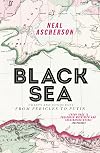
Black Sea
by Neal Ascherson
On This Page
Description
Black Seais a homage to an ocean and its shores and a meditation on Eurasian history, from the earliest times to the present. It explores the culture, history and politics of the volatile region which surrounds the Black Sea. Ascherson recalls the world of Herodotus and Aeschylus; Ovid's place of exile on what is now the coast of Romania; the decline and fall of Byzantium; the mysterious Christian Goths; the Tatar Khanates; the growth of Russian power across the grasslands, and the centuries show more of war between Ottoman and Russian Empires around the Black Sea. He examines the terrors of Stalinism and its fascist enemy, both striving for mastery of these endlessly colourful and complex shores, and investigates the turbulent history of modern Ukraine. This is a story of Greeks, Scythians, Samatians, Huns, Goths, Turks, Russians, Ukrainians and Poles. This is the sea where Europe ended. It is the place where 'barbarism' was born. UPDATED WITH A NEW FOREWORD BY THE AUTHOR show lessTags
Recommendations







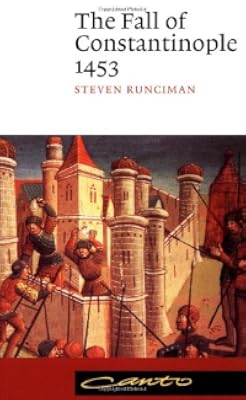

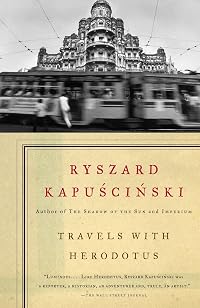
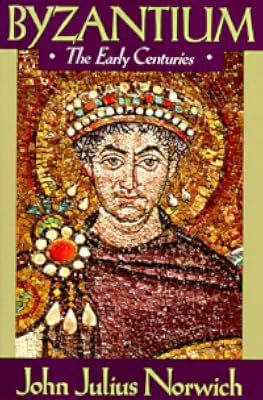


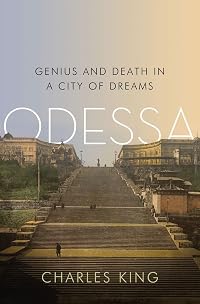
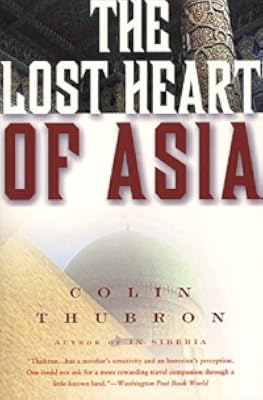
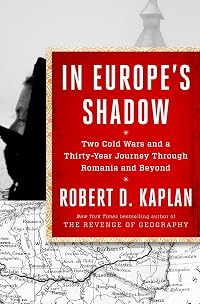

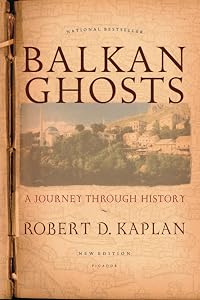

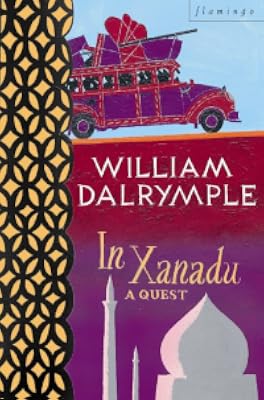








Member Recommendations


CGlanovsky Humorous story of 20th Century Anglican missionaries traveling in the Black Sea region with frequent references to Classical and Medieval history
Member Reviews
This is a thoughtful, complicated book, an amalgam of travel-writing, history, journalism, cultural studies, and all kinds of other stuff. Rather than attempting to provide a comprehensive history of the Black Sea region, Ascherson pursues a small set of topics that particularly interest him from the footprints they left in archaeology and classical literature right through to his own subjective experiences in Crimea, the northern Caucasus and and the Turkish Black Sea coast in the immediate aftermath of the collapse of the Soviet Union.
We read about the complicated ecology of the sea itself and how that has been and is being studied, about the region as the most intensively-documented point of interaction between the settled urban show more culture of the Pontic Greeks ("civilisation") and the nomadic culture of the Scythians, Sarmatians and other "barbarian" steppe peoples. But also about how the "fanciful" stuff about Amazons in Herodotus has turned out not to be so fanciful at all ... now that archaeologists have finally bothered to ask themselves whether the warrior skeletons they found in ancient burial mounds were those of men or women. And about the wonderfully multi-culti Bosporan Kingdom, based at Panticapaeum (up the hill from modern Kerch), the real identity of the Tatars and Cossacks, and the peculiar 17th century Polish aristocratic fancy of "Sarmatian" descent. And fascinating stuff about Adam Mickiewicz in Odesa, Harold Hardrade in Micklegarth, and all sorts of other things...
If there's an underlying theme, it seems to be about how different cultures/ethnicities/languages/religions have often been able to cohabit successfully in the region for long periods, but only until their equilibrium is displaced by some set of events which allows one or more parties to believe that there's something to be gained by driving out their neighbours. More often than not, the process turns out to be horribly destructive to all parties (e.g. the Abkhazian war in the early 1990s), but somehow the knowledge of the likelihood of that kind of outcome never entirely stops humans from stirring up distrust and violence. show less
We read about the complicated ecology of the sea itself and how that has been and is being studied, about the region as the most intensively-documented point of interaction between the settled urban show more culture of the Pontic Greeks ("civilisation") and the nomadic culture of the Scythians, Sarmatians and other "barbarian" steppe peoples. But also about how the "fanciful" stuff about Amazons in Herodotus has turned out not to be so fanciful at all ... now that archaeologists have finally bothered to ask themselves whether the warrior skeletons they found in ancient burial mounds were those of men or women. And about the wonderfully multi-culti Bosporan Kingdom, based at Panticapaeum (up the hill from modern Kerch), the real identity of the Tatars and Cossacks, and the peculiar 17th century Polish aristocratic fancy of "Sarmatian" descent. And fascinating stuff about Adam Mickiewicz in Odesa, Harold Hardrade in Micklegarth, and all sorts of other things...
If there's an underlying theme, it seems to be about how different cultures/ethnicities/languages/religions have often been able to cohabit successfully in the region for long periods, but only until their equilibrium is displaced by some set of events which allows one or more parties to believe that there's something to be gained by driving out their neighbours. More often than not, the process turns out to be horribly destructive to all parties (e.g. the Abkhazian war in the early 1990s), but somehow the knowledge of the likelihood of that kind of outcome never entirely stops humans from stirring up distrust and violence. show less
Neal Ascherson has an obvious background in the study of Greece and Rome, but has spent some time chasing down the byways of the title's body of water. The book is a meditation more than an account but touches on many of the curious peoples that have beeen part of the Pontic experience. Almost every chapter leaves me with a need to know more about the peoples or poities touched on. A good book to read with an eye for any of the further areas of research he touches on. Epigrams abound. some are even original.
The Black Sea is a well written if, at times, a rather self indulgent book. The book is not really about the Black Sea in its entirety - great tracts of its coastline are ignored and the historical gems are chosen to meet the interests and sometimes political prejudices of its author.
Romania, Bulgaria and half the Turkish coastline are ignored. Ascherson goes hurtling off to the North West on a lengthy tour of matters Polish-Lithuanian that barely connect with the Sea. He also has a clear anti-Russian bent and the book is very much of its near-Cold War time (1995).
Having said this, the book is a good educated light read, a mixture of well researched history, anthropology and anecdote from his own regional travels (with a bit of show more topography) that, other than the Polish indulgence (he clearly likes Poles as much as he dislikes Soviets), entertains.
Ascherson is a Scot and a small nation man. Start with an understanding of that prejudice and you will be able to filter out his politics and his bias and better enjoy the narrative. He is also a classic metropolitan liberal which is not always a bad thing when it comes to thinking about colonialism.
Although the book is not going to give you a balanced history of a vital European region, possibly more vital as Russia fights back against its containment, many of the stories he tells will be new to many people and so worth reading.
If there is a political theme beyond his mere prejudice, it is that nationalisms are inventions (fairly standard academic stuff) and that the claims of those he does not like are pretty invalid and those that he does like are notable for being inclusive liberal nationalisms. I sense a man of 1848.
Strip all that ideology away and he is good on the Greek-Scythian relationship in the classical era and introduces us to locally important cultures scarcely known to the West such as the Sarmatians, the Bosporan Kingdom and the Empire of Trebizond.
He tells a good story about the tragic events in Abkhazia and visits Crimea after the fall of the Soviet Union (he is pro-Tatar). He offers a rather sinister tale (to me though perhaps not to him) of the recent invention of Lazi nationalism by a late Herderian German academic.
In fact, Ascherson is not a little incoherent and sentimental about nationalism. He sort of likes it if it is for the little people and dislikes it if it is for the big people. There is, in this, all the fluffy sentimentality and near-permanent outrage at oppression of the cosmopolitan liberal.
Indeed, his prejudices become not a little irritating after a while. Now that Crimea and Novorossiya are back in the news, one could almost write his paragraphs for him about current events, at least based on this book.
But, putting all that aside, he tells a good story. He is a good journalist (a journalist does not have to be a coherent 'thinker'). When his implicit ideology is allowed to rest, his judgements can be sound and humane - sometimes, you can even see the questioning side of him break through.
Not exactly a wholly coherent book but a nice piece of international affairs entertainment. A recommendation as a holiday read for someone planning to go on a holiday visit to the region (assuming it is not Bulgaria or Romania or Turkey West of Sinop).
I can't imagine too many people planning holidays today in Odessa, Novorossiya, Crimea, Georgia or North East Turkey but, if such people are out there, this would be a good book for the journey and for the hotel. show less
Romania, Bulgaria and half the Turkish coastline are ignored. Ascherson goes hurtling off to the North West on a lengthy tour of matters Polish-Lithuanian that barely connect with the Sea. He also has a clear anti-Russian bent and the book is very much of its near-Cold War time (1995).
Having said this, the book is a good educated light read, a mixture of well researched history, anthropology and anecdote from his own regional travels (with a bit of show more topography) that, other than the Polish indulgence (he clearly likes Poles as much as he dislikes Soviets), entertains.
Ascherson is a Scot and a small nation man. Start with an understanding of that prejudice and you will be able to filter out his politics and his bias and better enjoy the narrative. He is also a classic metropolitan liberal which is not always a bad thing when it comes to thinking about colonialism.
Although the book is not going to give you a balanced history of a vital European region, possibly more vital as Russia fights back against its containment, many of the stories he tells will be new to many people and so worth reading.
If there is a political theme beyond his mere prejudice, it is that nationalisms are inventions (fairly standard academic stuff) and that the claims of those he does not like are pretty invalid and those that he does like are notable for being inclusive liberal nationalisms. I sense a man of 1848.
Strip all that ideology away and he is good on the Greek-Scythian relationship in the classical era and introduces us to locally important cultures scarcely known to the West such as the Sarmatians, the Bosporan Kingdom and the Empire of Trebizond.
He tells a good story about the tragic events in Abkhazia and visits Crimea after the fall of the Soviet Union (he is pro-Tatar). He offers a rather sinister tale (to me though perhaps not to him) of the recent invention of Lazi nationalism by a late Herderian German academic.
In fact, Ascherson is not a little incoherent and sentimental about nationalism. He sort of likes it if it is for the little people and dislikes it if it is for the big people. There is, in this, all the fluffy sentimentality and near-permanent outrage at oppression of the cosmopolitan liberal.
Indeed, his prejudices become not a little irritating after a while. Now that Crimea and Novorossiya are back in the news, one could almost write his paragraphs for him about current events, at least based on this book.
But, putting all that aside, he tells a good story. He is a good journalist (a journalist does not have to be a coherent 'thinker'). When his implicit ideology is allowed to rest, his judgements can be sound and humane - sometimes, you can even see the questioning side of him break through.
Not exactly a wholly coherent book but a nice piece of international affairs entertainment. A recommendation as a holiday read for someone planning to go on a holiday visit to the region (assuming it is not Bulgaria or Romania or Turkey West of Sinop).
I can't imagine too many people planning holidays today in Odessa, Novorossiya, Crimea, Georgia or North East Turkey but, if such people are out there, this would be a good book for the journey and for the hotel. show less
Best history book I've read this year (and the last, as it happens). Brilliant range of references covering 3000 years and more of history. Umpteen people, peoples, and places I've never or scarcely heard of as well as some good ecoscience thrown in. E.g. the Abkhazians who I proudly thought i knew included the charming Beria, but no, he was a Mingrelian. We get deep insights into Polish nationalism (its founding poet father Minkiewicz was exiled to the Black Sea). Ovid gets a mention (knew he was there but he springs to life in this account). the Pontic Greeks i'd heard of but here we get their whole flourish and fade and how they nurse their traditions still. Golden Horde and Mongol, Cossack, Kazakh and Tatar ride across the pages and show more seem to be different names for more or less one thing.(Side shots touch on Scottish nationalism, the Gaelic revival, the invention of the knight at arms, perestroika, Near the end we learn of Harald Hardrade (know him from Stamford Bridge at the margins of English history but hey! he was a commander of mercenaries for the Byzantine emperor and rammed his way out through the chain over the Bosporus. Here and there his first hand travel experiences: meetings with sad librarians, unfunded scientists, selfless archaeologists, a museum of sycophantic tributes to Brezhnev, a disabled girl's death on a bus. The book appears structureless; not a travelogue, nor a chronology, with so much going on and most of it new to me it should have been confusing, but themes are interwoven, sometimes reappearing, sewn together with such weightless scholarshop and seamless style, I was sorry to finish it. show less
Собирающимся в бархатный сезон на Черное море российские издатели подготовили правильный подарок. За исключением побережья Румынии и Болгарии охвачен весь его периметр и историческая глубина, а время написания — до 2014 года — милосердно избавляет от обсуждения самых последних событий региона. Впрочем, Крыму и без этого отводится немало места: отсюда в Европу прокралась «черная смерть» XIV века, show more выкосившая до трети ее населения, тут проходили эпические сражения и тут же располагалось государство-долгожитель региона — Боспорское царство. Помимо полуострова автору есть что рассказать интересного о казаках и амазонках, скифах и греках, лазах с убыхами и Пушкине с медузоподобными существами. Главный шок, однако, подстерегает отдыхающих в начале книги — оказывается, Черное море, в отличие ото всех прочих морей, практически целиком мертво: ниже 150 м там залежи сероводорода. И самое, извиняюсь, тухлое — существует отнюдь не гипотетическая угроза того, что эти пласты могут поменяться местами. show less
I consider this as a companion to the massive and brilliant 750 page tome on the Mediterranean and its peoples I am currently reading by David Abulafia The Great Sea (http://www.librarything.com/work/11256104) but it is written in a lighter and more easily read prose … but none the less scholarly… because of Neal Ascherson’s journalistic phrasing. You would not find the expression ”muddy-arsed squireens” (p.231) used by many historians and it is Ascherson’s human touch that makes this book such an enjoyable read.
Both books are histories back to the time of Herodotus, and both are concerned with the anthropology of the settlers of these seas but while Abulafia covers the whole of those great seas that make up the “Med”, show more Ascherson concentrates his 300 pages on just the one.
But the Black Sea has had more head-spinning confusions, churnings and population waves that a washing machine! From early Greek, Iranian and Viking settlers through pogroms, communism and collapse to our modern concerns with the dangerous ecological threat this region has experienced constant – and for readers – fascinating turmoil.
Neal Ascherson is an author with a strong background career grounded in journalism and gives us, in this book, an eminently readable and very personal (his own father as a Royal Naval midshipman in 1920 saw the Russian fleet withdrawing) account of the trials and churning of the peoples of this region in their struggle and search for homeland and identify. I was recently (2012) in Ukraine and saw some of this whirlpool and that obviously added to my personal enjoyment of this work which is thoroughly recommended for those readers who enjoy history in a very readable form. show less
Both books are histories back to the time of Herodotus, and both are concerned with the anthropology of the settlers of these seas but while Abulafia covers the whole of those great seas that make up the “Med”, show more Ascherson concentrates his 300 pages on just the one.
But the Black Sea has had more head-spinning confusions, churnings and population waves that a washing machine! From early Greek, Iranian and Viking settlers through pogroms, communism and collapse to our modern concerns with the dangerous ecological threat this region has experienced constant – and for readers – fascinating turmoil.
Neal Ascherson is an author with a strong background career grounded in journalism and gives us, in this book, an eminently readable and very personal (his own father as a Royal Naval midshipman in 1920 saw the Russian fleet withdrawing) account of the trials and churning of the peoples of this region in their struggle and search for homeland and identify. I was recently (2012) in Ukraine and saw some of this whirlpool and that obviously added to my personal enjoyment of this work which is thoroughly recommended for those readers who enjoy history in a very readable form. show less
I reached for this at the beginning of the Russian invasion of Ukraine, in order to get some historic insight into the region. Ascherson roams around the shore (and often well inland) to highlight the peoples and settlements of significance. He doesn't spend much time on Constantinople/Istanbul, though. I have more sympathy now for the Abkhazians and South Ossetians but can report (as if it needed saying) that Stalin was awful - and so is Putin.
Members
- Recently Added By
Published Reviews
Although geographically centered, Neal Ascherson’s BLACK SEA is not primarily about geography; rather, it concerns the people who, over the centuries, migrated to the shores of this inland sea that separates East from West, “the largest mass of lifeless water in the world,” extending 144 miles from the Crimean peninsula to the Bosporus and the Dardanelles. There is life at the top, show more schools of dolphin and porpoise, the once- abundant Black Sea anchovy, and a kind of mackerel called the bonito, but 150 meters below the surface of the Black Sea “is the world’s biggest single reservoir of hydrogen sulphide,” and the deeper waters are therefore sterile. show less
added by John_Vaughan
To unlock the mystery of creativity, cultural confluence and violent conflict associated with the Black Sea, Ascherson has eschewed conventional history. In its place, he trudges gamely around archaeological sites, some famous, some profoundly obscure. His ruminations on the bones and artefacts of long-extinct peoples drift effortlessly from their ancient history into our millennium and back, show more from Herodotus to Lermontov, and from the Zaporozhe Sich of the Cossacks to the loners on the Oregon trail. show less
added by russianreader
Lists

A Ukraine Reading List
129 works; 90 members

Folio Society
831 works; 53 members
Author Information

21+ Works 1,256 Members
Some Editions
Awards and Honors
Awards
Distinctions
Series
Belongs to Publisher Series
Common Knowledge
- Canonical title
- Black Sea
- Alternate titles
- The Black Sea
- Original publication date
- 1995
- People/Characters
- Mithradates Eupator; Joseph Stalin; Adam Mickiewicz; Harald Hardrada
- Important places
- Black Sea; Crimea, Ukraine; Turkey; Georgia; Russia; Ottoman Empire (show all 10); Abkhazia; Byzantine Empire; Odesa, Ukraine; Sevastopol, Crimea, Ukraine
- Important events
- Crimean War; World War I; World War II; Russian Revolution
- Dedication
- To my Father
- First words
- One day early in 1680, a young Italian named Luigi Ferdinando Marsigli stood on a boat anchored in the middle of the Bosporus, off Istanbul, and lowered a weighted line over the side.
- Last words
- (Click to show. Warning: May contain spoilers.)But it may be that the cause of the Black Sea itself, of its waters and its creatures, is at last beginning to achieve what so many millennia of human activity have failed to achieve: the union of the peoples who live around it.
- Blurbers
- Hurd, Douglas; Settle, Mary Lee
Classifications
- Genres
- History, Nonfiction, Travel, General Nonfiction
- DDC/MDS
- 909.096389 — History & geography History World history Other Geographic Classifications Air And Water
- LCC
- DJK66 .A83 — History of Europe, Asia, Africa and Oceania Eastern Europe (General) History of Eastern Europe (General) Local history and description Black Sea region
- BISAC
Statistics
- Members
- 767
- Popularity
- 36,728
- Reviews
- 17
- Rating
- (4.00)
- Languages
- 11 — Bosnian, Dutch, English, French, German, Italian, Polish, Russian, Spanish, Swedish, Turkish
- Media
- Paper, Ebook
- ISBNs
- 29
- ASINs
- 9