Hillbilly Elegy: The Internationally Bestselling Memoir from Trump’s Vice President of the United States by J. D. Vance

Hard to assess. Yes, well written with intelligence and fairness. but there's a kind of authorial aloofness (like J Joyce sitting back paring his fingernails ) which feels strange. He describes his own ability to lose it and from today's news we know he still does. The people, apart from brief showing of his calm intelligent wife, are ruled by their emotions which are mostly violent. Not just shouting but carrying guns, threatening with them, using them. His mum is a useless addict, so his maternal substitute is his gun-toting grandmother who teaches him how to punch effectively, so he can avoid most fights. Oddly she also favours education so he ends up in the top law school and, we now see, one step short of the presidency.
Well, OK, but something short of a masterpiece. Too long, like many American novels. He's trying to do a family saga over several generations but it loses focus. I notice that the synopsis in the relevant Wikipedia entry skips a whole generation. And they are almost all such unpleasant if not criminal characters. The grandfather (omitted by Wiki) is a phony military expert who lies about his war experience while embezzling a fortune; others are whoremongers, liars ,cowards and almost all get by without working of a living. the Chinese servant Lee is the most decent who rather sweetly starts out speaking Pidgin but switches to proper English as people realise he's more intelligent and better-read than any of them; shades of Jeeves. The title is a biblical phrase from the story of Cain & Abel which Lee discusses with the menfolk. Quite how it's relevant didn't get through to me. Most intriguing is Cath /Kate, a beautiful psychopath, who seduces her whoremaster so she doesn't have to whore any more, goes on to seduce Adam (a central but bland character,), marries him and bears his twins (oh no one of them is actually sired by his brother), deserrts Adam and the twins as soon as she's out of childbed and goes on to run a successful whorehouse of her own after murdering the whoremistress. For a book written in 1952 it's remarkably explicit, including a reference to the victim's clitoris. Didn't realise they'd been invented back then.
Though the events are lively and dramatic, show more it's no pleasure spending time with these nasty people.
Audiobook, Not a pleasant voice either. Admirable vocal embodiment of a wide range of folk. Only one that fails is the Irishman, passably Irish with a touch of Australian, but then it turns out he's from Derry. Wrong part of the island , dear boy. show less
Though the events are lively and dramatic, show more it's no pleasure spending time with these nasty people.
Audiobook, Not a pleasant voice either. Admirable vocal embodiment of a wide range of folk. Only one that fails is the Irishman, passably Irish with a touch of Australian, but then it turns out he's from Derry. Wrong part of the island , dear boy. show less
One of the best history books ever. Been lurking unread on my shelves for years.After reading War & Peace felt spurred to open it and was blown away (pardon the phrase). Full of detail which only enhances th e overall narrative: the politics, the generalship, the logistics, the mistakes, the uncomfortable uniforms, the unfed horses, the courage and cowardice. In a capsule: Napoleon was decisive that's why he lost; Kutuzov was indecisive, that's why he won.
If I enjoyed this more than "W&P", perhaps it just says I'm more of a fact than a fiction man.
If I enjoyed this more than "W&P", perhaps it just says I'm more of a fact than a fiction man.
This one dodged my reviewing habit so it's a while since I read it. While Dawkins is always elegant and informative, this made less impact on me than some of his others. Only a vague memory of the content remains. Mea culpa.
War and peace
A flawed masterpiece if ever there was one.
The story is full of sensory detail about people, their skin colour, hair arrangements, breath, finger pressures. From the Tsar down to the humblest peasant, characters come alive as complex contradictory people, both their behaviour and their inner lives. Both estate life and the salons are real; the war too ,especially the lower ranks and the suffering and resilience. “Dann commit die Moral” , as Brecht might put it. In the first half or so, just the occasional short chapter where Tolstoy analyses the big picture, with some interesting comments on the foibles of Napoleon, Alexander and others. Then in the later parts of the book the story is gradually abandoned and he holds forth about the emptiness of the “Great Man Theory of History”. He fails to make a very convincing case (I occasionally thought of how Marx might argue that we are bubbles in the tide of economic forces), but perhaps because of that he goes on and on, repeating himself, trying to find another way to say the same thing, trying to show he’s read some books on the matter. His fictional characters come so alive and seem to show some kind of free will as they cope with the pressure of events; but by the later part of the book he’s left them behind, mostly in rather dreary domesticity, and the whole sermon is a yawning bore.
On Audible, narrated by Jonathan Keeble (not Th Newton) it’s lively though, as so often, let down by pronunciation show more of foreign lingos. His French is really shaky and the opening chapters are famous for the aristos speaking French. So I’m then unsure about his pron of all the Russian names, which we all know can get quite complicated. We get Kututsov instead of Kutuzov, for example.
And did the Reds abolish all those matronymics? We don’t hear them these days. show less
A flawed masterpiece if ever there was one.
The story is full of sensory detail about people, their skin colour, hair arrangements, breath, finger pressures. From the Tsar down to the humblest peasant, characters come alive as complex contradictory people, both their behaviour and their inner lives. Both estate life and the salons are real; the war too ,especially the lower ranks and the suffering and resilience. “Dann commit die Moral” , as Brecht might put it. In the first half or so, just the occasional short chapter where Tolstoy analyses the big picture, with some interesting comments on the foibles of Napoleon, Alexander and others. Then in the later parts of the book the story is gradually abandoned and he holds forth about the emptiness of the “Great Man Theory of History”. He fails to make a very convincing case (I occasionally thought of how Marx might argue that we are bubbles in the tide of economic forces), but perhaps because of that he goes on and on, repeating himself, trying to find another way to say the same thing, trying to show he’s read some books on the matter. His fictional characters come so alive and seem to show some kind of free will as they cope with the pressure of events; but by the later part of the book he’s left them behind, mostly in rather dreary domesticity, and the whole sermon is a yawning bore.
On Audible, narrated by Jonathan Keeble (not Th Newton) it’s lively though, as so often, let down by pronunciation show more of foreign lingos. His French is really shaky and the opening chapters are famous for the aristos speaking French. So I’m then unsure about his pron of all the Russian names, which we all know can get quite complicated. We get Kututsov instead of Kutuzov, for example.
And did the Reds abolish all those matronymics? We don’t hear them these days. show less
The 80/20 Principle: Achieve More with Less: the essential guide to increasing productivity, effectiveness and results using the 8020 rule by Richard Koch
Silly self-improvement book. Takes Pareto’s principle and applies it to every aspect of life and business. Sure it’s a good idea to concentrate on essentials, what you’re good at, and enjoy doing. But the trivia still need attention and if you did manage to eliminate them others would creep in by the back door. Pareto’s insight for me is that only 20% of our actions really count, which does not mean we can change that.
Full of good ideas clearly expressed about how to do the job. Surprising sense of humour and general awareness of culture and people's feelings, not common among tech billionaires. Meanwhile a certain naïveté lurks. Will any government or bunch of voters embrace these ideas and put them into practice? There's a limit to what even the Gates foundation can do on a world scale.
Intriguing if worrying account. Science is the road to demonstrable testable truth but pressure, dishonesty, mistakes, venality, ambition for fame, desire for tenure and promotion disturb the process. Unsurprising perhaps that, of all subjects , psychology scores the worst.
Good account of many aspects of evolution. Each topic is set forth and the creationist approach shown to be inadequate or wildly wrong. Why do we still need such a book? Why no book to say the Earth is round and goes around the Sun? Why no book to say America exists? Underlying it is not just the Bible-bashing but anthropocentrism and human pride.

Just my sort of book : bit of history, bit of economics , bit of biology , all in a very readable enthusiastic mix. Best of all is the potato, explaining the whole of Irish history as consequence of the poverty of the soil (Recently chatted on the train to the son of an Irish farming family who confirmed the validity of this view). Sometimes Hobhouse got a bit of a twisted knicker, especially in the recently added chapter about cocaine. Just too many strands twisted together, as well as wandering off the main subject.
disappointing. Pseudo-science? the science of the bleedin' obvious? Or does that describe all psychology? Intriguing title but quite what it means remains cloudy. Here's how she begins her explanation: "Proust's sanctuary and the scientist's squid represent complementary ways of understanding different dimensions in the reading process" - and the book goes on like that. Some good quotes, though, from people like Graham Greene and including a version of the "tough and bough and cough and dough" rhyme. The book won all sorts of "Best" awards; I wouldn't give it any.
Disappointing. Approach is abstract to the point of boring. What in the end is consciousness anyway? Is it self-consciousness? Self-awareness? Wakefulness? If I hit a dog or mouse on the head it'll lose consciousness; when it comes round it's conscious again. Nothing unique to humans about that. Many refs to "the hard problem" versus "the real problem". Angels on the head of a pin. I couldn't engage. Best bit is a section far into the book where he explores the "consciousness" of an octopus with its brain spread throughout its tentacles. that was fun.
The Gut-Brain Paradox: Improve Your Mood, Clear Brain Fog, and Reverse Disease by Healing Your Microbiome: 9 (The Plant Paradox, 9) by Dr. Steven R Gundry MD
Sad to say, this might be total rubbish. Weak points: overwhelming flurry of medico-scientific terminology, much of it reduced to acronyms (TLAs), phony sense of humour, frequent refs to his own earlier books, rhetorical questions which he answers himself or phrases his reader for asking. Perhaps more serious faults: recommends smoking albeit modestly, eating earth (!) again small amounts, takes experiments on mice as evidence for treating humans. Overall thesis seems to be that your microbiome has more power over your decisions than you do. Reader Beware!

Readable and wide-ranging on th whole field up to the end of last century. Even has touches of humour. No hint of the intolerant sub-racist anti feminine person he supposedly became late in life. Recognition, even a photo, of Rosalind Franklin, and several mentions of Craig Venter who really was his opposition. I'll look for the TV version and maybe try the audio book in German.
too many jokes and over=extended metaphors. Implicit undervaluing of the reader's intelligence
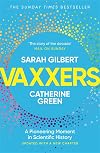
Interesting but not grabbing. Gives a feel for the hard work but not deep insight into the science

Set of reports on the state of British life from a personal point of view, set in different locations. The first, the longest, is about his father and his milieu as a Glasgow working class man. It has particular fascination for me, so many echoes of my father‘s cultural reference points: Kathleen Ferrier, Paul Court Orchestra et c. other essays are set in leftover British colonies (the Falklands, Rhodesia in its last days under that name, etc). These remind me somewhat of the gringo colony in Lima, narrow and boring. I did not read on. Not quite sure what the title refers to; the book was written quite a while ago, the oil has still not run out.
80/20 Your Life: Work Less, Worry Less, Succeed More, Enjoy More - Use The 80/20 Principle to invest and save money, improve relationships and become happier by Richard Koch
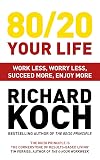
Silly self-improvement book. Takes Pareto’s principle and naively applies it to every aspect of life and business. Sure it’s a good idea to concentrate on essentials, what you’re good at, and enjoy doing. But the trivia still need attention and if you did manage to eliminate them others would creep in by the back door. Pareto’s insight for me is that only 20% of our actions really count, which does not mean we can change that.
[(Medicine's 10 Greatest Discoveries)] [ By (author) Meyer Friedman, By (author) Gerald W. Friedland ] [September, 2000] by Meyer Friedman
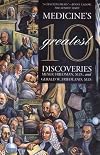
Thank God for books like this. Been sitting neglected on my shelves for years, in fact a masterpiece of clear exposition, experts explain important things to the laity.
Brilliant in many ways, not least bringing alive the people behind the great medical moments. Key take aways: most discoveries involve many people not just one hero; often takes a long time before a discovery is applied to practice or even recognised: those earlier explorers often don’t find their way into the textbooks.
The DNA story gets almost completely rewritten here. The chapter is entitled “Wilkins and DNA, so not even a nod to Crick & Watson. Someone called Miescher did significant groundbreaking work nearly a century earlier. Watson comes across as an ambitious chancer, even if intelligent.
Brilliant in many ways, not least bringing alive the people behind the great medical moments. Key take aways: most discoveries involve many people not just one hero; often takes a long time before a discovery is applied to practice or even recognised: those earlier explorers often don’t find their way into the textbooks.
The DNA story gets almost completely rewritten here. The chapter is entitled “Wilkins and DNA, so not even a nod to Crick & Watson. Someone called Miescher did significant groundbreaking work nearly a century earlier. Watson comes across as an ambitious chancer, even if intelligent.
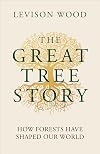
Preaching: hug those trees! embrace those natives! Does not mention the disappearance of large fauna in America, Australia etc just as Homo sapiens turned up.
Nominal determinism rules! not only the author’s surname Levinson Wood, also quotes from someone called Tree and on the team is a Garden
Mispronunciations on audio: Herodotus, decimate, Wohlleben.
Nominal determinism rules! not only the author’s surname Levinson Wood, also quotes from someone called Tree and on the team is a Garden
Mispronunciations on audio: Herodotus, decimate, Wohlleben.
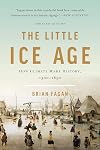
Audible version. The narrator is a pain. Not only mispronounced words, a common fault, he gets the emphasis in many sentences wrong as well and brings each sentence out as if it ended with ! !
Intérnecine ! Echoing shakespeare’s incarnadine
prōcessing ! Describing a line of people moving along, not a lump of food in a mixer
Requires the use of statistical méthods - when the meaning calls for emphasis on the adjective
Findhorn as if opposite of Losthorn
Content is really not much better. Main takeaway is: the weather was as changeable in the little ice age as it has been this morning. There seems to be no argument, no basic summary, no overview. the book is packed with details, of interest perhaps, but relevance? We get the full dinner menu of a French farmer, the exchange of shipbuilding methods between Basques and Nordics. various methods of salting cod including its name in Spanish in case you want to order a portion on your next visit to the Costa Brava.
Intérnecine ! Echoing shakespeare’s incarnadine
prōcessing ! Describing a line of people moving along, not a lump of food in a mixer
Requires the use of statistical méthods - when the meaning calls for emphasis on the adjective
Findhorn as if opposite of Losthorn
Content is really not much better. Main takeaway is: the weather was as changeable in the little ice age as it has been this morning. There seems to be no argument, no basic summary, no overview. the book is packed with details, of interest perhaps, but relevance? We get the full dinner menu of a French farmer, the exchange of shipbuilding methods between Basques and Nordics. various methods of salting cod including its name in Spanish in case you want to order a portion on your next visit to the Costa Brava.
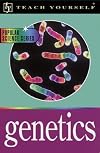
Tell us the whole damn thing at least up to 1997, neatly and cleanly in 150 pages. Well done, teach yourself books.
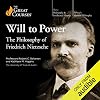
Full of enthusiasm and wide knowledge of Nietzsche and and where he fits into the whole history of philosophy. The speakers pay little attention to his adoption by the Nazis, describing for example the phrase “the will to power” as “unfortunate”. But it’s not just the phrasing, it’s his whole air of impatience , even contempt, towards the weakness of humanity that made him ripe for takeover by Hitler and his cronies. Some direct quotes from Nietzsche’s texts are very elegant even in translation. But I still find Nietzsche has little to say to me. So this book ****, Nietzsche himself **
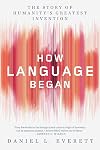
Wide ranging potentially interesting but somehow never quite gets there. Some of it the science of the bleeding obvious. Best bit is his demolition of Naom Chomsky whom I’ve always suspected of fraud., or at best naiveté. Here we see he is also guilty of false concreteness. The idea of a single gene suddenly producing language in every human being is silly and the author does a good job on that. The whole enterprise of the book is marked by the most excruciating narrator, his voice distorting every vowel in the book. So much for language.
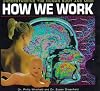
Body and mind , perhaps body and brain. Definitely a game of 2 halves. The first part is detailed anatomy and full of hard facts; the second half starts with the structure of the brain itself, attempting to capture its physical complexity, and then goes off into psychology, sociology and beyond. The difference in tone is marked: in the first half it’s all hard facts, rather a lot of of them, and technical terms mostly new to me - but that’s all the facts when it comes to hard tacks. The second half, once it goes beyond the brain's physical structure, is one unknown after another. Speculative guesses abound. These two quotes give a flavour of the difference:
Body:
“The fine tubes containing urine coalesce in the medulla into wider and wider ducts that eventually form a large urine filled space, the renal pelvis, which leads directly to the urethra.”
Brain:
“Physical abnormalities in the brain can be linked to schizophrenia, but it is not certain whether these signs of damage caused the disorder or are caused by it.”
The first half was really difficult for me to grasp, having only a sparse background in biology or medicine (eg, the swallowing mechanism is divided into 4 phases calling for 8 illustrations; not sure I'll ever be able to down a pill again). The second half was something of a breeze; all familiar stuff, whether it’s references to Freud or phobias; a smooth read for any reasonably educated person. Fact is, we humans, or at least our medics, understand show more how our bodies work but our minds remain a mystery.
The illustrations are bold, spreading dramatically across the pages but oddly enough they don’t do a great deal to help me understand.
An interesting titbit was the tabulation of views of different religions on moral questions. The secular crew is are an easy-going lot. But overall the only thing all agree on is that murder, theft, lying and adultery are Bad Things. How they variously view war, dangerous driving, or the trolley problem would be matters for long debate.
The title itself sits a little uneasily. “How we work“ suggests “We don’t half work hard“. Squirming to avoid an un-PC title like “Man’s body and mind””.
The book is nt new, dating back to 1997. Wonder if some of the hedging of bets about the mind has been settled. I doubt it. show less
Body:
“The fine tubes containing urine coalesce in the medulla into wider and wider ducts that eventually form a large urine filled space, the renal pelvis, which leads directly to the urethra.”
Brain:
“Physical abnormalities in the brain can be linked to schizophrenia, but it is not certain whether these signs of damage caused the disorder or are caused by it.”
The first half was really difficult for me to grasp, having only a sparse background in biology or medicine (eg, the swallowing mechanism is divided into 4 phases calling for 8 illustrations; not sure I'll ever be able to down a pill again). The second half was something of a breeze; all familiar stuff, whether it’s references to Freud or phobias; a smooth read for any reasonably educated person. Fact is, we humans, or at least our medics, understand show more how our bodies work but our minds remain a mystery.
The illustrations are bold, spreading dramatically across the pages but oddly enough they don’t do a great deal to help me understand.
An interesting titbit was the tabulation of views of different religions on moral questions. The secular crew is are an easy-going lot. But overall the only thing all agree on is that murder, theft, lying and adultery are Bad Things. How they variously view war, dangerous driving, or the trolley problem would be matters for long debate.
The title itself sits a little uneasily. “How we work“ suggests “We don’t half work hard“. Squirming to avoid an un-PC title like “Man’s body and mind””.
The book is nt new, dating back to 1997. Wonder if some of the hedging of bets about the mind has been settled. I doubt it. show less
Certainly not nothing, very substantial, starting of with the Greeks through the middle ages to relativity and the whole crew. Some of the mathematical bits were beyond me but otherwise all very clear.
Come away with the impression of the Greeks having a real enquiring mind, then as in the title of the book the church came along and forced the western mind to close for 1000 years and more. Then things opened up again, people started asking real questions again, not just accepting authority. And the pace increased exponentially and is still going on: relativity, quantum theory, AI and more
Come away with the impression of the Greeks having a real enquiring mind, then as in the title of the book the church came along and forced the western mind to close for 1000 years and more. Then things opened up again, people started asking real questions again, not just accepting authority. And the pace increased exponentially and is still going on: relativity, quantum theory, AI and more
Very Jolly, but nothing substantial really sticks either in my mind or my body
Excellent and wide ranging starting out with Euclid and going right through to modern times. Recurring theme is Lincoln when he worked as a travelling lawyer doing homework every night with Euclid and how could apply to legal arguments. A book worth reading again.
At 700+ pages, certainly not a slim volume, even if it might help you to slim. In fact borderline indigestible; fact piled on fact, every reference given to Greger‘s own research and publications both in print and online, often 20 or 30 refs per page .I did a kind of speed reading, browsing at each chapter and some of his summaries or comments, then looking up a few items of my own particular interests. he even has humour but does little to lift the heaviness of the whole enterprise.
Audiobook read by the author. One of the best audiobooks ever.. Gives a dramatic and detailed account of the opioid crisis as a whole and the Sacker family role in it. Intimate research, scientific and technical detail, beautifully handled. Above all, the dramatic unfolding over several generations of a family who knew how to play the game. Lies, denial, squirmings, highly paid lawyers, sacrifice of colleagues and the denouement, almost unexpected: they get CLEAN away. An indictment, if one were needed, of the whole American capitalist system and its twisted integration with the law and politics. If the Sacklers could do all this and get away with it, what else is happening in America?