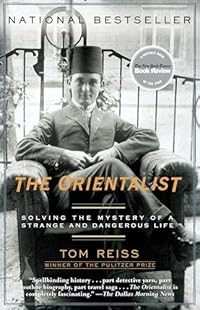
The Orientalist: Solving the Mystery of a Strange and Dangerous Life
by Tom Reiss
On This Page
Description
This book traces the life of Lev Nussimbaum, a Jew who transformed himself into a Muslim prince and became a best-selling author in Nazi Germany. Born in 1905 in Baku, at the edge of the czarist empire, Lev escaped the Russian Revolution in a camel caravan. He found refuge in Germany, where, writing under the names Essad Bey and Kurban Said, his remarkable books about Islam, desert adventures, and global revolution, became celebrated across fascist Europe. But his life grew wilder than his show more wildest stories. He married an international heiress who had no idea of his true identity--until she divorced him in a tabloid scandal. His closest friend in New York was arrested as the leading Nazi agent in the United States. He was invited to be Mussolini's official biographer--until the Fascists discovered his "true" identity. Under house arrest, he wrote his last book, helped by a mysterious half-German salon hostess, an Algerian weapons-smuggler, and the poet Ezra Pound. As he tracks down the pieces of Lev's deliberately obscured life, Reiss discovers a series of shadowy worlds--of European pan-Islamists, nihilist assassins, anti-Nazi book smugglers, Baku oil barons, Jewish Orientalists--that have also been forgotten. The result is a thoroughly unexpected picture of the twentieth century--of the origins of our ideas about race and religious self-definition, and of the roots of modern fanaticism and terrorism. show lessTags
Recommendations








Member Recommendations

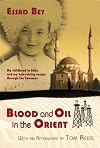
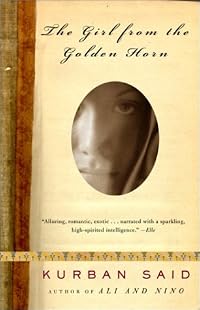
Artymedon A book by the main character of the Orientalist.

Member Reviews
http://nhw.livejournal.com/466903.html
This is a biography of the author of Ali and Nino, the insufficiently famous great romantic novel of the South Caucasus. Although Ali and Nino was published under the pseudonym of "Kurban Said", the author was born Lev Nussimbaum, apparently on a train in 1905, and grew up in Baku where his father, a minor oil magnate, was doing good business with the Swedish Nobel brothers (of dynamite, and the Nobel Prizes); his mother may well have invited Stalin round for tea occasionally; when the revolution came they fled to Constantinople, then Paris, and finally Berlin where he was in the same class at the school for the children of Russian exiles as the sisters of Boris Pasternak and Vladimir Nabokov; he show more later converted from Judaism to Islam and was best known as a writer on history and contemporary politics under the name of Essad Bey (his biography of the Prophet Mohammed has never been out of print). He died an early death, in Italian exile, caused by a horrifying medical condition in which bits of his feet gradually dropped off, aged just 37, Ezra Pound's last-minute efforts to help him being all in vain; and his grave became the butt of a comic anecdote told by John Steinbeck.
I'm afraid the summary above does not do justice to this fascinating book. Reiss has obviously been in the grip of an obsession with his subject, and understandably so. His portrayal of the religious, cultural, political and social background of Baku and the Russian Empire in the early twentieth century is utterly convincing, and he does decent vignettes of 1920s Turkey and inter-war Berlin as well. His central argument is that Nussimbaum was a late representative of a strand of Jewish thinking which saw alliance with Islam and the Arabs and Turks as the way forward, a strand which Reiss traces back to Benjamin Disraeli; obviously with the rise (and indeed political victory) of Zionism, one doesn't hear much of this side of the story, and Edward Said's account of Orientalism omits the Jewish orientalists (at least, according to Reiss, but I'm not very surprised). Nussimbaum obviously went just a little bit farther than most in a) converting to Islam and b) fervent admiration for Fascism and the Nazis, ever so slightly unusual for a writer who was originally himself Jewish.
Reiss' story of his own research permeates the biographical account, and includes nonagenarian Azeri exiles, fading central European aristocrats and the pretender to the throne of the Ottoman Empire. I felt the last part of the book was not quite as well structured - there's no account of Vienna, for instance, to match his superb descriptions of Berlin and Baku - but the strength of the material carried me through it. I'm sure that those who believe that the true author of Ali and Nino was not Nussimbaum, but really Baroness Elfriede Ehrenfels von Bodmershof, or the Azeri nationalist poet Josef Vezir, will feel more than a little short-changed by the narrative, but I'm basically convinced. Read Ali and Nino, and then read this; or vice versa, if you like, but be warned that the biography has spoilers for the novel. Both are superb. show less
This is a biography of the author of Ali and Nino, the insufficiently famous great romantic novel of the South Caucasus. Although Ali and Nino was published under the pseudonym of "Kurban Said", the author was born Lev Nussimbaum, apparently on a train in 1905, and grew up in Baku where his father, a minor oil magnate, was doing good business with the Swedish Nobel brothers (of dynamite, and the Nobel Prizes); his mother may well have invited Stalin round for tea occasionally; when the revolution came they fled to Constantinople, then Paris, and finally Berlin where he was in the same class at the school for the children of Russian exiles as the sisters of Boris Pasternak and Vladimir Nabokov; he show more later converted from Judaism to Islam and was best known as a writer on history and contemporary politics under the name of Essad Bey (his biography of the Prophet Mohammed has never been out of print). He died an early death, in Italian exile, caused by a horrifying medical condition in which bits of his feet gradually dropped off, aged just 37, Ezra Pound's last-minute efforts to help him being all in vain; and his grave became the butt of a comic anecdote told by John Steinbeck.
I'm afraid the summary above does not do justice to this fascinating book. Reiss has obviously been in the grip of an obsession with his subject, and understandably so. His portrayal of the religious, cultural, political and social background of Baku and the Russian Empire in the early twentieth century is utterly convincing, and he does decent vignettes of 1920s Turkey and inter-war Berlin as well. His central argument is that Nussimbaum was a late representative of a strand of Jewish thinking which saw alliance with Islam and the Arabs and Turks as the way forward, a strand which Reiss traces back to Benjamin Disraeli; obviously with the rise (and indeed political victory) of Zionism, one doesn't hear much of this side of the story, and Edward Said's account of Orientalism omits the Jewish orientalists (at least, according to Reiss, but I'm not very surprised). Nussimbaum obviously went just a little bit farther than most in a) converting to Islam and b) fervent admiration for Fascism and the Nazis, ever so slightly unusual for a writer who was originally himself Jewish.
Reiss' story of his own research permeates the biographical account, and includes nonagenarian Azeri exiles, fading central European aristocrats and the pretender to the throne of the Ottoman Empire. I felt the last part of the book was not quite as well structured - there's no account of Vienna, for instance, to match his superb descriptions of Berlin and Baku - but the strength of the material carried me through it. I'm sure that those who believe that the true author of Ali and Nino was not Nussimbaum, but really Baroness Elfriede Ehrenfels von Bodmershof, or the Azeri nationalist poet Josef Vezir, will feel more than a little short-changed by the narrative, but I'm basically convinced. Read Ali and Nino, and then read this; or vice versa, if you like, but be warned that the biography has spoilers for the novel. Both are superb. show less
Who knows what mysteries will be uncovered in the life of this man? A fascinating biography that is a detective-like investigation into a man who was a Jewish writer masquerading as a Muslim. How can a Jew support Hitler and then Mussolini? Much is revealed, but a lot remains obscured by time. It is a wonder that Weiss managed, through perseverance and luck, to uncover as much as he did. This book also provides insight into many of the same issues facing the Middle East in our modern world.
This book took me a long time to finish it but it was worth every single page. It's not only the biography of Lev Nussimbaum alias Essad Bey alias Kurban Said but also the historical events in Europe and Middle East during the first half of the 20th century. Those events mostly known to me revealed facts that were far different memories for me. I learned a lot about that time and and I think because certain events have been never worked off, the battles go on.
Essad Bey is a colorful character who the political realities could adapt to most. With this fictional character he could move on all parquet. There were moments where I was not sure if he had his Jewish past stripped completely or just covered. In any case I got the feeling to be show more met by a fantastic charlatan who tried to survive the events and to find his place among the authors. show less
Essad Bey is a colorful character who the political realities could adapt to most. With this fictional character he could move on all parquet. There were moments where I was not sure if he had his Jewish past stripped completely or just covered. In any case I got the feeling to be show more met by a fantastic charlatan who tried to survive the events and to find his place among the authors. show less
Born Lev Nussimbaum in Baku in the revolutionary year of 1905, and buried as Mohammed Essad Bey in Positano during the second world war, the writer who is the protagonist of this biography reveled in creating new identities and life stories for himself, but ultimately was trapped by the weight of geography and history. This book hadn't intrigued me when it first came out, but after reading Tom Reiss's The Black Count, I was eager to read this earlier work and I was not disappointed. Reiss became interested in Nussimbaum when he traveled to Baku to write an article about oil and was introduced to the novel Ali and Nino, written by someone named Kurban Said, said to be the best book to read about the place; who Kurban Said was was a show more mystery, a mystery which led him to research the life of Nussimbaum/Bey.
And quite a life it was. His father was a an oil millionaire in Baku, but father and son had to flee across the Caucusus after the 1917 revolution, with quite dramatic adventures along the way, adventures made even more dramatic by Nussimbaum/Bey when he wrote about them. (His mother, a revolutionary, had killed herself earlier.) As a child, and especially after this flight, young Lev became interested in what we would now call the multicultural but then was called, often derogatorily, cosmopolitan nature of the region, with Jews, Muslims, Azeris, Russians, and more interacting in business and in the streets. He became especially intrigued by Turkish culture in particular, and came to invent a Turkish and Persian heritage for himself.
Along with other emigrés from Soviet Russia, Lev and his father moved around Europe from Paris to Berlin, eventually becoming poor. Lev invented his Essad Bey persona, began to write nonfiction, and hung out with a literary crowd. Having grown up with the turmoil and danger of revolution, he had strong anti-revolutionary politics and even flirted with fascism. Later, he began to write fiction, married, visited the US, was divorced, and started writing fiction. Here is where the mystery of the name Kurban Said comes in. Eventually fleeing Nazi Berlin, he landed for a while in Vienna, then in Italy, where he became very sick and died, known in Positano only as "the Muslim."
Even more interesting than Nussimbaum's strange and sad story is the background Reiss provides on the times, places, and events. From the oil boom days in Baku to the cultures of the Caucasus, from the revolutionary and counterrevolutionary events in Berlin in the 20s and 30s to the lives of the emigré population in Paris and Berlin, from the fascination of the west with "eastern" culture to the effects of the Nazi takeover of publishing, and more, he brings compelling and (to me) little known history to life. As with his later biography, this one also reads like a novel, but Reiss conducted extensive interviews, read primary sources, and includes detailed notes and a lengthy biography. show less
And quite a life it was. His father was a an oil millionaire in Baku, but father and son had to flee across the Caucusus after the 1917 revolution, with quite dramatic adventures along the way, adventures made even more dramatic by Nussimbaum/Bey when he wrote about them. (His mother, a revolutionary, had killed herself earlier.) As a child, and especially after this flight, young Lev became interested in what we would now call the multicultural but then was called, often derogatorily, cosmopolitan nature of the region, with Jews, Muslims, Azeris, Russians, and more interacting in business and in the streets. He became especially intrigued by Turkish culture in particular, and came to invent a Turkish and Persian heritage for himself.
Along with other emigrés from Soviet Russia, Lev and his father moved around Europe from Paris to Berlin, eventually becoming poor. Lev invented his Essad Bey persona, began to write nonfiction, and hung out with a literary crowd. Having grown up with the turmoil and danger of revolution, he had strong anti-revolutionary politics and even flirted with fascism. Later, he began to write fiction, married, visited the US, was divorced, and started writing fiction. Here is where the mystery of the name Kurban Said comes in. Eventually fleeing Nazi Berlin, he landed for a while in Vienna, then in Italy, where he became very sick and died, known in Positano only as "the Muslim."
Even more interesting than Nussimbaum's strange and sad story is the background Reiss provides on the times, places, and events. From the oil boom days in Baku to the cultures of the Caucasus, from the revolutionary and counterrevolutionary events in Berlin in the 20s and 30s to the lives of the emigré population in Paris and Berlin, from the fascination of the west with "eastern" culture to the effects of the Nazi takeover of publishing, and more, he brings compelling and (to me) little known history to life. As with his later biography, this one also reads like a novel, but Reiss conducted extensive interviews, read primary sources, and includes detailed notes and a lengthy biography. show less
Solving the Mystery of a Strange and Dangerous Life
As he headed toward the city of Baku in Azerbaijan, in 1998, to write about the new oil boom there in the southernmost stretches of European Russia, Tom Reiss was offered the romantic novel "Ali and Nino" as an introduction to the Caucasus 'that would be more useful than any guide' he might read for the city he would shortly be visiting. The Introduction to the novel had said that "Kurban Said is a pen name and no one seems to know for certain the real name of the man who chose it." In Baku, Reiss noticed another novel in a book rack, "Blood and Oil in the Orient" by "Essad Bey (Lev Nussimbaum)," which said on the cover that it was"written by the author of 'Ali and Nino' " Intrigued by show more the multiple names, Reiss began his search and eventually discovered over 300 private letters, unpublished book manuscripts, six hidden death-bed notebooks with Kurban Said's final account of himself, "The Man Who Knew Nothing About Love", and then interviewed many people, then in their 80's and 90's, who had known him.
Kurban Said was born Lev Nussimbaum, in Baku, in October 1905, during the turbulence and pogroms of the Revolution of 1905, when the Czar signed the October Manifesto ceding some power and creating an elected Duma. He lived his early life there in a culturally diverse, but overwhelmingly Islamic Baku, until the 1917 Bolshevik Revolution sent him and his father fleeing for their lives via the Southern route that many emigres followed out of Russia, first to Paris, and then onto Berlin in 1921. His wealth and his Jewish birth left him vulnerable to the ism's of the day, Communism in Russia earlier and Fascism in Berlin later, but he managed to skirt the dangers and survive. His attraction for the Orient had begun during his childhood school days and continued throughout his life, finally forming the springboard for his career as a literary figure during the 20's and 30's when he wrote numerous books and articles about the Orient for the benefit of a Western audience. In 1922, he formally converted to Islam and soon thereafter styled himself Essad Bey, recreating himself as an Oriental prince, complete with Caucasian Muslim garb. When he was finally banned in Germany because of his background, he became "Kurban Said" and went on writing under his new name. After visits to the United States and Hollywood in 1932-38, from his home in Vienna, he finally retired to live out his now near-destitute days in Positano, Italy. He died there of a chronic disease, still a young man, in 1942.
Of at least equal interest in the book are the detailed descriptions of the historical environments in which Lev/Essad/Kurban lived his life. Germany of the 20's, especially, was the prequel to the horrors of the modern history that we are perhaps much more familiar with, which Hitler would unleash with his rise to the Chancellorship in 1933. For this reader, the detailed description of the political, social and intellectual chaos during the 20's almost beggars the imagination in terms of anything I have read before. It was a period when Dorothy Thompson, writing for Cosmopolitan as late as 1932, could obtain an interview with the future Fuehrer and come away saying: "He is inconsequent and voluble ... ill-poised, insecure. He is the prototype of the Little Man. . . When I finally walked into Adolf Hitler's salon in the Kaiserhof Hotel, I was convinced that I was meeting the future dictator of Germany. In something less than 50 seconds I was quite sure I was not." It was a period when Communists and Fascists, bitter enemies, would put previous enmity aside, and unite forces to demonstrate jointly to bring down the Weimar government. It was a period when many people actively favored Nazism because it was seen as preventing the greater evil of Communism from engulfing Germany. It was a period, as late as 1933, when "Even Walter Lippman, probably the most influential Jewish writer in America at the time, warned readers of his nationally syndicated column that to judge Nazi Germany by its concentration camps was to judge Protestantism by the Ku Klux Klan or the Jews by their parvenus." It was a period difficult to imagine, even with all we know, and this book sheds glaring invaluable light on it.
Now, finally, Muslim Kurban Said rests in a cemetery in Positano, Italy, overlooking the Tyrrhenian Sea, facing Mecca from under a headstone bearing a carved turban, after having been born Jewish in Baku, Azerbaijan, as Lev Nussimbaum, and converted to Islam as an adult, and having lived under the guise of an Arab prince Essad Bey. He rests now, the Orientalist, as Muhammed Essad Bey, mysterious when he was alive, finally known and understood through this amazing investigative biography written by Tom Reiss.
It is very well worth reading for the history of a life and the unimaginable times that the Orientalist endured. Let them never be forgotten. show less
As he headed toward the city of Baku in Azerbaijan, in 1998, to write about the new oil boom there in the southernmost stretches of European Russia, Tom Reiss was offered the romantic novel "Ali and Nino" as an introduction to the Caucasus 'that would be more useful than any guide' he might read for the city he would shortly be visiting. The Introduction to the novel had said that "Kurban Said is a pen name and no one seems to know for certain the real name of the man who chose it." In Baku, Reiss noticed another novel in a book rack, "Blood and Oil in the Orient" by "Essad Bey (Lev Nussimbaum)," which said on the cover that it was"written by the author of 'Ali and Nino' " Intrigued by show more the multiple names, Reiss began his search and eventually discovered over 300 private letters, unpublished book manuscripts, six hidden death-bed notebooks with Kurban Said's final account of himself, "The Man Who Knew Nothing About Love", and then interviewed many people, then in their 80's and 90's, who had known him.
Kurban Said was born Lev Nussimbaum, in Baku, in October 1905, during the turbulence and pogroms of the Revolution of 1905, when the Czar signed the October Manifesto ceding some power and creating an elected Duma. He lived his early life there in a culturally diverse, but overwhelmingly Islamic Baku, until the 1917 Bolshevik Revolution sent him and his father fleeing for their lives via the Southern route that many emigres followed out of Russia, first to Paris, and then onto Berlin in 1921. His wealth and his Jewish birth left him vulnerable to the ism's of the day, Communism in Russia earlier and Fascism in Berlin later, but he managed to skirt the dangers and survive. His attraction for the Orient had begun during his childhood school days and continued throughout his life, finally forming the springboard for his career as a literary figure during the 20's and 30's when he wrote numerous books and articles about the Orient for the benefit of a Western audience. In 1922, he formally converted to Islam and soon thereafter styled himself Essad Bey, recreating himself as an Oriental prince, complete with Caucasian Muslim garb. When he was finally banned in Germany because of his background, he became "Kurban Said" and went on writing under his new name. After visits to the United States and Hollywood in 1932-38, from his home in Vienna, he finally retired to live out his now near-destitute days in Positano, Italy. He died there of a chronic disease, still a young man, in 1942.
Of at least equal interest in the book are the detailed descriptions of the historical environments in which Lev/Essad/Kurban lived his life. Germany of the 20's, especially, was the prequel to the horrors of the modern history that we are perhaps much more familiar with, which Hitler would unleash with his rise to the Chancellorship in 1933. For this reader, the detailed description of the political, social and intellectual chaos during the 20's almost beggars the imagination in terms of anything I have read before. It was a period when Dorothy Thompson, writing for Cosmopolitan as late as 1932, could obtain an interview with the future Fuehrer and come away saying: "He is inconsequent and voluble ... ill-poised, insecure. He is the prototype of the Little Man. . . When I finally walked into Adolf Hitler's salon in the Kaiserhof Hotel, I was convinced that I was meeting the future dictator of Germany. In something less than 50 seconds I was quite sure I was not." It was a period when Communists and Fascists, bitter enemies, would put previous enmity aside, and unite forces to demonstrate jointly to bring down the Weimar government. It was a period when many people actively favored Nazism because it was seen as preventing the greater evil of Communism from engulfing Germany. It was a period, as late as 1933, when "Even Walter Lippman, probably the most influential Jewish writer in America at the time, warned readers of his nationally syndicated column that to judge Nazi Germany by its concentration camps was to judge Protestantism by the Ku Klux Klan or the Jews by their parvenus." It was a period difficult to imagine, even with all we know, and this book sheds glaring invaluable light on it.
Now, finally, Muslim Kurban Said rests in a cemetery in Positano, Italy, overlooking the Tyrrhenian Sea, facing Mecca from under a headstone bearing a carved turban, after having been born Jewish in Baku, Azerbaijan, as Lev Nussimbaum, and converted to Islam as an adult, and having lived under the guise of an Arab prince Essad Bey. He rests now, the Orientalist, as Muhammed Essad Bey, mysterious when he was alive, finally known and understood through this amazing investigative biography written by Tom Reiss.
It is very well worth reading for the history of a life and the unimaginable times that the Orientalist endured. Let them never be forgotten. show less
(#17 in the 2007 book challenge)
Thankfully, this was a book that was actually compelling. It's a biography heavily placed into historical context, during the rise of the Soviet and the rise of the Nazis. The subject is Lev Nussimbaum, later known as Essad Bey (among other things), who was a successful and established author with a seriously intriguing and painfully tragic life story. From a wealthy Jewish family in Azerbaijan, he and his family flee the Russians as refugees and finally end up in Berlin, just in time for Hitler. Having spent his childhood in an Muslim country, he converts to Islam and takes up a new identity. This is the kind of book where there is a main point on every page, so it's nearly impossible to sum up his story show more because it's all the nuances and details that make it so noteworthy. The concept that struck me the most was the observation that now in the present day, we have this idea that the conflict in the Middle East between Islam and Judaism is this historical, established, inevitable clash of culture and concept, but that ignores the reality that Jews and Muslims had previously shared a long tradition of co-existing pretty darn successfully as two aspects of a shared "Oriental" identity.
Grade: A
Recommended: Oh yes, this is very good. I will note that it's more heavy on the history than its marketing would lead you to believe. show less
Thankfully, this was a book that was actually compelling. It's a biography heavily placed into historical context, during the rise of the Soviet and the rise of the Nazis. The subject is Lev Nussimbaum, later known as Essad Bey (among other things), who was a successful and established author with a seriously intriguing and painfully tragic life story. From a wealthy Jewish family in Azerbaijan, he and his family flee the Russians as refugees and finally end up in Berlin, just in time for Hitler. Having spent his childhood in an Muslim country, he converts to Islam and takes up a new identity. This is the kind of book where there is a main point on every page, so it's nearly impossible to sum up his story show more because it's all the nuances and details that make it so noteworthy. The concept that struck me the most was the observation that now in the present day, we have this idea that the conflict in the Middle East between Islam and Judaism is this historical, established, inevitable clash of culture and concept, but that ignores the reality that Jews and Muslims had previously shared a long tradition of co-existing pretty darn successfully as two aspects of a shared "Oriental" identity.
Grade: A
Recommended: Oh yes, this is very good. I will note that it's more heavy on the history than its marketing would lead you to believe. show less
This was absolutely one of the best books I’ve ever read. And definitely the best book that I’ve read in the last two years.
Ostensibly, the book is the story of a deliberately obscure author who is born in Baku, Azerbaijan, and as the antebellum World War I falls apart, flees to Constantinople, then Berlin, and after a short period in New York City, to Vienna and after the Anschluss to Positano, Italy, where he dies as age 35. In reality, the book is the story both of a turbulent era, and a region of the world that fuses East and West. Even though I consider myself a serious history buff, the book was mostly information with which I was not familiar.
As usual I have a quibble but that didn't keep it from a "five." I occasionally had show more to retrace some of my reading to remind myself of who people were that did not seem important at first mention. I highly recommend reading this book. show less
Ostensibly, the book is the story of a deliberately obscure author who is born in Baku, Azerbaijan, and as the antebellum World War I falls apart, flees to Constantinople, then Berlin, and after a short period in New York City, to Vienna and after the Anschluss to Positano, Italy, where he dies as age 35. In reality, the book is the story both of a turbulent era, and a region of the world that fuses East and West. Even though I consider myself a serious history buff, the book was mostly information with which I was not familiar.
As usual I have a quibble but that didn't keep it from a "five." I occasionally had show more to retrace some of my reading to remind myself of who people were that did not seem important at first mention. I highly recommend reading this book. show less
Members
- Recently Added By
Lists

Books Read in 2016
4,666 works; 197 members
Author Information

5+ Works 3,130 Members
Tom Reiss (born May 5, 1964) is an American author, historian, and journalist. He grew up in New York City and graduated from Harvard University in 1987. Reiss is the author of three nonfiction books, the latest of which is The Black Count: Glory, Revolution, Betrayal, and the Real Count of Monte Cristo (2012), which received the 2013 Pulitzer show more Prize for Biography or Autobiography. His previous books are Führer-Ex: Memoirs of a Former Neo-Nazi (1996), the first inside exposé of the European neo-Nazi movement; and The Orientalist: Solving the Mystery of a Strange and Dangerous Life (2005), which became an international bestseller. As a journalist, Reiss has written for The New Yorker, The Wall Street Journal, and The New York Times. (Bowker Author Biography) show less
Awards and Honors
Series
Belongs to Publisher Series
Common Knowledge
- Original title
- The Orientalist. Solving the Mystery of a Strange and Dangerous Life
- Original publication date
- 2005
- People/Characters
- Lev Nussimbaum
- Important places*
- Azerbeidzjan
*Some information comes from Common Knowledge in other languages. Click "Edit" for more information.
Classifications
Statistics
- Members
- 1,038
- Popularity
- 24,737
- Reviews
- 23
- Rating
- (3.97)
- Languages
- 12 — Czech, Danish, Dutch, English, French, German, Italian, Norwegian (Bokmål), Norwegian, Polish, Portuguese, Spanish
- Media
- Paper, Audiobook, Ebook
- ISBNs
- 26
- ASINs
- 5