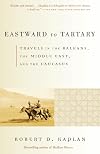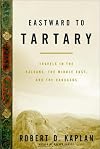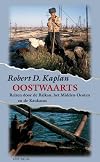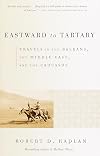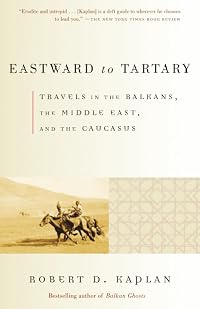
Eastward to Tartary: Travels in the Balkans, the Middle East, and the Caucasus
by Robert D. Kaplan
On This Page
Description
Eastward to Tartary, Robert Kaplan's first book to focus on a single region since his bestselling Balkan Ghosts, introduces readers to an explosive and little-known part of the world destined to become a tinderbox of the future. Kaplan takes us on a spellbinding journey into the heart of a volatile region, stretching from Hungary and Romania to the far shores of the oil-rich Caspian Sea. Through dramatic stories of unforgettable characters, Kaplan illuminates the tragic history of this show more unstable area that he describes as the new fault line between East and West. He ventures from Turkey, Syria, and Israel to the turbulent countries of the Caucasus, from the newly rich city of Baku to the deserts of Turkmenistan and the killing fields of Armenia. The result is must reading for anyone concerned about the state of our world in the decades to come. show lessTags
Recommendations







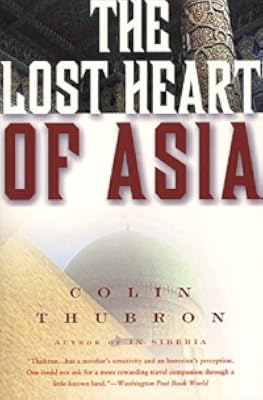


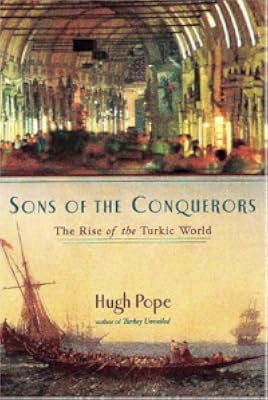


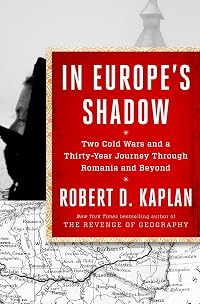
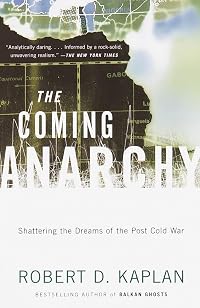




















Member Recommendations
John_Vaughan When you read Kaplan the sheer power of his acute observation shine...



Member Reviews
One of the best reads I've had i a while, and I've had some good ones. This book has really changed my thinking about many things: the downside when tyrannical empires end (Kaplan looks hard at the Soviet Union), the strange bedfellows of frontier politics (Israeli and Iranian oilmen in Central Asia), the role of the West, if any, in stabilizing the Balkans, the Near East, and Central Asia before it's too late (Iraq, maybe?), and the frequency with which good intentions cause horrific catastrophe, while bad intentions sometimes bring about a great gift to a neglected part of the world. I guess I'm not an anarchist any more, but if I was, Kaplan's work could have talked me out of it.
Robert Kaplan is a traveling writer/journalist who tries to interpret what he sees in the wider context of the World. He has long been one of my favourites, although his later books are becoming more and more something of a Tour de Force, trying to prove some grand, preconceived idea through going places, and then fit the observations to the idea. The Lebanon chapter (and the Turkey and Syria ones, for that matter) in “Eastwards to Tartary” (2000) is also somewhat disappointing. Compared to William Dalrymple, for instance, who visited the same area round about the same time, Kaplan doesn’t get nearly as much out of his journey, and remains stuck in the observations that Syria controls and dominates, and that Lebanon has embarked show more on a post-war consumer spree. I
NB: The comparison between the Brit Dalrymple and the American Kaplan is an interesting one. Where Dalrymple describes the history of Lebanon from the perspective of his observations, and is clearly on a journey of discovery, Kaplan travels with the usual American confidence, knowing it all, never doubting his conclusions. The word “perhaps” you won’t find in Kaplan’s books. Both writers meet Wahlid Jumblatt, the Druze leader, but Dalrymple somehow comes up with a much more interesting account after seeing the man for less than an hour, whilst Kaplan had a whole afternoon lunch with the man, without generating much insight.
The section on the Balkans, and Romania and Bulgaria, is also rather disappointed by the lack of depth, and lack of detail – perhaps inevitable, as this book, touted as Kaplan’s first book since Balkan Ghosts to focus on a single region again, in fact takes the author from Hungary via Romania, Bulgaria and Turkey into Armenia and Azerbijan to end in Turkmenistan, meanwhile taking a sidetrip to Syria, Jordan, Lebanon and Israel. So much for a ‘single region’… Like Lebanon, Romania and Bulgaria are covered somewhat hastily in this book. The story is low on travel observations and experiences, and heavy on interviews, whereby Mr. Kaplan has now acquired sufficient international fame to get access to presidents, mayors and professors, which leaves less time for discussions with the common people he so effectively used to paint a picture of a country in transition, in his earlier books. I can also not escape the impression that hope has been replaced by despair, as far as Romania and Bulgaria are concerned. show less
NB: The comparison between the Brit Dalrymple and the American Kaplan is an interesting one. Where Dalrymple describes the history of Lebanon from the perspective of his observations, and is clearly on a journey of discovery, Kaplan travels with the usual American confidence, knowing it all, never doubting his conclusions. The word “perhaps” you won’t find in Kaplan’s books. Both writers meet Wahlid Jumblatt, the Druze leader, but Dalrymple somehow comes up with a much more interesting account after seeing the man for less than an hour, whilst Kaplan had a whole afternoon lunch with the man, without generating much insight.
The section on the Balkans, and Romania and Bulgaria, is also rather disappointed by the lack of depth, and lack of detail – perhaps inevitable, as this book, touted as Kaplan’s first book since Balkan Ghosts to focus on a single region again, in fact takes the author from Hungary via Romania, Bulgaria and Turkey into Armenia and Azerbijan to end in Turkmenistan, meanwhile taking a sidetrip to Syria, Jordan, Lebanon and Israel. So much for a ‘single region’… Like Lebanon, Romania and Bulgaria are covered somewhat hastily in this book. The story is low on travel observations and experiences, and heavy on interviews, whereby Mr. Kaplan has now acquired sufficient international fame to get access to presidents, mayors and professors, which leaves less time for discussions with the common people he so effectively used to paint a picture of a country in transition, in his earlier books. I can also not escape the impression that hope has been replaced by despair, as far as Romania and Bulgaria are concerned. show less
I liked this book a lot. Kaplan's writing is best when he travels across territories and compares one with the others. This book is a lot like Ryszard Kapuscinski's writing.
Since writing Balkan Ghosts — which was reputedly very influential in the Clinton White House during the Balkan conflict — Robert Kaplan has become famous for writing travel literature that is part travelogue and part foreign policy briefing. Most of his books are about parts of the world most Americans couldn’t pick out on a map, let alone say anything intelligent about. Even the supposed educated elite would be hard pressed to name a single factoid about places like Azerbaijan. The same can’t be said for someone who has read Eastward to Tartary.
In Eastward to Tartary, Kaplan starts off in what is often euphemistically called “New Europe,” otherwise known as “Eastern” or, perhaps more accurately, “Central” Europe. show more In Budapest he meets an eccentric man who posits the idea that the amount of democracy and “civilization” present in a country today is directly related to how close the country was geographically, socially and politically to Europe during the enlightenment. This theme, amended to include the influence of the Ottoman and Soviet Empires, is woven throughout Kaplan’s travels through Romania, Bulgaria, Turkey, Syria, Lebanon, Jordan, Israel, Georgia, Azerbaijan, Turkmenistan, Uzbekistan and Armenia.
To read the rest of this review, click here show less
In Eastward to Tartary, Kaplan starts off in what is often euphemistically called “New Europe,” otherwise known as “Eastern” or, perhaps more accurately, “Central” Europe. show more In Budapest he meets an eccentric man who posits the idea that the amount of democracy and “civilization” present in a country today is directly related to how close the country was geographically, socially and politically to Europe during the enlightenment. This theme, amended to include the influence of the Ottoman and Soviet Empires, is woven throughout Kaplan’s travels through Romania, Bulgaria, Turkey, Syria, Lebanon, Jordan, Israel, Georgia, Azerbaijan, Turkmenistan, Uzbekistan and Armenia.
To read the rest of this review, click here show less
Fascinating! Launched my interest in Central Asia and the Balkans and made me want to read books again. Kaplan is among my favorite authors.
Fascinating! Launched my interest in Central Asia and the Balkans and made me want to read books again. Kaplan is among my favorite authors.
a great regional comparison of police states and dictatorships, then and now.
Members
- Recently Added By
Published Reviews
Like V. S. Naipaul in his pessimism, Niccolo Machiavelli in his realism, and Herodotus in his Eurocentrism, Kaplan is an able practitioner of the travel literature genre.
added by John_Vaughan
Lists

Best of Travel Narratives
142 works; 28 members
Author Information

36+ Works 10,107 Members
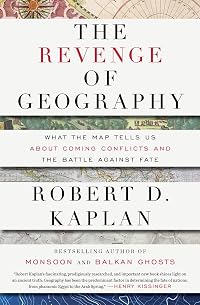
Journalist Robert D. Kaplan is a contributing editor The Atlantic Monthly. He has traveled extensively, and his journeys through Yugoslavia and America have produced, respectively, Balkan Ghosts (which was nominated for a Pulitzer Prize) and An Empire Wilderness. Kapan is also the author of Monsoon: The Indian Ocean and the Future of American show more Power (Random House, 2010) and The Revenge of Geography (Random House, 2012) Kaplan has lectured at the FBI, the National Security Agency, the Pentagon's Joint Staff, major universities, the CIA, and business forums. (Bowker Author Biography) show less
Some Editions
Common Knowledge
- Canonical title*
- Oostwaarts
- Original title
- Eastward to Tartary
- Original publication date
- 2000
- Important places
- Middle East; Balkans; Caucasus Mountains
- Epigraph
- ...it appears to me more appropriate to follow up the real
truth of a matter than the imagination of it; for many have
pictured republics and principalities which in fact have
never been seen and known, b... (show all)ecause how one lives is so far
distant from how one ought to live...
--Niccolo Machiavelli, The Prince
To know the worst is not always to be liberated from its
consequences; nevertheless it is preferable to ignorance.
--Isiah Berlin, "The Originality of Machiavelli" - Dedication
- To Allen Pizzey and Dee Hemmings
- Publisher's editor
- Epstein, Jason
- Blurbers
- Bernstein, Richard; Landes, David; Geniesse, Jane Fletcher
- Original language
- English
*Some information comes from Common Knowledge in other languages. Click "Edit" for more information.
Classifications
Statistics
- Members
- 636
- Popularity
- 45,901
- Reviews
- 10
- Rating
- (3.94)
- Languages
- Dutch, English, Polish, Spanish
- Media
- Paper, Ebook
- ISBNs
- 12
- ASINs
- 7