On This Page
Description
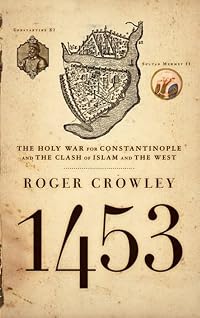
A gripping exploration of the fall of Constantinople and its connection to the world we live in today. The fall of Constantinople in 1453 signaled a shift in history and the end of the Byzantium Empire. Roger Crowley's readable and comprehensive account of the battle between Mehmet II, sultan of the Ottoman Empire, and Constantine XI, the 57th emperor of Byzantium, illuminates the period in history that was a precursor to the current conflict between the West and the Middle East.Tags
Recommendations
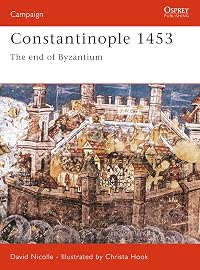
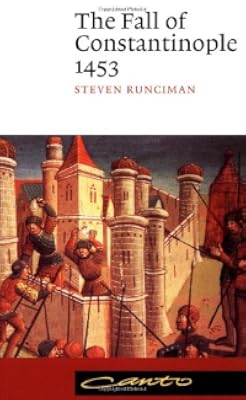










Member Recommendations

Member Reviews
Roger Crowley's pageturner gets good mileage out of presenting the fall of Constantinople as a decisive and open moment. In reality, it was not a "clash of Islam and the West", as the West chose not to involve itself for the leftover city of the Byzantine Empire. All the surrounding areas had already been gobbled up by the Ottoman Empire. Similar to Monty Python's black knight unwilling to admit defeat, the Byzantine ruling class decided to go down fighting instead of adopting the pragmatic solution of the hard-nosed Genoese who observed the siege in safety across the Golden Horn.
Minus the fake clash of civilizations bit (much cherished by conservatives everywhere), Crowley's account is a quick and enjoyable read.
Minus the fake clash of civilizations bit (much cherished by conservatives everywhere), Crowley's account is a quick and enjoyable read.
I found this to be a gripping and informative narrative of the climatic end of the Byzantine polity, with its particular virtue is that it gives equal time to the stresses and strains in the camps of both Constantine XI and Mehmet II. Though a popular account I'm impressed that Crowley seems to have made quite a complete survey of the first-person accounts of the siege, and and makes intelligent comments on their limitations. As for the complaints that I can find regarding the book, these seem to essentially be that this is not Stephen Runciman's study of the event (which is forty years old) or not anti-Muslim enough, which is sort of missing the point of telling a balanced narrative. Particularly since it's not as though Crowley stints show more on examples of Mehmet's ruthlessness. show less
For 50+ days, Constantinople defended itself and its 1200+ years of history as the eastern-most bastion of Christendom against the Turkish Ottomans’ assault. This is a very detailed account of the siege and battle, and some of the aftermath. Sultan Mehmet was only 21 when he felled the city that had withstood many previous attempts. I suspect age aided his endurance. But he was also a young military genius and had extraordinary control of the men who fought his battles, both by use of carrot (you get to plunder the city) and stick (you will die a lingering death if you fail to fight). The author writes in never boring detail, but it is a slow, monotonous read—the nature of a siege. The atrocious killing, taking of slaves, and show more plunder—the author is quick to note—was common at the time, regardless of creed or religion. I strongly recommend the book and its evenhandedness in its telling. show less
Thrilling account of the inevitable fall of Constantinople. The battle is described in vivid detail,like a scene from The Lord of the Ring II. Yet the author doesn't get carried away with Greek irredentism or military minutiae, but also covers the emotional states of the various parties involved in the siege, from the Emperor and Sultan down to the soldiers and people in the City. I got totally immersed by the suspense of it all, and though I know the history of Istanbul, in between reads I found myself wondering what would happen next and how it would end; that's how freshly it is told. Highly recommended.
Roger Crowley weaves together a brilliant history of Mehmet II’s siege of Constantinople in 1453. Much of his prose is worthy of the best novel writers. To some, the book may be slanted toward a particular side of the battle, but the work is for most part balanced in its portrayal of both the besieging Ottomans and the beseiged defenders. The back-and-forth struggle for supremacy is extremely compelling. It is books such as this that can make history exciting for those who think it too dry. An excellent read.
The author tells the story of the death throes of Byzantium with a vivid narrative. The army is barely more than a rag-tag militia supplemented by mercenaries supplied by neighbouring states almost in pity at the state of the once-great empire; the navy is virtually non-existant, with rotting hulks of vessells too expensive to maintain lying semi-submerged in the Golden Horn. All that stands between the Ottoman armies and the end of Byzantium are the decrepit walls of Constantinople and a few spirited individuals who refuse to let the imperial flame be extinguished. Indeed, the description of Emperor Palaeologus fighting alongside the peasants on the city walls is as evocative an image as I can remember.
A top read that flows like fiction.
A top read that flows like fiction.
This is my third Crowley book and least favorite, even though it's his most popular (by LibraryThing ownership stats) and his first book. Still, it is informative and entertaining. Chronologically it falls somewhere between City of Fortune and Empires of the Sea, it would be good to read them in order as it gives broader historical context. This book is focused on a single event, the Fall of Constantinople in 1453, which is truly seismic as it kicked off centuries of conflict between Europe and the Ottoman Turks; and shifted European attention away from the east and outward into the Atlantic. Stories about Medieval sieges are like dramatic genre novels, if you read enough of them they often follow similar scripts and events. This is the show more mother of sieges in sheer scale - of the walls, numbers of combatants, the size of the weapons, the stakes (real and figurative). I'm glad to have read about it in more detail as it's one of those things you can't avoid, it is one of the core markers of the end of the Middle Ages and start of the Early Modern period. show less
Members
- Recently Added By
Lists

Best Military History Books
123 works; 21 members

Further Reading Recommended by Herrin's Byzantium
151 works; 1 member

What A Year: Books titled with a particular year
147 works; 2 members

Reading Glasses Podcast
410 works; 3 members
Author Information

Some Editions
Series

Belongs to Publisher Series
地中海史詩三部曲 (1)
Common Knowledge
- Canonical title
- Constantinople: The Last Great Siege, 1453
- Original title
- Constantinople: The Last Great Siege, 1453 (UK) (UK); 1453: The Holy War for Constantinople and the Clash of Islam and the West (US) (US)
- Original publication date
- 2005
- People/Characters
- Sultan Mehmed II; Constantine XI Paleologus; Giovanni Giustiniani; Loukas Notaras; Mehmed the Conqueror
- Important places
- Constantinople, Byzantine Empire; Black Sea; Golden Horn; Bosphorus
- Important events
- Fall of Constantinople (1453)
- Epigraph
- A red apple invites stones (Turkish proverb)
- Dedication
- For Jan with love, wounded at the sea wall in pursuit of the siege.
- First words
- Early spring. A black kite swings on the Istanbul wind. It turns lazy circles round the Suleymaniye mosque as if tethered to the minarets. From here it can survey a city of fifteen million people, watching the passing of days... (show all) and centuries through imperturbable eyes.
- Last words
- (Click to show. Warning: May contain spoilers.)'Therefore, O mighty Emperor, I have laboured hard, for I was not myself a witness of the events, to know the exact trouth about these things. In writing the history I have at the same time inquired of those who knew, and have examined exactly how it all happened.... And if my words seem inferior to your deeds .... I myself.... yield in the matter of historical record to others who in such things are far more competent than I.'
- Original language
- English
Classifications
- Genres
- History, Nonfiction, General Nonfiction, Religion & Spirituality
- DDC/MDS
- 940 — History & geography History of Europe History of Europe
- LCC
- DR730 .C76 — History of Europe, Asia, Africa and Oceania Balkan Peninsula History of Balkan Peninsula Turkey Local history and description (European Turkey) Istanbul (Constantinople)
- BISAC
Statistics
- Members
- 1,350
- Popularity
- 17,704
- Reviews
- 23
- Rating
- (4.01)
- Languages
- 10 — Danish, Dutch, English, German, Hungarian, Italian, Portuguese, Spanish, Turkish, Chinese, traditional
- Media
- Paper, Audiobook, Ebook
- ISBNs
- 30
- ASINs
- 11