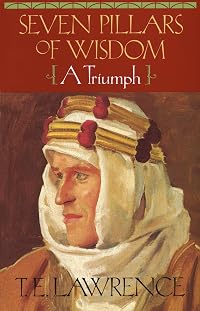
Seven Pillars of Wisdom
by T. E. Lawrence 
On This Page
Description
T.E. Lawrence describes his rise to leadership position and famed title Lawrence of Arabia. In vivid and lyrical detail, Lawrence describes how he unified numerous Arab factions during World War I against the occupying and oppressive Ottoman Turks.Tags
Recommendations








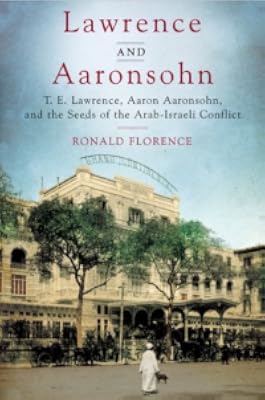

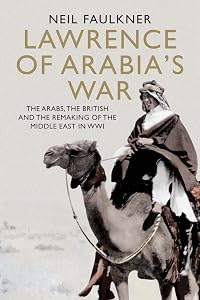
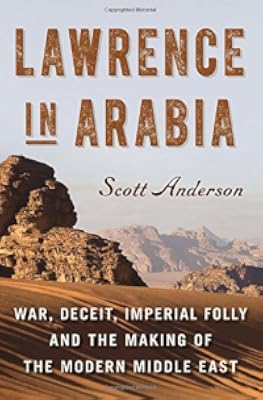









Member Recommendations

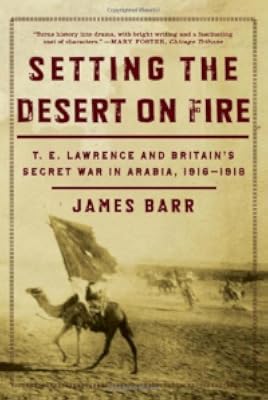
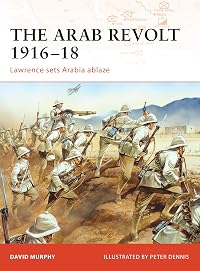
Setting the Desert on Fire: T. E. Lawrence and Britain's Secret War in Arabia, 1916-1918 by James Barr
arethusarose covers the politics and policies that led to Lawrence's activity, and work done by others in more detail than I have seen in other books. The author appears to have examined the territory covered in 1916-1918 as it is today
30

BINDINGSTHATLAST Affordable and robust book of letters.
20

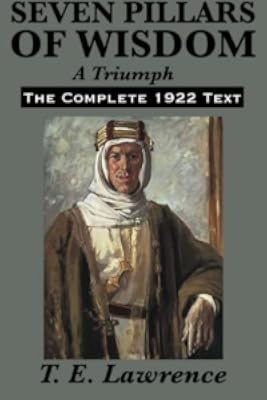
John_Vaughan Chapt 1 for more on Hejaz - Seven Pillars of Wisdom: A Triumph, T E Lawrence

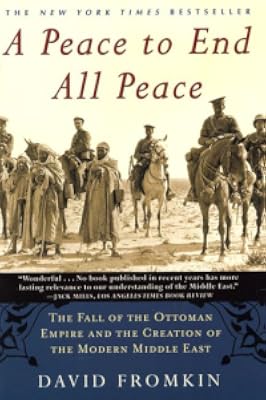
A Peace to End All Peace: The Fall of the Ottoman Empire and the Creation of the Modern Middle East by David Fromkin
Cecrow Exploring the reasons why Lawrence didn't get the outcome he wanted.
Member Reviews
Winston Churchill said this was a classic book and indeed it is. I, of course, cherish the film Lawrence of Arabia but Lawrence's prose and his story is a revelation. It is beautiful, beautiful in its awesome sense, and poetic in its verbiage. The story too is nothing short of engaging and interesting. His descriptive powers are amazing and his narrative is gripping, especially in battle scenes and scenes of intense effort or concentration. It is beautiful in an artistic sense. It borders on poetry. And it is worth the long slog for that. The maps are good, but could be better. The images are a mix of beautiful and silly 1920s-style frippery, but, they are a product of the times and of the man. Lawrence was a strange bird.
The only show more oddness, though knowing Lawrence's biography it is not surprising, are the long passages of homoerotic feeling and justification. No wonder this book did not circulate before his death. And it's not just the scene at Deraa.
All said, a classic, no doubt.
This is a review of a 1988 reissue of the 1935 version, a beautiful hardcover. show less
The only show more oddness, though knowing Lawrence's biography it is not surprising, are the long passages of homoerotic feeling and justification. No wonder this book did not circulate before his death. And it's not just the scene at Deraa.
All said, a classic, no doubt.
This is a review of a 1988 reissue of the 1935 version, a beautiful hardcover. show less
Tonight I finished [Seven Pillars of Wisdom], a book I've started reading half a dozen times before without making it to the end. It's very long, and can be tedious at times, but then there will be a thrilling scene of setting explosives while the enemy is near or a painfully beautiful description of the desert.
Lawrence's account of the revolt in the desert should not be taken as the definitive--or even reliable--history of the conflict, but he never intended it to be. As he writes in the introductory chapter: "In these pages the history is not of the Arab movement, but of me in it. It is a narrative of daily life, mean happenings, little people. Here are no lessons for the world, no disclosures to shock peoples. It is filled with show more trivial things, partly that no one mistake for history the bones from which some day a man may make history, and partly for the pleasure it gave me to recall the fellowship of the revolt." It is the romanticized, deeply personal truth of one man.
Throughout the book, Lawrence comes off as a very complicated person: self-aggrandizing and self-deprecating; highly intelligent, but inexperienced; romantic, but often clear-sighted and cynical. By the end, I found myself even more fascinated by this quixotic figure who found himself torn between conflicting loyalties.
I shall leave off with one of my favorite passages:
Later I was sitting alone in my room, working and thinking out as firm
a way as the turbulent memories of the day allowed, when the Muedhdhins
began to send their call of last prayer through the moist night over
the illuminations of the feasting city. One, with a ringing voice of
special sweetness, cried into my window from a near mosque. I found
myself involuntarily distinguishing his words: "God alone is great: I
testify there are no gods, but God: and Mohammed his Prophet. Come to
prayer: come to security. God alone is great: there is no god--but God.'
At the close he dropped his voice two tones, almost to speaking level,
and softly added: 'And He is very good to us this day, O people of
Damascus.' The clamour hushed, as everyone seemed to obey the call to
prayer on this their first night of perfect freedom. While my fancy, in
the overwhelming pause, showed me my loneliness and lack of reason in
their movement: since only for me, of all the hearers, was the event
sorrowful and the phrase meaningless. (Chapter CXX) show less
Lawrence's account of the revolt in the desert should not be taken as the definitive--or even reliable--history of the conflict, but he never intended it to be. As he writes in the introductory chapter: "In these pages the history is not of the Arab movement, but of me in it. It is a narrative of daily life, mean happenings, little people. Here are no lessons for the world, no disclosures to shock peoples. It is filled with show more trivial things, partly that no one mistake for history the bones from which some day a man may make history, and partly for the pleasure it gave me to recall the fellowship of the revolt." It is the romanticized, deeply personal truth of one man.
Throughout the book, Lawrence comes off as a very complicated person: self-aggrandizing and self-deprecating; highly intelligent, but inexperienced; romantic, but often clear-sighted and cynical. By the end, I found myself even more fascinated by this quixotic figure who found himself torn between conflicting loyalties.
I shall leave off with one of my favorite passages:
Later I was sitting alone in my room, working and thinking out as firm
a way as the turbulent memories of the day allowed, when the Muedhdhins
began to send their call of last prayer through the moist night over
the illuminations of the feasting city. One, with a ringing voice of
special sweetness, cried into my window from a near mosque. I found
myself involuntarily distinguishing his words: "God alone is great: I
testify there are no gods, but God: and Mohammed his Prophet. Come to
prayer: come to security. God alone is great: there is no god--but God.'
At the close he dropped his voice two tones, almost to speaking level,
and softly added: 'And He is very good to us this day, O people of
Damascus.' The clamour hushed, as everyone seemed to obey the call to
prayer on this their first night of perfect freedom. While my fancy, in
the overwhelming pause, showed me my loneliness and lack of reason in
their movement: since only for me, of all the hearers, was the event
sorrowful and the phrase meaningless. (Chapter CXX) show less
Prima lettura ottobre 2008:
Geologia, antropologia, etnografia, sociologia, politica, arte della guerra, e molto, molto altro ancora sono gli ingredienti di questo magnifico libro, massimo esempio di epica moderna, che racconta la storia con l'afflato del miglior romanzo.
Lawrence, scrittore inestimabile, tiene incollati alla pagina sia che racconti le lunghe notti nel deserto, sia che descriva i protagonisti sia che espliciti i propri pensieri, dolori dubbi.
Libro altamente raccomandabile per chiunque voglia entrare nel guazzabuglio della moderna storia del popolo arabo.
La nuova traduzione è molto ben fatta, peccato che per la correzione ci si sia un po' troppo affidati al correttore di word.
Seconda lettura:
Ci è voluto più tempo. La show more prima lettura è corsa sul ritmo epico della narrazione, dell'incredibile guerra che ha generato un personaggio romantico. La seconda invece mi ha fatto apprezzare l'abnegazione di un uomo fisicamente piccolissimo (45 kg) che, nutrito solo dalle sue idee romantiche, portò alla rivolta e alla liberazione un popolo che non era il suo e in cui si era completamente calato.
Alcuni passi sono assolutamente umoristici, e lasciano brillare in pieno l'intelligenza e la cultura di Lawrence, sempre conscio della sua piccolezza e della sua posizione assurda. show less
Geologia, antropologia, etnografia, sociologia, politica, arte della guerra, e molto, molto altro ancora sono gli ingredienti di questo magnifico libro, massimo esempio di epica moderna, che racconta la storia con l'afflato del miglior romanzo.
Lawrence, scrittore inestimabile, tiene incollati alla pagina sia che racconti le lunghe notti nel deserto, sia che descriva i protagonisti sia che espliciti i propri pensieri, dolori dubbi.
Libro altamente raccomandabile per chiunque voglia entrare nel guazzabuglio della moderna storia del popolo arabo.
La nuova traduzione è molto ben fatta, peccato che per la correzione ci si sia un po' troppo affidati al correttore di word.
Seconda lettura:
Ci è voluto più tempo. La show more prima lettura è corsa sul ritmo epico della narrazione, dell'incredibile guerra che ha generato un personaggio romantico. La seconda invece mi ha fatto apprezzare l'abnegazione di un uomo fisicamente piccolissimo (45 kg) che, nutrito solo dalle sue idee romantiche, portò alla rivolta e alla liberazione un popolo che non era il suo e in cui si era completamente calato.
Alcuni passi sono assolutamente umoristici, e lasciano brillare in pieno l'intelligenza e la cultura di Lawrence, sempre conscio della sua piccolezza e della sua posizione assurda. show less
Reading Seven Pillars of Wisdom is a pilgrimage through the vast deserts of Arabia, through the last remnants of Rome (if you squint, the Arab Revolt was like the blowing out of the final ember of the two-thousand-year-old fire of the Roman Empire), and into the conflicted mind of a mythical figure of WWI. In a book of enormous moments (which will forever inform my understanding of the region, still very relevant today), it was the small, lonely, reflective episodes that will stay with me, like when he falls one night in a snow bank alone and has to dig out his trusty old female camel, or when when he reflects during a night on the desert with his comrades: ‘And the stars – what are they?’ We slipped into talk of suns beyond suns, show more sizes and distance beyond wit. ‘What will now happen with this knowledge?’ asked Mohammed. ‘We shall set to, and many learned and some clever men together will make glasses as more powerful than ours, as ours than Galileo’s; and yet more hundreds of astronomers will distinguish and reckon yet more thousands of now unseen stars, mapping them, and giving each one its name. When we see them all, there will be no night in heaven…’ show less
Not an easy book to sum up in a paragraph or two: in many ways it's a big, shaggy mess, at times tediously self-centred and self-important, at times captivating and beautiful. You can put up with his endless agonising about his role in history and his "betrayal" of the Arabs, his sweeping generalisations about other people, his half-baked theories of this and that, his detached and callous descriptions of death and destruction; because there is nothing like the experience of riding across the desert with Lawrence. When he is talking about landscape, camels, tracks and wells, all the bloat and solipsism drops away, and his prose is perfectly fitted to what he is describing. Reading his descriptions of his journeys perversely gives a more show more intense visual experience than even the most technicoloured cinemascope version could hope to. show less
I was aware before starting that this was a somewhat unreliable account of the exploits of Lawrence on the Eastern Front during WWI but the Introduction introduced such a level of scepticism that it tainted my reading; I was forever wondering what was true, what was exaggerated, what entirely fabricated. The veracity of the account was challenged in a publication of 1955 that I don't have. I'd have much prefered to read a critical edition that put the book in the context of the known history so that truth and fiction could be easily separated - I don't know if such a thing exists, though.
Lawrence is at his best when describing landscape and action, at his worst when being judgemental, whether it be about history, peoples or individuals. show more The first half fled fairly fast but the second was a struggle for most of its length. It turns out that camel rides and raids on railways and bridges can become repetative and dull. Interest was re-ignited when the Allies turn up in force and events become novel again.
I know very little about WWI; my main impressions of it come from two books; All Quiet on the Western Front and this. The contrast between the Western and Eastern conflicts could hardly be greater, on this basis. The mud, trenches, gas attacks, whole-sale slaughter and stalemate of France and Belgium feel like a different world from the rock, sand, guerilla warfare and endless gadding about by horse, camel, plane and (Rolls Royce) car that Lawrence describes in the Middle East. Lawrence's account is rarely in the slightest bit romanticised, though, and hunger, thirst, battle and death are treated in a most matter-of-fact manner that contrasts both with the myth of Lawrence of Arabia on the one hand and the deliberately political and horrifying verse of Sassoon and his fellow War Poets. show less
Lawrence is at his best when describing landscape and action, at his worst when being judgemental, whether it be about history, peoples or individuals. show more The first half fled fairly fast but the second was a struggle for most of its length. It turns out that camel rides and raids on railways and bridges can become repetative and dull. Interest was re-ignited when the Allies turn up in force and events become novel again.
I know very little about WWI; my main impressions of it come from two books; All Quiet on the Western Front and this. The contrast between the Western and Eastern conflicts could hardly be greater, on this basis. The mud, trenches, gas attacks, whole-sale slaughter and stalemate of France and Belgium feel like a different world from the rock, sand, guerilla warfare and endless gadding about by horse, camel, plane and (Rolls Royce) car that Lawrence describes in the Middle East. Lawrence's account is rarely in the slightest bit romanticised, though, and hunger, thirst, battle and death are treated in a most matter-of-fact manner that contrasts both with the myth of Lawrence of Arabia on the one hand and the deliberately political and horrifying verse of Sassoon and his fellow War Poets. show less
http://nhw.livejournal.com/990884.html
This is the story of how Lawrence helped the Arabs revolt against the Ottoman Empire in 1917-1918. Its greatest strength is its vivid description of the landscapes of Arabia, Syria and Palestine; I've never been to the desert, and don't know that part of the world at all, so I found this tremendously compelling. I was left a bit more ambivalent about the human side of the story: on the one hand, Lawrence is aiding a subject nation to throw off their oppressor; on the other, his heroism is undermined - according to his own account, it should be said - by the brutality of the campaign, by his awareness that his British masters will certainly break their word to their Arab allies, and by the casual show more racism he himself displays toward them.
It's a very manly book, for values of "manly" that overlap with "gay". In the very first chapter, we have Arab lads "quivering together in the yielding sand with intimate hot limbs in supreme embrace". It is a constant theme, and manly love merges intriguingly with Lawrence's affection for the landscape. There is I think precisely one woman character of note, an old lady who Lawrence rescues from a train wreck (he blew up the train). Apart from her, there are several other memorable female personalities, but they are all camels.
The book falls rather neatly into two parts, the first half being the desert campaign starting from Mecca going up the coast to eventually capture Akaba (= Aqaba), the second half covering operations more closely linked to Allenby and culminating in the taking of Damascus and consolidation of a new Arab regime. I found it very odd that although Lawrence says he was present at the capture of Jerusalem, he reports almost nothing about this key event apart from an argument between the French diplomat Picot (of Sykes-Picot fame - Sykes too makes an appearance) and the British. Of course, he was not impressed by Jerusalem:
...a squalid town, which every Semitic religion had made holy. Christians and Mohammedans came there on pilgrimage to the shrines of its past, and some Jews looked to it for the political future of their race. These united forces of the past and the future were so strong that the city almost failed to have a present.
For all its faults (some mentioned above, but I'll add another: it is too long) I found the book also tremendously enlightening in understanding the roots of today's politics in the region. Lawrence himself is very aware of the contradiction between his responsibility to his country and his moral obligation to his Arab friends and allies, and his personal dilemma can be read also as a comment on the wider international situation. The ruling family of Mecca, who Lawrence helps put in charge of Syria, now rule Jordan (having also had a go at Iraq in the interim). The boundaries of states were mostly drawn at the convenience of the Great Powers, possibly even more arbitrarily than in Africa; it's not surprising that they are perceived as having shallow roots.
Anyway, a bit of a slog in places (rather like the campaign it describes), but I'm glad I read it in the end. show less
This is the story of how Lawrence helped the Arabs revolt against the Ottoman Empire in 1917-1918. Its greatest strength is its vivid description of the landscapes of Arabia, Syria and Palestine; I've never been to the desert, and don't know that part of the world at all, so I found this tremendously compelling. I was left a bit more ambivalent about the human side of the story: on the one hand, Lawrence is aiding a subject nation to throw off their oppressor; on the other, his heroism is undermined - according to his own account, it should be said - by the brutality of the campaign, by his awareness that his British masters will certainly break their word to their Arab allies, and by the casual show more racism he himself displays toward them.
It's a very manly book, for values of "manly" that overlap with "gay". In the very first chapter, we have Arab lads "quivering together in the yielding sand with intimate hot limbs in supreme embrace". It is a constant theme, and manly love merges intriguingly with Lawrence's affection for the landscape. There is I think precisely one woman character of note, an old lady who Lawrence rescues from a train wreck (he blew up the train). Apart from her, there are several other memorable female personalities, but they are all camels.
The book falls rather neatly into two parts, the first half being the desert campaign starting from Mecca going up the coast to eventually capture Akaba (= Aqaba), the second half covering operations more closely linked to Allenby and culminating in the taking of Damascus and consolidation of a new Arab regime. I found it very odd that although Lawrence says he was present at the capture of Jerusalem, he reports almost nothing about this key event apart from an argument between the French diplomat Picot (of Sykes-Picot fame - Sykes too makes an appearance) and the British. Of course, he was not impressed by Jerusalem:
...a squalid town, which every Semitic religion had made holy. Christians and Mohammedans came there on pilgrimage to the shrines of its past, and some Jews looked to it for the political future of their race. These united forces of the past and the future were so strong that the city almost failed to have a present.
For all its faults (some mentioned above, but I'll add another: it is too long) I found the book also tremendously enlightening in understanding the roots of today's politics in the region. Lawrence himself is very aware of the contradiction between his responsibility to his country and his moral obligation to his Arab friends and allies, and his personal dilemma can be read also as a comment on the wider international situation. The ruling family of Mecca, who Lawrence helps put in charge of Syria, now rule Jordan (having also had a go at Iraq in the interim). The boundaries of states were mostly drawn at the convenience of the Great Powers, possibly even more arbitrarily than in Africa; it's not surprising that they are perceived as having shallow roots.
Anyway, a bit of a slog in places (rather like the campaign it describes), but I'm glad I read it in the end. show less
Members
- Recently Added By
Published Reviews
That is what the book is about, and it could only be reviewed authoritatively by a staff officer who knows the East. That is what the book is about, and Moby Dick was about catching a whale. For round this tent-pole of a military chronicle T.E. has hung an unexampled fabric of portraits, descriptions, philosophies, emotions, adventures, dreams.... He has also contributed to sociology, in show more recording what is probably the last of the picturesque wars. Camels, pennants, the blowing up of little railway trains... show less
added by KayCliff
The author himself had described Seven Pillars in these terms, in a letter to Charlotte Shaw in 1923:
... it's more a storehouse than a book - has no unity, is too discursive, dispersed, heterogeneous. I've shot into it, as a builder into his yard, all the odds and ends of ideas which came to me during those years ... (Lawrence, 2000: 33)
And he proved himself no indexer's friend in the matter show more of consistency. He wrote:
Arabic names won't go into English, exactly ... There are some 'scientific systems' of transliteration... I spell my names anyhow, to show what rot the systems are. (Lawrence, 1935: 19) show less
... it's more a storehouse than a book - has no unity, is too discursive, dispersed, heterogeneous. I've shot into it, as a builder into his yard, all the odds and ends of ideas which came to me during those years ... (Lawrence, 2000: 33)
And he proved himself no indexer's friend in the matter show more of consistency. He wrote:
Arabic names won't go into English, exactly ... There are some 'scientific systems' of transliteration... I spell my names anyhow, to show what rot the systems are. (Lawrence, 1935: 19) show less
added by KayCliff
Lists

Really Good Narrative Non-Fiction
65 works; 24 members

Best Biographies, Autobiographies and Memoirs
465 works; 160 members

Best Military History Books
123 works; 21 members

Best Travel Narrative
32 works; 20 members

Witness from the front: accounts of war, revolution, and strife
23 works; 5 members

Unread books
1,063 works; 87 members

The Emergence of the Modern Middle East
289 works; 13 members

Best manuscripts lost on public transport (or elsewhere...)
7 works; 3 members

Books about World War I
80 works; 14 members

Adventure Travel & Exploration In Asia
31 works; 8 members

Books Read in 2022
5,168 works; 114 members

Books With Numbers in the Title
308 works; 13 members

The Top Ten: Writers Pick Their Favorite Books
240 works; 31 members

THE WAR ROOM
813 works; 24 members

Best Films based on novels
10 works; 1 member

Publisher's Weekly NON-Fiction list - 1912 - 1975
486 works; 4 members

Trinity College Booklist (1951): Class Four, History
120 works; 2 members

1920s
141 works; 6 members

Folio Society
831 works; 53 members

Best Books of 1926-1935
403 works; 10 members

501 Must-Read Books
529 works; 72 members

I Can't Finish This Book
189 works; 22 members

War Literature
101 works; 19 members
Best of British Literature
226 works; 41 members

In Our Time books
4,934 works; 2 members
Talk Discussions
Past Discussions
Seven Pillars of Wisdom suggestions in Fine Press Forum (August 2024)
Seven Pillars of Wisdom reading group anyone? in Folio Society Devotees (May 2015)
Author Information

100+ Works 7,921 Members
Born in Caernarvonshire in North Wales and educated at Oxford University, T. E. Lawrence was a soldier, author, archaeologist, traveler, and translator. After participating in archaeological expeditions in the Middle East from 1911 to 1914, he worked for British Army intelligence in North Africa during World War I. In 1916 he joined the Arab show more revolt against the Turks and became known as Lawrence of Arabia, the man who freed the Arabs from Turkish rule. The manuscript of his The Seven Pillars of Wisdom (1926) was lost when it had been two-thirds finished, and he rewrote the book from memory in 1919. Because it expressed certain personal and political opinions that Lawrence did not wish to publicize, it was offered for sale in 1926 in England at a prohibitive price. To ensure copyright in the United States, it was reprinted here by Doran (now Doubleday) and 10 copies were offered for sale at $20,000 each, a price "high enough to prevent their ever being sold." Doubleday then brought out a limited edition and a trade edition, substantially the same as the rare 1926 edition.Revolt in the Desert (1927) is an abridgment of The Seven Pillars, which the author made to pay the printing expenses of the original. The Mint (1955), an account of his service with the Royal Air Force, was published posthumously in an edition of 50 copies, 10 of which were offered for sale at a price of $500,000 each, to ensure no copies being sold. In 1950 a popular edition, in 1955 a limited edition, and in 1963 a paperback edition were published. After World War I, Lawrence enlisted in the Royal Air Force as Private John Hume Ross; when his real identity was discovered, he transferred to the Royal Tank Corps under the name T. E. Shaw, a name he legally assumed in 1927. In 1937 Lawrence was killed when the motorbike given to him by George Bernard Shaw (see Vol. 1) went out of control on an English country lane. Earlier biographers, including Lowell Thomas and Robert Graves, were enthusiastic and laudatory of Lawrence. Twenty years after his death, Richard Aldington wrote Lawrence of Arabia: A Biographical Enquiry, which "set off a fury of charge and countercharge." But Lawrence's saga had become legend. In tribute to this adventurous, enigmatic genius, who shunned fame, wealth, and power, King George V wrote, "His name will live in history." Public interest in "the elusive, mysterious and complex young Irishman" who led the Arab revolt was revived by Lawrence of Arabia, 1962's most honored film. In recent years the picture of Lawrence has changed again with the revelation of his illegitimacy, his readiness to embroider the truth, and other quirks and neuroses; but there were English witnesses to many of his accomplishments, and the disagreements among those who knew him have hindered efforts to discredit him in any definitive manner; even the Arabs view him with their Arab pride at stake. He remains enigmatic and eccentric, and is likely to be the subject of more research and many volumes before the truth about him is finally and fully understood. (Bowker Author Biography) show less
T. E. Lawrence has a Legacy Library. Legacy libraries are the personal libraries of famous readers, entered by LibraryThing members from the Legacy Libraries group.
Some Editions
Awards and Honors
Awards
Distinctions
Notable Lists
Series
Belongs to Publisher Series
Work Relationships
Is contained in
The Programmed Classics (13 Volume Set (Canterbury Tales, Crime & Punishment, Complete works of William Shakespeare Vol. 2, War & Peace, Travels of Marco Polo the Venetian, Odyssey, Divine Comedy, Last Days of Pompell, The Iliad,Seven Pillars of Wisdom, 3 more!)) by Geoffrey Chaucer
Contains
Is abridged in
Is expanded in
Inspired
Has as a reference guide/companion
Has as a study
Has as a supplement
Common Knowledge
- Original title
- Seven Pillars of Wisdom
- Alternate titles
- Seven Pillars of Wisdom: A Triumph
- Original publication date
- 1926
- People/Characters
- Faisal I, King of Iraq (Faisal bin Al Hussein Bin Ali El-Hashemi); T. E. Lawrence; General Sir Edmund H. H. Allenby
- Important places
- Daraa, Syria; Jeddah, Saudi Arabia; Aqaba, Jordan; Palestine; Middle East; Wadi Rum, Jordan
- Important events
- World War I (1914 | 1918); Mesopotamian Campaign (1914-11-06 | 1918-11-14); Arab Revolt (1916 | 1918)
- Related movies
- Lawrence of Arabia (1962 | IMDb); A Dangerous Man: Lawrence After Arabia (1992 | IMDb)
- Dedication
- To S.A.
I loved you, so I drew these tides of men into my hands and wrote my will across the sky in stars
To earn you Freedom, the seven pillared worthy house, that your eyes might be shining for me
&... (show all)nbsp; When we came.
Death seemed my servant on the road, till we were near and saw you waiting:
When you smiled, and in sorrowful envy he outran me and took you apart:
Into his quietness.
Love, the way-weary, groped to your body, our brief wage ours for the moment
Before earth's soft hand explored your shape, and the blind worms grew fat upon
Your substance.
Man prayed me that I set our work, the inviolate house, as a memory of you.
But for fit monument I shattered it, unfinished: and now
The little things creep out to patch themselves hovels in the marred shadow
Of your gift. - First words
- Mr Geoffrey Dawson persuaded All Souls College to give me leisure, in 1919-20, to write about the Arab Revolt.
Author's note, Cranwell, 15 August 1926.
The seven pillars of wisdom are first mentioned in the Bible, in the Book of Proverbs (ix. I)
Preface by A. W. Lawrence.
The story which follows was first written out in Paris during the Peace Conference, from notes jotted daily on the march, strengthened by some reports sent to my chiefs in Cairo. Afterwards, in the autumn of 1919, this first ... (show all)draft and some of the notes were lost. It seemed to me historically needful to reproduce the tale, as perhaps no one but myself in Feisal’s army had thought of writing down at the time what we felt, what we hoped, what we tried. So it was built again with heavy repugnance in London in the winter of 1919–20 from memory and my surviving notes. The record of events was not dulled in me and perhaps few actual mistakes crept in—except in details of dates or numbers—but the outlines and significance of things had lost edge in the haze of new interests.
Introductory Chapter.
Some Englishmen, of whom Kitchener was chief, believed that a rebellion of Arabs against Turks would enable England, while fighting Germany, simultaneously to defeat her ally Turkey.
Introduction : Foundations of re... (show all)volt.
Some of the evil of my tale may have been inherent in our circumstances
Chapter I. - Quotations
- Tallal had seen what we had seen. He gave one moan like a hurt animal; then rode to the upper ground and sat there a while on his mare, shivering and looking fixedly after the Turks. I moved near to speak to him, but Auda cau... (show all)ght my rein and stayed me. Very slowly Tallal drew his head-cloth about his face; and then he seemed suddenly to take hold of himself, for he dashed his stirrups into the mare's flanks and galloped headlong, bending low and swaying in the saddle, right at the main body of the enemy.
Later I was sitting alone in my room, working and thinking out as firm a way as the turbulent memories of the day allowed, when the Muedhdhins began to send their call of last prayer through the moist night over the illuminat... (show all)ions of the feasting city. One, with a ringing voice of special sweetness, cried into my window from a near mosque. I found myself involuntarily distinguishing his words: 'God alone is great: I testify there are no gods, but God: and Mohammed his Prophet. Come to prayer: come to security. God alone is great: there is no god--but God.'
At the close he dropped his voice two tones, almost to speaking level, and softly added: 'And He is very good to us this day, O people of Damascus.' The clamour hushed, as everyone seemed to obey the call to prayer on this their first night of perfect freedom. While my fancy, in the overwhelming pause, showed me my loneliness and lack of reason in their movement: since only for me, of all the hearers, was the event sorrowful and the phrase meaningless.
‘O Nesib,' said I, ‘and O Zeki, will not perfection, even in the least of things, entail the ending of this world? Are we ripe for that? When I am angry I pray God to swing our globe into the fiery sun, and prevent the so... (show all)rrows of the not-yet-born: but when I am content, I want to lie for ever in the shade, till I become a shade myself.'
The Arab leaders showed a completeness of instinct, a reliance upon intuition, the unperceived foreknown, which left our centrifugal minds gasping. Like women, they understood and judged quickly, effortlessly, unreasonably. I... (show all)t almost seemed as though the Oriental exclusion of woman from politics had conferred her particular gifts upon the men. Some of the speed and secrecy of our victory, and its regularity, might perhaps be ascribed to this double endowment's offsetting and emphasizing the rare feature that from end to end of it there was nothing female in the Arab movement, but the camels. - Last words
- (Click to show. Warning: May contain spoilers.)When Feisal had gone, I made to Allenby the last (and also I think the first) request I ever made him for myself—leave to go away. For a while he would not have it; but I reasoned, reminding him of his year-old promise, and pointing out how much easier the New Law would be if my spur were absent from the people. In the end he agreed; and then at once I knew how much I was sorry.
(Click to show. Warning: May contain spoilers.)Epilogue:
There remained historical ambition, insubstantial as a motive by itself. I had dreamed, at the city school in Oxford, of hustling into form, while I lived, the new Asia which time was inexorably bringing upon us. Mecca was to lead to Damascus; Damascus to Anatolia, and afterwards to Bagdad; and then there was Yemen. Fantasies, these will seem, to such as are able to call my beginning an ordinary effort. - Blurbers
- Forster, E. M.
- Original language
- English
- Canonical DDC/MDS
- 940.415
- Canonical LCC
- D568.4
Classifications
Statistics
- Members
- 5,362
- Popularity
- 2,522
- Reviews
- 65
- Rating
- (4.03)
- Languages
- 16 — Chinese, Czech, Danish, Dutch, English, Estonian, French, German, Hungarian, Italian, Norwegian (Bokmål), Polish, Portuguese, Russian, Spanish, Swedish
- Media
- Paper, Audiobook, Ebook
- ISBNs
- 139
- UPCs
- 5
- ASINs
- 179