
William Rosen (1) (1955–)
Author of Justinian's Flea: Plague, Empire, and the Birth of Europe
For other authors named William Rosen, see the disambiguation page.
William Rosen (1) has been aliased into William S. Rosen.
Works by William Rosen
Works have been aliased into William S. Rosen.
The Most Powerful Idea in the World: A Story of Steam, Industry, and Invention (2010) 466 copies, 10 reviews
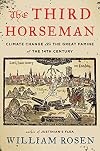
The Third Horseman: Climate Change and the Great Famine of the 14th Century (2014) 269 copies, 5 reviews
Miracle Cure: The Creation of Antibiotics and the Birth of Modern Medicine (2017) 87 copies, 2 reviews
Tagged
Common Knowledge
- Birthdate
- 1955-02-12
- Gender
- male
- Nationality
- USA
- Associated Place (for map)
- USA
Members
Reviews
**Goodreads Advance Reader copy**
I'll be honest, I probably get more excited about an historical examination of famine than the average reader. That said, it doesn't take a history nut to enjoy The Third Horseman. The easy conversational tone and cheeky footnotes keep the narrative flowing while the new perspective and information make for a fascinating story.
The Third Horseman addresses the Great Famine of the early 14th century, looking at the interaction of climate, economics, and show more political intrigue in the creation of devastating events, and their particular effects on the common man. The story is very much seated in England (and laterally in France), using the reign of Edward II and the struggles over Scottish independence as a lens to view the famine and its effects.
I was not prepared for the heavy focus on England. The story could as easily be told from a variety of regional perspectives, and I was interested to read more about the rest of the continent. However the author is well aware of this, and, facing the impracticality of including every story line, chose the one that worked for him. It works for the reader as well; and the benefit of focusing primarily on one area is the level of detail it allows him to provide.
There are inevitably many theories explaining any era of history; our accounts are always biased towards the records that survive. Rosen expands those accounts by drawing from a variety of disciplines and sources. I appreciated the anthropological approach; the premise that how we organize ourselves as humans (as animals) starts with how we get food from the land. He pieces together climate data from dendrochronology and arctic ice core samples; gauges food distribution using ethnobotany and modern humanitarian efforts, botanical knowledge of plant production and economic studies of pricing, trade, and production; all along with the classic sources of historical records and chronicles.
The most interesting facet of this book is the way the author uses this varied information to sketch out the life of the lower classes in England. While the majority of surviving records focus on the nobility and the ecclesiastics, these new sources (I'm reading a proof copy, but a great number of the non-contemporary references seem to be papers and writings from the last decade) allow him to postulate what life was like for a peasant, a farmer, a townsman, a soldier. This is especially important when we're talking famine; as he says, often these crises are not a total lack of food, but a shortage; and the poor starve first.
Ultimately, the book paints a clear picture from our own history of how an ecological disturbance can become a catastrophe when combined with an unequal economic structure and capricious decision-making on a political level; and how it is the working classes who bear the brunt of that damage. It's a lesson we can't afford to ignore in the present. show less
I'll be honest, I probably get more excited about an historical examination of famine than the average reader. That said, it doesn't take a history nut to enjoy The Third Horseman. The easy conversational tone and cheeky footnotes keep the narrative flowing while the new perspective and information make for a fascinating story.
The Third Horseman addresses the Great Famine of the early 14th century, looking at the interaction of climate, economics, and show more political intrigue in the creation of devastating events, and their particular effects on the common man. The story is very much seated in England (and laterally in France), using the reign of Edward II and the struggles over Scottish independence as a lens to view the famine and its effects.
I was not prepared for the heavy focus on England. The story could as easily be told from a variety of regional perspectives, and I was interested to read more about the rest of the continent. However the author is well aware of this, and, facing the impracticality of including every story line, chose the one that worked for him. It works for the reader as well; and the benefit of focusing primarily on one area is the level of detail it allows him to provide.
There are inevitably many theories explaining any era of history; our accounts are always biased towards the records that survive. Rosen expands those accounts by drawing from a variety of disciplines and sources. I appreciated the anthropological approach; the premise that how we organize ourselves as humans (as animals) starts with how we get food from the land. He pieces together climate data from dendrochronology and arctic ice core samples; gauges food distribution using ethnobotany and modern humanitarian efforts, botanical knowledge of plant production and economic studies of pricing, trade, and production; all along with the classic sources of historical records and chronicles.
The most interesting facet of this book is the way the author uses this varied information to sketch out the life of the lower classes in England. While the majority of surviving records focus on the nobility and the ecclesiastics, these new sources (I'm reading a proof copy, but a great number of the non-contemporary references seem to be papers and writings from the last decade) allow him to postulate what life was like for a peasant, a farmer, a townsman, a soldier. This is especially important when we're talking famine; as he says, often these crises are not a total lack of food, but a shortage; and the poor starve first.
Ultimately, the book paints a clear picture from our own history of how an ecological disturbance can become a catastrophe when combined with an unequal economic structure and capricious decision-making on a political level; and how it is the working classes who bear the brunt of that damage. It's a lesson we can't afford to ignore in the present. show less
Change is difficult, in more ways than one
The Third Horseman: Climate Change and the Great Famine of the 14th Century by William Rosen (Viking Adult, $28.95).
While William Rosen’s delight in details may put off some readers, his recounting of the 1300s from the dynastic ambitions of English and Scots rulers to changes in climate patterns that allowed grape cultivation at higher altitudes in this detailed and heavily-footnoted interdisciplinary work offers an extremely good example of just show more how serious even small changes in climate can be when a large population is relying on stable crops for food.
It’s the “butterfly effect” writ large. When climate changes, agriculture changes. When agriculture changes, people get hungry. When people get hungry, governments and cultures become unstable. The next thing you know, there are mass migrations and political upheaval.
The “Great Famine” lasted for seven years during what’s known as the Medieval Warm Period. For the most part, the climate changes increased food production and allowed for population growth. Unfortunately, famine isn’t always about the presence of food; it’s more often about the price of food. When food becomes too expensive for people to buy, famine ensues, and, as Rosen points out, when societies rely too heavily on a limited number of crops, failures can result in catastrophes.
While Rosen is not particularly interested in making a prediction about the implications of his work for those of us paying attention to current climate change issues, his tale of how unusually wet weather led to a century of European war and unrest will certainly provide food for thought. His main thrust is that climate change of any kind—and the Medieval Warm Period was not caused by humans, nor was the Little Ice Age—will put pressures on societies that create all sorts of disturbance.
Reviewed at Lit/Rant: www.litrant.tumblr.com show less
The Third Horseman: Climate Change and the Great Famine of the 14th Century by William Rosen (Viking Adult, $28.95).
While William Rosen’s delight in details may put off some readers, his recounting of the 1300s from the dynastic ambitions of English and Scots rulers to changes in climate patterns that allowed grape cultivation at higher altitudes in this detailed and heavily-footnoted interdisciplinary work offers an extremely good example of just show more how serious even small changes in climate can be when a large population is relying on stable crops for food.
It’s the “butterfly effect” writ large. When climate changes, agriculture changes. When agriculture changes, people get hungry. When people get hungry, governments and cultures become unstable. The next thing you know, there are mass migrations and political upheaval.
The “Great Famine” lasted for seven years during what’s known as the Medieval Warm Period. For the most part, the climate changes increased food production and allowed for population growth. Unfortunately, famine isn’t always about the presence of food; it’s more often about the price of food. When food becomes too expensive for people to buy, famine ensues, and, as Rosen points out, when societies rely too heavily on a limited number of crops, failures can result in catastrophes.
While Rosen is not particularly interested in making a prediction about the implications of his work for those of us paying attention to current climate change issues, his tale of how unusually wet weather led to a century of European war and unrest will certainly provide food for thought. His main thrust is that climate change of any kind—and the Medieval Warm Period was not caused by humans, nor was the Little Ice Age—will put pressures on societies that create all sorts of disturbance.
Reviewed at Lit/Rant: www.litrant.tumblr.com show less
A very interesting excursion through the history of invention, like a leisurely ramble through the countryside led by a true aficianado, with side trips that may seem to be taking you out of your way but will certainly enrich your journey.
The author uses the device of the Rocket, the first steam locomotive on display in the British Museum, as the unifying thread for the journey, and explores the development of every significant technological invention that led to it. This doesn't mean just show more the mechanical parts that go into a steam engine, but the technological infrastructure required to forge iron into pure reliable steel in the first place. The scientific and technological history is embedded in its social, economic, and legal contexts, which developed right along with it, and we hear the human stories of the inventors as well.
The author's motivating question was, What made the Industrial Revolution so special? What was it about that time and place that led to such an explosion of invention, and such widespread adoption of technology? He considers this question repeatedly along the way, and argues persuasively that it was what he considers "the most powerful idea in the world", rather than any particular technological development, that made the difference.
That most powerful idea is the idea of intellectual property, and the legal mechanism of the patent that allowed the inventor to transform the intellectual capital of the idea into economic capital.
The epilogue of the book is notable for its substance: not a mere afterthought or closing reflections, but an overview and assessment of the book's main argument, and an application of its findings to the contemporary question of human-induced global warming.
I listened to the audio book, which is narrated in the almost bombastic tones of a 1950s science reporter. This was a little wearing to listen to at times, but it rendered the author's occasional witty asides even more amusing.
I'd recommend this book to anyone interested in the history of science or technology, scientific progress, the Industrial Revolution, or the legal and social constructs that were developed along with it. show less
The author uses the device of the Rocket, the first steam locomotive on display in the British Museum, as the unifying thread for the journey, and explores the development of every significant technological invention that led to it. This doesn't mean just show more the mechanical parts that go into a steam engine, but the technological infrastructure required to forge iron into pure reliable steel in the first place. The scientific and technological history is embedded in its social, economic, and legal contexts, which developed right along with it, and we hear the human stories of the inventors as well.
The author's motivating question was, What made the Industrial Revolution so special? What was it about that time and place that led to such an explosion of invention, and such widespread adoption of technology? He considers this question repeatedly along the way, and argues persuasively that it was what he considers "the most powerful idea in the world", rather than any particular technological development, that made the difference.
The epilogue of the book is notable for its substance: not a mere afterthought or closing reflections, but an overview and assessment of the book's main argument, and an application of its findings to the contemporary question of human-induced global warming.
I listened to the audio book, which is narrated in the almost bombastic tones of a 1950s science reporter. This was a little wearing to listen to at times, but it rendered the author's occasional witty asides even more amusing.
I'd recommend this book to anyone interested in the history of science or technology, scientific progress, the Industrial Revolution, or the legal and social constructs that were developed along with it. show less
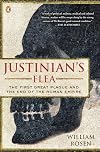
When boats arrived in Constantinople from Egypt in 541 AD, they weren’t carrying just exotic foods and trinkets. Rats and fleas from the lower holds scrambled into the new landscape, and with them came the plague. The disease swept through port cities, leaving corpses riddled with black buboes in its wake. At its peak, ten thousand people a day died in Constantinople. William Rosen’s Justinian’s Flea takes a look at the damage this microscopic agent caused to humans and how that show more affected history for centuries to come.
William Rosen is a great editor in his own right, but when he writes, his real talent comes out. Deftly combining history, medicine, sociology, and religion, Rosen posits that a major factor in the demise of the Roman Empire was the convergence between the first outbreak of bubonic plague and the weakened state of the Roman army. The book starts off slow, with a complete history of the empire between Diocletian and Justinian, then gets really good with an in-depth analysis of the evolution of the plague virus. A slowish but ultimately rewarding read. show less
William Rosen is a great editor in his own right, but when he writes, his real talent comes out. Deftly combining history, medicine, sociology, and religion, Rosen posits that a major factor in the demise of the Roman Empire was the convergence between the first outbreak of bubonic plague and the weakened state of the Roman army. The book starts off slow, with a complete history of the empire between Diocletian and Justinian, then gets really good with an in-depth analysis of the evolution of the plague virus. A slowish but ultimately rewarding read. show less
Lists
For Science! (1)
Climate Change (1)
Awards


You May Also Like
Associated Authors
Statistics
- Works
- 4
- Members
- 1,899
- Popularity
- #13,558
- Rating
- 3.7
- Reviews
- 58
- ISBNs
- 41
- Languages
- 2
- Favorited
- 1
