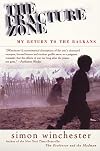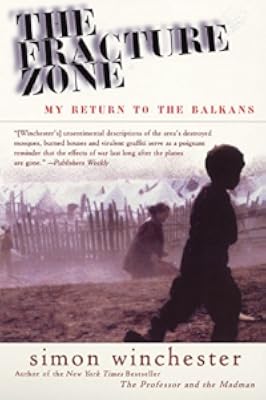
The Fracture Zone: My Return to the Balkans
by Simon Winchester
On This Page
Description
A True Portrait of One of the World's Most Chaotic and Beautiful Regions That Explains Why Violence Has Always Occurred There--And Why It May Continue For Years To Come. The vast and mountainous area that makes up the Balkans is rife with discord, both cultural and topographical. And, as Simon Winchester superbly demonstrates in this intimate portrait of the region, much of the political strife of the past century can be traced to its inherent contrasts. With the aid of a guide and linguist, show more Winchester traveled deep into the region's most troublesome areas--including Slovenia, Croatia, Bosnia, Montenegro, Albania, Kosovo, and Turkey--just as the war was tearing these countries apart. The result is a book not just about war but also about how war affects the living. Both timeless and current, The Fracture Zone goes behind the headlines to offer a true picture of a region that has always been on the brink. Winchester's remarkable journey puts all the elements together--the faults, the fractures, and the chaos--to make sense out of a seemingly senseless place. show lessTags
Recommendations






















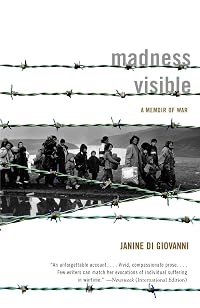


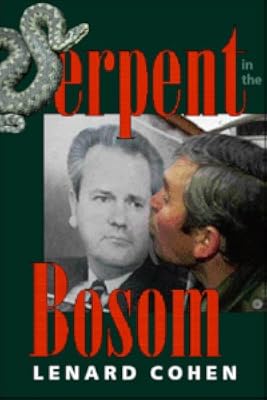

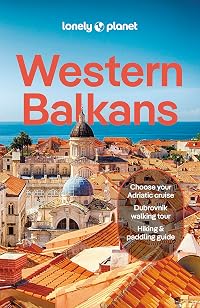
Member Recommendations

Member Reviews
One of the great things about Winchester is his ability to weave centuries of history into contemporary travel writing. In this book he puts today's tragedies in the context of hundreds of years of bitter feuds and disagreements.
Part travelogue, part narrative history, part social history, Winchester deftly combines interviews with the historical record, helping to clarify why so many wars and atrocities have been committed in this region.
What struck me most was how the beliefs and ideas of ordinary people have been so carefully manipulated by political and religious leaders so as to consolidate power and perpetuate centuries old disputes. It's hard to be optimistic about the future of the region after reading this powerful book. show more
Winchester was a newspaper journalist for 30 years, and the strength of this narrative makes all too clear how today's 24 hour cable news journalism -- of food fights in the name of balance -- do a disservice to understanding, and ultimately the truth. show less
Part travelogue, part narrative history, part social history, Winchester deftly combines interviews with the historical record, helping to clarify why so many wars and atrocities have been committed in this region.
What struck me most was how the beliefs and ideas of ordinary people have been so carefully manipulated by political and religious leaders so as to consolidate power and perpetuate centuries old disputes. It's hard to be optimistic about the future of the region after reading this powerful book. show more
Winchester was a newspaper journalist for 30 years, and the strength of this narrative makes all too clear how today's 24 hour cable news journalism -- of food fights in the name of balance -- do a disservice to understanding, and ultimately the truth. show less
At the height of the 1999 NATO bombings on Belgrade, Simon Winchester travels through the Balkans, bearing witness to the strained torsions of ethnic and religious division stretching between the historic endpoints of Vienna and Istanbul. The Balkans' bitter history is seen through the welcome bias of an outsider’s eyes, untangling the strife, conflict and even the fractured geology of the region without great proclamations of moral judgment. An excellent primer on this heart rending collision.
This was an interesting but often tedious book written by an English journalist in the 1990s—the height of the Balkan crises. In a way it is dated, much has changed, but this book chronicles why and how this region split into a myriad of small countries. I read it to learn more about Montenegro and I certainly learned more about that country than I would have thought. The book is peppered with references, plus a chapter devoted to it & a conclusion that ties up a loose end from his visit to Montenegro.
I really wanted to like this book, and as a basic introduction to the ethnic conflicts of the Balkans, it might do the job. But Winchester's over-reliance on anecdotes and broad generalizations (not to mention somewhat chauvinistic attitudes) don't do him any favors here, and I found those elements quite grating long before the end.
At the height of the 1999 NATO bombings on Belgrade, Simon Winchester travels through the Balkans, bearing witness to the strained torsions of ethnic and religious division stretching between the historic endpoints of Vienna and Istanbul. The Balkans' bitter history is seen through the welcome bias of an outsider’s eyes, untangling the strife, conflict and even the fractured geology of the region without great proclamations of moral judgment. An excellent primer on this heart rending collision.
Simon Winchester is a pleasant writer and the book an easy read. The problem of the book is structural. It is a curious combination of a holiday travelogue with a war reporting excursion. Reporting on the Kosovo War both paid for Winchester being in the Balkans and prevented him from visiting Serbia, the keystone country of the Balkans. As a British tourist, he also fails to present the full picture of the Balkan countries which are a wedged no-man's land between the Danube and the Adria. Not including the Danube and the Adria also removes the crucial influence of Hungary and Venice on the Balkans. Winchester thus overplays the Austrian and Turkish influence and interest in the region. Austria was much more interested in maritime access show more at Trieste. "The bridge over the Drina" splendidly showed the Ottoman neglect of this backward and resource-poor region. As the European Union and NATO had to learn anew, one could, as the Austrian and Ottoman Empires had done before, pour vast sums of money into the regions without creating an effect. Angry young men remain the chief export of the region.
The two highlights of the book are Winchester's visit of two men. Firstly, he meets the locked away skull of the Grand Viszir who botched the siege of Vienna and paid for it with his life. His skull became a cherished trophy mounted in a silver receptacle. Out of new-found piety, the recent Prince Eugene exhibition in Vienna displayed only the skull-less receptacle (fortunately for the curious, the catalogue includes an old picture of the Baroque ensemble).
Secondly, Wiinchester meets with Michael Jackson, the general not the singer. The British General Michael Jackson commanded the NATO forces that liberated Kosovo out of Serbia's deadly embrace. Having leisurely traveled from Vienna to Sarajevo to Dubrovnik and Albania, Winchester joins the NATO forces in crossing into Kosovo. He even manages some feat of war tourism driving around and into the Kosovo airfield desired by both NATO and the Russians. The book ends with him relaxing in Bulgaria and Turkey. Overall, a mixed travelogue that misses most of Balkan history and its central country. The main purpose of this booklet was the reimbursement of Winchester's travel bills at which he succeeded. show less
The two highlights of the book are Winchester's visit of two men. Firstly, he meets the locked away skull of the Grand Viszir who botched the siege of Vienna and paid for it with his life. His skull became a cherished trophy mounted in a silver receptacle. Out of new-found piety, the recent Prince Eugene exhibition in Vienna displayed only the skull-less receptacle (fortunately for the curious, the catalogue includes an old picture of the Baroque ensemble).
Secondly, Wiinchester meets with Michael Jackson, the general not the singer. The British General Michael Jackson commanded the NATO forces that liberated Kosovo out of Serbia's deadly embrace. Having leisurely traveled from Vienna to Sarajevo to Dubrovnik and Albania, Winchester joins the NATO forces in crossing into Kosovo. He even manages some feat of war tourism driving around and into the Kosovo airfield desired by both NATO and the Russians. The book ends with him relaxing in Bulgaria and Turkey. Overall, a mixed travelogue that misses most of Balkan history and its central country. The main purpose of this booklet was the reimbursement of Winchester's travel bills at which he succeeded. show less
I had read Kaplan's book "Balkan Ghosts" and found that Winchester's treatment of the area was much more readable. He takes us through the Balkans after the war and shows how we got there. Memories die hard. They are still fighting battles lost 600 yeas ago.
Members
- Recently Added By
Lists

Best Journalistic Travel
14 works; 4 members
Author Information

53+ Works 38,633 Members
Simon Winchester was born in London, England on September 28, 1944. He read geology at St. Catherine's College, Oxford. After graduation in 1966, he joined a Canadian mining company and worked as field geologist in Uganda. The following year he decided to become a journalist. His first reporting job was for The Journal, Newcastle upon Tyne. In show more 1969, he joined The Guardian and was named Britain's Journalist of the Year in 1971. He also worked for the Daily Mail and the Sunday Times before becoming a freelancer. He is the author of numerous books including In Holy Terror, The River at the Center of the World, The Alice Behind Wonderland, The Professor and the Madman: A Tale of Murder, Insanity, the Making of the Oxford English Dictionary, and.Exactly: How Precision Engineers Created the Modern World. In 2006, he was made an Officer of the Order of the British Empire for services to journalism and literature. (Bowker Author Biography) show less
Common Knowledge
- Important places
- Albania; Balkans; Kosovo; Croatia; Slovenia; Serbia (show all 7); Montenegro
- Original language
- English
Classifications
- Genres
- Nonfiction, Travel, General Nonfiction, History, Biography & Memoir
- DDC/MDS
- 949.6 — History & geography History of Europe Greece, Albania, Yugoslavia, Serbia, Romania, Bulgaria Turkey and the Balkans
- LCC
- DR16 .W56 — History of Europe, Asia, Africa and Oceania Balkan Peninsula History of Balkan Peninsula Description and travel
- BISAC
Statistics
- Members
- 281
- Popularity
- 114,253
- Reviews
- 13
- Rating
- (3.46)
- Languages
- English
- Media
- Paper, Audiobook, Ebook
- ISBNs
- 10
- ASINs
- 4