On This Page
Description
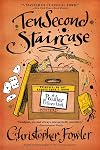
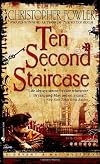
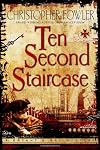
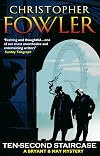
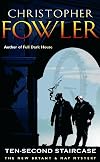
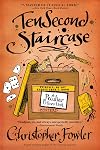
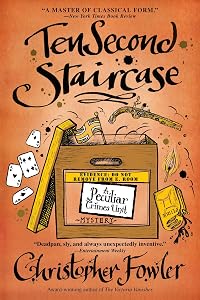
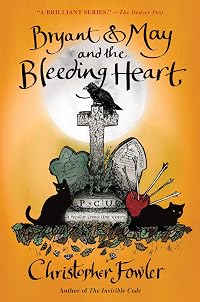
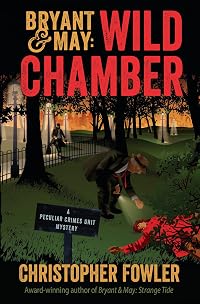
An artist is found dead in a gallery with locked doors and windows. A television presenter is struck by lightning while indoors. Two seemingly impossible crimes that only Arthur Bryant and John May of the Met's Peculiar Crimes Unit might be able to solve. But Bryant has lost his nerve and May is fighting to keep the unit from closure. Worse still, an unsolved mystery from the past has returned to haunt them...Tags
Recommendations








Member Reviews
'The debunking of phantoms and bogeymen is what you do best,' said Land. 'You had a clear remit; to stop the general public from panicking, to protect the vulnerable, to remove danger from the streets. Admit it, you lost sight of your duties.'
'We had to look at the bigger picture. Our job is to help keep the city in equilibrium between myth and reality.'
'I don't hold with all that spiritual holy-water-sprinkling demon-summoning nonsense, Bryant. You're a policeman, you can't afford to hold eccentric views.'
It is May's agoraphobic granddaughter April's first day working in the unit, and she soon shows her worth in research and making connections, but a Home Office official is gunning for the Peculiar Crime Unit and they are challenged to show more solve the closed case of the Leicester Square Vampire by the end of the week or face closure.
As they are also working on the case of a man dressed as a Highwayman who kills fading minor celebrities in elaborate ways, Bryant and May have to split their resource between the two cases. Bryant sees both criminals as embodiments of London myths, linked via the psychogeography of the city to older crimes and monster such as Springheel Jack, the Radcliffe Highway murders and even the Knights Templar, but I found the Highwayman's identity and motivation frankly unbelievable, althoughmaybe it would take callow youth to think that a woman's decision to go through with a pregnancy meant that her pro-choice campaigning must be hypocritical. show less
'We had to look at the bigger picture. Our job is to help keep the city in equilibrium between myth and reality.'
'I don't hold with all that spiritual holy-water-sprinkling demon-summoning nonsense, Bryant. You're a policeman, you can't afford to hold eccentric views.'
It is May's agoraphobic granddaughter April's first day working in the unit, and she soon shows her worth in research and making connections, but a Home Office official is gunning for the Peculiar Crime Unit and they are challenged to show more solve the closed case of the Leicester Square Vampire by the end of the week or face closure.
As they are also working on the case of a man dressed as a Highwayman who kills fading minor celebrities in elaborate ways, Bryant and May have to split their resource between the two cases. Bryant sees both criminals as embodiments of London myths, linked via the psychogeography of the city to older crimes and monster such as Springheel Jack, the Radcliffe Highway murders and even the Knights Templar, but I found the Highwayman's identity and motivation frankly unbelievable, although
One of the best entries in the Peculiar Crimes Unit series (#4) - all the most entertaining attributes of curmudgeonly Arthur Bryant and sensitive John May are on display with crackling dialogue and a true stumper of a case with possible connections to an old unsolved case that has haunted Bryant and May for years. The support characters in the PCU are well-drawn and interesting and Fowler weaves in just enough London history to give depth and meaning to the crimes and to Bryant and May's commitment to their careers, even when their superiors are determined to shut them down. The audiobook narrator does an excellent job capturing Bryant's archaic rudeness and May's tolerant exasperation.
I was first introduced to Fowler by a fellow horror fan through a book called "Spanky" which isn't the kind of fetish erotica the cover would have you believe. It's a brilliant Faustian tale. Anyway that led me to investigate the author further and it turns out he has a very popular crime series, about a quirky pair of aged detectives Bryant & May (sounds like a brand of cigarettes so immediately memorable). These two along with a small but loyal team make up London's Peculiar Crimes Team. This is not supernatural fiction, ok the first time I met them there were zombies, but since then these have been straight crime fic. Good old fashioned detecting by a couple of total oddballs. The characters are lovingly created and I defy anyone not show more to become fond of them reading these novels. The plots are suitably complex and challenging, but of course we see more than the detectives do so I found I was putting things together a few pages before Bryant and May. Of course that meant I came to the wrong conclusions first too (seriously i'm as mystery writers dream I take all the red herrings home for tea). The detail of London is fascinating and intricate but slipped in so naturally as the cases are examined and the cast of oddballs that Bryant consults add a richness to the novels. I love London, i've been many times over the years and have always been enchanted with it, Fowler's tidbits just serve to deepen that enchantment.
This is not the fast paced uber graphic violent crime fiction of present, it's gentler, a little noir and a little Agatha Christie, detecting by talking to people and digging through bits of paper, the forensics is generally fairly straightforward and the crime scene technology typical of an overstretched under funded slightly embarrassing department. The characters are the real joy, Arthur Bryant with his pipe and clairvoyants and hackers, John May with his determination to keep up with computers and mobile phones and his balancing affect on his partner, Longbright in her 50's wardrobe and full makeup and he rest of the team, loyal, diligent and a little offbeat.
Ten-Second Staircase is based around a private boys school and a council estate in London, minor but contentious celebrities are being murdered in elaborate ways and the witness statements all point towards a Highwayman. How do you capture a myth? This case also brings the unresolved Vampire case to the fore, a case which has already nearly destroyed the friendship between the two detectives once and up against all this, the Home Office is trying to shut them down. I promise it's really not supernatural. It's wonderful. I love it and am decidedly pleased to have a couple more from this series in the TBR pile. show less
This is not the fast paced uber graphic violent crime fiction of present, it's gentler, a little noir and a little Agatha Christie, detecting by talking to people and digging through bits of paper, the forensics is generally fairly straightforward and the crime scene technology typical of an overstretched under funded slightly embarrassing department. The characters are the real joy, Arthur Bryant with his pipe and clairvoyants and hackers, John May with his determination to keep up with computers and mobile phones and his balancing affect on his partner, Longbright in her 50's wardrobe and full makeup and he rest of the team, loyal, diligent and a little offbeat.
Ten-Second Staircase is based around a private boys school and a council estate in London, minor but contentious celebrities are being murdered in elaborate ways and the witness statements all point towards a Highwayman. How do you capture a myth? This case also brings the unresolved Vampire case to the fore, a case which has already nearly destroyed the friendship between the two detectives once and up against all this, the Home Office is trying to shut them down. I promise it's really not supernatural. It's wonderful. I love it and am decidedly pleased to have a couple more from this series in the TBR pile. show less
I'm confused, and not by the book itself. The title claims that it is the fourth in the series, but the end-paper in the book itself lists two other titles before it. Drat. I kept seeing references that felt like they pointed to other stories.
That said, this is Bryant an May with their usual deadpan silliness wrapped in tons of history and trivia and absurd behavior, and yet a decent puzzle with rather spectacular murders. I guessed early on what was happening, but the journey was a pleasant one, and in at least one place I laughed out loud.
That said, this is Bryant an May with their usual deadpan silliness wrapped in tons of history and trivia and absurd behavior, and yet a decent puzzle with rather spectacular murders. I guessed early on what was happening, but the journey was a pleasant one, and in at least one place I laughed out loud.
"A populated gallery, a noisy, messy murder that nobody sees or hears, a killer who appears and vanishes at will, an artist killed by her own work, and an animated poem in riding boots and a tricorn hat who comes galloping through a building before leaving a calling card - doesn't it sound to you like someone's been reading old detective stories?" (92)
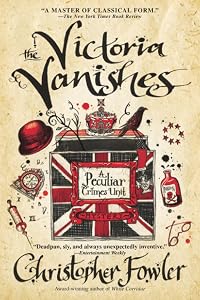
This is the second Peculiar Crimes Unit book that I have read. (The first was The Victoria Vanishes.) The first one was a bit difficult to get into; I'm not sure what it was about it, but it didn't particularly intrigue me. As I got into the second third of the book, though, it drew me in. At least enough to compel me to buy another Peculiar Crimes Unit book when I saw it on the clearance show more shelf at Half Price Books.
In this my second book with the PCU, I laughed out loud often, from the first chapter of the book. I marked several quotes as particularly hilarious from that point on and didn't stop until I reached the end.
In this episode with the Peculiar Crimes Unit, a series of two-bit celebrities (a controversial artist, a reality television star, a magazine editor) are murdered. At the scene of the first murder - that of the artist in her own installation piece - the twelve-year-old eyewitness claims to have seen a cape-clad highwayman atop a black stallion. As they get closer to catching the killer, Bryant and May must also sort out a cold-case which split up their partnership once before, all while trying to keep their unit from being shut down by the Home Office.
I find there might be a comparison to be made for Bryant and May as a modern-day (mostly) Holmes and Watson, respectively. Bryant is the brilliant fount of obscure knowledge with no family and an inability to sustain or understand social norms. In fact, I found some of the phrasing and word choice of Bryant particularly reminiscent of Holmes. May is the more socially adept one of the pair, often having to smooth things over after Bryant has been through.
Fowler writes with wit and creates nuanced characters. His books are quite a joy to read, once you are initially able to connect to the people that he has conjured
One thing that I did find irritating was that Fowler will sometimes latch onto a particular, rather obscure adjective, and use it several times over. Now, for regular, everyday adjectives that's not a problem. But if you are going to use words that are not commonplace, then use them sparingly, I say. Especially don't use them twice within fifty pages.
Overall a good book, and certainly worth the $2.00 I paid for it. Thank you once again, Half Price Books!
Some other favourite quotes:
After having received vague, noncommittal answers from a security guard at the art gallery, Bryant asks him: "Is there something wrong with you that requires all answers to be preceded by a conditional clause?"
"Madame Briquet divides her time between here and her villa in Menton," explained the caretaker. "She wouldn't like me letting strange men into her flat."
"We're not strange," said Kershaw. "We're from the Peculiar Crimes Unit."
One of the best exchanges:
(Frank, a librarian, in answer to a question from Bryant) "He can't come round for a few days because he was cat-sitting for a sick aunt, but her Persian swallowed a hair ball and coughed itself to death, so he had to find an identical replacement, and the trouble is that the new one has one green eye and one yellow, so he's waiting to hear back from the vet about whether they can put a contact lens in."
(Bryant) "I'm sorry, Frank; you seem to be speaking some alien language designed for people who care about your problems. Back to me. Where is Dorothy?"
http://incurablebookworm.blogspot.com/ show less
This is the second Peculiar Crimes Unit book that I have read. (The first was The Victoria Vanishes.) The first one was a bit difficult to get into; I'm not sure what it was about it, but it didn't particularly intrigue me. As I got into the second third of the book, though, it drew me in. At least enough to compel me to buy another Peculiar Crimes Unit book when I saw it on the clearance show more shelf at Half Price Books.
In this my second book with the PCU, I laughed out loud often, from the first chapter of the book. I marked several quotes as particularly hilarious from that point on and didn't stop until I reached the end.
In this episode with the Peculiar Crimes Unit, a series of two-bit celebrities (a controversial artist, a reality television star, a magazine editor) are murdered. At the scene of the first murder - that of the artist in her own installation piece - the twelve-year-old eyewitness claims to have seen a cape-clad highwayman atop a black stallion. As they get closer to catching the killer, Bryant and May must also sort out a cold-case which split up their partnership once before, all while trying to keep their unit from being shut down by the Home Office.
I find there might be a comparison to be made for Bryant and May as a modern-day (mostly) Holmes and Watson, respectively. Bryant is the brilliant fount of obscure knowledge with no family and an inability to sustain or understand social norms. In fact, I found some of the phrasing and word choice of Bryant particularly reminiscent of Holmes. May is the more socially adept one of the pair, often having to smooth things over after Bryant has been through.
Fowler writes with wit and creates nuanced characters. His books are quite a joy to read, once you are initially able to connect to the people that he has conjured
One thing that I did find irritating was that Fowler will sometimes latch onto a particular, rather obscure adjective, and use it several times over. Now, for regular, everyday adjectives that's not a problem. But if you are going to use words that are not commonplace, then use them sparingly, I say. Especially don't use them twice within fifty pages.
Overall a good book, and certainly worth the $2.00 I paid for it. Thank you once again, Half Price Books!
Some other favourite quotes:
After having received vague, noncommittal answers from a security guard at the art gallery, Bryant asks him: "Is there something wrong with you that requires all answers to be preceded by a conditional clause?"
"Madame Briquet divides her time between here and her villa in Menton," explained the caretaker. "She wouldn't like me letting strange men into her flat."
"We're not strange," said Kershaw. "We're from the Peculiar Crimes Unit."
One of the best exchanges:
(Frank, a librarian, in answer to a question from Bryant) "He can't come round for a few days because he was cat-sitting for a sick aunt, but her Persian swallowed a hair ball and coughed itself to death, so he had to find an identical replacement, and the trouble is that the new one has one green eye and one yellow, so he's waiting to hear back from the vet about whether they can put a contact lens in."
(Bryant) "I'm sorry, Frank; you seem to be speaking some alien language designed for people who care about your problems. Back to me. Where is Dorothy?"
http://incurablebookworm.blogspot.com/ show less
This was a great "read". I have been listening to it for the last 6 weeks or so, so it has taken me quite a while to get through it but I've never thought of abandoning it.
Christopher Fowler delights in giving the reader/listener intellectual puzzles to solve. He has set TEN-SECOND STAIRCASE against a background of London's history. For example what do Robin Hood, Dick Turpin, and Jack the Ripper have in common? After reading TEN-SECOND STAIRCASE you'll know.
Arthur Bryant is getting on, undoubtedly, like John May, coming to end of his career. He accepts an invitation to address boys at the local St. Crispin's College. He is meant to encourage them to be law-abiding and to be careful about what he says. He has a history of provoking show more people. He really doesn't understand why his audience, in essence privileged and moneyed adolescents, becomes angry and he has to be escorted from the school by teachers. So, in a sense, one of the themes of TEN-SECOND STAIRCASE is about the collision of values of the older generation with those of current adolescents.
Arthur Bryant in particular is an oddity with an antiquarian knowledge of a most peculiar kind. His pronouncements contribute to a level of humour in the Bryant & May series that is unusual in crime fiction of the generally serious kind. It part of what makes this book a delightful read. show less
Christopher Fowler delights in giving the reader/listener intellectual puzzles to solve. He has set TEN-SECOND STAIRCASE against a background of London's history. For example what do Robin Hood, Dick Turpin, and Jack the Ripper have in common? After reading TEN-SECOND STAIRCASE you'll know.
Arthur Bryant is getting on, undoubtedly, like John May, coming to end of his career. He accepts an invitation to address boys at the local St. Crispin's College. He is meant to encourage them to be law-abiding and to be careful about what he says. He has a history of provoking show more people. He really doesn't understand why his audience, in essence privileged and moneyed adolescents, becomes angry and he has to be escorted from the school by teachers. So, in a sense, one of the themes of TEN-SECOND STAIRCASE is about the collision of values of the older generation with those of current adolescents.
Arthur Bryant in particular is an oddity with an antiquarian knowledge of a most peculiar kind. His pronouncements contribute to a level of humour in the Bryant & May series that is unusual in crime fiction of the generally serious kind. It part of what makes this book a delightful read. show less
This fourth volume n the Bryant and May series about the quirky detectives is set a month after the events of The Water Room, still my favourite in the series. I found this one more convincing than the predecessor, The Seventy Seven clocks, but also more predictable. The detectives find themselves fighting for the existence of their unit and trying to solve an old cold case with definite similarities to the latest murders committed by someone the media dubs the Highwayman. Although there is a red herring that caught me out for a while, I was spot on with the perpetrator of the earlier crimes and not far off the ultimate solution if the present day murders. I find it a bit unsatisfactory when I seem to be ahead of the characters who are show more both smart cookies. So an interesting read in places, but not up to the standard of The Water Room. show less
Members
- Recently Added By
Lists

Majkia's Mystery/ Thriller TBR
86 works; 3 members

Books Read in 2021
5,361 works; 114 members

Must Read Detective Stories (Nick Fuller)
278 works; 2 members
Author Information

136+ Works 12,716 Members
Christopher Fowler was born in Greenwich, London, England in 1953. He is the author of the Bryant and May Mystery series, Rune, and Old Devil Moon, which won the Edge Hill Audience Prize in 2008. He also won the British Fantasy Society Award for best novella for Breathe in 2005. He also won The Dagger in the Library Award 2015 for his body of show more work. (Bowker Author Biography) show less
Some Editions
Series

Common Knowledge
- Canonical title
- Ten Second Staircase
- Original title
- Ten-Second Staircase
- Original publication date
- 2006-09-01
- People/Characters
- Arthur Bryant; John May; Raymond Land; Janice Longbright
- Important places
- London, England, UK
- Epigraph
- The wit of cheats, the courage of a whore,
Are what ten thousand envy and adore:
All, all look up, with reverential awe,
At crimes that 'scape, or triumph o'er the law:
While truth, worth, wisdom, daily they decry... (show all)--
'Nothing is sacred now but villainy.'
--Alexander Pope - Dedication
- For Peter Chapman
Hang on, Little Tomato
For Peter Chapman
Everything to the max - First words
- MEMORANDUM
PRIVATE AND CONFIDENTIAL
Thank you for your correspondence of 26 September requesting further details concerning my tenure at the North London Peculiar Crimes Unit. - Last words
- (Click to show. Warning: May contain spoilers.)They drank and watched in contented silence as an iridescent sun sent shivers of golden light across the water of the Thames, lighting the serpentine channel of the radiant river, opening a path to the heart of the city.
- Publisher's editor
- Taylor, Simon
Classifications
Statistics
- Members
- 700
- Popularity
- 40,739
- Reviews
- 22
- Rating
- (3.81)
- Languages
- Czech, English
- Media
- Paper, Audiobook, Ebook
- ISBNs
- 21
- ASINs
- 9