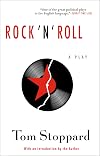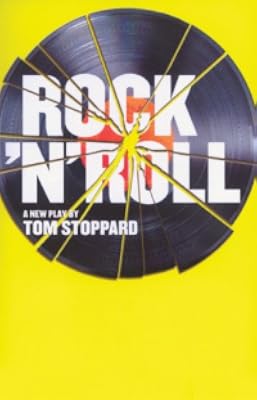
Rock 'n' Roll: A New Play
by Tom Stoppard
On This Page
Description
"Tom Stoppard's Rock 'n' Roll is an electrifying collision of the romantic and the revolutionary. It is 1968 and the world is ablaze with rebellion, accompanied by a sound track of the Rolling Stones and Bob Dylan. Clutching his prized collection of rock albums, Jan, a Cambridge graduate student, returns to his homeland of Czechoslovakia just as Soviet tanks roll into Prague. When security forces tighten their grip on artistic expression, Jan is inexorably drawn toward a dangerous act of show more dissent. Back in England, Jan's volcanic mentor, Max, faces a war of his own as his free-spirited daughter and his cancer-stricken wife attempt to break through his walls of academic and emotional obstinacy. Over the next twenty years of love, espionage, chance, and loss, the extraordinary lives of Jan and Max spin and intersect until an unexpected reunion forces them to see what is truly worth the fight. Both moving and funny, Stoppard's passionate tour de force explores a world of betrayals and hopes to find something lasting, true, and free underneath."--Publisher's website. show lessTags
Recommendations












Member Reviews
For you, freedom means, ‘Leave me alone.’ For the masses it means, ‘Give me a chance.’
Wonderful exposition on the possibility of dissent. Layered with pop culture, the scene of Rock ‘N’ Roll switches back and forth between Cambridge and Prague from 1968 to 1992. A Czech grad student leaves the UK to return to Czechoslovakia as the Prague Spring comes to an untidy end. His academic advisor at Cambridge is a lifelong Marxist and myriad family dramas unfold across decades while the turntable provides a soundtrack.
There’s an intriguing rumination on the idea Moral Exhibitionism. There’s some obvious weight to that. The Velvet Revolution occurs (while The Velvet Underground dissemble after their famed legacy—Brian Eno said show more everyone who bought their first album started their own band) and life proceeds. The life of Syd Barrett is an interesting metaphor for such, maybe Gorbachev as well. Rock ‘n’ Roll was very reminiscent of Stoppard’s Arcadia, Open doors leading to gardens and High Table gossip. 4.6 stars— I’d love to see this performed. show less
Wonderful exposition on the possibility of dissent. Layered with pop culture, the scene of Rock ‘N’ Roll switches back and forth between Cambridge and Prague from 1968 to 1992. A Czech grad student leaves the UK to return to Czechoslovakia as the Prague Spring comes to an untidy end. His academic advisor at Cambridge is a lifelong Marxist and myriad family dramas unfold across decades while the turntable provides a soundtrack.
There’s an intriguing rumination on the idea Moral Exhibitionism. There’s some obvious weight to that. The Velvet Revolution occurs (while The Velvet Underground dissemble after their famed legacy—Brian Eno said show more everyone who bought their first album started their own band) and life proceeds. The life of Syd Barrett is an interesting metaphor for such, maybe Gorbachev as well. Rock ‘n’ Roll was very reminiscent of Stoppard’s Arcadia, Open doors leading to gardens and High Table gossip. 4.6 stars— I’d love to see this performed. show less
This is a surprisingly powerful play, with an emotional climax that I had not expected from Stoppard's earlier work. It begins as a forceful debate on the history and future of socialism, ground which Stoppard has tilled before. But then it blindsides us with a gradually but strongly developed subtext that the spirit of Pan (here personified by rock musicians, particularly Syd Barrett) is a truer agent of change than even intellectuals -- Stoppard himself -- might devise.
This edition has an 11-page introductory essay by Stoppard which you might find helpful, as the characters are caught up in historical events with which you may not be familiar.
This edition has an 11-page introductory essay by Stoppard which you might find helpful, as the characters are caught up in historical events with which you may not be familiar.
Watching Cahoot's Macbeth has made me think about this play again.
I went to see it in a negative frame of mind. Fictional adaptation of history is what happens when writers run out of ideas. Not so, not so. This is such a good play. It imparts something that is important for people in soft societies to understand. Popular culture in a place like Czechoslovakia in the 1960s was really important. It was integral to politics.It changed lives. People fought for it and died for it.
I went to see it in a negative frame of mind. Fictional adaptation of history is what happens when writers run out of ideas. Not so, not so. This is such a good play. It imparts something that is important for people in soft societies to understand. Popular culture in a place like Czechoslovakia in the 1960s was really important. It was integral to politics.It changed lives. People fought for it and died for it.
Watching Cahoot's Macbeth has made me think about this play again.
I went to see it in a negative frame of mind. Fictional adaptation of history is what happens when writers run out of ideas. Not so, not so. This is such a good play. It imparts something that is important for people in soft societies to understand. Popular culture in a place like Czechoslovakia in the 1960s was really important. It was integral to politics.It changed lives. People fought for it and died for it.
I went to see it in a negative frame of mind. Fictional adaptation of history is what happens when writers run out of ideas. Not so, not so. This is such a good play. It imparts something that is important for people in soft societies to understand. Popular culture in a place like Czechoslovakia in the 1960s was really important. It was integral to politics.It changed lives. People fought for it and died for it.
A friend introduced me to Stoppard in school, before I moved to Czechia, and it was long after that I realized his connection. This is a lovely rediscussion of dissent in a way that hopefully was more accessible to western audiences than some of the samizdat.
This is much better on the stage than on the page. I will never not love Alice, but the relationships are *hard* to parse in text (or maybe that's just me; an actor or director would likely get a little more from it), and the politics do not come across well. I don't know if this is one of Stoppard's better works, or if it's just more technically adept than much of his previous work, or what. (Also, Plastic People of Universe, as a band, *suck*.)
Members
- Recently Added By
Author Information

113+ Works 23,625 Members
When the National Theatre needed a last-minute substitute for a canceled production of As You Like It, Kenneth Tynan decided to stage Rosencrantz and Guildenstern Are Dead, a work by an unfamiliar author that had received discouraging notices from provincial critics at its Edinburgh Festival debut. Of course, the play, when it opened in April show more 1967, met with universal acclaim. In New York the next year, it was chosen best play by the Drama Critics Circle. In such an unlikely way, Tom Stoppard came to light. Born in Czechoslovakia, a country he left (for Singapore) when he was an infant, he began his literary career as a journalist in Bristol, where play reviewing led to playwriting. After Rosencrantz and Guildenstern, Stoppard's reputation suffered through the production of a number of minor works, whose intellectual preoccupations were shrugged off by reviewers: Enter a Free Man (1968; "an adolescent twinge of a play," N.Y. Times), The Real Inspector Hound (1968; "lightweight," N.Y. Times), and After Magritte. But in the 1970s, the initial enthusiasms aroused by Rosencrantz and Guildenstern were more than vindicated by the production of two full-length plays, Jumpers (1974) and the antiwar play Travesties (1975), whose immense verbal and theatrical inventiveness made them absolute successes on both sides of the Atlantic. Stoppard's method from the start has been to contrive explanations for highly unlikely encounters---of objects (the ironing board, old lady, and bowler hat of After Magritte), characters (Joyce, Lenin, and Tzara in Travesties), and even plays (Hamlet, Rosencrantz and Guildenstern, The Importance of Being Earnest, Travesties, and The Real Thing, 1982). In the 1970s, Tynan called for Stoppard---as a Czech and as an artist---to engage himself politically. But although political subjects have since found their way into pieces from Every Good Boy Deserves Favor (1977) to Squaring the Circle (1985), politics and art seem to have become just two more of the playwright's irreconcilables, which meet, but never join, in the logical frames of his comedy. The presence of political material---such as the Lenin sections that nearly ruin the second part of Travesties---has occasionally strained the structure of the plays. But in The Real Thing Stoppard is comfortable enough with the satire on art and activism to bring a third subject, love, into the mix. Stoppard has acknowledged his Eastern European heritage nonpolitically, in a series of adaptations of plays by Arthur Schnitzler (see Vol. 2), Johann Nestroy, and Ferenc Molnar. (Bowker Author Biography) Tom Stoppard is the author of many plays, including Rosencrantz and Guildenstern Are Dead, Jumpers, Travesties, and The Invention of Love. He lives in London. (Publisher Provided) show less
Awards and Honors
Work Relationships
Is abridged in
Has as a supplement
Common Knowledge
- Original title
- Rock 'n' Roll
- Original publication date
- 2006
- Dedication
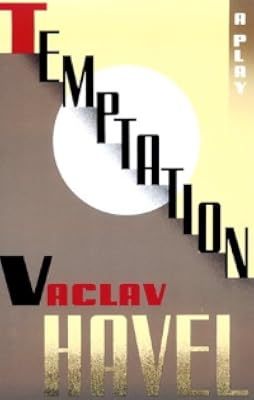
- For Václav Havel
- First words
- Blackout.
The Piper
'Lean out of your window,
Golden Hair,
I heard you singing
In the midnight air.
My book is closed,
I read no more . . .' - Last words
- (Click to show. Warning: May contain spoilers.)Esme (exuberantly) I don't care. I don't care. I don't care.
(Click to show. Warning: May contain spoilers.)The End. - Original language
- English
Classifications
Statistics
- Members
- 362
- Popularity
- 87,228
- Reviews
- 8
- Rating
- (3.96)
- Languages
- 8 — Catalan, Czech, English, German, Italian, Portuguese, Russian, Spanish
- Media
- Paper, Ebook
- ISBNs
- 16
- ASINs
- 2