Brief Notes on the Art and Manner of Arranging One's Books: Georges Perec (Penguin Great Ideas) by Georges Perec
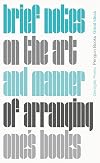
All of these short essays, originally written for literary periodicals, are also included in Perec's "Species of Spaces," but in any case this is minor Perec and hardly deserves a place in Penguin's "Great Ideas" series.
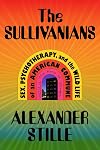
This book promises to a thoughtful exploration of an eccentric group, but instead delivers a trashy true crime beach read.

Having loved Allende's previous novel, A Long Petal of the Sea, this was a sad disappointment. Not because it was different, but because it reads like a first draft.
The eponymous narrator, born in 1920, is writing down her life story in 2020, and to avoid spoilers I will only say that Violeta's intended reader, Camilo, was born around 1972. The passages where Violeta is describing things she has personally experienced are lively, but unfortunately the author feels the need to explain an enormous amount of history that Camilo has lived through and knows well. Time and again the narrator must say "as you know" or "little did I suspect that later on" or "at the time nobody knew" or "did you know that at that time" to shoehorn in facts that are ultimately irrelevant to the story.
Flipping through pages at random, here's a typical example: "...It took him under two hours to get me a travel permit from the regional commander. Those were other times, Camilo. Now you can find out someone's identity in under a minute and even the most intimate details of their life, but in the seventies that wasn't always possible." Surely anyone born before 1995 knows this?
And another: "For three years the right-wing propaganda had been sermonizing about the horrors of a Communist dictatorship. Now we were experiencing the real-life terrors of a Fascist one. The military junta claimed that these were only temporary measures, but that they would continue indefinitely, until Christian and Western show more values were restored to the nation. I held on to the illusion that our country had the most solid tradition of democracy on the continent that we'd been a model of civic duty in the world that we'd soon have elections and democracy would be reinstated."
Moments of impersonal precis are almost inevitable in historical fiction, but there's far more here than needed, as if it were rushed to press without time to edit. In the end it often feels like Allende's true audience is more like a modern high school student than someone well into middle age. And perhaps it is? show less
The eponymous narrator, born in 1920, is writing down her life story in 2020, and to avoid spoilers I will only say that Violeta's intended reader, Camilo, was born around 1972. The passages where Violeta is describing things she has personally experienced are lively, but unfortunately the author feels the need to explain an enormous amount of history that Camilo has lived through and knows well. Time and again the narrator must say "as you know" or "little did I suspect that later on" or "at the time nobody knew" or "did you know that at that time" to shoehorn in facts that are ultimately irrelevant to the story.
Flipping through pages at random, here's a typical example: "...It took him under two hours to get me a travel permit from the regional commander. Those were other times, Camilo. Now you can find out someone's identity in under a minute and even the most intimate details of their life, but in the seventies that wasn't always possible." Surely anyone born before 1995 knows this?
And another: "For three years the right-wing propaganda had been sermonizing about the horrors of a Communist dictatorship. Now we were experiencing the real-life terrors of a Fascist one. The military junta claimed that these were only temporary measures, but that they would continue indefinitely, until Christian and Western show more values were restored to the nation. I held on to the illusion that our country had the most solid tradition of democracy on the continent that we'd been a model of civic duty in the world that we'd soon have elections and democracy would be reinstated."
Moments of impersonal precis are almost inevitable in historical fiction, but there's far more here than needed, as if it were rushed to press without time to edit. In the end it often feels like Allende's true audience is more like a modern high school student than someone well into middle age. And perhaps it is? show less
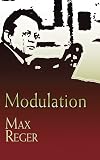
Reger here lists the shortest modulatory path between any two keys. It's a good resource at 3am when you're tired and confused - start with Reger's stock solution and the progression that actually fits your situation will soon be clear.
Nurse and spy in the Union army: comprising the adventures and experiences of a woman in hospitals, camps, and battlefields by Sarah Emma Edmonds

This is a first-person account of a woman who enlisted in the Army of the Potomac in 1861, presenting herself as a man, to serve as a field nurse. She says little about why she did so. She became ill and left the field in 1863, and this was published a year or two later.
The book is typical of its time in being heavily padded with lengthy quotations from other published sources, contemporary sentimental poetry, and religious digressions both passionate and naive.
It reads as if the chapters were made for periodical serialization: each of the thirty chapters is approximately the same length. Also typical is that it appears to be factually unreliable; but in many cases it's ambiguous whether she's actually claiming to have been somewhere (such as Antietam), or innocently reporting other people's stories.
In spite of these flaws, it's more than reasonably well-written and has significant antiquarian interest. For those interested in finding out more about the author herself, there's a modern biography available (The Mysterious Private Thompson, by Laura Leedy Gansler).
The book is typical of its time in being heavily padded with lengthy quotations from other published sources, contemporary sentimental poetry, and religious digressions both passionate and naive.
It reads as if the chapters were made for periodical serialization: each of the thirty chapters is approximately the same length. Also typical is that it appears to be factually unreliable; but in many cases it's ambiguous whether she's actually claiming to have been somewhere (such as Antietam), or innocently reporting other people's stories.
In spite of these flaws, it's more than reasonably well-written and has significant antiquarian interest. For those interested in finding out more about the author herself, there's a modern biography available (The Mysterious Private Thompson, by Laura Leedy Gansler).
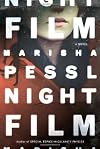
In a word, disappointing.
The book is narrated by disgraced investigative journalist Scott McGrath. He's not very bright, noticing far too many 'amazing coincidences' without ever questioning them, constantly using italics for emphasis, and repeatedly pointing out obvious connections. I realize this is all part of Pessl's pulp-fiction pastiche, but it's a bit wearying. (I also note that several of the reviewers here found these tics annoying enough to have missed the point that they're deliberate.)
After a couple of hundred pages of the protagonist simply going from one clue to another, I kept waiting for the trap to spring, for something to reveal a hidden side to things and move the story in a new and more complex direction; but it doesn't happen. Again this seems deliberate, as she drops hints all along that she's structuring the book like one of the many 'plots' she relays. But I do think that a film with this structure would be no less tedious.
Still, she kept me interested enough to keep turning the pages, and did get me into the paranoid state of mind characteristic of the hero, so she gets points for that. I hope that for her next book she backs off of the formal tricks and just tells the story.
The book is narrated by disgraced investigative journalist Scott McGrath. He's not very bright, noticing far too many 'amazing coincidences' without ever questioning them, constantly using italics for emphasis, and repeatedly pointing out obvious connections. I realize this is all part of Pessl's pulp-fiction pastiche, but it's a bit wearying. (I also note that several of the reviewers here found these tics annoying enough to have missed the point that they're deliberate.)
After a couple of hundred pages of the protagonist simply going from one clue to another, I kept waiting for the trap to spring, for something to reveal a hidden side to things and move the story in a new and more complex direction; but it doesn't happen. Again this seems deliberate, as she drops hints all along that she's structuring the book like one of the many 'plots' she relays. But I do think that a film with this structure would be no less tedious.
Still, she kept me interested enough to keep turning the pages, and did get me into the paranoid state of mind characteristic of the hero, so she gets points for that. I hope that for her next book she backs off of the formal tricks and just tells the story.

Usually I don't write spoilers, but most of the other reviewers seem to have entirely misunderstood the framing device and it's relationship to the plot. So:
* * * * * SPOILERS * * * * *
- In the opening chapter, we meet Dennis, who is obsessively watching 24-Hour Psycho. He sees Jim and Elster, briefly.
- In the closing chapter (the next day) he meets Jessica and gets her phone number.
- Sometime after that chapter ends, Dennis starts calling Jessica. It's not clear what happens in those calls, or whether they meet again.
- Then the middle chapter begins. While its events are taking place, Jessica's mother (who sometimes picks up the phone and hears no answer), decides something isn't right, and sends Jessica to her father's place in the desert.
- In the middle of the second chapter, Jessica arrives at the house. Dennis eventually comes after her, they leave the house together, and (presumably) Dennis kills her, as Norman Bates kills Janet Leigh. The knife is found by the police, but not a body. Jim & Elster leave the desert.
* * * * * END SPOILERS * * * * *
I don't know what I think of this novella, but it wasn't boring, and the last chapter was a little bit of a twist.
* * * * * SPOILERS * * * * *
- In the opening chapter, we meet Dennis, who is obsessively watching 24-Hour Psycho. He sees Jim and Elster, briefly.
- In the closing chapter (the next day) he meets Jessica and gets her phone number.
- Sometime after that chapter ends, Dennis starts calling Jessica. It's not clear what happens in those calls, or whether they meet again.
- Then the middle chapter begins. While its events are taking place, Jessica's mother (who sometimes picks up the phone and hears no answer), decides something isn't right, and sends Jessica to her father's place in the desert.
- In the middle of the second chapter, Jessica arrives at the house. Dennis eventually comes after her, they leave the house together, and (presumably) Dennis kills her, as Norman Bates kills Janet Leigh. The knife is found by the police, but not a body. Jim & Elster leave the desert.
* * * * * END SPOILERS * * * * *
I don't know what I think of this novella, but it wasn't boring, and the last chapter was a little bit of a twist.
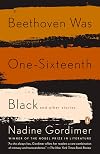
"...they mostly fell asleep in what she called the spoon-and-fork way...The softness of breasts in opposition to the male rib cage and spine are one of the wordless questions and answers between men and women."
These are tiny, dense stories, stylized and yet beyond style. They're quite satisfying when taken one per day, like vitamins.
They often deal with elemental questions: who is my family, really? How does one mourn? How to judge the worth of a life? People thrown together, or drifting apart, all in ten pages.
The three stories that make up "Alternate Endings" take the same story arc -- one spouse cheats on the other -- and in each a crucial role is played by a different sense (sight, hearing, smell) and comes to a different conclusion.
These are tiny, dense stories, stylized and yet beyond style. They're quite satisfying when taken one per day, like vitamins.
They often deal with elemental questions: who is my family, really? How does one mourn? How to judge the worth of a life? People thrown together, or drifting apart, all in ten pages.
The three stories that make up "Alternate Endings" take the same story arc -- one spouse cheats on the other -- and in each a crucial role is played by a different sense (sight, hearing, smell) and comes to a different conclusion.
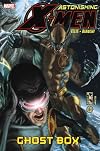
I'm a big fan of Warren Ellis, which is why I picked this up, but this is one of his most generic efforts. The story is nothing special, and the dialog has little of Ellis's usual sparkle. If I hadn't known it was his I would never have guessed.
Bianchi's draftsmanship is gorgeous, but the page layouts are often poor, and the action sequences difficult to follow.
Bianchi's draftsmanship is gorgeous, but the page layouts are often poor, and the action sequences difficult to follow.
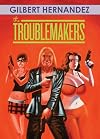
For those unfamiliar with the comic Love and Rockets: Hernandez is the creator of stories set in the fictional Central American town of Palomar. One of his main characters is the absurdly endowed Luba, who has a similarly shaped sister Fritz. Fritz starred in a series of B-movies, and now Hernandez is creating a corresponding series of fotonovela-like graphic novels. This is the second, after the excellent (but deeply disturbing) Chance in Hell.
The Troublemakers features four grifters. At the start, one has somehow come into $200,000, and the rest of the story concerns their efforts to con each other out of it. It's never entirely clear, even by the end, who is conning whom, a noir gambit that's often just sloppy writing but is here elevated to a matter of principle.
Unlike Chance in Hell, or the recent Citizen Rex serial (not yet collected), there are no science fiction elements here. This makes the complex plot easier to follow -- no time needs to be spent explaining the world of the story.
There is a bit of the deliberately crude about Hernandez's graphic style, which some may resist -- Fritz's character is derogated by one of the others as "blimp tits", and that's how she's drawn. For anyone else, and especially for to fans of the Palomar stories, this is an easy recommendation.
The Troublemakers features four grifters. At the start, one has somehow come into $200,000, and the rest of the story concerns their efforts to con each other out of it. It's never entirely clear, even by the end, who is conning whom, a noir gambit that's often just sloppy writing but is here elevated to a matter of principle.
Unlike Chance in Hell, or the recent Citizen Rex serial (not yet collected), there are no science fiction elements here. This makes the complex plot easier to follow -- no time needs to be spent explaining the world of the story.
There is a bit of the deliberately crude about Hernandez's graphic style, which some may resist -- Fritz's character is derogated by one of the others as "blimp tits", and that's how she's drawn. For anyone else, and especially for to fans of the Palomar stories, this is an easy recommendation.
* SPOILERS*
Entertaining account of the author's two years in a rock band, told in parallel with the near-breakup of her marriage. The band story particularly is one seldom told as well, and makes the book worth reading.
But the author seems unaware that her "happy" ending (reconciled, new baby, etc) actually comes off as quite dismal. She has given up on playing in a band, the one experience in the book that brings her virtually unalloyed joy. She has 'forgiven' her husband's year of cheating, but her persistent and intense rages (which last almost as long as the affair) leave their long-term prospects doubtful.
The story is occasionally interspersed with some marginally relevant reportage, some of which should have been trimmed significantly.
Entertaining account of the author's two years in a rock band, told in parallel with the near-breakup of her marriage. The band story particularly is one seldom told as well, and makes the book worth reading.
But the author seems unaware that her "happy" ending (reconciled, new baby, etc) actually comes off as quite dismal. She has given up on playing in a band, the one experience in the book that brings her virtually unalloyed joy. She has 'forgiven' her husband's year of cheating, but her persistent and intense rages (which last almost as long as the affair) leave their long-term prospects doubtful.
The story is occasionally interspersed with some marginally relevant reportage, some of which should have been trimmed significantly.
This is more a pamphlet than a book, and you can get through it in perhaps twenty minutes; but I still it's very creative and enjoyable. Good for reading aloud to one's lover in bed (if you're hetero).

The weirdest, most disturbing play I've encountered since the late '60s. It takes place in a kind of post-apocalyptic dystopia akin to that of Caryl Churchill's 'Far Away', where nature itself has turned on humans (although whether the characters are actually homo sapiens is at times ambiguous.)
This inexpensive volume is a good alternative to the free online versions, some of which are really 'adaptations'. It's also available in a dual-language version.
The title story still shocks a century later, and it's simply wrong to dismiss it as "bitter" or "pessimistic". The premise is simple enough: in 16th Century Austria, an angel appears to three boys. But Twain's angel is not the usual cliche, and the changes he rings on the theme are constantly surprising. There is a bit of speechifying, but the philosophical challenges Twain throws down are real and well worth pondering.
You don't have to be espeically into history or politics to really enjoy this book.
The best thing here is the neutral point of view. Many books about one or another of these men are simply soapboxes for their authors, or worse. And as history books go, this is unusually enjoyable to read, lively and colorful without being sensationalistic. The occasional well-chosen detail is invariably footnoted, which increases one's trust in the accuracy of the telling. Strongly recommended.
The best thing here is the neutral point of view. Many books about one or another of these men are simply soapboxes for their authors, or worse. And as history books go, this is unusually enjoyable to read, lively and colorful without being sensationalistic. The occasional well-chosen detail is invariably footnoted, which increases one's trust in the accuracy of the telling. Strongly recommended.
 This review was written for LibraryThing Early Reviewers.
An enjoyable romp, made me laugh once every couple of pages. It presents itself as autobiography, and she says it all happened, (http://www.oasisjournals.com/Issues/0108/cover.html), but she gets to call it fiction, which lets her have it both ways: the structural relaxation of a memoir, but the eventfulness of fiction.
The first volume of a planned complete run of Feiffer's Village Voice strips, this covers 1956-1966. Though amazing simply as a time capsule, many of these sixty-second satires retain their considerable punch.
The distinguishing attribute of this book is the author's fearlessness. She doesn't pretend to be a nice person, only an honest one, and the result is sometimes shocking.
In brief: Homes, who was adopted at birth, is contacted at age 31 by her birth mother, a childish woman who has fantasies of Homes 'adopting' her. Eventually she meets her birth father, who knows only how to be either seductive (making promises he can't keep to Homes's birth mother, and eventually Homes herself) or submissive (to his wife).
It's not a novel, and Homes insists on telling the story chronologically, which effectively evokes the terribly uncertain and edgy state that she experienced while it was all happening. Some people can't handle this, accusing Homes of 'whining'. They mistake acute pain and deep disorientation for narcissism; perhaps they would have liked something more Hollywood-ready.
As it happens I have personal experience with all the types encountered here: adopted children encountering their birth parents, hidden half-siblings, women who relinquished their children at birth, and so forth; and Homes deserves full credit for true-to-life portraiture.
The second half of the book is less compelling, but if you read it at a sitting (not difficult) then the arc of it becomes of a piece with the whole.
In brief: Homes, who was adopted at birth, is contacted at age 31 by her birth mother, a childish woman who has fantasies of Homes 'adopting' her. Eventually she meets her birth father, who knows only how to be either seductive (making promises he can't keep to Homes's birth mother, and eventually Homes herself) or submissive (to his wife).
It's not a novel, and Homes insists on telling the story chronologically, which effectively evokes the terribly uncertain and edgy state that she experienced while it was all happening. Some people can't handle this, accusing Homes of 'whining'. They mistake acute pain and deep disorientation for narcissism; perhaps they would have liked something more Hollywood-ready.
As it happens I have personal experience with all the types encountered here: adopted children encountering their birth parents, hidden half-siblings, women who relinquished their children at birth, and so forth; and Homes deserves full credit for true-to-life portraiture.
The second half of the book is less compelling, but if you read it at a sitting (not difficult) then the arc of it becomes of a piece with the whole.

After the diffuse "Black Dossier", this is a terrific return to form. There were times when it was so good I gasped out loud.
The title of this first installment (of three) is "What Keeps Mankind Alive?", and if that doesn't excite you--if you don't get that he's taking on The Threepenny Opera--then you probably won't get this book at all. The way Moore's "Jenny Diver" is entangled with that of Brecht is by itself worth the price of admission.
The League, such as it is, now consists of three immortals: Mina Murray, Allan Quartermain, and Orlando; plus Thomas Carnacki, the Ghost Finder, and the Gentleman Burglar, A.J. Raffles.
I can't say more without spoiling things, alas, but I will mention that the "Earl of Gurney" who plays a significant (but unseen) role in the denouement is the protagonist of Peter Barnes's brilliant black comedy "The Ruling Class."
It's not an action comic, and it's not a Hollywood movie. The heroes aren't always central, and they sometimes fail. It's much more like a prose novel, where characters come and go and not everything gets spelled out. Moore's allusions here are less universal than in the first LoEG, but it's worth chasing down the footnotes. (The prose backmatter incorporates parodies of Clarke's "2001" and Reage's "Story of O", among other surprises.)
I need also to say that this is the best work I ever seen from Kevin O'Neill, which is saying something.
The title of this first installment (of three) is "What Keeps Mankind Alive?", and if that doesn't excite you--if you don't get that he's taking on The Threepenny Opera--then you probably won't get this book at all. The way Moore's "Jenny Diver" is entangled with that of Brecht is by itself worth the price of admission.
The League, such as it is, now consists of three immortals: Mina Murray, Allan Quartermain, and Orlando; plus Thomas Carnacki, the Ghost Finder, and the Gentleman Burglar, A.J. Raffles.
I can't say more without spoiling things, alas, but I will mention that the "Earl of Gurney" who plays a significant (but unseen) role in the denouement is the protagonist of Peter Barnes's brilliant black comedy "The Ruling Class."
It's not an action comic, and it's not a Hollywood movie. The heroes aren't always central, and they sometimes fail. It's much more like a prose novel, where characters come and go and not everything gets spelled out. Moore's allusions here are less universal than in the first LoEG, but it's worth chasing down the footnotes. (The prose backmatter incorporates parodies of Clarke's "2001" and Reage's "Story of O", among other surprises.)
I need also to say that this is the best work I ever seen from Kevin O'Neill, which is saying something.

Unlike the comical (and wonderful) 'Winbledon Green', here author Seth sustains a deeply elegiac tone throughout. The large pages encourage (maybe even enforce) a slower-than-usual pace, which contributes. It never breaks through to overt sorrow, but that may be the point.
[!! SPOILERS !!]
This is not a love story.
There is a book-length flirtation at the heart of the action, but by the time we're halfway through it's clear that the protagonist and the object of his affection are a ridiculous pairing, the kind that only ends happily in the fantasies of middle-aged men.
But what is also obvious by then is that the author is not going to indulge in this cliche; and since he likes his bad-but-not-evil characters, the question that begins to occupy the reader is: how is he going to get them out of this safely?
I did enjoy watching Phillips play variations on the theme of elision, which he does with skill and humor. If this doesn't sound like your idea of fun, you might find the book trouble. Then again, there are other ways in, as some reviewers have reported.
[obtained via Early Reviewers]
This is not a love story.
There is a book-length flirtation at the heart of the action, but by the time we're halfway through it's clear that the protagonist and the object of his affection are a ridiculous pairing, the kind that only ends happily in the fantasies of middle-aged men.
But what is also obvious by then is that the author is not going to indulge in this cliche; and since he likes his bad-but-not-evil characters, the question that begins to occupy the reader is: how is he going to get them out of this safely?
I did enjoy watching Phillips play variations on the theme of elision, which he does with skill and humor. If this doesn't sound like your idea of fun, you might find the book trouble. Then again, there are other ways in, as some reviewers have reported.
[obtained via Early Reviewers]
This review was written for LibraryThing Early Reviewers.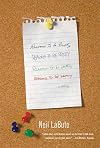
The play starts in mid-fight: Greg has been overheard referring to his girlfriend's looks as 'regular' (rather than 'pretty' or 'beautiful'), and now there's hell to pay. She walks out on their four-year relationship, leaving Greg wanting her back and us wondering if there isn't more to it than that. There is, but LaBute doesn't bash us over the head with it; so we're right in there with Greg, stretching for things just beyond our reach, and growing a bit in the process. The other couple in the play are mostly there for contrast, but so fully drawn that you don't think of it that way while the story is in motion.
Note that although LaBute may have begun with the impulse to comment on the burden of physical beauty (or its lack), that's ultimately peripheral to this story.
The book states that this is the script that preceded the first production. I don't know what changed when, but by Broadway there had been some substantial alterations. Particularly there are three big monologues (for Steph, Kirk, and Greg) which were cut, which was wise -- now the characters struggle to convince each other, rather than us, which is more engaging. The Broadway version is clearly superior, but not yet published.
Note that although LaBute may have begun with the impulse to comment on the burden of physical beauty (or its lack), that's ultimately peripheral to this story.
The book states that this is the script that preceded the first production. I don't know what changed when, but by Broadway there had been some substantial alterations. Particularly there are three big monologues (for Steph, Kirk, and Greg) which were cut, which was wise -- now the characters struggle to convince each other, rather than us, which is more engaging. The Broadway version is clearly superior, but not yet published.
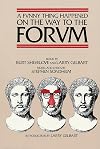
One of the best Broadway librettos ever, of course, and the only successful musical farce. One of the few scripts that repeatedly makes me laugh out loud.
This edition (Applause) includes lyrics from cut songs, a few of which have found a life outside the show: "Invocation," "Love is in the Air," "Farewell," "The House of Marcus Lycus," "Your Eyes Are Blue," "I Do Like You," "There's Something About a War," "Echo Song," "The Gaggle of Geese."
This edition (Applause) includes lyrics from cut songs, a few of which have found a life outside the show: "Invocation," "Love is in the Air," "Farewell," "The House of Marcus Lycus," "Your Eyes Are Blue," "I Do Like You," "There's Something About a War," "Echo Song," "The Gaggle of Geese."
Nineteenth Century German Plays (German Library) [King Ottocar's Rise and Fall (Grillparzer); The Talisman (Nestroy); Agnes Bernauer (Hebbel)] by Egon Schwarz
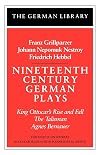
Contains three plays: King Ottocar's Rise and Fall (Grillparzer); The Talisman (Nestroy); Agnes Bernauer (Hebbel).
The tragedy 'King Ottocar' is about Ottocar II of Bohemia, a 13th-Century ruler. Arrogant and expansionist, he meets his match with the ascent of Rudolf of Hapsburg to the throne of the Holy Roman Empire. The is ultimately less about the title character's fall than the founding of the Habsburg dynasty.
'The Talisman' is a comedy. In a place where redheads are considered abhorrent, we see a man's fortunes transformed when he dons a wig. This seems an unpromising premise, but it reads surprisingly well.
'Agnes Bernauer' is another historical tragedy. In the early 15th Century, Alberich III of Bavaria chooses to make a beautiful peasant his wife, even though his father Ernest, Duke of Bavaria, sees that it will lead the country to civil war.
The tragedy 'King Ottocar' is about Ottocar II of Bohemia, a 13th-Century ruler. Arrogant and expansionist, he meets his match with the ascent of Rudolf of Hapsburg to the throne of the Holy Roman Empire. The is ultimately less about the title character's fall than the founding of the Habsburg dynasty.
'The Talisman' is a comedy. In a place where redheads are considered abhorrent, we see a man's fortunes transformed when he dons a wig. This seems an unpromising premise, but it reads surprisingly well.
'Agnes Bernauer' is another historical tragedy. In the early 15th Century, Alberich III of Bavaria chooses to make a beautiful peasant his wife, even though his father Ernest, Duke of Bavaria, sees that it will lead the country to civil war.
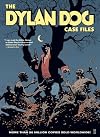
Seven story arcs of an Italian b&w comic from the '90s. I'd never heard of it, but a clerk at Forbidden Planet recommended it, and Umberto Eco wrote the cover blurb, so I took a chance.
Starts out as jokey zombie horror (not usually something I'd read), but the last two issues start going deeper, tinkering with the character's reality. I don't know if they're in chronological order, but the writer only really hits his stride in those last two.
It's well drawn and the pace seldom flags. If they issue another volume like this brick-like tome I'll pick it up.
Starts out as jokey zombie horror (not usually something I'd read), but the last two issues start going deeper, tinkering with the character's reality. I don't know if they're in chronological order, but the writer only really hits his stride in those last two.
It's well drawn and the pace seldom flags. If they issue another volume like this brick-like tome I'll pick it up.

Essays included:
The Musical Symbolism of Wagner's Music Dramas
Wagner's Operatic Apprenticeship
The Bruckner Problem Simplified [1969, rev 1975] - Cooke reviews the published editions of Bruckner's Symphonies -- all thirty-four of them -- and concludes that nearly all can be safely ignored. He stresses that in most cases there is a clear choice of editions, so that we need not attach the editor's name to every program listing
The Facts Concerning Mahler's Tenth Symphony
Mahler's Melodic Thinking
The Word and the Deed: Mahler and his Eighth Symphony
Delius: A Centenary Evaluation
Delius and Form: A Vindication
The Unity of Beethoven's Late Quartets - Cooke suggests that if you take the quartets in the order composed (Opp.127-132-130-131-135), they form a single compositional whole, an arch with Op.130 at the center.
Strauss, Stravinsky, and Mozart
Shakespeare into Music
Reading and Re-reading Wuthering Heights
Reactionary
The Lennon-McCartney Songs
The Futility of Music Criticism
The Future of Musical Language
The Future of The Language of Music
Also includes:
Deryck Cooke: A Memoir, by Bryan Magee
The Musical Symbolism of Wagner's Music Dramas
Wagner's Operatic Apprenticeship
The Bruckner Problem Simplified [1969, rev 1975] - Cooke reviews the published editions of Bruckner's Symphonies -- all thirty-four of them -- and concludes that nearly all can be safely ignored. He stresses that in most cases there is a clear choice of editions, so that we need not attach the editor's name to every program listing
The Facts Concerning Mahler's Tenth Symphony
Mahler's Melodic Thinking
The Word and the Deed: Mahler and his Eighth Symphony
Delius: A Centenary Evaluation
Delius and Form: A Vindication
The Unity of Beethoven's Late Quartets - Cooke suggests that if you take the quartets in the order composed (Opp.127-132-130-131-135), they form a single compositional whole, an arch with Op.130 at the center.
Strauss, Stravinsky, and Mozart
Shakespeare into Music
Reading and Re-reading Wuthering Heights
Reactionary
The Lennon-McCartney Songs
The Futility of Music Criticism
The Future of Musical Language
The Future of The Language of Music
Also includes:
Deryck Cooke: A Memoir, by Bryan Magee
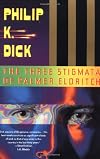
I assume that the shared escapism of Dick's interplanetary settlers was intended as a satire on PKD's contemporary suburbia, or perhaps a literalization of television's "vast wasteland"; but there is an eerie connection between their drug-induced state and the "consensual hallucination" (aka 'cyberspace') found in Wiliam Gibson's Neuromancer.
The religious aspect is inescapable, but he gives you fair warning in the title. As for the last couple of paragraphs -- okay, they're weird. I'll get back to you after I've thought about them a bit...
The religious aspect is inescapable, but he gives you fair warning in the title. As for the last couple of paragraphs -- okay, they're weird. I'll get back to you after I've thought about them a bit...
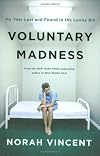
This is a very good book, though not what you might expect. At first it looks like it's going to be an undercover reporter's expose, a normal person faking crazy so the rest of us can see how our benighted brethren live. But eventually it turns out that she's not really faking, she needs help, and more than she knows.
As with her last book, 'Self-Made Man', this is an inadvertent coming-of-age story. The journalistic narrative is gradually displaced by her struggle for self-knowledge, and in the process she discovers all kinds of things that many people already know, in this case that interpersonal psychotherapy -- the kind that doesn't need a prescription pad -- actually works.
I hasten to add that this isn't the sentimental Hollywood version. She is wonderfully dry-eyed and skeptical, and acquires not pat solutions, but the logical means for navigating past the twin whirlpools of rage and despair.
Thus her story is essentially universal. Everyone struggles with these things from time to time, and her presentation if free of the self-pity and/or glibness that are endemic to the this sort of story. It's not Thomas Szasz, nor is it Oliver Sacks, but it's still a useful and necessary book for times like ours, when psychopharmacology (and the pseudo-scientific 'cost-benefit' analysis that enthrones it) has not merely eclipsed the traditional talking cure but nearly driven it into hiding.
As with her last book, 'Self-Made Man', this is an inadvertent coming-of-age story. The journalistic narrative is gradually displaced by her struggle for self-knowledge, and in the process she discovers all kinds of things that many people already know, in this case that interpersonal psychotherapy -- the kind that doesn't need a prescription pad -- actually works.
I hasten to add that this isn't the sentimental Hollywood version. She is wonderfully dry-eyed and skeptical, and acquires not pat solutions, but the logical means for navigating past the twin whirlpools of rage and despair.
Thus her story is essentially universal. Everyone struggles with these things from time to time, and her presentation if free of the self-pity and/or glibness that are endemic to the this sort of story. It's not Thomas Szasz, nor is it Oliver Sacks, but it's still a useful and necessary book for times like ours, when psychopharmacology (and the pseudo-scientific 'cost-benefit' analysis that enthrones it) has not merely eclipsed the traditional talking cure but nearly driven it into hiding.

This is a book of twelve fables, in a style imitative of typical Yiddish folktales, though with more sex, more violence, and a bit of Borges thrown in for good measure. If that sounds at all interesting, read this book: the author does an exceptional job of inhabiting the clothes of folklore without distracting anachronism. (Well, he does slip a couple of times in the first half of the book, but only in passing.)
In a mockumentary preface, an authorial alter ego explains that these are tales of the tzaddikim (the saintly); one prepares for the worst at this point. But he creates stories and characters that are almost free of predictability, sentimentality, and cliche, which is very impressive. Just to give you a sense of this: the 'saints' described include a thief, golem, a whore, and a fallen angel.
All of these stories are very good, with some better than that. There was one whose premise is not laid out clearly enough, and I had to stop in the middle and reread it, but even this story repaid the effort.
It's not clear whether ignorance of Jewish folklore would impede a reader, but in any case there is no real theology here.
A favorite passage, in which a princess is comforting her prince's discarded (twin) mistresses:
-- Neither of you is to blame. He's the one who's changed.
-- But what if...
-- Hush. This is his way. It's his misfortune. I was once like him. I know how it is not to feel.
-- But we gave him such pleasure.
-- It empties right through him. The prince has no show more stomach for love, and passion without the capacity for devotion is appetite without the capacity for digestion.
show less
In a mockumentary preface, an authorial alter ego explains that these are tales of the tzaddikim (the saintly); one prepares for the worst at this point. But he creates stories and characters that are almost free of predictability, sentimentality, and cliche, which is very impressive. Just to give you a sense of this: the 'saints' described include a thief, golem, a whore, and a fallen angel.
All of these stories are very good, with some better than that. There was one whose premise is not laid out clearly enough, and I had to stop in the middle and reread it, but even this story repaid the effort.
It's not clear whether ignorance of Jewish folklore would impede a reader, but in any case there is no real theology here.
A favorite passage, in which a princess is comforting her prince's discarded (twin) mistresses:
-- Neither of you is to blame. He's the one who's changed.
-- But what if...
-- Hush. This is his way. It's his misfortune. I was once like him. I know how it is not to feel.
-- But we gave him such pleasure.
-- It empties right through him. The prince has no show more stomach for love, and passion without the capacity for devotion is appetite without the capacity for digestion.
show less
This review was written for LibraryThing Early Reviewers.