
Helene Stapinski
Author of Five-Finger Discount: A Crooked Family History
About the Author
Helene Stapinski began her career at her hometown newspaper and since then has written for The New York Times, New York magazine, and People, among other publications. She lives in Brooklyn with her husband and son.
Works by Helene Stapinski
Murder In Matera: A True Story of Passion, Family, and Forgiveness in Southern Italy (2017) 126 copies, 5 reviews
The American Way: A True Story of Nazi Escape, Superman, and Marilyn Monroe (2023) 37 copies, 1 review
MISTERO A MATERA 1 copy
Tagged
Common Knowledge
- Canonical name
- Stapinski, Helene
- Birthdate
- 1965-03-03
- Gender
- female
- Education
- New York University (BA|1987)
Columbia University (MFA|1995) - Occupations
- journalist
author - Organizations
- People
New York Magazine
New York Times
Jersey Journal - Relationships
- Wendell, Jamieson (spouse)
- Nationality
- USA
- Birthplace
- Jersey City, New Jersey, USA
- Places of residence
- Brooklyn, New York, USA
- Associated Place (for map)
- USA
Members
Reviews
Murder In Matera: A True Story of Passion, Family, and Forgiveness in Southern Italy by Helene Stapinski
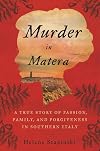
Helene Stapinski's strong narrative voice drew me into this book, but ultimately Murder in Matera failure to decide what kind of book it wanted to be failed to keep me gripped until the end. Is this a work of history? A piece of historical fiction based on a true story? A meditation on immigration and familial identity? A travelogue? Stapinski makes feints in all these directions and more, as she explores the life of her great-great-grandmother, Vita Gallitelli, whose immigration to the US show more in the 1890s supposedly came hot on the heels of her having murdered someone. Stapinski travels to Italy to research Vita's story, passed down through her New Jersey Italian family for generations, to find out what really happened and to "solve" the murder.
Now, if she'd really bothered to sit down with a historian or genealogist before she undertook this, Stapinski would have been, 1. Swiftly disabused of the notion that you can find out what "really" happened at a remove of more than a century, 2. Told she couldn't base part of her argument for what "really happened" on customs like prima notte because that's myth, not fact, and 3. Not been able to talk about her "decade-long search for the truth" because she would have been pointed quickly and efficiently towards the neatly-organised archives where birth, death, and marriage certificates, and records of criminal trials, were all indexed and waiting for her to just request the right file. Yet one gets the feeling that Stapinski deliberately postpones those parts of her narrative, because it's not as thrilling as her going to caves once inhabited by medieval hermits and declaring that the scriptural scenes painted on the cave walls provided clues to help her figure out what really happened.
(I don't know if that was the part of the book that frustrated me the most, or if it was Stapinski's declaration that finding out that great-great-grandmother Vita wasn't really a murder relieved her of her fears that her children might have inherited unusually violent genetic tendencies. No, instead now it's just her grandfather who was a life-long criminal and murderer! Plus all the other petty crooks in the family! To make it clear, I don't think that any of those things are going to have an impact on Stapinski's children either: just pointing out the sheer illogic of her train of thought, something which she apparently never realises. Instead, she ends up hailing her great-great-grandmother for her moxie and foresight in emigrating to the US, an act which Stapinski directly credits with allowing her to have a "blessed life", skipping over, well, all the generations of struggle, poverty, and criminality in between.)
If Murder in Matera had been edited down to a longer piece in the New Yorker or a similar magazine, it might have worked. Stapinski would have been forced to edit out some of her conjecture and more melodramatic sorties, or the swathes of material that seem to have been pulled at random from Wikipedia. (Part of the story hinges on pears. Did we need a whole section on pears in history, literature, and myth from places as far afield as China? No.) show less
Now, if she'd really bothered to sit down with a historian or genealogist before she undertook this, Stapinski would have been, 1. Swiftly disabused of the notion that you can find out what "really" happened at a remove of more than a century, 2. Told she couldn't base part of her argument for what "really happened" on customs like prima notte because that's myth, not fact, and 3. Not been able to talk about her "decade-long search for the truth" because she would have been pointed quickly and efficiently towards the neatly-organised archives where birth, death, and marriage certificates, and records of criminal trials, were all indexed and waiting for her to just request the right file. Yet one gets the feeling that Stapinski deliberately postpones those parts of her narrative, because it's not as thrilling as her going to caves once inhabited by medieval hermits and declaring that the scriptural scenes painted on the cave walls provided clues to help her figure out what really happened.
(I don't know if that was the part of the book that frustrated me the most, or if it was Stapinski's declaration that finding out that great-great-grandmother Vita wasn't really a murder relieved her of her fears that her children might have inherited unusually violent genetic tendencies. No, instead now it's just her grandfather who was a life-long criminal and murderer! Plus all the other petty crooks in the family! To make it clear, I don't think that any of those things are going to have an impact on Stapinski's children either: just pointing out the sheer illogic of her train of thought, something which she apparently never realises. Instead, she ends up hailing her great-great-grandmother for her moxie and foresight in emigrating to the US, an act which Stapinski directly credits with allowing her to have a "blessed life", skipping over, well, all the generations of struggle, poverty, and criminality in between.)
If Murder in Matera had been edited down to a longer piece in the New Yorker or a similar magazine, it might have worked. Stapinski would have been forced to edit out some of her conjecture and more melodramatic sorties, or the swathes of material that seem to have been pulled at random from Wikipedia. (Part of the story hinges on pears. Did we need a whole section on pears in history, literature, and myth from places as far afield as China? No.) show less
Murder In Matera: A True Story of Passion, Family, and Forgiveness in Southern Italy by Helene Stapinski
I really enjoyed this book - I have read several others by Ms Stapinski, in particular I enjoyed Five-Finger Discount, which I thought was hilarious, so reading this was pretty automatic (although I admit, it sat on the shelf for a while awaiting its turn). It didn't quite have the inner reveal that Five Finger did, so that is why I gave it four stars, but still. I could relate to the whispered stories of her family members and I applaud her efforts to uncover the truth, no matter where that show more took her. Her descriptions are vivid and spot on. If you have an interest in Italian American history, add this one to your reading list. Good story well told - the kind of book I didn't want to finish too soon, if you know what I mean show less
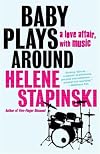
* SPOILERS*
Entertaining account of the author's two years in a rock band, told in parallel with the near-breakup of her marriage. The band story particularly is one seldom told as well, and makes the book worth reading.
But the author seems unaware that her "happy" ending (reconciled, new baby, etc) actually comes off as quite dismal. She has given up on playing in a band, the one experience in the book that brings her virtually unalloyed joy. She has 'forgiven' her husband's year of show more cheating, but her persistent and intense rages (which last almost as long as the affair) leave their long-term prospects doubtful.
The story is occasionally interspersed with some marginally relevant reportage, some of which should have been trimmed significantly. show less
Entertaining account of the author's two years in a rock band, told in parallel with the near-breakup of her marriage. The band story particularly is one seldom told as well, and makes the book worth reading.
But the author seems unaware that her "happy" ending (reconciled, new baby, etc) actually comes off as quite dismal. She has given up on playing in a band, the one experience in the book that brings her virtually unalloyed joy. She has 'forgiven' her husband's year of show more cheating, but her persistent and intense rages (which last almost as long as the affair) leave their long-term prospects doubtful.
The story is occasionally interspersed with some marginally relevant reportage, some of which should have been trimmed significantly. show less

This memoir is well-written. I particularly like the way the earlier part of the book is filled with humorous remembrances of "criminal" activity by her family members, while the later parts are shown through the eyes of an adult who knows better and is sickened and saddened by the lack of morals.
Lists
Awards

You May Also Like


Statistics
- Works
- 5
- Members
- 432
- Popularity
- #56,590
- Rating
- 3.5
- Reviews
- 12
- ISBNs
- 25
- Favorited
- 1