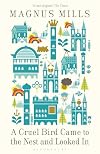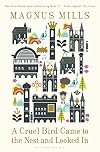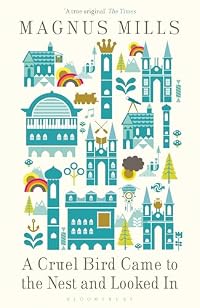
A Cruel Bird Came to the Nest and Looked In
by Magnus Mills
On This Page
Description
Far away, in the ancient Empire of Greater Fallowfields, things are falling apart. The Imperial Orchestra is presided over by a conductor who has never played a note, the clocks are changed constantly to ensure that the postmen can deliver in daylight regardless of how that affects everyone else, and the Astronomer Royal is only able to use the observatory telescope when he can find a sixpence to put in its slot. But while the kingdom drifts, awaiting the return of the young emperor, who has show more gone abroad and communicates only by penny post, a sinister and unfamiliar enemy is getting closer and closer... A Cruel Bird Came to the Nest and Looked In is Magnus Mills's most ambitious work to date. A surreal portrait of a world that, although strange and distant, contains rather too many similarities to our own for the alien not to become brilliantly familiar and disturbingly close to home. It is comic writing at its best - and it is Magnus Mills' most ambitious, enjoyable and rewarding novel to date. show lessTags
Recommendations










Member Reviews
'A Cruel Bird Came to the Nest and Looked In' is a whimsical and distinctly allegorical fable with an utterly wonderful title. In places, it reminded me of the Gormenghast trilogy, Michael Frayn's 'The Tin Men', and Kafka's 'Amerika', but possessed a gentleness that none of them have. The novel is set in a declining kingdom and narrated by a man who has arbitrarily been chosen as Principle Composer to the Imperial Court. He has no idea of his duties, but attends cabinet meetings and does his best with good humour. Meanwhile, the emperor has vanished and other kingdoms begin to encroach.
To me the story seemed like an allegory for either the decline of Britain as an imperial power and/or for the industrial revolution's transformation of show more the traditional guild-based manufacturing economy. Whichever you prefer, it is also a nice satire on inept and outdated bureaucracy. I found it a very easy read, perhaps because of its gentleness. The progression of events held little threat or tension, as the narrator's perspective is so fluffy and unworried. I realise this was a stylistic choice, but I generally prefer a bit more darkness and bite to my satire.
Nonetheless, this book definitely amused me. The character names have a fantastic ring to them, for example Whimbrel, Wryneck, and Garganey. In fact, that's one of the aspects that reminded me of Mervyn Peake. I also loved the fact that the concert hall and home of the orchestra is referred to exclusively as 'the cake'. This results in appealing comments like, 'What I really wanted was to have the cake to myself.' show less
To me the story seemed like an allegory for either the decline of Britain as an imperial power and/or for the industrial revolution's transformation of show more the traditional guild-based manufacturing economy. Whichever you prefer, it is also a nice satire on inept and outdated bureaucracy. I found it a very easy read, perhaps because of its gentleness. The progression of events held little threat or tension, as the narrator's perspective is so fluffy and unworried. I realise this was a stylistic choice, but I generally prefer a bit more darkness and bite to my satire.
Nonetheless, this book definitely amused me. The character names have a fantastic ring to them, for example Whimbrel, Wryneck, and Garganey. In fact, that's one of the aspects that reminded me of Mervyn Peake. I also loved the fact that the concert hall and home of the orchestra is referred to exclusively as 'the cake'. This results in appealing comments like, 'What I really wanted was to have the cake to myself.' show less
This novel is in Magnus Mills' usual sparse style, where every word counts and he has constructed another clever world and leads the reader by the hand through this strange, but familiar, world.
The plot seems very simple, but try and explain it and the complexity of it starts to emerge; the emperor has gone AWOL, new ministers are not necessarily up to the job and the empire is under threat. Some people seem aware of the threats, but others bury their heads in the sand. This gives plenty of opportunity for comic writing and wonderful situations.
The other review mentions that this novel seems to miss the dark side that other Magnus Mills novels have. Yes, this can seem a quirky fairytale sort of novel, but to me there is a dark theme show more throughout the novel about power, how it is abused, changes hands, but generally stays with the elite. show less
The plot seems very simple, but try and explain it and the complexity of it starts to emerge; the emperor has gone AWOL, new ministers are not necessarily up to the job and the empire is under threat. Some people seem aware of the threats, but others bury their heads in the sand. This gives plenty of opportunity for comic writing and wonderful situations.
The other review mentions that this novel seems to miss the dark side that other Magnus Mills novels have. Yes, this can seem a quirky fairytale sort of novel, but to me there is a dark theme show more throughout the novel about power, how it is abused, changes hands, but generally stays with the elite. show less
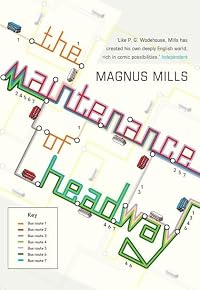
Furztrockener, absurder englischer Humor, die Pfanne dieses Humor ist so mausetot, mausetoter gehts gar nicht mehr. Faszinierend ist auch die unglaubliche Konsequenz, mit der Magnus Mills sich leichtfäustig durch seine Romane prügelt. Nicht sein allerbester (ich finde ja, seine Stärken liegen im Banalen, siehe: Maintenance of headway) aber immer noch ein amüsanter Roman von der Sorte, bei dem man während dem Lesen ab und zu innehält, den Kopf schräg hält, und die Stirn runzelt.
Furztrockener, absurder englischer Humor, die Pfanne dieses Humor ist so mausetot, mausetoter gehts gar nicht mehr. Faszinierend ist auch die unglaubliche Konsequenz, mit der Magnus Mills sich leichtfäustig durch seine Romane prügelt. Nicht sein allerbester (ich finde ja, seine Stärken liegen im Banalen, siehe: Maintenance of headway) aber immer noch ein amüsanter Roman von der Sorte, bei dem man während dem Lesen ab und zu innehält, den Kopf schräg hält, und die Stirn runzelt.
'Besides,' I added, 'this is a thoroughly benign empire. It's all jumbled and disorganised; we have a vast hierarchy with serfs at the bottom and the emperor at the top, but in between there exists a pecking order that's vague and unfathomable to say the least; shopkeepers, publicans and postmen happily inconvenience officers-of-state whenever it takes their fancy; we have no police force; no army or navy; no tax collectors; and, finally, the emperor doesn't even bother to turn up for cabinet meetings.' 'Hmm, I see what you mean,' said Whimbrel. 'Treason would be pointless.' 'Exactly,' I said.
As usual with the author, this is a deadpan satire and I enjoyed it.
This in turn required us to set an example, which we duly did by producing show more the Fallowfieldsman. He was the epitome of all we stood for. Wherever he travelled in the world, the Fallowfieldsman could always be told by his accent, his manners and his temperament. He frowned on uncouth practices but was never outspoken. When he went abroad he took with him the imperial flag, and this came to be widely recognised as a symbol of his natural authority over others; moreover, it was the only flag that could be flown upside down without anybody noticing.
Hmm, it is beyond obvious which country he is satirising, but I was taught how to tell if the flag was the right way up when I was in the Brownies, so some people would notice. show less
As usual with the author, this is a deadpan satire and I enjoyed it.
This in turn required us to set an example, which we duly did by producing show more the Fallowfieldsman. He was the epitome of all we stood for. Wherever he travelled in the world, the Fallowfieldsman could always be told by his accent, his manners and his temperament. He frowned on uncouth practices but was never outspoken. When he went abroad he took with him the imperial flag, and this came to be widely recognised as a symbol of his natural authority over others; moreover, it was the only flag that could be flown upside down without anybody noticing.
Hmm, it is beyond obvious which country he is satirising, but I was taught how to tell if the flag was the right way up when I was in the Brownies, so some people would notice. show less
The glorious (but somewhat tiny) empire Greater Fallowfields, which has built it’s supremacy on the notion that they sail better than anyone else, is crumbling. The emperor never returned from university, and business is now run by the rather inexperienced cabinet of advisors. Everybody lives on tick, the Royal Telescope won’t work unless you can find a sixpence to put in the slot and local mail can take weeks due to the postmen refusing to move breakfast. Our narrator has just been appointed Royal Composer, despite never having played a note. The cabinet is in fact all a rather petty and insecure bunch, spending more time trying to get the hang of things, rehearsing a tragedy they don’t understand or quarreling than actually show more ruling. And on the eastern horizon, where there’s nothing but those rather uninteresting “friendly cities” a cloud of smoke is drawing nearer and nearer.
Magnus Mills is a deeply original writer. I know nobody else with such a knack for finding those little things that make everyday life harder to deal with –convention, custom, bureaucracy, pettiness and obedience - and taking them to the subtly extreme. He’s a gentler, funnier, deadpan Kafka. He’s also a master at creating characters with very few pen strokes, and the way he manages such a large cast with distinctive voices and personalities with such a sparse, understated style is rather amazing.
This is a funny book, no question about that. But Magnus Mills is at his best when a quiet, slightly eerie quality shines through underneath. That, as sometimes is the case, it’s missing here. This is thus a much friendlier book than many of his others. It’s also, I must say, rather predictable as far as plots go. Also, with the fairytale-ish setting the satire that is often present in his work, is becoming much more underlined. There’s no question at all what tiny kingdom, dwelling on a heroic past when it ruled the waves, is referred to here. This is a must for us fans, of course. And also, I guess, not a bad introduction to Mills. Just know that the chuckles and cringes are usually a tad darker than this. show less
Magnus Mills is a deeply original writer. I know nobody else with such a knack for finding those little things that make everyday life harder to deal with –convention, custom, bureaucracy, pettiness and obedience - and taking them to the subtly extreme. He’s a gentler, funnier, deadpan Kafka. He’s also a master at creating characters with very few pen strokes, and the way he manages such a large cast with distinctive voices and personalities with such a sparse, understated style is rather amazing.
This is a funny book, no question about that. But Magnus Mills is at his best when a quiet, slightly eerie quality shines through underneath. That, as sometimes is the case, it’s missing here. This is thus a much friendlier book than many of his others. It’s also, I must say, rather predictable as far as plots go. Also, with the fairytale-ish setting the satire that is often present in his work, is becoming much more underlined. There’s no question at all what tiny kingdom, dwelling on a heroic past when it ruled the waves, is referred to here. This is a must for us fans, of course. And also, I guess, not a bad introduction to Mills. Just know that the chuckles and cringes are usually a tad darker than this. show less
Furztrockener, absurder englischer Humor, die Pfanne dieses Humor ist so mausetot, mausetoter gehts gar nicht mehr. Faszinierend ist auch die unglaubliche Konsequenz, mit der Magnus Mills sich leichtfäustig durch seine Romane prügelt. Nicht sein allerbester (ich finde ja, seine Stärken liegen im Banalen, siehe: Maintenance of headway) aber immer noch ein amüsanter Roman von der Sorte, bei dem man während dem Lesen ab und zu innehält, den Kopf schräg hält, und die Stirn runzelt.
Members
- Recently Added By
Author Information

22+ Works 3,303 Members
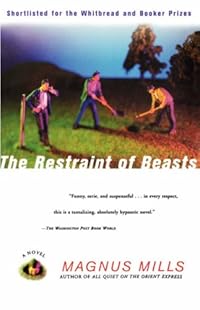
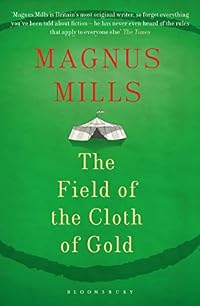
Magnus Mills lives in London. (Publisher Provided) Magnus Mills is the author of A Cruel Bird Came to the Nest and Looked In and six other novels, including The Restraint of Beasts, which won the McKitterick Prize and was shortlisted for both the Booker Prize and the Whitbread (now the Costa) First Novel Award in 1999. His most recent novel, A show more Cruel Bird Came to the Nest and Looked In, was published to great critical acclaim. His books have been translated into twenty languages. His title, The Field of the Cloth of Gold, made the Goldsmiths Prize shortlist 2015. (Bowker Author Biography) show less
Common Knowledge
- Canonical title
- A Cruel Bird Came to the Nest and Looked In
- Dedication
- The author would like to thank Simon Moody and Mark Pappenheim for their patience.
- First words
- As the clock struck ten, Smew opened the register.
- Last words
- (Click to show. Warning: May contain spoilers.)‘We are the Player King!’
Classifications
Statistics
- Members
- 122
- Popularity
- 266,343
- Reviews
- 9
- Rating
- (3.61)
- Languages
- English
- Media
- Paper, Audiobook, Ebook
- ISBNs
- 6
- ASINs
- 2