On This Page
Description
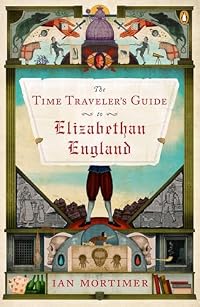
" ... this popular history explores daily life in Queen Elizabeth's England, taking us inside the homes and minds of ordinary citizens as well as luminaries of the period, including Shakespeare, Christopher Marlowe, Sir Walter Raleigh, and Sir Francis Drake. Organized as a travel guide for the time-hopping tourist, Mortimer relates in delightful (and occasionally disturbing) detail everything from the sounds and smells of sixteenth-century England to the complex and contradictory Elizabethan show more attitudes toward violence, class, sex, and religion. Original enough to interest those with previous knowledge of Elizabethan England and accessible enough to entertain those without, The Time Traveler's Guide is a book for Elizabethan enthusiasts and history buffs alike."-- show lessTags
Recommendations














Member Reviews
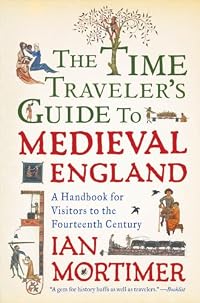
I love the idea of writing time traveller’s guides to the past. The Time Traveller's Guide to Medieval England: A Handbook for Visitors to the Fourteenth Century was brilliant, and I am glad that Ian Mortimer kept writing. Yes, please, let’s not think about history as facts, facts, facts and numbers, numbers, numbers, but as something real people lived through, as history was their “here and now”. It’s fascinating how well this book succeeds in transporting the reader to Elizabethan England.
I liked the description of people becoming more aware of their place in history and the growing interest in recording things that might otherwise be lost.
There were so many things to learn, to wonder at, and to revisit. I think my only show more complaint is that the book was too short – I wanted more of everything, more details, more geekiness. (The trouble with reading non-fiction as e-books it that I always forget about the space needed for the footnotes, and then I suddenly find myself finishing the book… What, already? Noooo…)
Here are just a few of the things that stayed with me (I took A LOT of notes ;)):
- Isabella Whitney published the first volume of verse by an Englishwoman. She was a servant who taught herself to write, and this is awesome. Then there was Emilia Lanier, who argued passionately against women’s supposed inferiority. Why wasn’t this in my schoolbooks? (That was a rhetorical question.)
- I knew about the persecution of Catholics and Protestants, but I had no idea of the growing scope and brutality.
- The book also debunks the myth that the English did not travel much before the Industrial Revolution.
- Another myth: everyone and everything stank and nobody cared. It was a question of class more than anything else.
- Character witnesses at ecclesiastical courts probably seemed like a good idea at the time, but it is appalling. Basically, if you are accused of adultery and can produce the required number of people who will swear that you have great morals, you will be found innocent. If your lover can’t do the same, they will be found guilty. Ouch.
- It’s ok to be a witch! Really. Unless you summon evil spirits and kill someone by magic, that is – that's against the law.
- I loved the author’s asides. Here, he is citing from a dialogue book - ladies and gentlemen go fishing together, and one lady gets a fish: “To which the second gentleman, who is as much of a creep as the first, replies ‘O fish, thou hast had a happy destiny to be taken by so worthy a fisher. Thou couldst never have had a better end.’ “ : )))
I am sure I’ll be happily reading and rereading the whole series, these books are a delight. show less
I liked the description of people becoming more aware of their place in history and the growing interest in recording things that might otherwise be lost.
There were so many things to learn, to wonder at, and to revisit. I think my only show more complaint is that the book was too short – I wanted more of everything, more details, more geekiness. (The trouble with reading non-fiction as e-books it that I always forget about the space needed for the footnotes, and then I suddenly find myself finishing the book… What, already? Noooo…)
Here are just a few of the things that stayed with me (I took A LOT of notes ;)):
- Isabella Whitney published the first volume of verse by an Englishwoman. She was a servant who taught herself to write, and this is awesome. Then there was Emilia Lanier, who argued passionately against women’s supposed inferiority. Why wasn’t this in my schoolbooks? (That was a rhetorical question.)
- I knew about the persecution of Catholics and Protestants, but I had no idea of the growing scope and brutality.
- The book also debunks the myth that the English did not travel much before the Industrial Revolution.
- Another myth: everyone and everything stank and nobody cared. It was a question of class more than anything else.
- Character witnesses at ecclesiastical courts probably seemed like a good idea at the time, but it is appalling. Basically, if you are accused of adultery and can produce the required number of people who will swear that you have great morals, you will be found innocent. If your lover can’t do the same, they will be found guilty. Ouch.
- It’s ok to be a witch! Really. Unless you summon evil spirits and kill someone by magic, that is – that's against the law.
- I loved the author’s asides. Here, he is citing from a dialogue book - ladies and gentlemen go fishing together, and one lady gets a fish: “To which the second gentleman, who is as much of a creep as the first, replies ‘O fish, thou hast had a happy destiny to be taken by so worthy a fisher. Thou couldst never have had a better end.’ “ : )))
I am sure I’ll be happily reading and rereading the whole series, these books are a delight. show less
It's been 11 years since I read and enjoyed The Time Traveller's Guide to Medieval England by Ian Mortimer. At the time I found it illuminating, fascinating, shocking and at times even funny, and I'm surprised it's taken me so long to pick up another in the series.
That's the way of readers though isn't it? There's so many back catalogue books to catch up on, that before you know it, a decade has passed before you pick up another one.
Nevertheless, The Time Traveller's Guide to Elizabethan England by Ian Mortimer was another five star reading experience and met all my hopes and expectations. It took me two months to get through the 18 hour audiobook, but the narration was terrific and it's easy to listen to non fiction like this in short show more bursts.
Once again, the author takes the reader's hand and shows them around Elizabethan England, pointing out the different places to stay, what you might earn, what to wear, and what to eat.
I loved the general etiquette rules from Chapter 19. Mortimer draws on several references, but the following rules were from The Boke of Nurture, or Schoole of Good Maners; For Men, Servants, and Children by Hugh Rhodes published in 1577.
On manners and politeness:
Don't tell secrets to strangers
Don't correct the faults in others that you commit yourself
Rebuke men only when alone with them
Don't boast
Don't laugh at your own jokes
At table:
Don't belch in another man's face
Keep your knife bright
Don't spit across the table
Don't blow crumbs or spit on the floor near you
Don't throw bones under the table
I just loved these! It's fascinating to learn that in 450 years, some things have changed while others are timeless. The combination of content and the narrator Mike Grady's delivery of the rules was very entertaining, and I just stepped away from this review to listen to them all again for sheer pleasure. I'll leave you with one more quote:
"It is customary to take your hat off when someone urinates or defecates in your company." Chapter 19
According to the author, 'noisome smells and noxious fumes are common in Elizabethan England' and the section on sanitation in Chapter 34 was engrossing (pun intended) and amusing.
The introduction of tobacco, smoking and pipes was mentioned, and this observation from the time made me laugh:
"Smoking makes your breath stink like the piss of a fox." Chapter 40
Finishing The Time Traveller's Guide to Elizabethan England means I'm now halfway through this non fiction series, and still have the following books to look forward to:
The Time Traveller's Guide to Restoration Britain
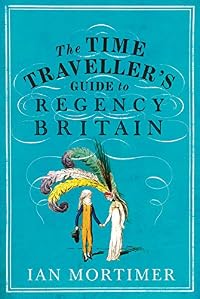
The Time Traveller's Guide to Regency Britain
These two eras don't interest me as much as Elizabethan England and Medieval England did, but I'm sure they'll be informative and entertaining reads just the same. I've just added them to my TBR, but how long will it be until I get to one of them? show less
That's the way of readers though isn't it? There's so many back catalogue books to catch up on, that before you know it, a decade has passed before you pick up another one.
Nevertheless, The Time Traveller's Guide to Elizabethan England by Ian Mortimer was another five star reading experience and met all my hopes and expectations. It took me two months to get through the 18 hour audiobook, but the narration was terrific and it's easy to listen to non fiction like this in short show more bursts.
Once again, the author takes the reader's hand and shows them around Elizabethan England, pointing out the different places to stay, what you might earn, what to wear, and what to eat.
I loved the general etiquette rules from Chapter 19. Mortimer draws on several references, but the following rules were from The Boke of Nurture, or Schoole of Good Maners; For Men, Servants, and Children by Hugh Rhodes published in 1577.
On manners and politeness:
Don't tell secrets to strangers
Don't correct the faults in others that you commit yourself
Rebuke men only when alone with them
Don't boast
Don't laugh at your own jokes
At table:
Don't belch in another man's face
Keep your knife bright
Don't spit across the table
Don't blow crumbs or spit on the floor near you
Don't throw bones under the table
I just loved these! It's fascinating to learn that in 450 years, some things have changed while others are timeless. The combination of content and the narrator Mike Grady's delivery of the rules was very entertaining, and I just stepped away from this review to listen to them all again for sheer pleasure. I'll leave you with one more quote:
"It is customary to take your hat off when someone urinates or defecates in your company." Chapter 19
According to the author, 'noisome smells and noxious fumes are common in Elizabethan England' and the section on sanitation in Chapter 34 was engrossing (pun intended) and amusing.
The introduction of tobacco, smoking and pipes was mentioned, and this observation from the time made me laugh:
"Smoking makes your breath stink like the piss of a fox." Chapter 40
Finishing The Time Traveller's Guide to Elizabethan England means I'm now halfway through this non fiction series, and still have the following books to look forward to:
The Time Traveller's Guide to Restoration Britain
The Time Traveller's Guide to Regency Britain
These two eras don't interest me as much as Elizabethan England and Medieval England did, but I'm sure they'll be informative and entertaining reads just the same. I've just added them to my TBR, but how long will it be until I get to one of them? show less
I read this book directly after reading Mortimer’s previous Time Traveler’s Guide to Medieval England. That one covered the 14th century. This one “represent(s) England as it existed between Elizabeth’s accession on November 17, 1558 and her death on March 24, 1603.” Two centuries separate the times they describe, and although there have been changes, the culture and the lives of most people seem remarkably (almost disturbingly) similar. It remains a period of superstition, oppression, injustice, poverty, violence, and disease. That’s in comparison to our point in space-time, of course. Two hundred years from now, people reading about our times may regard them much the same way. We may not draw and quarter criminals the way show more Elizabethans did, but many nations still execute them. Bearbaiting and cockfighting are no longer popular forms of entertainment, but our movies often portray fictionalized acts of violence that are no less brutal. Maybe we haven’t progressed as far as we might wish to believe.
But I digress. This book attempts to provide the reader with a feeling of what it might be like to visit Elizabethan England, and to the extent possible, I think it largely succeeds. Unlike the previous book, this one has no color plates or pictures or any kind. These would have been helpful, especially to illustrate the clothing of the well off, which sounds incredibly impractical, uncomfortable, and outrageously expensive. The primary function seems to be as displays of social status, but I suppose people still do that in our time with designer handbags and whatnot.
I’m tempted to go on about how histories like this demonstrate the foibles our species, and that we and our ancestors are much the same, subject to the same types of irrational beliefs and behaviors. But I won’t. I’m only writing a short book review, after all, and I have other things to do today. Still, I can recommend this book, not just for the history it provides about a specific time and place but also as a means for encouraging a higher perspective about the human species and its cultural evolution. show less
But I digress. This book attempts to provide the reader with a feeling of what it might be like to visit Elizabethan England, and to the extent possible, I think it largely succeeds. Unlike the previous book, this one has no color plates or pictures or any kind. These would have been helpful, especially to illustrate the clothing of the well off, which sounds incredibly impractical, uncomfortable, and outrageously expensive. The primary function seems to be as displays of social status, but I suppose people still do that in our time with designer handbags and whatnot.
I’m tempted to go on about how histories like this demonstrate the foibles our species, and that we and our ancestors are much the same, subject to the same types of irrational beliefs and behaviors. But I won’t. I’m only writing a short book review, after all, and I have other things to do today. Still, I can recommend this book, not just for the history it provides about a specific time and place but also as a means for encouraging a higher perspective about the human species and its cultural evolution. show less
*3.5*
This book could have been something... much more intriguing than what it was. Despite its chapters and chapters on English Renaissance mores and social history that I invariably flock to, Mortimer's book feels simply dry more often than not. It felt as if much of the book diverted into rote history—too many lists and "evidence" without much expounding of why they were there to begin with. I did enjoy the second person point of view, and the "Time Traveler's Guide" aspect was fresh and could have been more exciting if that dedication to guide went less into the rote historical aspects as I noted earlier and more into the rare scenes as if you were really there. These shifts are a bit incongruous and I grew bored on certain show more chapters to the point of skimming.
One aspect I found early in the book was Mortimer's obvious distaste of religiosity. It struck me as terribly disingenuous for an author on a time period ruled by religion to dismiss it so obviously—there's very little nuance in this book that supposedly wishes to get into the mind of Elizabethan's so as to inform us on our "trip". I think this quote summarizes the author's thesis fairly cleary (and something I won't spend my time on as to why I found it so wrong):
I didn't hate all of it though, in fact, I loved the chapters the people, basic essentials, what to wear, what to eat and drink, and especially on hygiene, illness, and medicine. Those were page-turners, especially in the depiction of a plague-ridden man digging his own grave and forcing his nephew to watch as he lay down and died in it, oh man. The chapters on the landscape and on where to stay though were quite the opposite, and almost made me give up a few times.
Maybe I just don't like 16th-century English history though, and it's all on me. It's a decent book, but I just know I won't be reading this again nor necessarily recommending it (and maybe staying away from this time period for a bit). show less
This book could have been something... much more intriguing than what it was. Despite its chapters and chapters on English Renaissance mores and social history that I invariably flock to, Mortimer's book feels simply dry more often than not. It felt as if much of the book diverted into rote history—too many lists and "evidence" without much expounding of why they were there to begin with. I did enjoy the second person point of view, and the "Time Traveler's Guide" aspect was fresh and could have been more exciting if that dedication to guide went less into the rote historical aspects as I noted earlier and more into the rare scenes as if you were really there. These shifts are a bit incongruous and I grew bored on certain show more chapters to the point of skimming.
One aspect I found early in the book was Mortimer's obvious distaste of religiosity. It struck me as terribly disingenuous for an author on a time period ruled by religion to dismiss it so obviously—there's very little nuance in this book that supposedly wishes to get into the mind of Elizabethan's so as to inform us on our "trip". I think this quote summarizes the author's thesis fairly cleary (and something I won't spend my time on as to why I found it so wrong):
"Today we commonly take for granted that there is a fundamental conflict between scientific knowledge and religious beliefs" (102)
I didn't hate all of it though, in fact, I loved the chapters the people, basic essentials, what to wear, what to eat and drink, and especially on hygiene, illness, and medicine. Those were page-turners, especially in the depiction of a plague-ridden man digging his own grave and forcing his nephew to watch as he lay down and died in it, oh man. The chapters on the landscape and on where to stay though were quite the opposite, and almost made me give up a few times.
Maybe I just don't like 16th-century English history though, and it's all on me. It's a decent book, but I just know I won't be reading this again nor necessarily recommending it (and maybe staying away from this time period for a bit). show less
Bit like a Schott's Miscellany, collapses into list-making. Fails to fulfil its promise of bringing the era alive. Most interesting bit is the exploration of religion. Insightful observation that the break with Rome made people more religious, not less. But too much on the tortures for my taste. intriguing trivial fact that Naples was the second largest city in Europe at the time, London trailing in third place. What about Vienna or Madrid?
Have you ever wondered what people in Elizabethan England ate, what they built their houses out of, how they spoke, or what they did for entertainment? This book answers all of those questions and more, giving you a picture of daily life that many other history books leave out. Every aspect of Elizabethan life is covered in detail, with sections covering topics from religion to entertainment. Particularly unique is the inclusion of information on the lives of the middle and lower class.
I found the first chapter of The Time Traveler’s Guide a little hard to get through. The description of the landscape made me hold details about what was in all directions in my head at once and it made it hard to see the big picture. If you experience show more the same thing, don’t let that deter you! The rest of the book flew by. Topics described were easier to picture and I found the glimpse I got of every day life in Elizabethan England fascinating. I particularly liked that the author would say things like “if you went up and spoke to one of those peasants…” or “as you’re walking down the street, you’ll most likely see…”. It made me picture being there very vividly.
Another really nice touch was the inclusion of specific information known about real people. The statement “farmers kept most of their money invested in live stock” is far less interesting than hearing that “John Smith kept cows, sheep, and pigs that were worth most of his monetary value”. These examples made the information feel much more real, personal, and immediate. The direct quotes provided the finishing touch on the immersive experience this book provides. Some quotes were explained so well that humor transcended time, an impressive feat given how hard it is to translate humor across cultures. Overall, the many details, the quotes, the inclusion of the reader in the scenes described, and the personal touches made this the perfect book for getting a feel for the Elizabethan Era.
This review first published on Doing Dewey. show less
I found the first chapter of The Time Traveler’s Guide a little hard to get through. The description of the landscape made me hold details about what was in all directions in my head at once and it made it hard to see the big picture. If you experience show more the same thing, don’t let that deter you! The rest of the book flew by. Topics described were easier to picture and I found the glimpse I got of every day life in Elizabethan England fascinating. I particularly liked that the author would say things like “if you went up and spoke to one of those peasants…” or “as you’re walking down the street, you’ll most likely see…”. It made me picture being there very vividly.
Another really nice touch was the inclusion of specific information known about real people. The statement “farmers kept most of their money invested in live stock” is far less interesting than hearing that “John Smith kept cows, sheep, and pigs that were worth most of his monetary value”. These examples made the information feel much more real, personal, and immediate. The direct quotes provided the finishing touch on the immersive experience this book provides. Some quotes were explained so well that humor transcended time, an impressive feat given how hard it is to translate humor across cultures. Overall, the many details, the quotes, the inclusion of the reader in the scenes described, and the personal touches made this the perfect book for getting a feel for the Elizabethan Era.
This review first published on Doing Dewey. show less
Good historical information marred by its tone. The 'time traveller' concept, used effectively by Mortimer in his medieval volume, is a good one; it allows the author to present the past quite literally as if it were a foreign country. Mortimer's history is good, and his descriptions of the 16th-century landscape, apparel and day-to-day activities are quite vivid. Unfortunately he seems driven to debunk the notion that Elizabeth's reign was a golden age in English history. In doing so he allots a disproportionate amount of space to practices and attitudes that would be considered cruel or unjust in the contemporary western world, giving the book an unnecessarily judgemental tone. Terrible things happened in Elizabethan England, and many show more of them still go in in the world today, but in a work of history I would prefer more objectivity and less polemic. show less
Members
- Recently Added By
Author Information

30+ Works 8,091 Members
Dr. Ian Mortimer is best known as the author of The Time Traveler's Guide to Medieval England and The Time Traveler's Guide to Elizabethan England, which were both national bestsellers. He was awarded the Alexander Prize by the Royal Historical Society and is a Fellow of the Royal Historical Society and a Fellow of the Society of Antiquaries. He show more latest novel is the acclaimed The Outcasts of Time Please visit his website at www.ianmortimer.com. show less
Some Editions
Series

Common Knowledge
- Original title
- The Time Traveller's Guide to Elizabethan England
- Original publication date
- 2012
- People/Characters
- Elizabeth I, Queen of England
- Important places
- England, UK (as England); London, England, UK (as London, England)
- Important events
- Elizabethan Era
- Epigraph
- But when memory embraces the night
I see those days, long since gone,
like the ancient light of extinguished stars
traveling still, and shining on.
from "Ghosts," Acumen 24 (1996), p. 17 - Dedication
- This book is dedicated to my daughter,
Elizabeth Rose Mortimer - First words
- Introduction
It is a normal morning in London, on Friday 16 July 1591. In the wide street known as Cheapside the people are about their business, going between the timber-covered market stalls. Traders are calling o... (show all)ut, hoping to attract the attention of merchants' wives.
I
The Landscape
Different societies see landscapes differently. You may look at Elizabethan England and see a predominantly green land, characterised by large open fields and woodlands, but an Elizabethan yeoman ... (show all)will describe his homeland to you in terms of cities, towns, ports, great houses, bridges and roads. In your eyes it may be a sparsely populated land–the average density being less than sixty people per square mile in 1561 (compared to well over a thousand today)–but a contemporary description will mention overcrowding and the problems of population expansion.¹ Describing a landscape is thus a matter of perspective: your priorities affect what you see. - Last words
- (Click to show. Warning: May contain spoilers.)And Shakespeare above all others meets the challenge of the age by holding up a mirror to mankind and showing people what they really are — and not what they think they are in the eyes of God. This is something truly original and one of the reasons the rabble in the theatre yard does fall quiet, and strains to hear the words of the great soliloquies and speeches; and, in so doing, becomes a little more like us.
(Click to show. Warning: May contain spoilers.)Envoi
One last thught. It is often said of Shakespeare that he is 'not of an age but for all time' — a line originally penned by Ben Jonson. But Shakespeare is of an age: Elizabethan England. It makes him. It gives him a stage, a language and an audience. If Shakespeare is 'for all time', then so too is Elizabethan England. - Original language
- English
Classifications
- Genres
- History, General Nonfiction, Nonfiction
- DDC/MDS
- 942.055 — History & geography History of Europe England and Wales England 1485-1603, Tudors 1558-1603, Elizabeth I
- LCC
- DA355 .M687 — History of Europe, Asia, Africa and Oceania Great Britain History of Great Britain England History By period Modern, 1485- Tudors, 1485-1603 Elizabeth I, 1558-1603. Elizabethan age
- BISAC
Statistics
- Members
- 1,233
- Popularity
- 19,842
- Reviews
- 31
- Rating
- (3.96)
- Languages
- English, German
- Media
- Paper, Audiobook, Ebook
- ISBNs
- 17
- ASINs
- 9