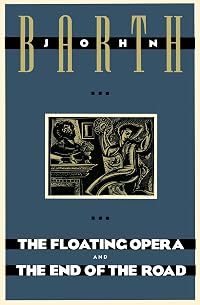
The Floating Opera and The End of the Road
by John Barth
On This Page
Description
The Floating Opera and The End Of The Road are John Barth's first two novels. Their relationship to each other is evident not only in their ribald subject matter but in the eccentric characters and bitterly humorous tone of the narratives. Both concern strange, consuming love triangles and the destructive effect of an overactive intellect on the emotions. Separately they give two very different views of a universal human drama. Together they illustrate the beginnings of an illustrious career.Tags
Recommendations







Member Reviews
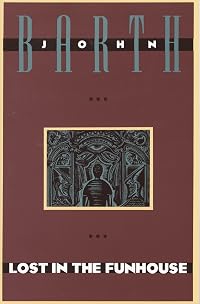
My first experience with John Barth was with his collection of short stories "Lost in the Fun House." I was magnified by his finesse with language and, although I didn't feel that all of those stories were successes (and what writer's ever are?), he left me spellbound as to the potential of future fiction. Having come across him through one of my favorite authors David Foster Wallace and his story "Westward the Course of Empire Takes it's Way," which was a response to Barth's short story from which the prior collection derived it's name, I needed to get more!
This was not a disappointment! It is never easy to tell if a writer of short stories (which was how I became introduced to him) would be a good novelist. Nevertheless I found these show more two stories just as spellbinding. As his first two attempts at becoming an author, they of course have their juvenile aspects to them and conventions that seemed forced - but I personally feel every author should be forgiven that in their early career when attempting to find their voice.
His ability to develop a protagonist of solid depth though is incredible. During a time when other authors were writing about the active individual in a rapidly individualizing time in American letters, Barth was able to create two characters of non-action; a progenitor to future meta-fiction. Although the anti-climax had already begun to emerge in literature, these two stories have the courage to force it upon the reader whereas others had only really had a dwindling down without exploiting the fact that the modern text need not satisfy, in fact must not satisfy, in a unsatisfactory world. I would even place these two novellas along-side Robert Musil's epic "The Man Without Qualities." Any extensive reader can admit that every topic has been written about - which is true - but what makes literature is it's ability to keep those "truths" of humanity alive in the collective consciousness in it's ever changing forms, which I feel these two stories effectively do. show less
This was not a disappointment! It is never easy to tell if a writer of short stories (which was how I became introduced to him) would be a good novelist. Nevertheless I found these show more two stories just as spellbinding. As his first two attempts at becoming an author, they of course have their juvenile aspects to them and conventions that seemed forced - but I personally feel every author should be forgiven that in their early career when attempting to find their voice.
His ability to develop a protagonist of solid depth though is incredible. During a time when other authors were writing about the active individual in a rapidly individualizing time in American letters, Barth was able to create two characters of non-action; a progenitor to future meta-fiction. Although the anti-climax had already begun to emerge in literature, these two stories have the courage to force it upon the reader whereas others had only really had a dwindling down without exploiting the fact that the modern text need not satisfy, in fact must not satisfy, in a unsatisfactory world. I would even place these two novellas along-side Robert Musil's epic "The Man Without Qualities." Any extensive reader can admit that every topic has been written about - which is true - but what makes literature is it's ability to keep those "truths" of humanity alive in the collective consciousness in it's ever changing forms, which I feel these two stories effectively do. show less
I liked "The Floating Opera" a lot when I read it in high school, but not so much when I re-read it later in life. The book is nihilistic and maybe that's a natural reaction.
Quotes:
"I needn't explain that that's how much of life works: our friends float past; we become involved with them; they float on, and we must rely on hearsay or lose track of them completely; they float back again, and we either renew our friendship - catch up to date - or find that they and we don't comprehend each other any more."
"So I begin each day with a gesture of cynicism, and close it with a gesture of faith; or, if you prefer, begin it by reminding myself that, for me at least, goals and objectives are without value, and close it by demonstrating that the show more fact is irrelevant. A gesture of temporality, a gesture of eternity. It is in the tension between these two gestures that I have lived my adult life." show less
Quotes:
"I needn't explain that that's how much of life works: our friends float past; we become involved with them; they float on, and we must rely on hearsay or lose track of them completely; they float back again, and we either renew our friendship - catch up to date - or find that they and we don't comprehend each other any more."
"So I begin each day with a gesture of cynicism, and close it with a gesture of faith; or, if you prefer, begin it by reminding myself that, for me at least, goals and objectives are without value, and close it by demonstrating that the show more fact is irrelevant. A gesture of temporality, a gesture of eternity. It is in the tension between these two gestures that I have lived my adult life." show less
Rick's review of John Irving made me think of this writer and these two books.
# The Floating Opera (1957)
# The End of the Road (1958)
I believe they're both written at almost the same time, tell the same story with different characters, and have different outcomes. They're fabulous. In my old age, I've taken to reading books a second time -- something I never did nor understand before. I hope to stumble upon these soon in a used book store; the only place I do any serious book shopping.
# The Floating Opera (1957)
# The End of the Road (1958)
I believe they're both written at almost the same time, tell the same story with different characters, and have different outcomes. They're fabulous. In my old age, I've taken to reading books a second time -- something I never did nor understand before. I hope to stumble upon these soon in a used book store; the only place I do any serious book shopping.
Always a great time with Mr. Barth!
The Floating Opera: 4.5
The end of the Road: 3
The end of the Road: 3
The Floating Opera completed 1 FEB 2026
The End of the Road completed
The End of the Road completed
Members
- Recently Added By
Author Information

39+ Works 12,235 Members
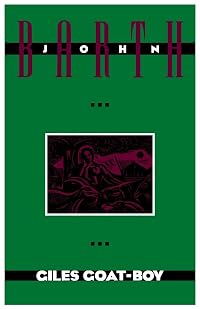
John Barth taught for many years in the writing program at Johns Hopkins University, and he lives in Chestertown, Maryland. (Publisher Provided) John Simmons Barth was born on May 27, 1930 in Cambridge, Maryland. He is considered to be one of the American writers who introduced a U.S. audience to experimental fiction. Barth began as a conventional show more novelist, exploring existential themes of suicide in The Floating Opera (1956) and the complexity of love in The End of the Road (1958). By the end of the 1950s, however, he was exploring less realistic techniques to keep the reader from being pulled into the story, and thus to make larger points. Those techniques include parody, which Barth first used in The Sot-Weed Factor (1960), to mock the style of the eighteenth-century picaresque novel, and Giles Goat-Boy (1966), which depicts the world as a giant university. In Chimera (1972), for which he won the National Book Award, Barth applied his method to retell classical myths. His later works include Letters (1979), in which Barth himself appears as a character, and Sabbatical (1982), the story of a woman college professor and her novelist husband, both of whom address the reader and author. Barth's other novels include The Tidewater Tales (1987) and The Last Voyage of Somebody the Sailor (1991). For most of his career as a writer, he has also been a professor of English, teaching at Pennsylvania State University, the State University of New York at Buffalo, and The Johns Hopkins University. (Bowker Author Biography) show less
Work Relationships
Contains
Common Knowledge
- Canonical title
- The Floating Opera and The End of the Road
- Original title
- The Floating Opera and The End of the Road
- Original publication date
- 1957 (The Floating Opera) (The Floating Opera); 1958 (The End Of The Road) (The End Of The Road)
- First words
- My books tend to come in pairs, as did their author; I am half of a set of opposite-sex twins. (Foreword)
The Floating Opera was written in the first three months of 1955; its companion piece, The End of the Road, in the last three months of the same year. (Prefatory Note)
To someone like myself, who literary activities have been confined since 1920 mainly to legal briefs and Inquiry-writing, the hardest thing about the task at hand-viz., the explanation of a day in 1937 when I c... (show all)hanged my mind - is getting into it. (The Floating Opera)
In a sense, I am Jacob Horner. (The End of the Road) - Last words
- (Click to show. Warning: May contain spoilers.)Truth to tell, I knew that all along. (Foreword)
(Click to show. Warning: May contain spoilers.)The Floating Opera remains the very first novel of a very young man, but I'm pleased that it will sink or float now in its original design. (Prefatory Note)
(Click to show. Warning: May contain spoilers.)This clear, I made a note to intercept my note to Jimmy Andrews, stubbed out (after all) my cigar, undressed, went to bed in enormous soothing solitude, and slept fairly well despite the absurd thunderstorm that soon afterwards broke all around. (The Floating Opera)
(Click to show. Warning: May contain spoilers.)"Terminal." (The End of the Road) - Blurbers
- New York Times
- Original language
- English
Classifications
Statistics
- Members
- 858
- Popularity
- 31,791
- Reviews
- 8
- Rating
- (3.88)
- Languages
- English, Hebrew, Spanish, Turkish
- Media
- Paper, Audiobook
- ISBNs
- 3
- ASINs
- 1