Simply excellent. Wonderful writing. Powerful story; everything about it. And, seems like a truly wonderful person.
In Love with the World: A Monk's Journey Through the Bardos of Living and Dying by Yongey Mingyur Rinpoche
I know a good bit about Buddhism and have studied comparative religions for fifty years. In this book, I did enjoy many of the short stories and situations highlighting the often wonderful teachings of Buddhism. I pretty much liked Mingyur Rinpoche. I did not like at all the princeling nature of his worldview nor the Prince and the Pauper story of this book. I especially did not appreciate in the least the foolishness, the Christian Scientist/Jehovah's Witness-like rejection of not-all-that-modern medicine, the anti-intellectualism just to make a point, a point that highlights so much foolishness. Karma, really? Reincarnation, really? It's as easy to believe my virgin wife was fucked by a pigeon.
Actually very good; in Grisham's Author's Note he states it's all based on a true character and a true case. That was nice to read and all after a wonderful, in this very particular day and age, ending.
I didn't much care for the writing, didn't exactly like Power herself, but of course the stories and the times are very, very interesting. Her own story is rich and the times/situations she has lived thru, her experiences, and her work are fascinating and often quite moving.
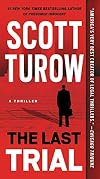
Starts out boring and uninteresting and then gets completely completely complicated, riveting, and mysterious. Very well-written and constructed story. As a side benefit, it doesn't help one to *like* lawyers, but at least to understand them a bit. Heh.
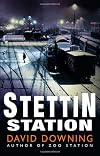
I like these books, like the characters, like the history. Small suggestion - read them in order. I read 1,2,4,3. In order would've been a little better. But, anyway, it's all a fascinating view and mixture of view with US, Soviet, and German perspective. However, and this is a big spoiler (for me), I saw an uninspired author talk with Downing from 2014 at DC's Politics and Prose wherein he confesses to never having been in Berlin, because, he says, he didn't want to confuse it with the 1930s, 40s Berlin. I call bullshit. I was in the middle of "Stettin Station" and the next scenes I read after having listened to the talk included an ambulatory narrative that immediately felt fake and forced. Ah, well. I'll certainly finish the series and may even read #4 again first before continuing with 5, 6.
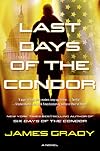
Very good. Not written in the delightfully complicated style like le Carré, but the plot becomes very nicely, grandly complicated. The style, by the bye, is a kind of interesting mix of stream of consciousness and narrative between and among the characters. And, fun.
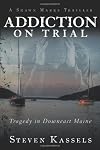
As good a murder/medical/legal mystery as one might hope. This is a self-published work by a guy whose life work was in medical addiction clinics and he has a lot to say about addiction and society's view of addiction. It surprisingly works along with the mysteries of our legal, medical systems and investigations and an array of relatively well-drawn characters. Although the author attempts to balance an extraordinarily immature high-powered atty and his view of relationships with seemingly smart and strong women, still one wonders why one would spend time, just reading about, much less dinner, with this atty. This is too bad. However, back to the writing, the whole story moves very well and highlighted by a fishing boat in a storm that's absolutely as thrilling as those depicted in "A Perfect Storm." Too bad human relationships, especially romantic ones, weren't depicted with a lot less immaturity, less cliche, and much, much more interest.
Potsdam Station (John Russell World War II Spy Thriller #4) (A John Russell WWII Spy Thriller) by David Downing
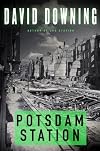
Not bad overall, but exceptional in the last week or two of the Red Army advance into Berlin following the protagonist Russell parachuting in from Moscow, his actress wife hiding in the city with a little Jewish girl, and Russell's son in the Wehrmacht retreating into the city. 1 Dec. 2015.
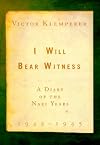
There are many extraordinary things about the quality of Klemperer's life and story, but to mention one: the detailing of the incremental accretion of one horrific indignity after another.
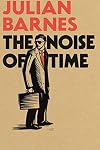
Wholly uninterested in made-up bullshit. 'This book has been stolen from D. B. Shostakovich' sounds like a Book of the Month Club owner's book plate and the next page's "'You must be the man in the family now.' They had freighted him with an expectation and a sense of duty he was ill equipped to bear" sounding more like sappy middle America than Soviet Russia. Done with early on.

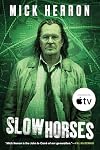
Pretty good. Liked the characters, writing above average, nicely complicated.
Wonderfully complicated; delightful outcomes, unintended or otherwise. Though, can't even remember the ending.
Completely excellent le Carré, except for the ending which makes no sense. Those kids are not going to get away and what on earth is going to happen with Nat and Prue?
Excellent strong perspective on Chamberlain. And, a delight for me with the running around Munich, knowing well all the locations.
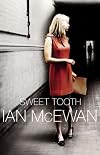
This, and Atonement, I just don't want to be in a man's brain pretending to be in a girl's or a woman's brain.
I enjoyed somewhat the "spying" parts of the story, the very le Carré insider's views and thinking. But the story itself, the writing, and especially the dull ending doesn't reflect much of an intellect.
I enjoyed somewhat the "spying" parts of the story, the very le Carré insider's views and thinking. But the story itself, the writing, and especially the dull ending doesn't reflect much of an intellect.
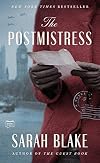
Some extraordinary scenes, very well-written. However, not a great ending, the writing, the thinking, the point. Also, the Note, the Acknowledgements, The Story Behind the Story seems a very bad layout of the book. These are not interesting things to read after the finish. Ah, well. Now that I think about it, I'm not all that impressed with any of the three women. Harumph.
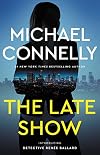
Goodness, Connelly really isn't very good. I very much enjoyed so much of his earlier works, but they turned pretty uninteresting and not at all well written quite some time ago. This one's workaday. I'd rather spend my time with better stories and, you know, better words.
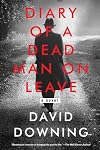
A lovely, gentle story. Surrounded by current and coming violence, this is a small story of a small family and small community of real human beings. Life and History are huge things and this puts a scale to it all. Good reminder of that scale and import.
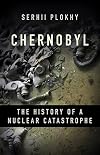
Excellent, readable history of the personalities, science, and politics of the catastrophe involving both the Soviet Union and Ukraine by a Ukranian with mostly Ukrainian sources.
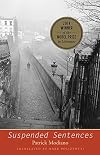
I did enjoy these stories, the mood so well done. However, I very much got the idea Modiano was looking at a map the whole time he was writing so he could be sure to put in every, single street he possibly could.
Midnight in Chernobyl: The Untold Story of the World's Greatest Nuclear Disaster by Adam Higginbotham
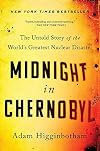
Fascinating. I have a tiny quibble with a couple of opinionized remarks only in the beginning of the book; some nasty comments about the Soviets where there is no groundwork or reasoning. Thankfully this does not continue. This is a powerful story and much, much more complicated story of an empire than the HBO series depicts - must read after watching the series.
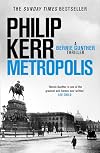
Aww, bye bye Bernie. It's been great knowing you. What a life. Huge thanks to Mr Kerr.
Oddly moving, not moving. Surprisingly, somewhat shallow protagonist with his academics and intellectual veneer. I’m done and find I don’t know him well or care very much about him.
Only the tiniest bits of 1938 Munich color and history making for a disappointing read. Mostly uninteresting characters, none fleshed out, and Maisie herself, sorry to say, I couldn't give one whit about and her petty upper class struggles and enemies and friendships.

Good mystery of sorts and terribly timely for a 1965 novel in 2019.
Fascinating history; very interesting personal experiences by the author; foundering, repetitive last third of the book.