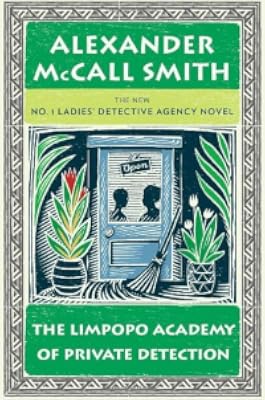
The Limpopo Academy of Private Detection
by Alexander McCall Smith
No. 1 Ladies' Detective Agency (13)
On This Page
Description
"Precious Ramotswe is back and, as usual, her plate is full! She's called in to tackle a mysterious disciplinary problem at her adopted daughter's school...Her infinitely trustworthy assistant, Grace Makutsi, is having trouble adjusting to wedded bliss, a problem to test even the formidable talents of Mma Ramotswe...And the estimable Clovis Andersen, author of The Principles of Private Investigation--the No. 1 Ladies' prized manual--has arrived, right there, in Botswana, on a case of his show more own. Bush tea anyone?"-- show lessTags
Recommendations








Member Reviews
Although I finished this book in about a day, I've been stuck on this review for weeks. Could it be that I've moved on from the series? Could it be that McCall Smith is starting to repeat himself? Has he lost his magic?
Yes, yes, and yes, along with the added discomfort of lingering weirdness for reading a book written by an old Scottish white dude about a middle-aged African woman from Botswana. There's just something that smacks of being interpreted and romanticized by the Other that doesn't set well with me. Add story fatigue and I find myself pulling away.
The Limpopo Academy begins with Precious having a dream. Attempting to share the experience with Grace Makutsi, she is interrupted by Grace's pedantic interpretation and unable to show more convey the portentous feeling she has. It segues to tea-time, interrupted by Mma Potokwane, the Orphan Matron. She is enlisting help in her struggle with Mr. Ditso Ditso, who has convinced the orphan board to build a formal dining hall for the orphans with the grant money they've recently received. Shortly after, Grace leaves to meet with her husband and the builder they are hiring. Meanwhile, Fanwell, one of the mechanic's helpers, gets in trouble for taking a side job and experiences an inept legal system.
Limpopo goes on to distinguish itself from its predecessors when Mma Ramotswe's mythic detective Clovis Andersen arrives on scene. It creates a wink-nudge reaction for the reader, who can see the detective is not famous, or even particularly clever, despite the admiring gaze of the women of the Ladies' Detective Agency.
In retrospect, the subtext in the detective's (in)competence plot is insulting. Yes, it tries to be gently funny, but in the end, all it serves to do is show how wisdom comes out of naive faith/ uneducated natives. Ugh. Now I'm really annoyed.
Dr. Siri has spoiled me ([b:The Coroner's Lunch|243353|The Coroner's Lunch (Dr. Siri Paiboun, #1)|Colin Cotterill|http://d202m5krfqbpi5.cloudfront.net/books/1333580301s/243353.jpg|235766]) when it comes to genre-bending detective fiction. Cotterill, as Siri's creator, contextualizes the story in regional and national political events, and if Dr. Siri occasionally is bitter, it is because it comes out of disappointed love and early participation in the emancipation of his country. In McCall Smith's Botswana, however, very little is given context or reality base--if it wasn't for the rare one-line reference, it would be difficult to historically place the series. The Precious tales take on folk-tale proportions, and I feel like Africans deserve more than another veiled Anansi story. McCall Smith should be starting to challenge the readers with more information and context, not less.
Instead of the 'talking shoes' of Grace and Precious' endless repetitive admiration for her father, perhaps we should know more about how the explosion of cattle-farming is ruining the eco-system and the land (plus, long-term father-worship is a little creepy when it doesn't come with any other family or venerated-ancestor framing). Grace selecting building materials for a house hints at the economic explosion in one of the more stable African nations, but we don't get that context, and indeed, it only serves to highlight corruption . Truly, the only hint we get is the laborer who is afraid of losing his job and therefore his visa, but as a sub-sub storyline, the focus isn't there. I want McCall Smith to root us in the real, so that as we identify and admire, we also learn instead of romanticizing or judging.
Ultimately, the writing in this edition fails to distinguish itself in lyricism or narrative. The portrayal of Grace is heavy-handed and lacks compassion for the woman who worked so hard in secretarial school for the "97th per cent" as she struggles with the builder's sexism. The opposition in each of the small tales is the kind of grasping greed or incompetence most readers will be familiar with: influence, bureaucracy, the legal system, graft. Not to say that human nature isn't the same everywhere, but the villainous behavior is simplified and familiar; almost declaring that by becoming 'first world,' Botswana is leaving its ideals behind.
I started reading "The Number One Ladies' Detective Agency" because of the unusual heroine, the unexpected charm of the language and the insight into human nature that comes from living in a small, close-knit society (hello, Miss Jane Marple!). McCall challenged the reader to a great degree in the early books, especially with Precious' abusive ex-husband, the prevalence of orphans and social dynamics. Unfortunately, not only is 'Limpopo' not a capable entry in the series, it is one that reminds the reader of the giant disconnect between storytelling and reality.
Cross posted at http://clsiewert.wordpress.com/2013/04/15/the-limpopo-academy-of-private-detecti... show less
Yes, yes, and yes, along with the added discomfort of lingering weirdness for reading a book written by an old Scottish white dude about a middle-aged African woman from Botswana. There's just something that smacks of being interpreted and romanticized by the Other that doesn't set well with me. Add story fatigue and I find myself pulling away.
The Limpopo Academy begins with Precious having a dream. Attempting to share the experience with Grace Makutsi, she is interrupted by Grace's pedantic interpretation and unable to show more convey the portentous feeling she has. It segues to tea-time, interrupted by Mma Potokwane, the Orphan Matron. She is enlisting help in her struggle with Mr. Ditso Ditso, who has convinced the orphan board to build a formal dining hall for the orphans with the grant money they've recently received. Shortly after, Grace leaves to meet with her husband and the builder they are hiring. Meanwhile, Fanwell, one of the mechanic's helpers, gets in trouble for taking a side job and experiences an inept legal system.
Limpopo goes on to distinguish itself from its predecessors when Mma Ramotswe's mythic detective Clovis Andersen arrives on scene. It creates a wink-nudge reaction for the reader, who can see the detective is not famous, or even particularly clever, despite the admiring gaze of the women of the Ladies' Detective Agency.
In retrospect, the subtext in the detective's (in)competence plot is insulting. Yes, it tries to be gently funny, but in the end, all it serves to do is show how wisdom comes out of naive faith/ uneducated natives. Ugh. Now I'm really annoyed.
Dr. Siri has spoiled me ([b:The Coroner's Lunch|243353|The Coroner's Lunch (Dr. Siri Paiboun, #1)|Colin Cotterill|http://d202m5krfqbpi5.cloudfront.net/books/1333580301s/243353.jpg|235766]) when it comes to genre-bending detective fiction. Cotterill, as Siri's creator, contextualizes the story in regional and national political events, and if Dr. Siri occasionally is bitter, it is because it comes out of disappointed love and early participation in the emancipation of his country. In McCall Smith's Botswana, however, very little is given context or reality base--if it wasn't for the rare one-line reference, it would be difficult to historically place the series. The Precious tales take on folk-tale proportions, and I feel like Africans deserve more than another veiled Anansi story. McCall Smith should be starting to challenge the readers with more information and context, not less.
Instead of the 'talking shoes' of Grace and Precious' endless repetitive admiration for her father, perhaps we should know more about how the explosion of cattle-farming is ruining the eco-system and the land (plus, long-term father-worship is a little creepy when it doesn't come with any other family or venerated-ancestor framing). Grace selecting building materials for a house hints at the economic explosion in one of the more stable African nations, but we don't get that context, and indeed,
Ultimately, the writing in this edition fails to distinguish itself in lyricism or narrative. The portrayal of Grace is heavy-handed and lacks compassion for the woman who worked so hard in secretarial school for the "97th per cent" as she struggles with the builder's sexism. The opposition in each of the small tales is the kind of grasping greed or incompetence most readers will be familiar with: influence, bureaucracy, the legal system, graft. Not to say that human nature isn't the same everywhere, but the villainous behavior is simplified and familiar; almost declaring that by becoming 'first world,' Botswana is leaving its ideals behind.
I started reading "The Number One Ladies' Detective Agency" because of the unusual heroine, the unexpected charm of the language and the insight into human nature that comes from living in a small, close-knit society (hello, Miss Jane Marple!). McCall challenged the reader to a great degree in the early books, especially with Precious' abusive ex-husband, the prevalence of orphans and social dynamics. Unfortunately, not only is 'Limpopo' not a capable entry in the series, it is one that reminds the reader of the giant disconnect between storytelling and reality.
Cross posted at http://clsiewert.wordpress.com/2013/04/15/the-limpopo-academy-of-private-detecti... show less
After a fairly long hiatus from this series, I'm not sure if absence made the heart grow fonder or what, but this installment had everything I was looking for. I missed Mma Ramotswe, Mma Makutsi's shoes, Mma Potokwane, and all the sundry characters. This volume is particularly rewarding for devotees of the series, with a guest appearance of some significance (it is on the blurb on the back, people, but I'll not be blamed for spoilers). Mma Makutsi and Mma Ramotswe seem to have (mostly) comfortably settled in as ... associates, and this story shows how friends can band together, laying aside petty differences. The most charming and touching aspect of the book comes at the end, where we see that Mma Ramotswe's true gift is to find the show more value in most people and things -- maybe not Violet Sepotho, however. show less
The Limpopo Academy of Private Detection – A. McCall Smith
4 stars
Not so long ago, I was in Botswana attending the wedding of Phuti and Grace. It was a cheerful little book with no disturbing mysteries of any consequence.
Back again for the 13th installment of McCall Smith’s No. 1 Ladies Detective Agency, it seems that, “There are many things in this life to worry about, many things.” Mma Ramotswe and her cohorts have some serious troubles to overcome. Two of the most likable characters of the series, Fanwell and Mma Potokwane are facing life-changing difficulties. In addition, the newlyweds have employed a dishonest contractor to build their first home. This book has the same slow pace, philosophical musings and gentle humor of show more the preceding books, but it stepped a bit closer to reality. Fanwell has been falsely accused of theft and there is a believable possibility that he will be found guilty. Mma Potokwane has been removed from her position as director of the orphan farm, and what can be done about it? In this book, when Mma Ramotswe’s thoughts wander from immediate problems, she seems to be reflecting more on the hard realities of life in Africa.
This was one of my favorite books of the series. The plotting of this book was tighter and nothing of the wonderful atmosphere and optimism was lost from the injection of real world problems. There’s still time for many cups of tea with, can you believe it, the real Clovis Anderson, right in Gabarone! show less
4 stars
Not so long ago, I was in Botswana attending the wedding of Phuti and Grace. It was a cheerful little book with no disturbing mysteries of any consequence.
Back again for the 13th installment of McCall Smith’s No. 1 Ladies Detective Agency, it seems that, “There are many things in this life to worry about, many things.” Mma Ramotswe and her cohorts have some serious troubles to overcome. Two of the most likable characters of the series, Fanwell and Mma Potokwane are facing life-changing difficulties. In addition, the newlyweds have employed a dishonest contractor to build their first home. This book has the same slow pace, philosophical musings and gentle humor of show more the preceding books, but it stepped a bit closer to reality. Fanwell has been falsely accused of theft and there is a believable possibility that he will be found guilty. Mma Potokwane has been removed from her position as director of the orphan farm, and what can be done about it? In this book, when Mma Ramotswe’s thoughts wander from immediate problems, she seems to be reflecting more on the hard realities of life in Africa.
This was one of my favorite books of the series. The plotting of this book was tighter and nothing of the wonderful atmosphere and optimism was lost from the injection of real world problems. There’s still time for many cups of tea with, can you believe it, the real Clovis Anderson, right in Gabarone! show less
Another wonderfully gentle and entertaining episode in the lives of Mma Precious Ramotswe, Mma Grace Makutsi, Mma Silvia Potokwane, Phuti Radiphuti, and the rest of the colorful, gracious and sometimes nefarious characters we've come to know and love in this series about life in Botswana.
Those of you familiar with the series may think there's nothing new that can possibly to added to the adventures of the employees of the No. 1 Ladies Detective Agency and their families, but the appearance of the hero of the ladies' endeavors, Clovis Anderson himself (author of the bible of private detection) and three separate problems makes this one a fresh and exciting read. Grace and Phuti are building a house, Mma Potkwane is trying to keep from show more being fired as director of the orphans' home, and Mma Ramotswe is trying to prove that one of Mr. J.L.B. Matekone's workers does not deserve to be in jail. With Mr. Anderson's help, they are able to bring everything to a suitable Botswana conclusion.
These are well-written, classically crafted stories. The mysteries are almost an afterthought. McCall-Smith gives us characters who are so human, so devoted to goodness that they could become saccharine. Instead, the author allows them to make mistakes, become depressed and discouraged, and exhibit some pompous behavior that could be hurtful to others. Through it all, their dedication to maintaining the "Botswana way of life" brings us not just a good ending, but a feeling of wanting more. If you haven't yet been to the No.1 Ladies Detective Agency, grab one of these tranquil tellings of stimulating mystery stories and settle back for a feel good read. show less
Those of you familiar with the series may think there's nothing new that can possibly to added to the adventures of the employees of the No. 1 Ladies Detective Agency and their families, but the appearance of the hero of the ladies' endeavors, Clovis Anderson himself (author of the bible of private detection) and three separate problems makes this one a fresh and exciting read. Grace and Phuti are building a house, Mma Potkwane is trying to keep from show more being fired as director of the orphans' home, and Mma Ramotswe is trying to prove that one of Mr. J.L.B. Matekone's workers does not deserve to be in jail. With Mr. Anderson's help, they are able to bring everything to a suitable Botswana conclusion.
These are well-written, classically crafted stories. The mysteries are almost an afterthought. McCall-Smith gives us characters who are so human, so devoted to goodness that they could become saccharine. Instead, the author allows them to make mistakes, become depressed and discouraged, and exhibit some pompous behavior that could be hurtful to others. Through it all, their dedication to maintaining the "Botswana way of life" brings us not just a good ending, but a feeling of wanting more. If you haven't yet been to the No.1 Ladies Detective Agency, grab one of these tranquil tellings of stimulating mystery stories and settle back for a feel good read. show less
The introduction of the much-revered Clovis Anderson, author of The Principles of Private Detection, adds an extra zing to this 13th novel in the No. 1 Ladies' Detective Agency series. (Both Mma Precious Ramotswe and her stalwart assistant, Grace Makutsi, have used Anderson's book as a bible in their detective work, even having actually memorized most of the guide.) Anderson joins forces with the intrepid Mma Ramotswe and Mma Makutsi in foiling a smug, rich but unscrupulous businessman. The latter is attempting to remove Mma Sylvia Makutsi Potokwane, the tireless matron of the orphan farm, from her post. Mma Ramotswe knows there's some skullduggery involved. But can she, Anderson and Mma Makutsi prove it?
Both Mma Ramotswe and the show more disillusioned Anderson learn from each other, but Alexander McCall Smith never allows the plot to get cloying. The novel's ambiguous ending doesn't reveal whether Anderson ill, indeed, be back in the next novel. We can only hope that Smith can be prevailed upon to return Clovis Anderson to Gaborone, Botswana. show less
Both Mma Ramotswe and the show more disillusioned Anderson learn from each other, but Alexander McCall Smith never allows the plot to get cloying. The novel's ambiguous ending doesn't reveal whether Anderson ill, indeed, be back in the next novel. We can only hope that Smith can be prevailed upon to return Clovis Anderson to Gaborone, Botswana. show less
If you haven't read and liked one of the Precious Ramotswe books in Alexander McCall Smith's No. 1 Ladies Detective Agency series, I recommend giving the first one a try. They're charming and often wise.
They're set in Botswana, where the author once taught law, and feature a gentle humor and warmth that makes reading them feel like taking a short vacation from our daily pressures. They are mysteries, but typically involve the good sorting out, and outwitting, the wicked and greedy. In The LImpopo Academy of Private Detection an auto shop assistant is unjustly accused of being involved in a stolen car racket, and formidable Mma Potakwane is dismissed for shady-appearing reasons from administering the orphanage she has given her life to. show more Can "traditionally built" Precious Ramotswe use her clear-sightedness and resolve to save both? There's a timely surprise appearance by the author of the book she learned her detective skills from, as the some of the underlying motivations prove hard to bring to light.
These books also have wonderful characters - Precious is insightful, unflappable, maternal and tradition-observing - chastising, for example, a company CEO for chewing a toothpick in front of an out-of-country guest. Her assistant, Grace Makutsi, is inordinately proud of her high score in secretarial college and finds shoe-buying difficult to resist, but also has her own keen instincts and is fiercely loyal. Precious's solid, reliable, common sense husband J.L.B Maketoni, his auto shop assistants, Grace's stutter-prone beloved Phuti and many others brighten the stories and become welcoming friends for the returning reader. show less
They're set in Botswana, where the author once taught law, and feature a gentle humor and warmth that makes reading them feel like taking a short vacation from our daily pressures. They are mysteries, but typically involve the good sorting out, and outwitting, the wicked and greedy. In The LImpopo Academy of Private Detection an auto shop assistant is unjustly accused of being involved in a stolen car racket, and formidable Mma Potakwane is dismissed for shady-appearing reasons from administering the orphanage she has given her life to. show more Can "traditionally built" Precious Ramotswe use her clear-sightedness and resolve to save both? There's a timely surprise appearance by the author of the book she learned her detective skills from, as the some of the underlying motivations prove hard to bring to light.
These books also have wonderful characters - Precious is insightful, unflappable, maternal and tradition-observing - chastising, for example, a company CEO for chewing a toothpick in front of an out-of-country guest. Her assistant, Grace Makutsi, is inordinately proud of her high score in secretarial college and finds shoe-buying difficult to resist, but also has her own keen instincts and is fiercely loyal. Precious's solid, reliable, common sense husband J.L.B Maketoni, his auto shop assistants, Grace's stutter-prone beloved Phuti and many others brighten the stories and become welcoming friends for the returning reader. show less
Audiobook performed by Lisette Lecat
Book thirteen in the series featuring Mma Precious Ramotswe, her associate Mma Grace Makutsi, and their husbands, friends and clients. In this volume personal and professional lives become entwined. The best apprentice at Mr J L B Matekoni’s garage is arrested, Grace and her husband are building their dream house, and Mma Potokwane (matron of the orphan farm) has been dismissed.
I love this gentle cozy series, where the mysteries are usually of the financial or political kind, and not typically murders. Still Mma Ramotswe and Mma Makutsi are tenacious in ferreting out corruption and misbehavior, and in setting things right. For who could possibly look either of these ladies in the eye and NOT follow show more the right path they so clearly set out.
I think I’ll never get tired of this series. Reading one of these books is simply a balm for my soul.
Lisette Lecat is nothing short of spectacular performing the audio. She really brings this cast of characters alive. I feel as if I’ve been sitting on the veranda with Mma Ramotswe, enjoying some tea and drinking in the beauty that is Botswana and its people. show less
Book thirteen in the series featuring Mma Precious Ramotswe, her associate Mma Grace Makutsi, and their husbands, friends and clients. In this volume personal and professional lives become entwined. The best apprentice at Mr J L B Matekoni’s garage is arrested, Grace and her husband are building their dream house, and Mma Potokwane (matron of the orphan farm) has been dismissed.
I love this gentle cozy series, where the mysteries are usually of the financial or political kind, and not typically murders. Still Mma Ramotswe and Mma Makutsi are tenacious in ferreting out corruption and misbehavior, and in setting things right. For who could possibly look either of these ladies in the eye and NOT follow show more the right path they so clearly set out.
I think I’ll never get tired of this series. Reading one of these books is simply a balm for my soul.
Lisette Lecat is nothing short of spectacular performing the audio. She really brings this cast of characters alive. I feel as if I’ve been sitting on the veranda with Mma Ramotswe, enjoying some tea and drinking in the beauty that is Botswana and its people. show less
Members
- Recently Added By
Lists

Books Read in 2012 (Numbered)
168 works; 6 members

Detective Stories
343 works; 5 members

Books Read in 2012
816 works; 31 members

Favorite Books Published in 2012
57 works; 17 members

Books tagged "feel good"
129 works; 20 members

Best books I read in 2013
152 works; 3 members

Carole's List
445 works; 13 members

Chronological 2015
39 works; 1 member

Books Read in 2016
4,666 works; 197 members
Author Information

310+ Works 125,371 Members
Alexander McCall Smith was born on August 24, 1948 in Zimbabwe. He was a professor of medical law at the University of Edinburgh, but he left in 2005 to focus on his writing. He has written over 60 books, including specialist academic titles including Forensic Aspects of Sleep and The Criminal Law of Botswana, short story collections including show more Portuguese Irregular Verbs, and children's books including The Perfect Hamburger. He is best known for the No. 1 Ladies' Detective Agency series. He also writes the Corduroy Mansions, Isabel Dalhousie and 44 Scotland Street series. He has received numerous awards, including The Crime Writers' Association Dagger in the Library Award and the 2004 United Kingdom's Author of the Year Award. His book, The Full Cupboard of Life, received the Saga Award for Wit in the United Kingdom. In 2007, he received a CBE for his services in literature. (Bowker Author Biography) show less
Some Editions
Series

Common Knowledge
- Canonical title
- The Limpopo Academy of Private Detection
- Original title
- The Limpopo Academy of Private Detection
- Original publication date
- 2012-03-01
- People/Characters
- Precious Ramotswe (Mma); Grace Makutsi (Mma); J.L.B. Matekoni; Phuti Radiphuti; Motholeli; Puso (show all 12); Silvia Potokwane (Mma); Charlie (the apprentice); Fanwell (the apprentice); Violet Sephotho; Clovis Andersen; Grace's Shoes
- Important places
- Gabarone, Botswana; Mochudi, Botswana
- Dedication
- This book is for Hilary Neville-Towle, with gratitude.
- First words
- In Botswana, home to the No. 1 Ladies' Detective Agency for the problems of ladies, and others, it is customary - one might say very customary - to enquire of people whom you meet whether they have slept well.
- Quotations
- The verandah of the President's Hotel is not a place in which a great deal happens. This is not in any way to disparage it: it is important that there should be places where not a great deal happens because such places remind... (show all) us that life is not entirely and exclusively made up of exciting or significant events. Every life needs spells of calm, every life needs expanses of time when nothing much occurs, when one may sit for several hours in the same place and gaze upon static things, upon some waxen-leafed desert plant, perhaps, or a patch of dry grass. Or a group of cattle standing under a tree for the shade, the slow, flicking movement of their tails the only indication that they are animate beasts, not rocks; or a sky across which no clouds, or perhaps only the merest wisp of white, moves.
- Last words
- (Click to show. Warning: May contain spoilers.)He thought: The Limpopo Academy of Private Detection. Then he thought: Not really. But he smiled nonetheless.
Classifications
Statistics
- Members
- 1,521
- Popularity
- 15,140
- Reviews
- 63
- Rating
- (3.94)
- Languages
- 5 — English, Finnish, French, Italian, Swedish
- Media
- Paper, Audiobook, Ebook
- ISBNs
- 38
- ASINs
- 16