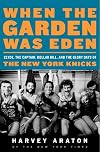
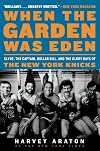
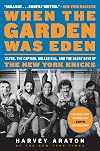
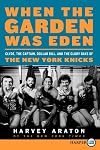
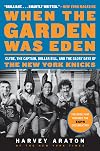
When the Garden Was Eden: Clyde, the Captain, Dollar Bill, and the Glory Days of the New York Knicks
by Harvey Araton
On This Page
Description
"The fascinating account--part autobiography, part sports history--of a young New York sportswriter sent out to cover his favorite team, the New York Knicks, during the social unrest of the 1960s and 70s"--Tags
Recommendations














Member Reviews
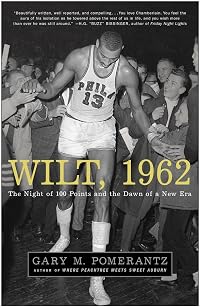
The New York Knickerbockers or Knicks (named after the fictional narrator in Washington Irving's satirical novel "Knickerbocker's History of New York"), one of the original teams of the National Basketball Association (NBA), has been in continuous existence since 1946. The early Knicks teams were competitive, playing in three consecutive NBA Finals from 1951-1953, but lost each series to a superior foe. The Knicks then sunk into mediocrity from the mid-1950s to the mid-1960s, playing before sparse and largely uninterested crowds at the old Madison Square Garden and the 69th Regiment Armory. The low point of the franchise occurred 50 years ago this month, when Philadelphia Warriors center Wilt Chamberlain set an as yet unbroken NBA show more record by scoring 100 points against the Knicks in a 169-147 shellacking on March 2, 1962.
New Yorkers were avid basketball fans in the mid-20th century, but they reserved their passion for the powerful local college teams at City College (CCNY), St. John's, LIU, NYU, Fordham and Manhattan, until a notorious point shaving scandal in 1951 led to the de-emphasis of basketball at several schools.
Beginning in 1964, the Knicks' fortune would begin to change. Willis Reed, a center from historically black Grambling College in Louisiana, was selected in the second round. Reed would later be named captain of the Knicks, and served as the team's linchpin during its glory years from 1967-1973. Unorthodox and brash shooting guard Dick Barnett joined the team the following year. Coach Red Holzman assumed responsibility for the flagging team midway through the 1967-68 season; his steady hand and willingness to allow his savvy and highly intelligent team to run its own plays and determine how it should attack each opponent's best players directly led to the team's success and the loyalty his players afforded him. The Knicks acquired two essential players in the 1967 draft: Walt Frazier, a superb shooting guard and defensive wizard from Southern Illinois, and Phil Jackson, a long and lanky defensive specialist from North Dakota, who would become famous as the coach of the Chicago Bulls and Los Angeles Lakers, winning 11 NBA titles. The All-American and future New Jersey senator and presidential candidate Bill Bradley, who was drafted in 1965 but left Princeton to attend Oxford on a Rhodes Scholarship, also began his NBA career that season. The following season brought forward Dave DeBusschere from the Detroit Pistons, a blue collar scorer and defender who also served as the Pistons' coach and as a pitcher for the Chicago White Sox.
With the essential pieces in place, the team improved dramatically over the next two seasons, as regular fans, along with celebrities such as Woody Allen, Elliott Gould and Dustin Hoffman, packed the new Madison Square Garden. The Knicks' success energized and united New Yorkers, who often found themselves divided over the Vietnam War, the civil rights movement, and the city's growing financial crisis.
The 1969-70 team burst out of the gate, winning 23 of its first 24 games en route to a 60-22 regular season. The Knicks defeated the Baltimore Bullets and the Milwaukee Bucks in the first and second rounds of the NBA playoffs, and then faced the powerful Los Angeles Lakers, led by future Hall of Famers Elgin Baylor, Jerry West and Wilt Chamberlin. Both teams were hungry for a championship; the Knicks had never won an NBA title and hadn't been to the Finals since 1953, whereas the Lakers hadn't earned hardware since 1954, losing in the Finals in six of the previous eight seasons. The teams split the first four games of the series, and appeared to be evenly matched until Game 5, when Willis Reed tore a thigh muscle. Somehow the Knicks battled back from a 10 point deficit without Reed to defeat the Lakers. With Reed on the bench, the New Yorkers were thoroughly outclassed in Game 6, setting up a deciding Game 7 in Madison Square Garden before 19,500 partisan spectators and a national television audience. One question resided on the lips of everyone who watched, listened to or participated in that game (including this 9 year old diehard Knicks fan and his father): would Willis Reed play?
"When the Garden Was Eden", written by a long time sports reporter for the Post, the Daily News and the New York Times, is at heart a love story about the great Knicks teams of the late 1960s to early 1970s, who overcame a lack of height and team speed by playing unselfish basketball that is almost foreign to the current crop of highly paid, self centered superstars who would rather take a contested shot than throw a pass to an open teammate. Araton's 40+ year career following the Knicks, many of whom remain close friends, allows the reader to learn about the lives of its stars and supporting players, the coaches and owners, the supporting staff of broadcasters, trainers, and office workers, and the fans who supported the "Old Knicks" and the newer, less talented and successful, versions that followed. Araton places his book in the context of the societal strife that surrounded and touched the players, and shows how racial differences affected many of them personally, but did not affect their relationships with each other or the chemistry of the team, unlike many other collegiate and professional teams during that time. Fans of the Knicks, especially those like me who grew up watching these great teams at MSG or on television or listening to Marv Albert's radio broadcasts on WNEW ("Yes! And it counts!"), will love and cherish this book. However, other sports fans, especially those interested in or familiar with the history of the NBA during that period, will also find a lot to enjoy in this engaging and inspirational work. show less
New Yorkers were avid basketball fans in the mid-20th century, but they reserved their passion for the powerful local college teams at City College (CCNY), St. John's, LIU, NYU, Fordham and Manhattan, until a notorious point shaving scandal in 1951 led to the de-emphasis of basketball at several schools.
Beginning in 1964, the Knicks' fortune would begin to change. Willis Reed, a center from historically black Grambling College in Louisiana, was selected in the second round. Reed would later be named captain of the Knicks, and served as the team's linchpin during its glory years from 1967-1973. Unorthodox and brash shooting guard Dick Barnett joined the team the following year. Coach Red Holzman assumed responsibility for the flagging team midway through the 1967-68 season; his steady hand and willingness to allow his savvy and highly intelligent team to run its own plays and determine how it should attack each opponent's best players directly led to the team's success and the loyalty his players afforded him. The Knicks acquired two essential players in the 1967 draft: Walt Frazier, a superb shooting guard and defensive wizard from Southern Illinois, and Phil Jackson, a long and lanky defensive specialist from North Dakota, who would become famous as the coach of the Chicago Bulls and Los Angeles Lakers, winning 11 NBA titles. The All-American and future New Jersey senator and presidential candidate Bill Bradley, who was drafted in 1965 but left Princeton to attend Oxford on a Rhodes Scholarship, also began his NBA career that season. The following season brought forward Dave DeBusschere from the Detroit Pistons, a blue collar scorer and defender who also served as the Pistons' coach and as a pitcher for the Chicago White Sox.
With the essential pieces in place, the team improved dramatically over the next two seasons, as regular fans, along with celebrities such as Woody Allen, Elliott Gould and Dustin Hoffman, packed the new Madison Square Garden. The Knicks' success energized and united New Yorkers, who often found themselves divided over the Vietnam War, the civil rights movement, and the city's growing financial crisis.
The 1969-70 team burst out of the gate, winning 23 of its first 24 games en route to a 60-22 regular season. The Knicks defeated the Baltimore Bullets and the Milwaukee Bucks in the first and second rounds of the NBA playoffs, and then faced the powerful Los Angeles Lakers, led by future Hall of Famers Elgin Baylor, Jerry West and Wilt Chamberlin. Both teams were hungry for a championship; the Knicks had never won an NBA title and hadn't been to the Finals since 1953, whereas the Lakers hadn't earned hardware since 1954, losing in the Finals in six of the previous eight seasons. The teams split the first four games of the series, and appeared to be evenly matched until Game 5, when Willis Reed tore a thigh muscle. Somehow the Knicks battled back from a 10 point deficit without Reed to defeat the Lakers. With Reed on the bench, the New Yorkers were thoroughly outclassed in Game 6, setting up a deciding Game 7 in Madison Square Garden before 19,500 partisan spectators and a national television audience. One question resided on the lips of everyone who watched, listened to or participated in that game (including this 9 year old diehard Knicks fan and his father): would Willis Reed play?
"When the Garden Was Eden", written by a long time sports reporter for the Post, the Daily News and the New York Times, is at heart a love story about the great Knicks teams of the late 1960s to early 1970s, who overcame a lack of height and team speed by playing unselfish basketball that is almost foreign to the current crop of highly paid, self centered superstars who would rather take a contested shot than throw a pass to an open teammate. Araton's 40+ year career following the Knicks, many of whom remain close friends, allows the reader to learn about the lives of its stars and supporting players, the coaches and owners, the supporting staff of broadcasters, trainers, and office workers, and the fans who supported the "Old Knicks" and the newer, less talented and successful, versions that followed. Araton places his book in the context of the societal strife that surrounded and touched the players, and shows how racial differences affected many of them personally, but did not affect their relationships with each other or the chemistry of the team, unlike many other collegiate and professional teams during that time. Fans of the Knicks, especially those like me who grew up watching these great teams at MSG or on television or listening to Marv Albert's radio broadcasts on WNEW ("Yes! And it counts!"), will love and cherish this book. However, other sports fans, especially those interested in or familiar with the history of the NBA during that period, will also find a lot to enjoy in this engaging and inspirational work. show less
Ratings
Members
- Recently Added By
Author Information

8 Works 280 Members
Harvey Araton is New York Times feature writer and sports columnist. Prior to working at the Times he was a sports reporter and columnist at the New York Daily News, a sports reporter for the New York Post, and he also worked at the Staten Island Advance as a sports reporter, night sports editor, city side reporter and copyboy. Araton is the show more author or co-author of the books: Driving Mr. Yogi: Yogi Berra, Ron Guidry, and Baseball's Greatest Gifts (Houghton Mifflin Harcourt, 2012); When the Garden Was Eden: Clyde, the Captain, Dollar Bill, and the Glory Days of the New York Knicks (Harper, 2011); Crashing the Borders: How Basketball Won the World and Lost Its Soul at Home (Free Press, 2005); Alive & Kicking (When Soccer Moms Take The Field And Change Their Lives Forever (Simon & Schuster, 2001); Money Players (Inside The New NBA) (Pocket Books, 1997); The Selling of the Green: The Financial Rise and Moral Decline of the Boston Celtics, Harper Collins, 1992. Araton's work has appeared in numerous magazines including the New York Times Magazine, GQ Magazine, ESPN Magazine, Sport Magazine, and Basketball Weekly. (Bowker Author Biography) show less
Classifications
- Genres
- Sports and Leisure, Nonfiction, General Nonfiction, History, Biography & Memoir
- DDC/MDS
- 796.323 — Arts & recreation Recreation, sports, and performing arts Athletic and outdoor sports and games Ball sports Ball and net sports Basketball
- LCC
- GV885.52 .N4 .A83 — Geography, Anthropology and Recreation Recreation. Leisure Recreation. Leisure Sports Ball games: Baseball, football, golf, etc.
- BISAC
Statistics
- Members
- 57
- Popularity
- 540,360
- Reviews
- 1
- Rating
- (3.61)
- Languages
- English
- Media
- Paper, Ebook
- ISBNs
- 4
- ASINs
- 3